
Toyota Hilux Electric in Portugal: Price, Range and Payload Explained
Published: 17/06/2026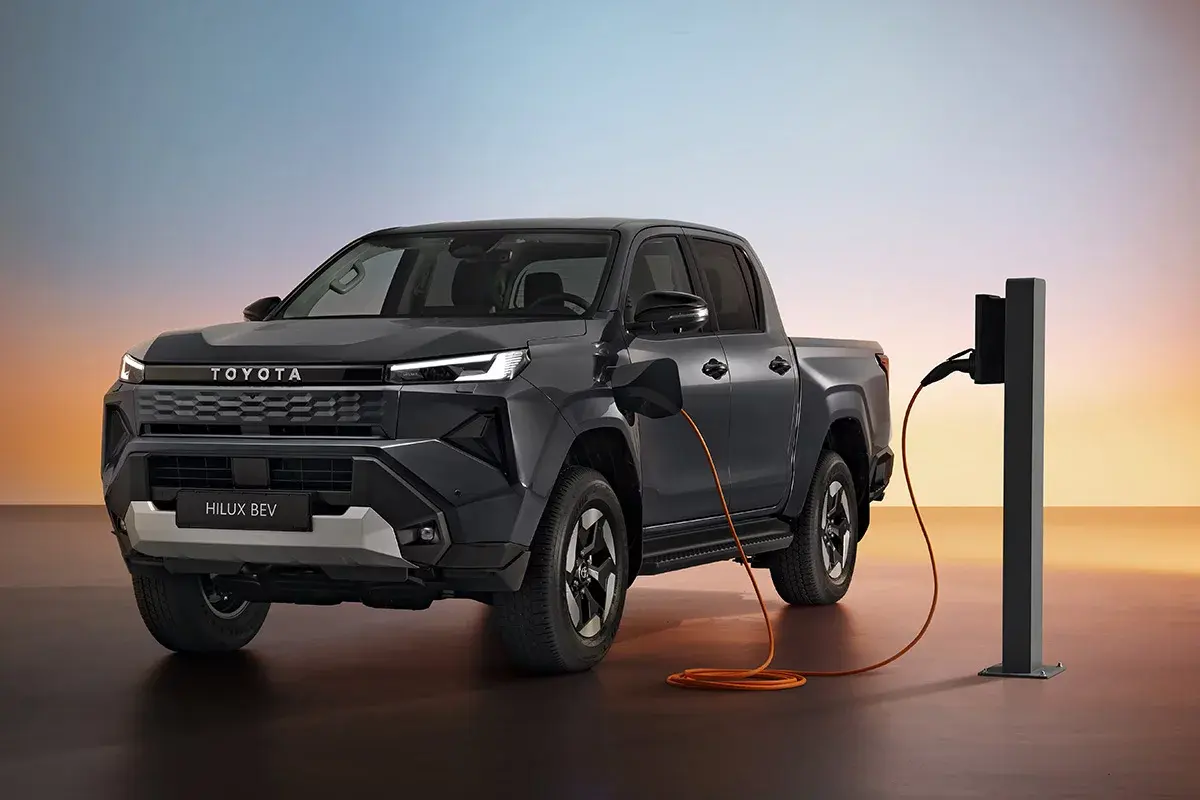
The electric Toyota Hilux is coming to Portugal — and it shakes up the pickup game
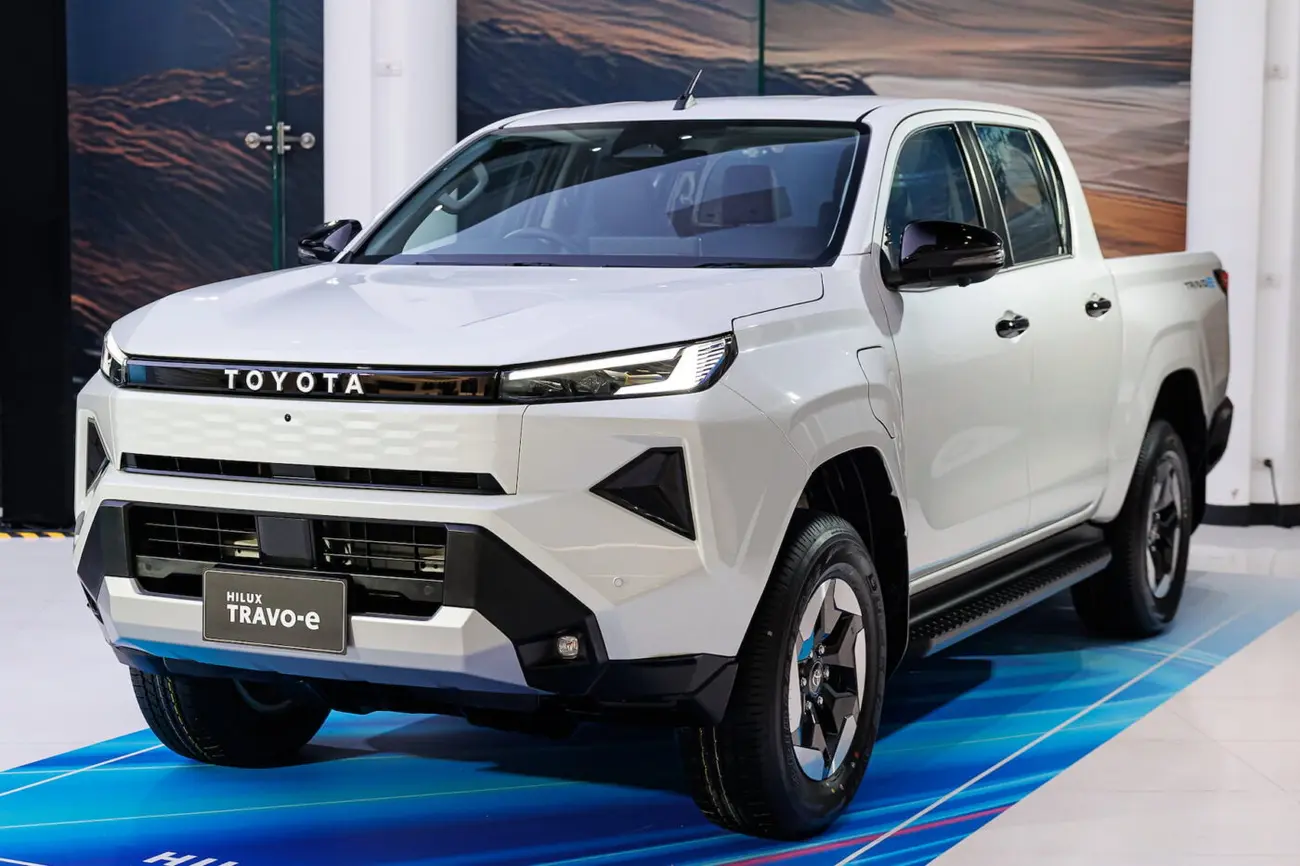
After 27 million units sold over seven decades, the Hilux had never had a fully electric version. Now it does. The ninth generation brings the electric Toyota Hilux to Portugal from September 2026, and it's the world's first mass-produced midsize pickup to drop diesel entirely. Order books are already open in the UK and Australia, and the Portuguese price hasn't been confirmed yet — but there's plenty we already know.
The real question for anyone who works with a pickup isn't whether it's electric. It's whether it can do the job. Let's get to the numbers.
What the Hilux BEV offers: motors, drive and performance
The electric Hilux uses two motors, one per axle, with permanent all-wheel drive through a dual e-Axle setup. The front motor puts out 80 kW and 205 Nm, the rear one 128 kW and 268 Nm. Combined, that's 208 kW (278 hp) and 473 Nm of torque — available from a standstill, as with any EV.
One caveat is worth flagging. UK outlets (Auto Express, Electrifying) quote 193 hp instead of 278 hp, probably down to a different measurement standard. Whatever the official figure Toyota Portugal ends up publishing, the instant torque on both axles is what counts on rough ground — and that doesn't change.
Construction stays body-on-frame, with a dedicated battery sub-frame that isolates the cells from torsional forces. This isn't an SUV dressed up as a pickup. It's a proper Hilux, now electric.
Toyota Hilux BEV range: is the 59.2 kWh battery enough?
Here's the weak spot, and we won't pretend otherwise. The battery is a 59.2 kWh water-cooled lithium-ion unit. WLTP range sits around 257 km (160 miles), rising to 380 km in the city cycle. In its official November 2025 announcement, Toyota quoted a more conservative figure of roughly 240 km.
The UK specialist press was blunt: 59.2 kWh is "a bit of a small battery" for a pickup. And they're right if the plan is to drive Lisbon to the Algarve without stopping. Real-world range in winter, loaded up with the heating on, will dip below 240 km.
But that's exactly where you need to understand what this truck is for. The electric Hilux was designed for short-distance commercial use — the back-to-base kind, where the vehicle returns to the same depot at the end of each day. For a municipal fleet, a building site, a farm or a regional service company, 240 km is more than enough, and overnight charging handles the rest.
Charging: fast where it matters
On DC fast charging, via CCS2 at 125 kW, the Hilux goes from 10 to 80% in about 30 minutes. At home or at the depot, on a 10 kW wallbox, a full 10-to-100% charge takes around 6.5 hours — one night, in other words. For the "leave full in the morning, come back in the afternoon, charge overnight" pattern, charging time is a non-issue.
Payload and towing: what you give up versus the diesel
There's no sugar-coating this: the electric version carries and tows less than the diesel.
| Capacity | Hilux electric (BEV) | Hilux diesel 48V |
|---|---|---|
| Payload | 715 kg | 1,000 kg |
| Towing | 1,600 kg | 3,500 kg |
| Range | ~257 km WLTP | hundreds of km |
The 715 kg payload and 1,600 kg towing capacity (1,500 kg according to one source) sit clearly behind the 48V mild-hybrid diesel, which keeps 1,000 kg of payload and 3,500 kg of towing. If you haul heavy trailers or run fully loaded all day, the diesel remains the obvious choice — which is precisely why Toyota points to it as the volume seller in Western Europe.
The electric one is for a different kind of user. And there's more in its favour than these numbers let on.
Off-road ability: still a Hilux
The good part: on tough terrain, the Hilux BEV keeps its credentials. You get 212 mm of ground clearance, 700 mm of wading depth — the same as the combustion model — and approach, departure and breakover angles of 29°, 24° and 20°.
The Multi-Terrain Select system has five modes (Rock, Sand, Mud, Dirt, Mogul) that manage torque and braking per wheel depending on the surface. With instant torque on both axles, an electric pickup can even hold an edge crawling through mud or over rock, where fine power control matters more than raw output.
Cabin and tech: borrowed from the Land Cruiser
Inside, the electric Hilux steps up. The steering wheel and much of the cabin design come from the new Land Cruiser. Top trims get a 12.3-inch central screen and 12.3-inch digital instruments; entry trims drop to a 9-inch display. It's the first Hilux with electric power steering in Western Europe.
For fleets, the trump card is MyToyota management: a manager can monitor up to 10 vehicles at once — location, battery charge status, driving analytics. Add the third-generation T-Mate safety package, with driving assistance, emergency braking that detects pedestrians and cyclists, and a driver monitor camera.
And there's one detail that reassures anyone worried about battery degradation in a work vehicle: the Battery Care Program guarantees at least 70% capacity over 10 years or 1 million kilometres.
Toyota Hilux electric price in Portugal: what it'll cost
The Portuguese price isn't confirmed yet. What we have are references from other markets. In the UK, the BEV runs from £57,845 (Icon) to £60,695 (Invincible), with a £5,000 commercial-vehicle grant available. In Spain, pre-sales started at €41,588 (GX trim). In Australia, it starts at AUD 74,990 before tax.
For Portugal, the tax maths works in its favour: being fully electric, the Hilux qualifies for ISV (the vehicle purchase tax) exemption and IUC (annual road tax) benefits, plus favourable treatment as a company car. This is exactly where the electric version can claw back ground on the diesel: less tax at purchase, lower cost per kilometre, and a usage profile (short distance, fixed base) that cancels out the range disadvantage.
Frequently Asked Questions
The official Portuguese price hasn't been confirmed yet. For reference, in the UK the BEV runs from £57,845 (Icon) to £60,695 (Invincible), in Spain pre-sales started at €41,588 (GX trim), and in Australia it begins at AUD 74,990 before tax. Being fully electric, in Portugal it qualifies for ISV (purchase tax) exemption and IUC (road tax) benefits, which helps narrow the final cost gap against the diesel.
First units are expected in Portugal from September 2026. Order books are already open in the UK and Australia, and the European launch is tied to the Brussels Motor Show debut. All that's left is for Toyota Portugal to confirm pricing and the trims available for the local market.
WLTP range sits around 257 km (up to 380 km in the city cycle), but Toyota's official November 2025 announcement cites a more conservative figure of roughly 240 km. With its 59.2 kWh battery, real-world range in winter and under load drops below 240 km — enough for short-distance commercial use with a daily return to base, but tight for long trips like Lisbon to the Algarve without stopping.
The electric version offers 715 kg of payload and 1,600 kg of towing capacity, clearly below the 48V mild-hybrid diesel, which keeps 1,000 kg of payload and 3,500 kg of towing. If you haul heavy trailers or run fully loaded all day, the diesel remains the obvious choice; the electric version targets a regional, short-distance usage profile instead.
It depends on usage. For municipal fleets, building sites, farms or regional service companies that always return to base, the ~240 km range plus overnight charging (10 kW, around 6.5 hours) is enough, and the ISV exemption and lower cost per kilometre pay off. For heavy towing or long distances, the 48V diesel remains better suited. The Battery Care Program guarantees at least 70% capacity over 10 years or 1 million kilometres.
Is it worth it for the Portuguese buyer?
The electric Hilux isn't here to replace the diesel — it sits alongside it. If your job is towing 3 tonnes or crossing the country fully loaded, stick with the 48V mild-hybrid. If your pickup does regional rounds, always comes back to base, and you want to cut fuel and tax, this is the first time an electric version makes sense in this segment.
The official Portuguese price is still missing, and that's the number that will decide everything. With first units expected in September 2026, it's worth watching Toyota Portugal's announcement — above all for how it's positioned against the diesel, which will tell us whether the electric Hilux is a serious alternative or just a tech showcase.