
Suzuki Electric Kei Car in Portugal: Price, Range and 2027 Launch
Published: 12/08/2026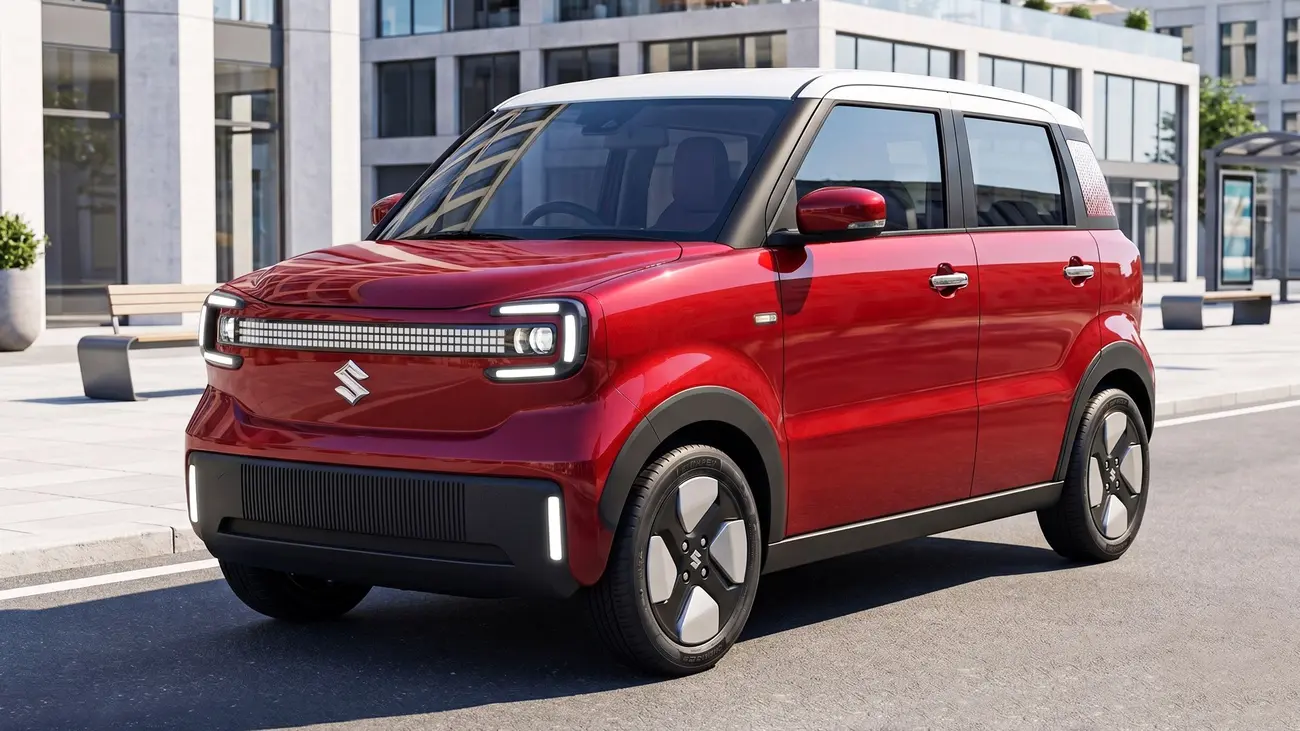
Three and a half metres of Japan, headed for Europe
An electric car 3,395 mm long, with four seats and a claimed 310 km of range. Suzuki wants to bring a European version of the Vision e-Sky here as early as 2027 — its first electric kei passenger car, which goes on sale in Japan in November 2026. It would be the first kei car exported to Europe with barely any changes since the 1990s.
The number that matters most to anyone shopping for a small, cheap EV: the quoted starting price sits under £20,000 in the UK, roughly €23,000. That is cheap for a European electric car. It is expensive for a Japanese kei car. And that gap is the whole story.
What the Suzuki Vision e-Sky is (and why the name may change)
The Vision e-Sky broke cover at the 2025 Japan Mobility Show as a concept, with Suzuki committing on the spot to putting it on sale within its 2026 fiscal year. The production name has not been confirmed — "Vision e-Sky" is the concept badge, so treat it as provisional.
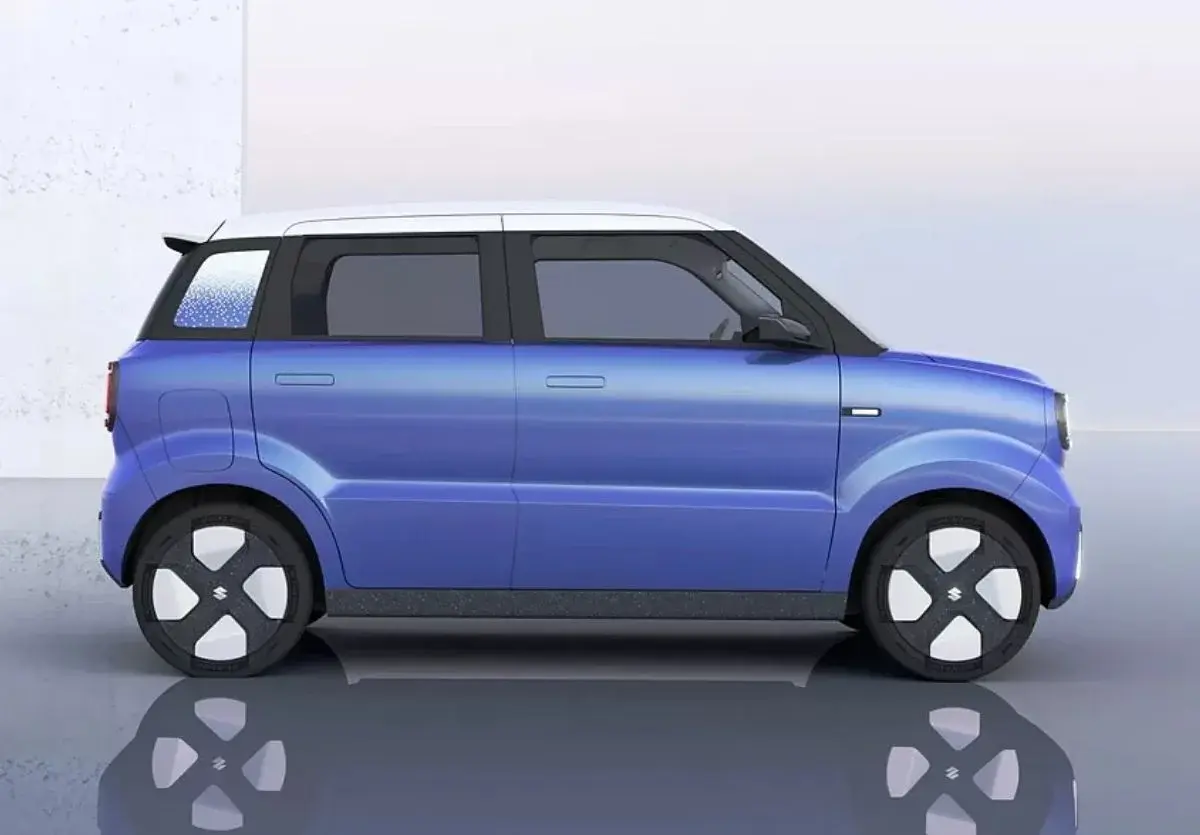
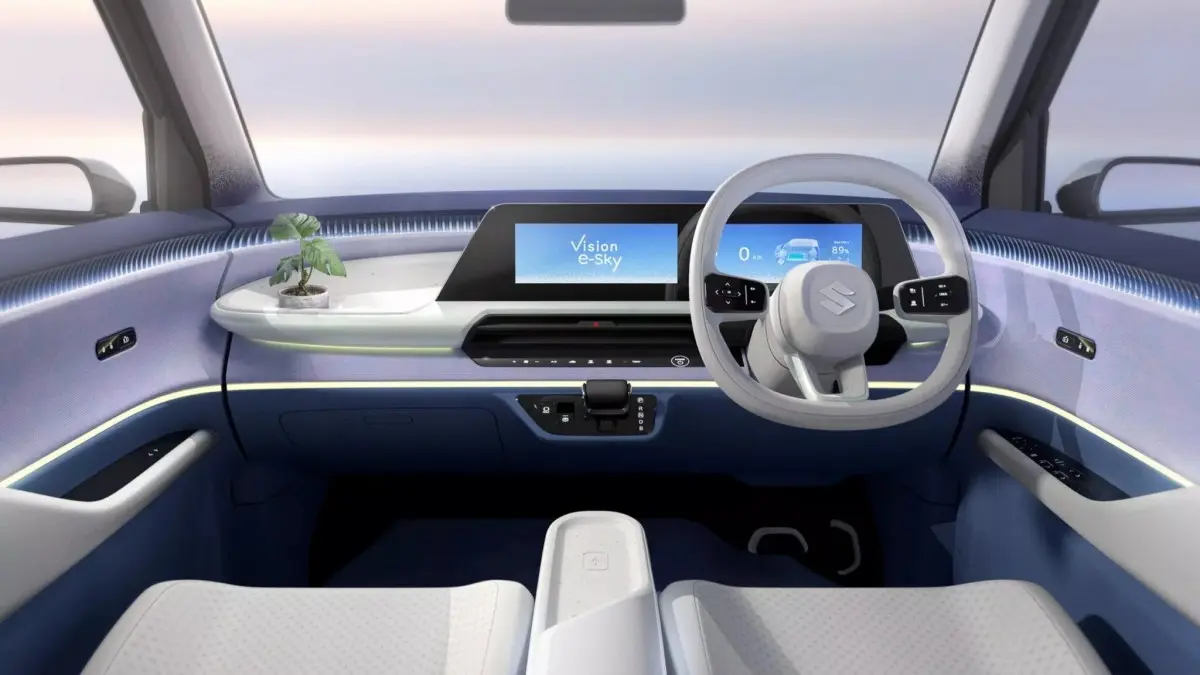
The recipe is pure kei car: a tall-boy body, a high roof, four seats squeezed out of a tiny footprint. Outside, pixel-style LED headlights, C-shaped daytime running lights and a roofline that tapers slightly more than the petrol Wagon R it visually descends from. Inside, two roughly 12-inch screens — one for instruments, one for infotainment — a floating centre console and wireless phone charging.
The European car will not be identical to the Japanese one. Suzuki has already confirmed revised bumpers and light units, larger mirrors and conventional door handles in place of the concept's retractable ones, plus the changes needed to satisfy EU regulations and cope with European roads and speeds.
Specs: dimensions, battery and range
The official concept figures, plus what has been quoted for the European version:
| Specification | Value |
|---|---|
| Type | Electric kei minicar, 4 seats, front-wheel drive |
| Length | 3,395 mm |
| Width | 1,475 mm |
| Height | 1,625 mm |
| Battery | around 20–25 kWh (estimated) |
| Range (European version, claimed) | 310 km |
| Range (concept) | over 270 km |
| Interior | two approx. 12-inch screens, floating console, wireless charging |
| Japan launch | November 2026 |
| Europe launch | 2027 (spring, according to Carscoops) |
| Production | Shizuoka prefecture, Japan |
For scale: a Suzuki Swift measures 3,860 mm. This is almost half a metre shorter. The batteries come from a supplier linked to BYD, which helps explain how a brand without its own low-cost EV platform gets anywhere near this price point.
The claimed 310 km deserves a caveat. The concept talked about "over 270 km" from an estimated 20 to 25 kWh pack, and that capacity is unlikely to grow much for export. So 310 km reads as an optimistic figure for a small battery, and real motorway range in winter will land well below it. For city and suburban driving, it is more than enough.
Suzuki electric kei car price in Portugal: still unconfirmed
Let us be blunt, because plenty of coverage online blurs this. The European markets named so far for the launch are the UK and Italy. Portugal is not on that list, and Suzuki has announced neither a date nor a price for our market.
What we can do is estimate honestly. If UK entry pricing lands under £20,000, that is roughly €23,000. In Portugal a fully electric car is exempt from ISV (the vehicle registration tax) and from IUC (the annual road tax), which strips away the tax layer that inflates the price of a comparable petrol model. Factor that in, assume Suzuki holds a similar position to the British one, and something between €21,000 and €24,000 looks plausible — with the clear caveat that this is our projection, not an official price.
Anyone who wants a cheap electric city car in Portugal before 2027 should be looking at what is already on sale here rather than waiting for this Suzuki.
Why kei cars cost more in Europe
In Japan the kei car is not a poverty option: the category accounts for roughly one third of the new car market. That is because it comes with lower taxes, cheaper insurance, lighter inspection costs and exemption from parking-proof requirements in many areas. Regulation created the segment — the low price follows from the rules as much as from the engineering.
Bring the same car to Europe and that advantage evaporates. Homologated as M1 — the ordinary passenger car category — a kei car has to meet full crash protection, software and driver-assistance requirements. Costs climb and the price drifts toward €20,000, which is exactly where this Suzuki has landed.
Today's alternative is the L6e and L7e quadricycle class — Citroën Ami, Mobilize Duo, Microlino. They are cheaper because homologation is far lighter, but they are capped at speeds between 45 and 90 km/h, carry minimal batteries and offer limited crash protection. They are not family car replacements.
The EU created a new category in 2025 precisely to fill that gap: small electric cars up to 4.2 m long, with lighter technical requirements and an explicit goal of cutting prices. There is a catch for Suzuki. The car is built in Shizuoka, Japan, and because it is manufactured outside the EU it will likely be ineligible for those incentives. The irony writes itself — a category inspired by Japanese kei cars may not apply to the first Japanese kei car to arrive.
How it stacks up against the Twingo E-Tech, Spring and T03
| Model | Battery | Range | Reference price |
|---|---|---|---|
| Suzuki electric kei car (Europe) | around 20–25 kWh | 310 km claimed | under £20,000 / about €23,000 |
| Renault Twingo E-Tech | n/a | 263 km WLTP | n/a |
| Dacia Spring | n/a | n/a | about £16,000 / about €18,800 |
| Leapmotor T03 | n/a | n/a | £15,995 |
| Honda Super-N | n/a | 206 km combined cycle | n/a |
| BYD Racco (Japan) | 20 kWh LFP | about 180 km WLTC | ¥2.5m, about €15,000 |
| Dacia Hipster (concept) | n/a | n/a | target under £15,000 |
Those prices are UK and Japanese reference figures — Portuguese list prices differ, and both the Spring and the T03 are already sold here.
The comparison is uncomfortable reading for Suzuki. The Twingo E-Tech, the closest rival, claims 263 km — less than the Japanese car's 310 km, but it is the segment benchmark. The Dacia Spring and Leapmotor T03 sit several thousand euros below. And the BYD Racco, the Chinese answer in the kei class, costs about €15,000 in Japan with a 20 kWh LFP pack, 180 km of range and 100 kW DC charging. BYD has not brought the Racco to Europe yet, but Stella Li has already said that "that kei car is exactly the E-car we are talking about". If the European category goes ahead and BYD moves, Suzuki has a pricing problem.
Frequently Asked Questions
There is no confirmed date for Portugal. Suzuki is targeting a European launch in 2027 (spring 2027 according to Carscoops), but the only markets named for the rollout are the UK and Italy. The car reaches Japan first in November 2026, built in Shizuoka prefecture. Any Portuguese launch would come in a later wave of markets and has not been announced by the brand.
There is no official Portuguese price. The known reference is the UK, where the quoted starting price sits under £20,000, roughly €23,000 at current rates. Because fully electric vehicles in Portugal are exempt from ISV and IUC, a plausible projection lands between €21,000 and €24,000 — our estimate, not a price confirmed by Suzuki.
The claimed range for the European version is 310 km, above the 270 km-plus quoted for the concept, from a battery estimated at 20 to 25 kWh. With a pack that small, expect considerably less on the motorway and in winter, although it is more than enough for city and suburban use. Suzuki has not yet disclosed the European version's maximum DC charging power, so fast-charging times remain unconfirmed.
On claimed range the Suzuki wins: 310 km against the Renault Twingo E-Tech's 263 km WLTP. On price it loses: the Dacia Spring sits around £16,000 (about €18,800) and the Leapmotor T03 at £15,995, several thousand below the Suzuki's roughly €23,000. The practical difference is that the Spring and T03 are already on sale in Portugal, while the Suzuki is a 2027 promise with no confirmed Portuguese market.
No. In Portugal, fully electric vehicles are exempt from both ISV and IUC regardless of size or origin, and they enter the low-emission zones in Lisbon and Porto without restriction. One regulatory nuance matters, though: the new EU category created in 2025 for small electric cars up to 4.2 metres brings lighter technical requirements to cut prices, but because this Suzuki is built in Japan it is likely to fall outside those incentives.
Does it make sense for Lisbon or Porto?
For city driving, yes, for practical reasons. A car 3.4 m long and 1.47 m wide parks where a Clio simply will not fit, and on the narrow streets of central Lisbon or Porto that beats ten extra horsepower. Being electric, it enters low-emission zones without restriction and pays neither ISV nor IUC.
The limits are just as clear. With a 20 to 25 kWh battery, Lisbon to the Algarve means at least one charging stop, and Suzuki has not yet published the European car's maximum DC charging rate — the figure that decides whether that stop lasts 20 minutes or 45. As a second family car, or as the only car for someone covering 30 to 50 km a day, it fits well. For regular motorway work, it does not.
There is also the dealer question. Suzuki has an established presence in Portugal, which sorts out servicing and parts — an advantage over recently arrived Chinese brands still building their networks.
Worth watching over the coming months: confirmation of the production name, the DC charging rate and, above all, whether Portugal joins the second wave of markets after the UK and Italy. Until then, anyone who needs a cheap electric city car has more choice on sale in Portugal today than two years ago — and no reason to wait for 2027.