
Sono Motors Insolvency: The End of the Sion and Europe's Solar Car Bet
Published: 19/08/2026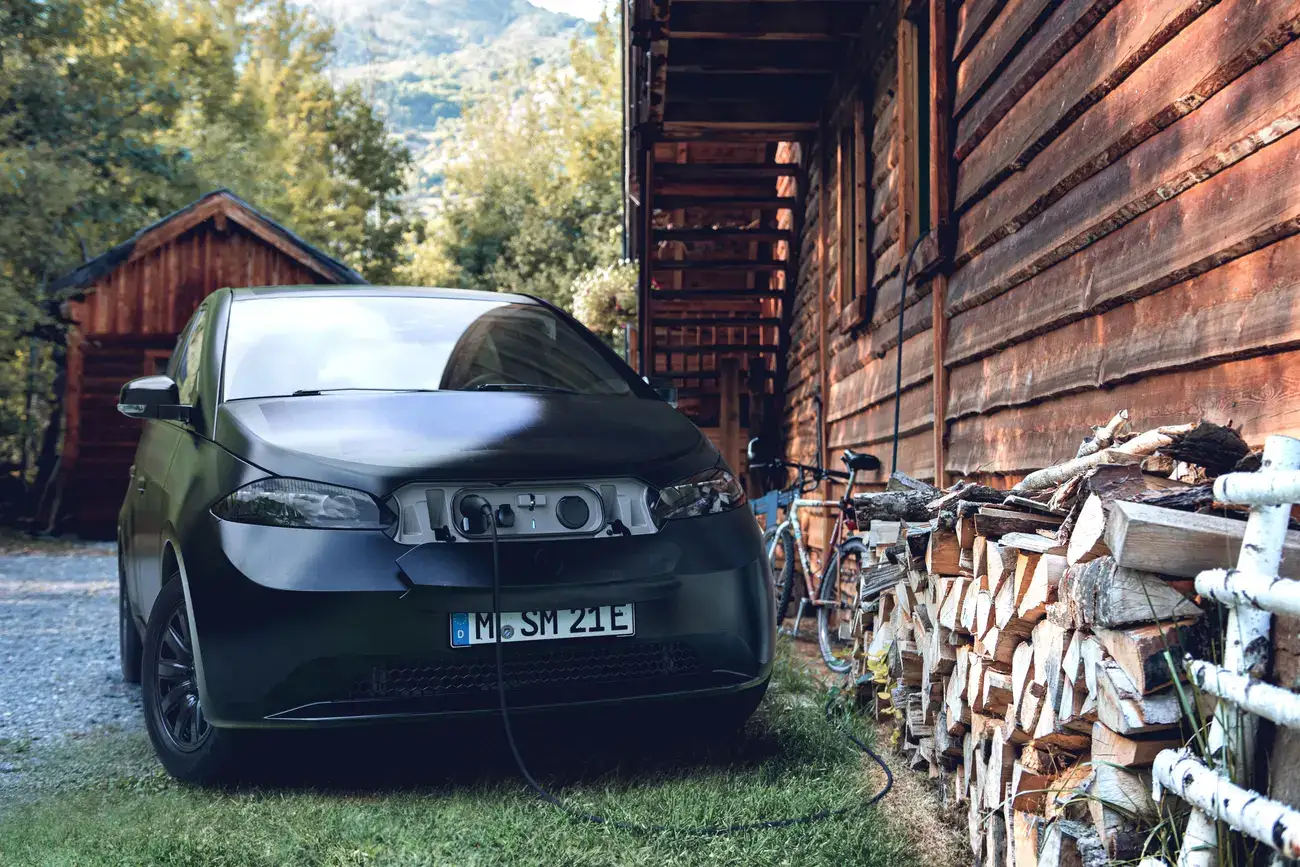
Ten years of the solar car ended on 31 July
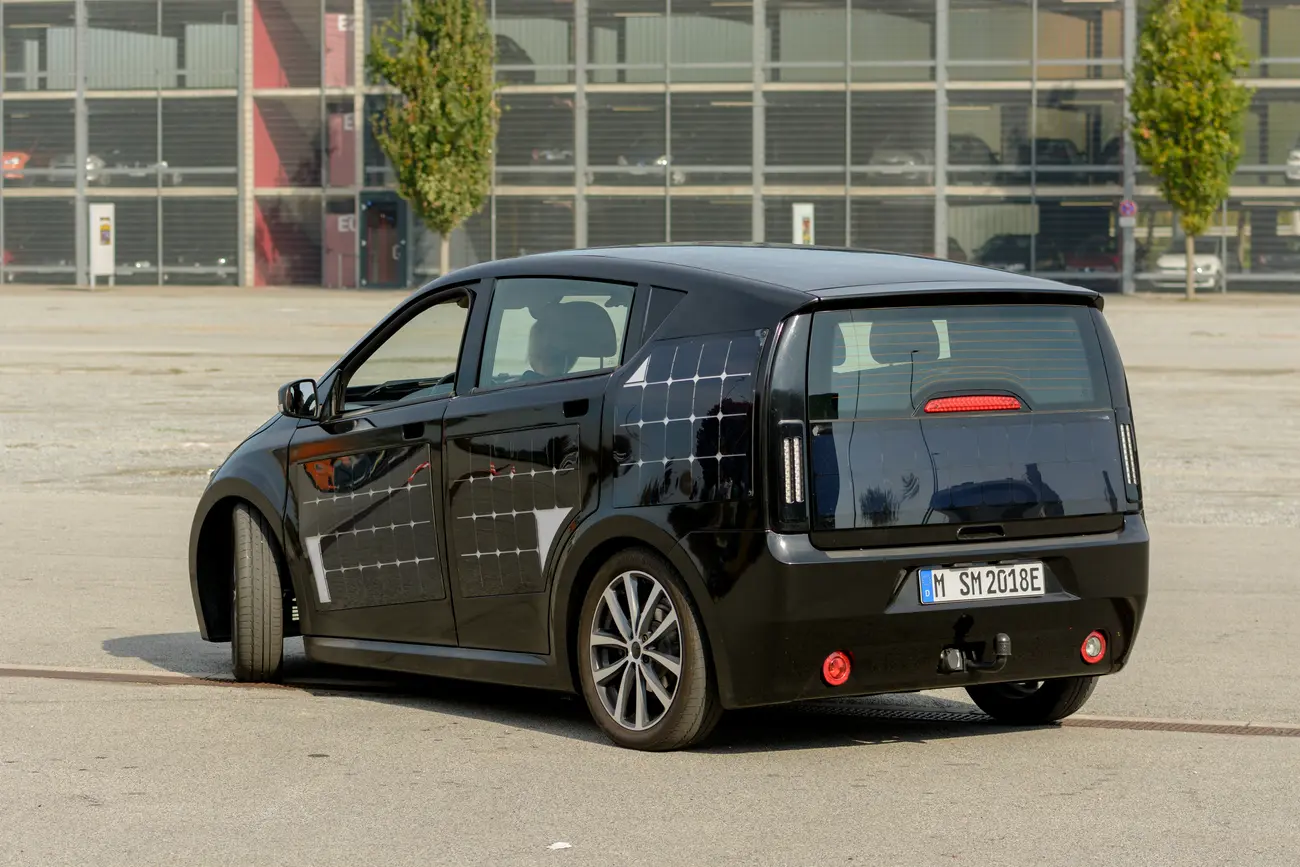
Sono Motors GmbH shut down on the last day of July 2026 and filed for insolvency proceedings. It is the second time in three years — the first was May 2023 — and this time there is no plan B. The Sono Motors insolvency closes the book on the most ambitious solar car Europe ever attempted: the Sion, a hatchback carrying 330 photovoltaic cells across its roof, doors and bonnet, which collected almost 10,000 pre-orders and never delivered a single unit to a customer.
What is left is for sale. The Munich company has put three packages on the market: the solar integration system developed for the Sion, the power electronics — chiefly the solar charge controller for EVs — and Solar Data Services, its energy-management software. Bundled in are all intellectual property, hardware components, technical documentation and the Sono Solar brand itself.
What happened to Sono Motors: three months to find money
The blow came from inside. In March 2026, parent company and main investor Sono Group N.V. announced its immediate withdrawal from the solar division and handed the subsidiary to managing directors Denis Azhar and Jan Schiermeister with no financial backing. The parent then changed business entirely: it moved to buying Bitcoin and trading options.
That left roughly three months to find a new investor. Talks continued "intensively until the very end", the company says, but none closed. The final statement puts it plainly: the company was unable to secure sustainable financing during a restructuring phase.
"A decade of solar mobility know-how is truly unique," said Denis Azhar. Schiermeister thanked the community, customers, partners and team, and added the article of faith the company always kept: he believes solar energy will eventually become a standard feature in vehicles. It may well. It just won't carry their badge.
Sono Motors Sion specs: the car that never arrived
The Sion started as a concept in 2012, and the company was founded in 2016 by Laurin Hahn, Jona Christians and Navina Pernsteiner. Funding came almost entirely from the crowd: over €2 million raised in 2016-17, roughly €55 million accumulated by January 2020, with customer deposits reaching €3,000. By June 2018 there were 5,000 reservations; by late 2019, close to 10,000.
These are the final production figures the company announced — several changed over the years, so read them as ranges rather than showroom certainties.
| Specification | Value |
|---|---|
| Body | B-segment, 5-door hatchback, 5 seats |
| Battery | 54 kWh LFP (no cobalt, nickel or manganese) |
| NEDC range | 320 km |
| Realistic range | around 250 km |
| Solar gain (annual average) | around 112 km per week (about 10 km/day) |
| Solar gain (summer peak) | up to 245 km per week (max. about 34 km/day) |
| Solar cells | 330 monocrystalline modules, 7.5 m², 21% efficiency, 1,208 Wp peak |
| Motor | 120 kW (163 hp), 270 Nm, front-wheel drive |
| 0-100 km/h | 9.0 s |
| Top speed | 140 km/h |
| DC charging | 50 to 75 kW depending on the project revision (30 min to 80% on the 50 kW spec) |
| AC charging | 3.7 to 22 kW Type 2; 2.5 h to 80% |
| Bidirectional | 11 kW to other EVs; 2.7 kW / 230 V household socket |
| Dimensions (L/W/H) | 4,290 / 1,830 / 1,670 mm |
| Wheelbase | 2,770 mm |
| Kerb weight | 1,400 kg |
| Boot | 650 l (1,250 l seats folded) |
| Announced price | €25,500 initially, revised to €29,900 in April 2022 |
| Planned warranty | 2 years / 100,000 km |
The bidirectional side deserved more attention than it got. A Sion could charge another EV at 11 kW or run household equipment at 230 V — the same V2L function that now shows up on Chinese models and that is genuinely useful for camping, worksites or power cuts.
The launch date kept slipping: mid-2019, then late 2020, then 2022, then the first half of 2023. Production was contracted to Valmet Automotive in Uusikaupunki, Finland, targeting 43,000 cars a year and an ambition of 260,000 units by 2028. In February 2023, the programme was cancelled. In August 2025, the 10 remaining prototypes and the tooling went to auction.
Why solar cars failed — and it wasn't the technology
This is the part worth keeping: the technology worked. What was missing was a market growing fast enough to pay for it.
After the 2023 collapse and an investment from the Yorkville hedge fund in November of that year, the company rebranded as Sono Solar and pivoted to B2B in 2024 — selling solar integration to manufacturers and fleet operators instead of building cars. There it hit a different wall. Fleet managers decide by payback period, and with modest fuel prices the retrofit maths never closed inside an acceptable timeframe.
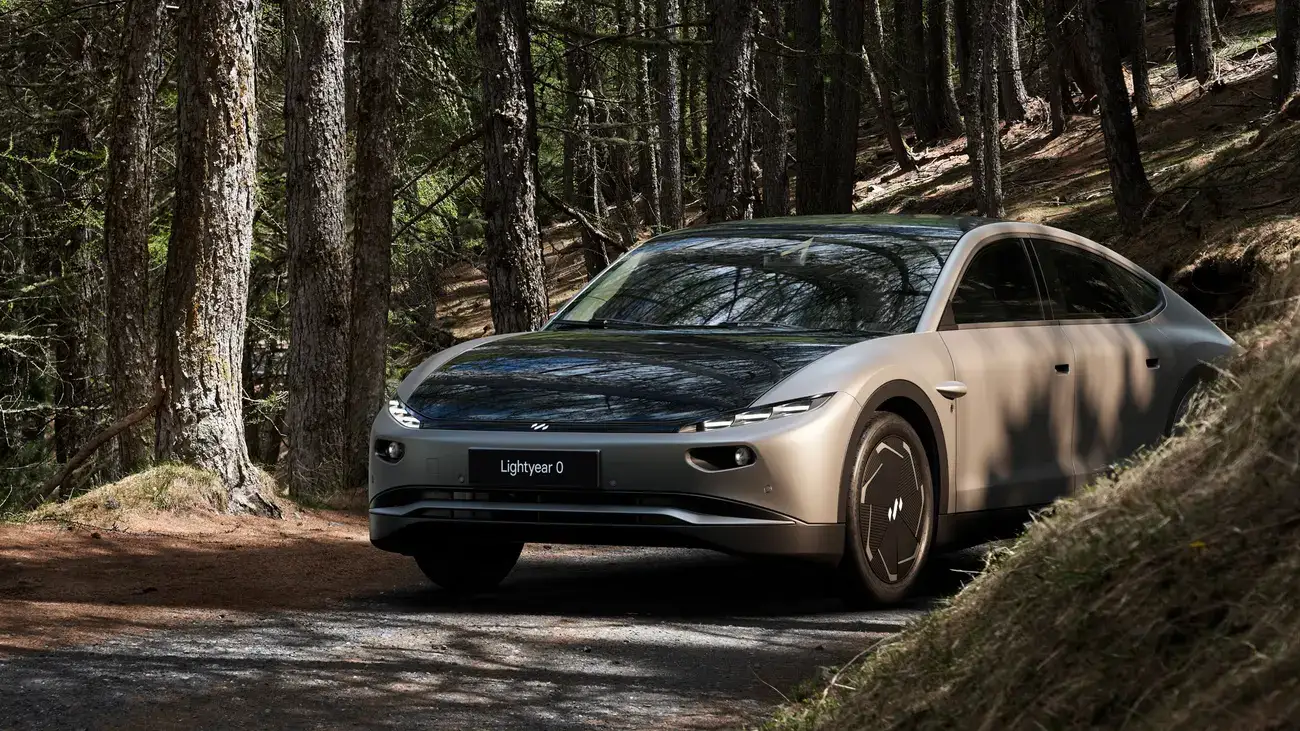
Dutch rival Lightyear, the other big name in European solar cars, ran into exactly the same barrier; it only recently demonstrated a Nissan Ariya with integrated solar panels. Two companies, two failures, one diagnosis.
The interesting part is where the real value sat. Not in the panels — anyone can buy those — but in the electronics: the solar charge controller that manages the voltage swings caused by constantly shifting partial shade from bridges, buildings and trees. And above all in the Allgemeine Betriebserlaubnis, the German general operating permit Sono Solar held for solar integration on commercial vehicles. By the company's own account, it is worth more than the patents.
The European backdrop makes this hard to read as an isolated case. Northvolt went under in March 2025 after burning more than $15 billion. Fisker, Arrival, Canoo, Lilium, Volocopter — the estimate is that 90% of EV start-ups fail, with over $25 billion destroyed in the 2020-2025 cycle. On the other side, Chinese state support has cut battery unit costs by roughly 30% against European equivalents. Brussels answered with a €1.5 billion "battery booster" of interest-free loans. Set that next to what China has injected and the asymmetry speaks for itself.
Is a solar electric car worth it in Portugal?
Here is an irony that's hard to ignore. The Sion's figures — around 112 km per week on average, up to 245 km at peak — were calculated for Germany. Portugal gets considerably more sun: annual irradiation in the south runs in the region of 1,700 to 1,900 kWh/m², against roughly 1,000 to 1,100 kWh/m² in Germany. A Sion parked in Faro would live much closer to the top of that range than to the German average.
In everyday terms: a 15 to 20 km commute in Lisbon or Porto could, through a Portuguese summer, be largely covered by what the bodywork gathered while the car sat in the sun. That isn't infinite range. It's one fewer trip to a charger per week. For anyone parking on the street with no home charger — the reality for plenty of people in Portuguese cities — that would have counted for something.
The problem is that nobody ever got to test it here. And that's where the solar promise stops being a reason to buy: a car that doesn't exist has zero range, wherever the sun is. If you want to cut your energy bill using Portuguese sunshine, today's route is the opposite one — panels on your roof and an ordinary EV charging during the day.
Buying an EV from a startup brand: the risk nobody reads in the contract
Sono's ending leaves a concrete lesson for anyone shopping the Portuguese market, especially used. Thousands of people put down as much as €3,000 on a car that never existed. Buy a used car from a brand that later disappears and you don't lose the car — but you do lose three things that cost money:
- Warranty. When the manufacturer enters insolvency, the manufacturer's contractual warranty has no counterparty left. What remains is the seller's statutory warranty — from the dealer or private seller — which in Portugal covers defects present at handover, not a seven-year battery promise.
- Parts and service. Batteries, power modules and management software are rarely generic. With no service network and no software updates, one electronics fault can immobilise a car that is otherwise perfectly healthy.
- Residual value. The moment a brand makes the news for the wrong reason, demand on the used market drops. And it drops faster on an EV, where the next buyer is already thinking about battery health.
None of this means avoiding newer brands on principle — several Chinese manufacturers have entered Portugal in recent years with serious service networks and the volumes that keep parts flowing. It means asking two questions before signing: who honours the warranty if the manufacturer leaves the market, and how many certified workshops sit within an hour's drive. An attractive price on an orphaned car stops being cheap at the first breakdown.
Frequently Asked Questions
Munich-based Sono Motors GmbH ceased operational business on 31 July 2026 and filed for insolvency, announced publicly on 3-4 August. It is the company's second insolvency in three years — the first came in May 2023, after the Sion programme had already been cancelled that February. The final trigger was parent company Sono Group N.V. withdrawing from the solar division in March 2026, leaving the managing directors roughly three months to find new investment.
The 330 monocrystalline modules integrated into the bodywork (7.5 m², 21% efficiency, 1,208 Wp peak) delivered around 112 km per week as an annual average — close to 10 km a day — rising to as much as 245 km per week at peak, roughly 34 km daily. Those figures were calculated for German solar irradiance of about 1,000-1,100 kWh/m² per year; southern Portugal receives 1,700-1,900 kWh/m², so a Sion parked in Faro would sit far closer to the upper end.
The launch price was 25,500 euros including German VAT (or 16,000 euros without the battery), revised in April 2022 to 29,900 euros. The final planned spec listed a 54 kWh cobalt-free LFP battery, 320 km of NEDC range (realistically closer to 250 km), a 120 kW / 163 hp motor, a 140 km/h top speed, DC charging up to 75 kW and 11 kW bidirectional charging. Not a single unit was ever delivered to a customer.
Sono Motors raised over 55 million euros by January 2020 through crowdfunding and pre-orders, with about 10,000 reservations by late 2019 and deposits of up to 3,000 euros. When the programme was cancelled in February 2023 and insolvency followed, customer deposits became ordinary unsecured claims inside the proceedings — the weakest position in the creditor ranking, where full recovery is rare. In August 2025 the remaining assets, including 10 prototypes and production tooling, were auctioned off.
The manufacturer's contractual warranty — those seven- or eight-year battery promises — loses its counterparty once the carmaker enters insolvency. What remains in Portugal is the seller's statutory guarantee, from the dealer or private seller, which covers defects already present at delivery and does not replace factory cover. Before buying an EV from a young brand, check who honours the warranty if the manufacturer exits the market and how many certified workshops are within reach, because an orphaned car loses residual value and makes parts harder to source.
What is left of Sono Motors is a bundle of technology waiting for a buyer at contact@sono-solar.com. It's entirely possible the solar charge controller reappears in a few years on a refrigerated truck or a delivery van, where the numbers add up better than they ever did on a family car. Solar cells on vehicles aren't dead — it's just been proven they can't carry a brand on their own.