
Smart #1 Facelift 800V in Portugal: 12-Minute Charging and 2027 Timing
Published: 05/08/2026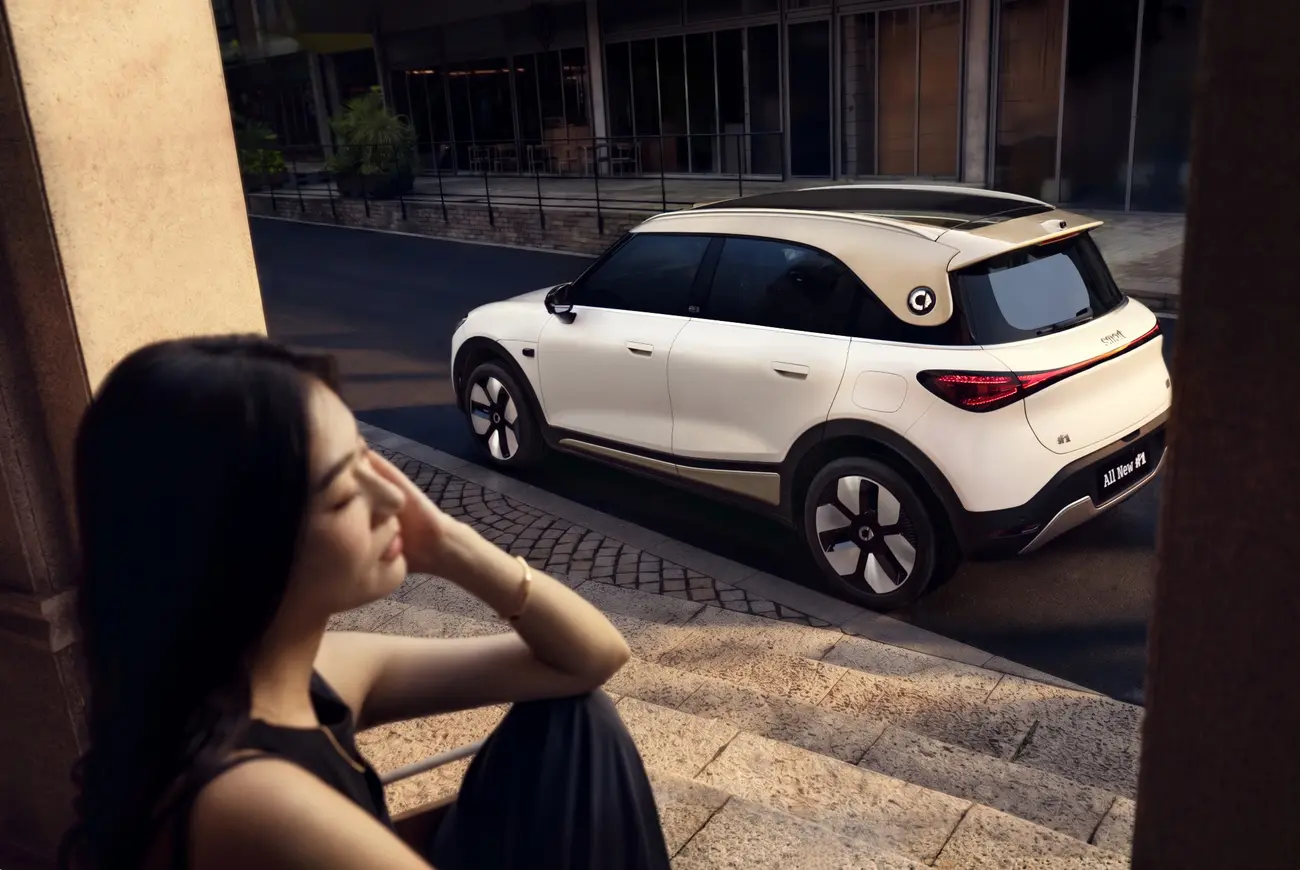
Twelve minutes. That's the number that matters on the Smart #1 facelift 800V
Ten to 80 per cent in around twelve minutes — less time than a coffee and a bathroom stop at an A1 service area. The Smart #1 facelift 800V, revealed on 28 July and launching in China on 6 August 2026, swaps its 400-volt architecture for an 800-volt silicon carbide (SiC) system and cuts DC charging time from roughly 30 minutes to 12.
One caveat before anyone gets carried away: this car is China-only for now. Nothing has been confirmed for Europe. We'll come back to that — and it matters a lot if you're currently looking at a Smart #1 in a Portuguese showroom.
Smaller battery, 6C charge rate: the trade Smart made
The battery shrinks from 66 kWh to 61.52 kWh. That sounds like a step backwards, and on range it is. But the new cell accepts a 6C charge rate, meaning charging power up to six times its capacity. Do the maths: 61.52 × 6 comes out around 369 kW, which lines up neatly with the 370 kW peak output Smart quotes.
Real-world numbers are more modest. German outlets that went through the spec sheet cite roughly 215 kW average power across the session and a 250 kW real-world peak. Still more than double the 150 kW the current 66 kWh European Smart #1 accepts.
There's one figure nobody is leading with that probably deserves to be: the pack is rated for 3,500 full cycles. At a realistic 350 km per charge, that works out to about 1.2 million kilometres of declared cell life. If you plan to keep the car eight or ten years, that's a stronger argument than the twelve minutes.
Range in 2026: 535 km CLTC, roughly 420 km WLTP
Here's what the upgrade costs. On China's CLTC cycle the facelift claims 535 km, down from 570 km. Converted to Europe's stricter and more realistic WLTP cycle, German estimates land at about 420 km, against the 420-440 km of the current 66 kWh Smart #1 sold in Europe.
So you give up maybe 20 km on paper and get charging that's two to three times quicker. For anyone doing the occasional Lisbon-Porto run, that trade is clearly worth it. For anyone who charges at home overnight, it changes nothing.
Around 60 hp more, and Geely's 16-in-1 drive unit
Output climbs from 200 kW / 272 PS to roughly 245 kW. German sources quote 333 PS, CarNewsChina says 329 hp, and Smart hasn't published an exact figure — so "about 245 kW and 330 hp" at the rear axle is the honest way to put it.
The hardware behind it is Geely's new in-house 16-in-1 drive unit: 12 hardware and 4 software elements in a single block, 93.8% system efficiency on the CLTC cycle, 30% less high-voltage wiring, and under 325 mm tall. The same motor appears in the Galaxy TT and the Lynk and Co 20.
A 15.4-inch screen, new electronics brain — and a LiDAR that won't make the trip
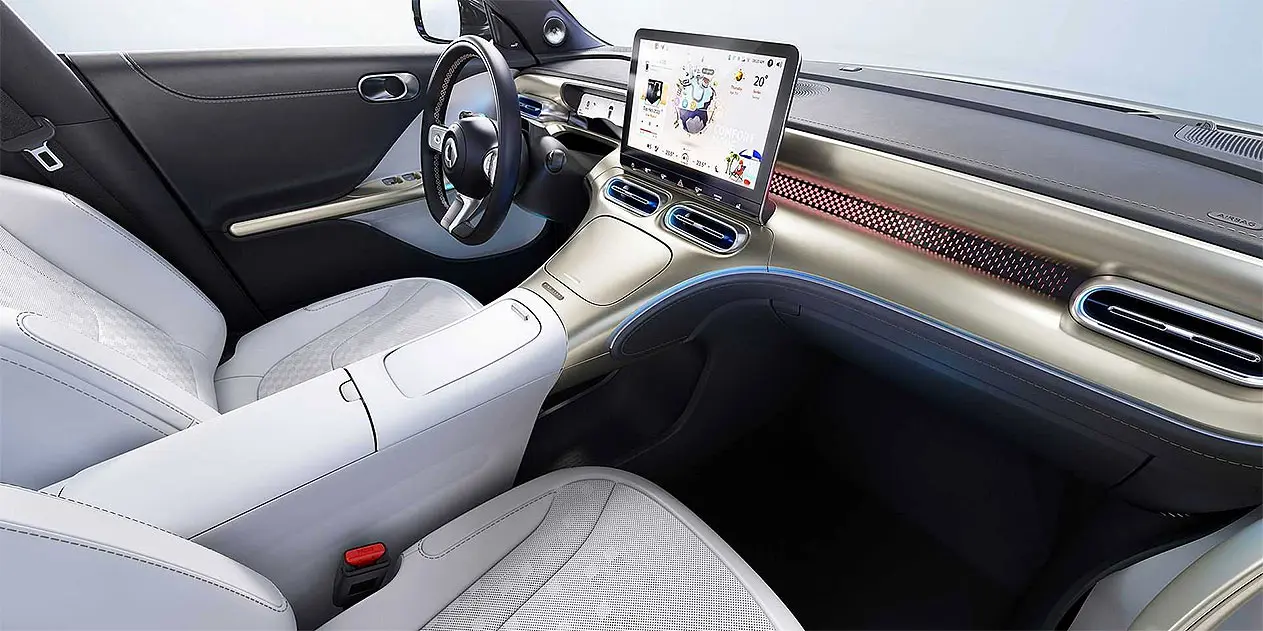
Inside, the central display grows from 12.8 to 15.4 inches at 2.5K resolution, driven by a 4 nm processor (Dragon Eagle / Longying 6P) running Flyme Auto. The head-up display has been upgraded and the whole car moves to the new AI-based EEA4.0 electronic architecture.
The driver-assistance chapter is the flashiest part and the least likely to survive the journey west. The Chinese car gets 31 sensors including a roof-mounted LiDAR, an Nvidia Orin Y chip with 200 TOPS of compute, map-free navigate-on-autopilot for both city streets and motorways, and all-scenario automated parking. The outlets covering the launch expect this suite to be scaled back for Europe on regulatory grounds.
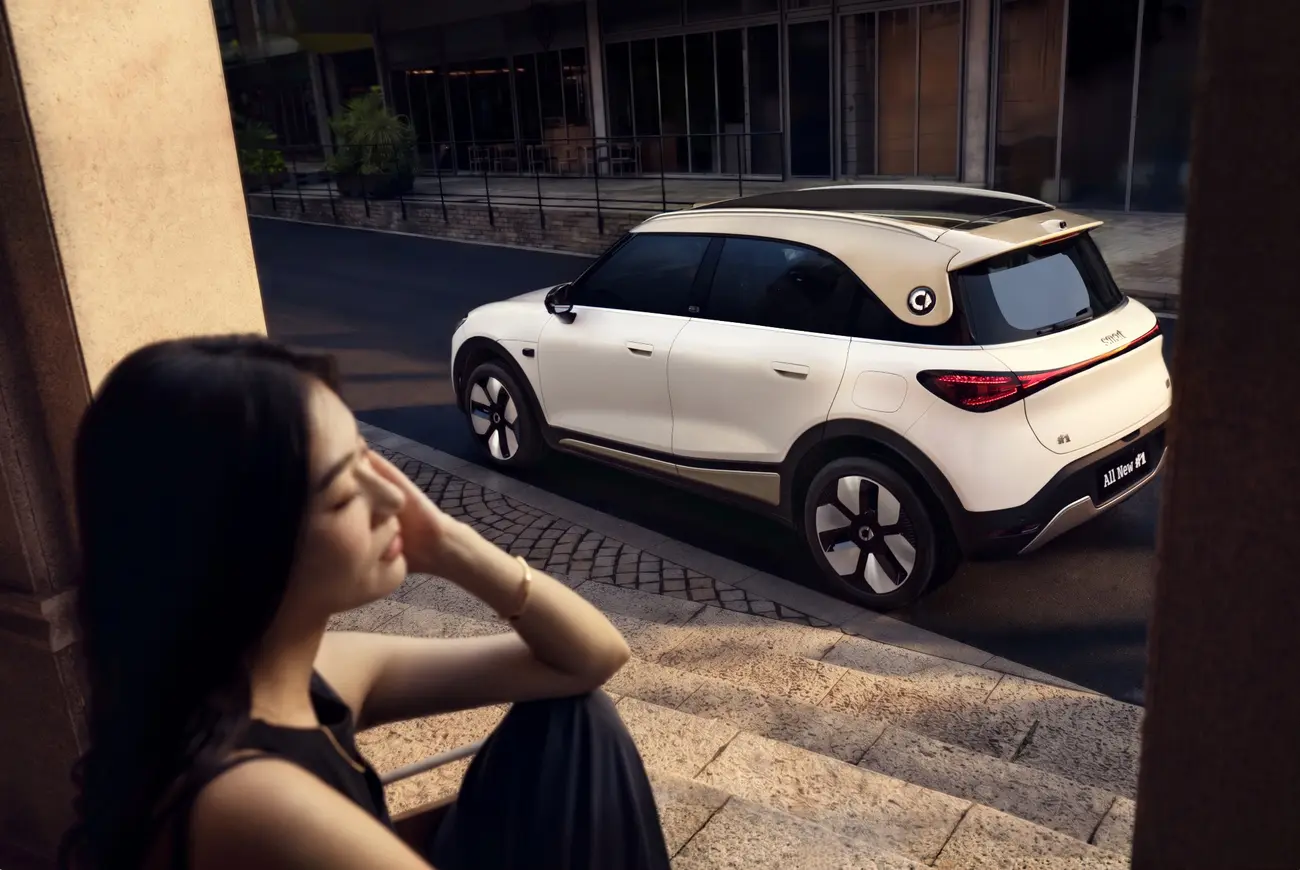
Outside, the changes are subtle: conventional semi-hidden door handles replacing the flush ones, forced by new Chinese safety rules; lighter 19-inch wheels; a revised rear spoiler with an integrated camera; and two new colours, Blue Gold and White Gold. In total Smart claims more than 200 product and equipment updates.
Specs: current European Smart #1 vs the Chinese facelift
| Specification | Current European Smart #1 (66 kWh) | Chinese facelift (August 2026) |
|---|---|---|
| Architecture | 400 V | 800 V silicon carbide |
| Battery | 66 kWh gross / 62 kWh usable | 61.52 kWh |
| Charge rate | about 2.3C | 6C |
| DC power | 150 kW | 370 kW claimed; about 215 kW average and 250 kW peak in practice |
| 10-80% DC | about 30 min | about 12 min |
| Range | about 440 km WLTP / 570 km CLTC | 535 km CLTC (about 420 km WLTP estimated) |
| Motor output | 200 kW / 272 PS | about 245 kW / 330 hp |
| Battery cycles | n/a | 3,500 full cycles |
| Central screen | 12.8 in | 15.4 in 2.5K |
| Length / width / height | 4,300 / 1,800 / 1,600 mm | 4,270 / 1,822 / 1,636 mm |
| Wheelbase | 2,750 mm | 2,750 mm |
Can Portuguese chargers actually use the Smart #1's 800V?
Partly. The MOBI.E network — Portugal's national public charging network — is still overwhelmingly made up of DC posts between 50 and 180 kW, with 350 kW units concentrated at motorway service areas and a handful of urban hubs. Plug into a 150 kW charger and the facelifted Smart #1 charges at the same speed as today's car. An 800-volt architecture cannot conjure power the charger doesn't have.
Where it pays off is at the ultra-rapid hubs on the A1, A2 and A6, where a 250 kW peak turns into stops of barely over ten minutes. And there's a secondary effect worth knowing: an 800-volt system holds high power for longer across the charging curve instead of spiking and tailing off. Even on a 180 kW post, that means less time standing around.
When does the Smart #1 facelift reach Portugal?
The honest answer is that nobody knows. What we do know:
- The 6 August 2026 launch is China-only.
- Electrive considers a European launch in 2026 unlikely and points to 2027 as the earliest realistic timeframe.
- Mbpassion.de is more cautious still: for Europe nothing is confirmed, neither timing nor specification.
- If it does arrive, it will almost certainly come with a reduced sensor package compared with the Chinese car.
For a buyer in Portugal that means any price, date or European spec sheet you read over the coming months is speculation. Smart Portugal doesn't have numbers to give either.
Frequently Asked Questions
There is no confirmed date. The 6 August 2026 launch is China-only, and Electrive points to 2027 as the earliest realistic European timeframe, while mbpassion.de stresses that nothing is confirmed for Europe at all — neither timing nor specification. If it does reach Portugal, it will almost certainly arrive with a reduced sensor package compared with the Chinese car's 31 sensors and roof LiDAR, for regulatory reasons.
No European price has been announced, and Smart Portugal has no figures to give either. As a reference for the current car, the 66 kWh Smart #1 lists from €34,290 including VAT in Ireland and between £29,960 and £44,960 in the UK. In Portugal every electric version is exempt from ISV (vehicle registration tax) and pays a reduced IUC (annual road tax), which already helps the bottom line — though anything landing in Europe in 2027 adds logistics costs and import duties.
Only at the fastest sites. The MOBI.E network is still dominated by 50-180 kW DC posts, with 350 kW units concentrated at A1, A2 and A6 motorway service areas and a handful of urban hubs. At those hubs the 250 kW real-world peak turns into stops of barely over ten minutes; on a 150 kW post the facelift charges no faster than today's car. The indirect benefit of 800 volts is holding high power for longer across the charging curve, which shortens the stop even on a 180 kW charger.
Not by much. The facelift claims 535 km on the CLTC cycle versus 570 km before, which translates to an estimated 420 km WLTP against the 420-440 km of the current 66 kWh European Smart #1. That is roughly 20 km on paper traded for charging that is two to three times quicker. The cell is also rated for 3,500 full cycles — about 1.2 million kilometres at a realistic 350 km per charge.
If you need a car within the next twelve months, waiting makes little sense: the facelift may never arrive in Europe in this form, and the current Smart #1 remains a good 4.3 m compact electric SUV with a 273-litre boot plus a 15-litre frunk and 1,600 kg of braked towing capacity. Waiting only adds up if you can hold out to 2027 and fast charging genuinely decides your day — no home charger, plenty of motorway kilometres. It is worth noting the facelift is a response to weak demand in China, where Smart sold just 5,350 units of the #1 between January and June 2026, down 47.6% year on year — cars in that position often launch more aggressively priced.
Should you wait for the new Smart #1?
It depends how long you're willing to wait for a car that may never arrive in this form.
If you need a car within the next twelve months, waiting makes no sense. The current Smart #1 is still a good compact electric SUV — 4.3 m long, a 2,750 mm wheelbase, a 273-litre boot plus a 15-litre frunk, 1,600 kg braked towing — and it benefits today from Portugal's EV tax treatment: exemption from ISV (the vehicle registration tax) and a reduced IUC (annual road tax). In Ireland, a 66 kWh Pro+ lists at €34,290 including VAT, which is a useful reference point for what the car costs on this side of Europe.
If you can hold out until 2027 and fast charging genuinely decides your day — no home charger, lots of motorway kilometres — then there's a case for waiting. With one condition: follow the official announcements rather than counting on them.
It's also worth understanding what this facelift is a response to. Smart delivered just 5,350 units of the #1 in China between January and June 2026, a 47.6% year-on-year drop. The 800 volts and the twelve minutes aren't only an engineering flex — they're an answer to falling sales. Cars born of that kind of urgency tend to reach the market priced more aggressively than expected.