
Skoda Elroq Versions in Portugal: Motors, Batteries and Range Compared
Published: 18/10/2026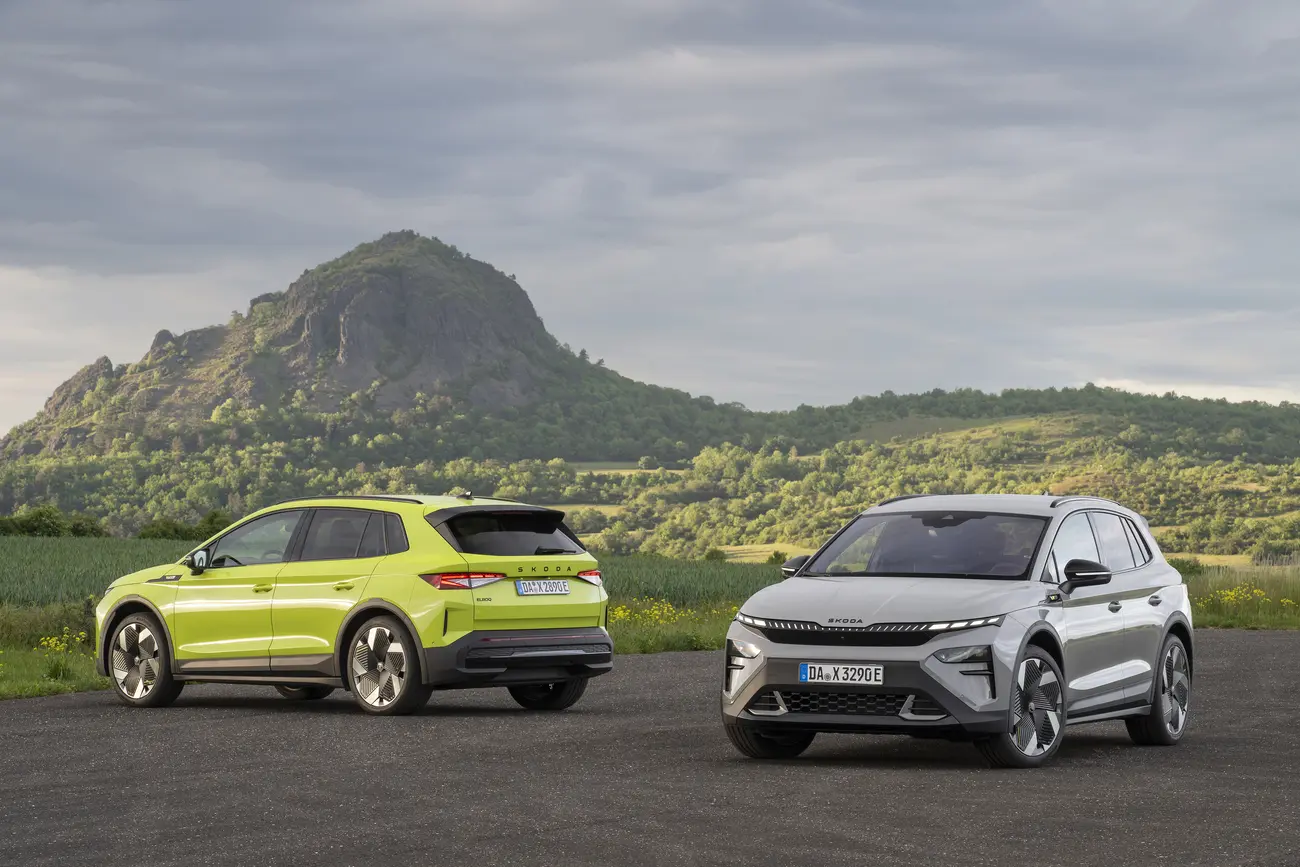
Skoda Elroq versions in Portugal: what changed for 2026
Four versions, two battery chemistries and outputs from 190 to 340 hp. That is the Elroq line-up after the model-year 2027 update, which Škoda announced in March 2026 and started building in mid-2026. If you're shopping for one, it's worth knowing that the Skoda Elroq versions in today's configurator are not the ones described in most Portuguese reviews you'll find online.
The biggest change: the Elroq 50 is gone. The new range starts with the 60, now with an LFP battery, and moves up through the 85, the all-wheel-drive 85x and the sporty RS. The 50 still exists, but only on the used market.
Some context on why the car matters. In 2025 the Elroq was Europe's second best-selling EV, with more than 95,300 deliveries, and it was named German Car of the Year 2026. Over half of all 2025 orders were for the 85.
Skoda Elroq specs: all four versions side by side
All figures below are Škoda's official numbers for model year 2027, filled in with EV Database data where the brand doesn't publish them.
| Elroq 60 | Elroq 85 | Elroq 85x | Elroq RS | |
|---|---|---|---|---|
| Battery (gross/net) | 61/58 kWh LFP | 82/77 kWh NMC | 82/77 kWh NMC | 82/77 kWh NMC |
| Power | 140 kW (190 hp) | 210 kW (286 hp) | 220 kW (299 hp) | 250 kW (340 hp) |
| Torque | 350 Nm | 545 Nm | 679 Nm | 679 Nm |
| Drive | Rear | Rear | All-wheel | All-wheel |
| 0-100 km/h | 8.5 s | 6.6 s | 6.2 s | 5.4 s |
| Top speed | 160 km/h | 180 km/h | 180 km/h | 180 km/h |
| WLTP range | up to 453 km | up to 576 km | up to 576 km | up to 561 km |
| Max DC charging | 105 kW | 165 kW | 165 kW | 165 kW |
| DC 10-80% | 26 min | 29 min | 29 min | 29 min |
| AC onboard charger | 11 kW | 11 kW | 11 kW | 11 kW |
| Braked towing | 1,000-1,200 kg | 1,800 kg | 1,800 kg | 1,800 kg |
| Weight (EU) | 2,032 kg | 2,131 kg | 2,198 kg | 2,218 kg |
Shared across the range: 4,488 mm long, 1,884 mm wide, a 470-litre boot (1,580 litres with the seats folded), a new 21-litre frunk and an 8-year or 160,000 km battery warranty. The heat pump is an option on every version rather than standard equipment, which is a little stingy for this segment.
Skoda Elroq batteries: LFP in the 60, NMC everywhere else
The split is simple. The Elroq 60 now uses LFP (lithium iron phosphate) cells with 58 kWh usable, built on a new cell-to-pack line in Mladá Boleslav that started up at the end of February 2026. The 85, 85x and RS keep the 77 kWh usable NMC pack from the MEB platform.
In practice, LFP copes better with frequent charging to 100% and tends to age more slowly, but it's less energy-dense and charges more slowly on DC. NMC packs more range into the same space. If you charge at home every night, LFP makes a lot of sense.
Skoda Elroq 60 LFP: a new kind of entry model
The new 60 debuts the APP350 motor, replacing the APP310. Power dips slightly, from 150 kW to 140 kW (190 hp), but torque rises to 350 Nm and efficiency improves. It does 0-100 km/h in 8.5 seconds and tops out at 160 km/h.
WLTP range reaches 453 km (408 km at the worst-case end, with more equipment fitted). EV Database estimates about 345 km of real-world combined range, and around 315 km on the motorway at 110 km/h in mild weather. Lisbon to Porto is roughly 300 km, so it's doable without stopping, but with little to spare.
The weak spot is fast charging: a 105 kW peak and 10-80% in 26 minutes. On a 50 kW charger, still common on MOBI.E (Portugal's national public charging network), the same top-up takes about 57 minutes. At home, an 11 kW wallbox fills the battery from 0 to 100% in 6h15.
Skoda Elroq 60 vs 85: which one to pick
The real-world range gap is about 100 km (345 vs 450 km, according to EV Database). The 85 also brings 96 hp more, charges at 165 kW and tows 1,800 kg instead of 1,000-1,200 kg.
If most of your driving is daily commuting around Lisbon, Porto or Braga and you can charge at home, the 60 covers your needs for a lot less money. If you regularly drive Lisbon to the Algarve or cross the country, the 85 is the more relaxed choice. There's a reason it's the best seller.
Elroq 85: the sweet spot most buyers choose
210 kW (286 hp), 545 Nm and rear-wheel drive. The 85 hits 0-100 km/h in 6.6 seconds, reaches 180 km/h and has the longest range in the line-up: up to 576 km WLTP. On real roads, EV Database points to 450 km combined and 415 km on the motorway in mild weather.
DC charging rises to 165 kW, with 10-80% in 29 minutes. On AC, 0 to 100% at 11 kW takes 8h15. It's not the quickest-charging car in its class, since it runs on a 400 V architecture, but a half-hour stop at a motorway fast charger handles most long trips.
Skoda Elroq 85x all-wheel drive: more power with the update
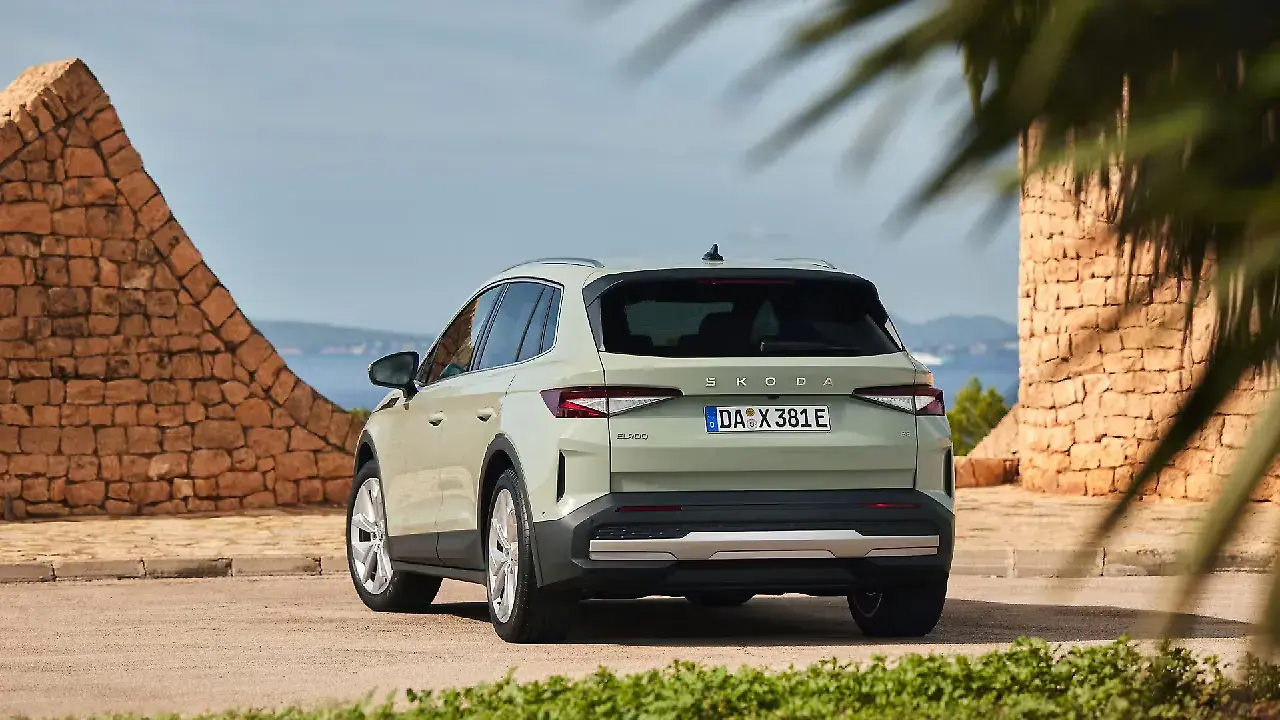
The 85x uses the same 77 kWh battery as the 85, but adds a second motor on the front axle. With the update, power went up from 210 kW to 220 kW (299 hp) and torque reaches 679 Nm. Škoda quotes 0-100 km/h in 6.2 seconds.
The good news is that all-wheel drive barely dents the range: the same 576 km WLTP as the 85, and around 445 km in real use. The trade-offs are weight (67 kg more) and the turning circle, which grows from 9.3 m on the 60 to 10.8 m.
Skoda Elroq 85 vs 85x: the differences that matter
In Portugal, all-wheel drive mostly pays off if you live among mountain roads, deal with frequent wet weather up north, or tow regularly. For most drivers, the rear-wheel-drive 85 is more than enough. The price gap between the two is around €2,250-2,300 in Italy and Germany.
Skoda Elroq RS: the sporty flagship
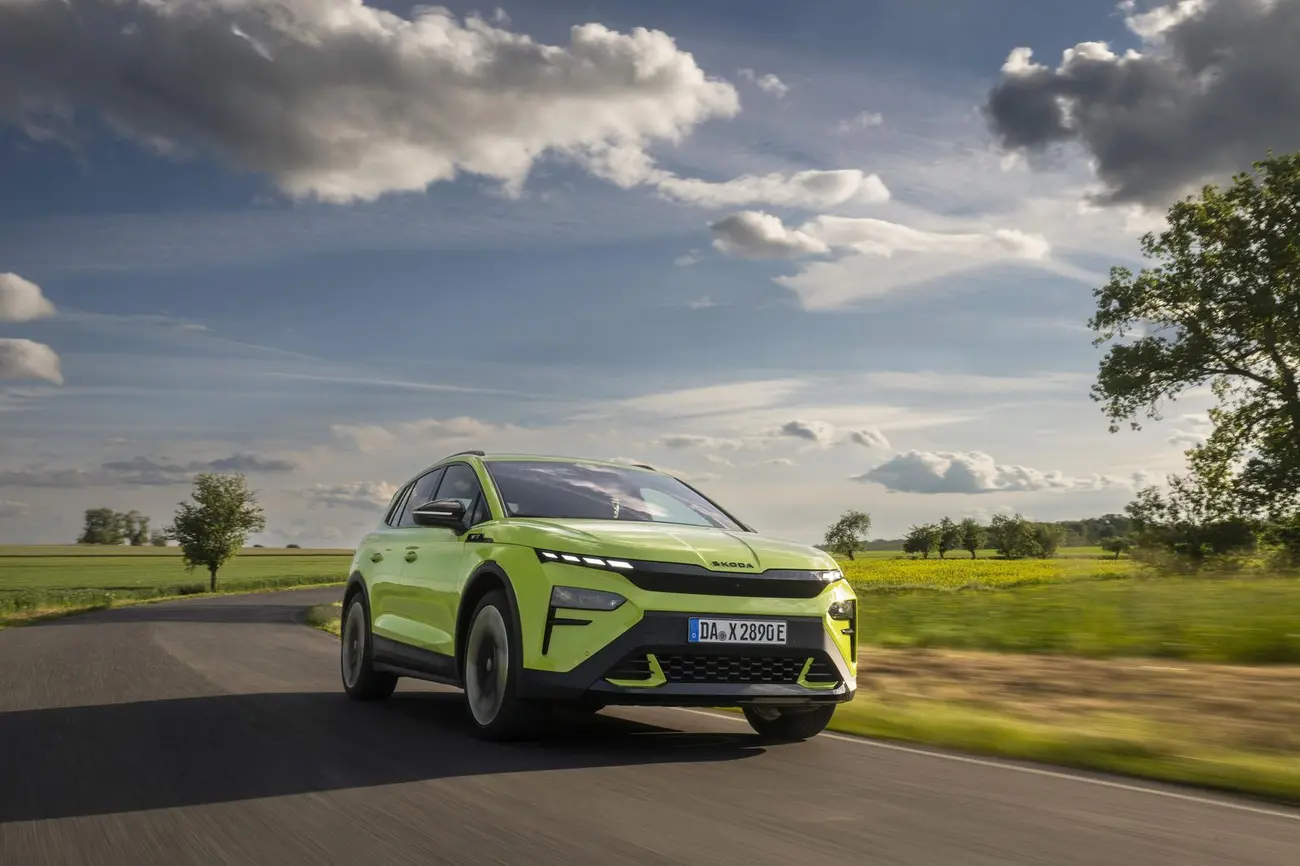
340 hp (250 kW), 679 Nm, all-wheel drive and 0-100 km/h in 5.4 seconds. The RS is the version for drivers who want performance, with the top speed capped at 180 km/h like the rest of the 77 kWh range.
Be careful with the figures floating around: some articles still list a 79 kWh usable battery and 185 kW DC charging, which belong to the earlier RS. For the current car, Škoda quotes 82/77 kWh and a 165 kW peak, with 10-80% in 29 minutes. WLTP range sits between 516 and 561 km depending on spec, and around 445 km in real-world driving, practically the same as the 85x.
How much does the Skoda Elroq cost in Portugal
We'll be straight with you: we couldn't find an official Portuguese price list for the 2027 range. So instead of making numbers up, here are list prices from other European markets as a reference point.
| Version | Italy | Germany | Netherlands |
|---|---|---|---|
| Elroq 60 | €38,300 | €37,390 | €37,990 |
| Elroq 85 | €44,550 | €46,390 | €44,490 |
| Elroq 85x | €46,800 | €48,690 | n/a |
| Elroq RS | €52,050 | €54,790 | €52,490 |
These are each country's own list prices including local VAT (22% in Italy, 19% in Germany, 21% in the Netherlands), not Portuguese prices. Since EVs in Portugal are exempt from ISV (the vehicle registration tax) and VAT here is 23%, it's reasonable to expect figures in the same ballpark, but always check with a dealer before deciding.
Tax benefits in Portugal
Whichever version you pick, the Elroq falls under the EV regime: no ISV at purchase and no annual IUC (road tax). For companies, the exemption from tributação autónoma (the autonomous tax on company cars) and VAT deduction apply to EVs with an acquisition cost up to €62,500, which covers every version at the European prices above.
Used Skoda Elroq: the older 50 and NMC 60
The used market already has low-mileage 2025 and 2026 Elroqs, and that's where you'll find versions no longer sold new:
- Elroq 50: 125 kW (170 hp) and 52 kWh usable. Discontinued in 2026. The cheapest way in, but with the shortest range in the family.
- Elroq 60 (NMC): 150 kW and 59 kWh usable. Slightly quicker than the new LFP 60; EV Database rates it about 6% faster in acceleration with around 5 km more range.
- Elroq 85 (2025): in June 2025 Škoda switched from LG to CATL cells and peak DC charging dropped from 175 kW to 135 kW, although 10-80% times stayed close to 28 minutes.
- Earlier 85x and RS: 210 kW on the 85x and a 79 kWh battery on the RS.
One detail worth knowing: the new Android-based infotainment only comes on cars built after the update. It can't be added to older cars through a software update. The same goes for 3.6 kW V2L, one-pedal driving and the 21-litre frunk.
Frequently Asked Questions
There is no official public Portuguese price list yet for the model-year 2027 range. For reference, the Elroq costs from €37,390 (60) to €54,790 (RS) in Germany and from €38,300 to €52,050 in Italy, including each country's VAT. In Portugal every version is exempt from ISV purchase tax and annual IUC, and companies avoid autonomous taxation on EVs costing up to €62,500. Always confirm the final price with a Škoda dealer.
At 110 km/h in mild weather, EV Database estimates about 315 km for the Elroq 60 and 410-415 km for the 85, 85x and RS. In winter, at -10 °C with heating on, this drops to roughly 245 km for the 60 and 315-320 km for the 77 kWh versions. Those figures are well below the 453 to 576 km WLTP ratings.
On a DC fast charger, Škoda quotes 26 minutes for the Elroq 60 (105 kW peak) and 29 minutes for the 85, 85x and RS (165 kW peak). At home on an 11 kW wallbox, a full 0-100% charge takes about 6h15 for the 60 and 8h15 for the 77 kWh versions. On a 50 kW MOBI.E charger, a 10-80% session on the Elroq 60 takes about 57 minutes.
Since the 2026 update, the Elroq 85, 85x and RS can tow up to 1,800 kg braked. The Elroq 60 keeps 1,000 kg on a 12% gradient and 1,200 kg on an 8% gradient. The unbraked limit is 750 kg on the versions for which EV Database publishes that figure.
Yes. The model-year 2027 update, announced on 23 March 2026 with orders from April, dropped the Elroq 50 (125 kW, 52 kWh net), and the range now starts with the 60 LFP. The 50 is only available used, as is the older 150 kW 60 NMC. These earlier cars do not get the new Android infotainment, 3.6 kW V2L or the 21-litre frunk, but they keep the 8-year or 160,000 km battery warranty.
Which Skoda Elroq version to buy in Portugal
For most buyers here, the Elroq 85 is the best-balanced version: the longest range in the line-up, 165 kW charging and a mid-range price. The LFP 60 is the sensible pick if you mostly drive in town and charge at home. The 85x earns its place if you need all-wheel drive or tow often, and the RS is for those who put performance first and are willing to pay for it.
The next thing to watch is Škoda Portugal's official model-year 2027 price list. Compare it against used 2025 Elroqs, which can be a cheaper way into 85 territory.