
Used EV Battery Health in Portugal: What AVILOO's 20-Model Study Shows
Published: 09/09/2026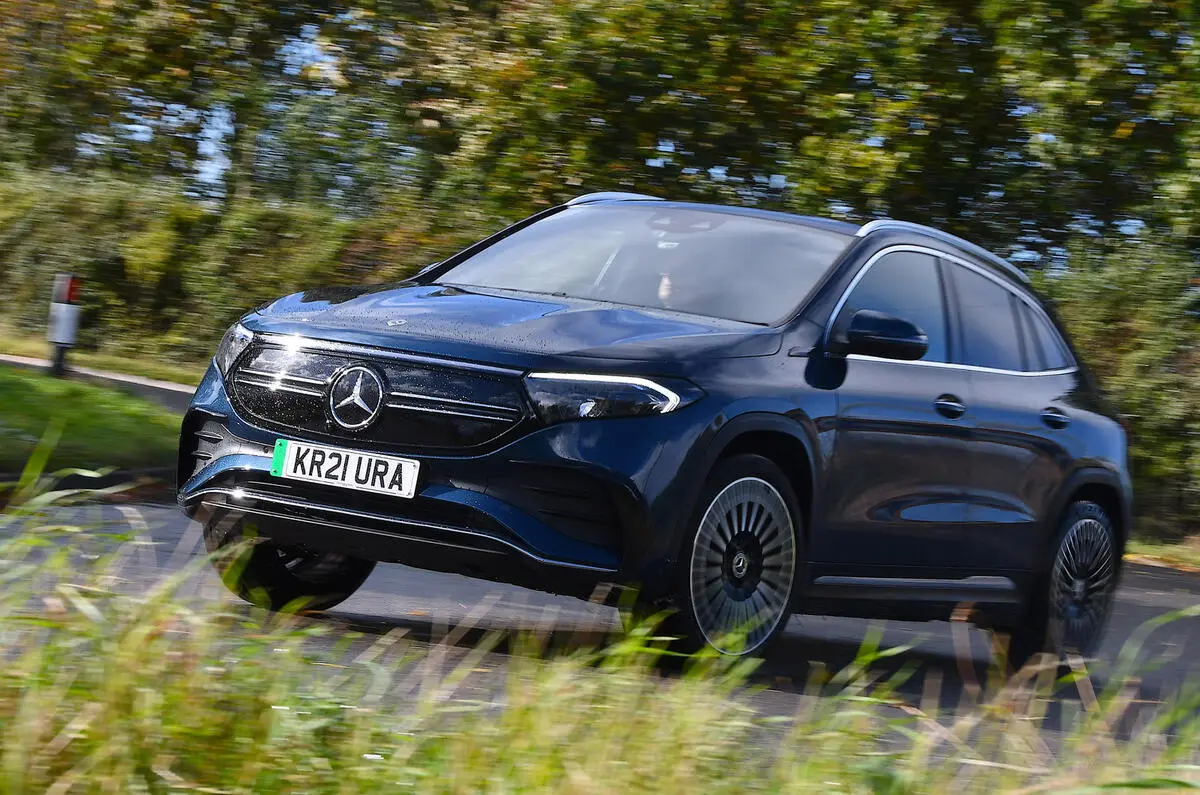
Half a million tests later, we know how EV batteries age
Two Nissan Leafs of the same age with the same 150,000 km on the clock can be 13.5 percentage points apart in battery health. Same model, same paper wear, and a huge gap in the thing that actually matters: how far the car still goes on a charge. That is the single most important finding of the first AVILOO Certified EV Battery Report, published on 2 September 2026 by the Austrian firm that has become Europe's reference for independent battery diagnostics.
The report draws on more than 500,000 individual tests performed on used EVs between 2022 and 2026, across 20 popular models. It is by far the largest public dataset on used EV battery health available anywhere. The headline conclusion is good news for buyers: batteries last far longer than the folklore suggests. The practical conclusion is less comfortable — the model average tells you nothing about the specific car sitting in front of you at the dealer.
What SoH means and why the number matters
SoH (State of Health) is the percentage of the original usable capacity a battery can still store. A pack at 95% SoH delivers roughly 95% of the range it gave when new. It is the one figure that governs both how far the car goes per charge and what it is worth when you sell it.
AVILOO measures it with the FLASH Test: about three minutes plugged into the car's OBD port. The clever part is that it does not simply read out the manufacturer's BMS figure — every brand calculates battery health its own way, which makes those numbers useless for comparing models. Instead it runs a statistical model trained on hundreds of thousands of comparable used cars, combining the vehicle's internal health assessment with mileage, age, charge cycles, cell-voltage spread and energy counts. All methods and certificates are TÜV and CARA certified, and coverage extends to over 96% of available brands.
The 20 models, ranked by battery health at 150,000 km
The values below are medians, with 99% confidence bands, measured at fixed mileage milestones. They are not per-car guarantees — they are the centre of a distribution.
| Model | 50,000 km | 150,000 km |
|---|---|---|
| Mercedes-Benz EQA | 96.6% | 94.0% |
| BMW i4 | 95.6% | 93.6% |
| Hyundai Kona Electric | 96.3% | 93.0% |
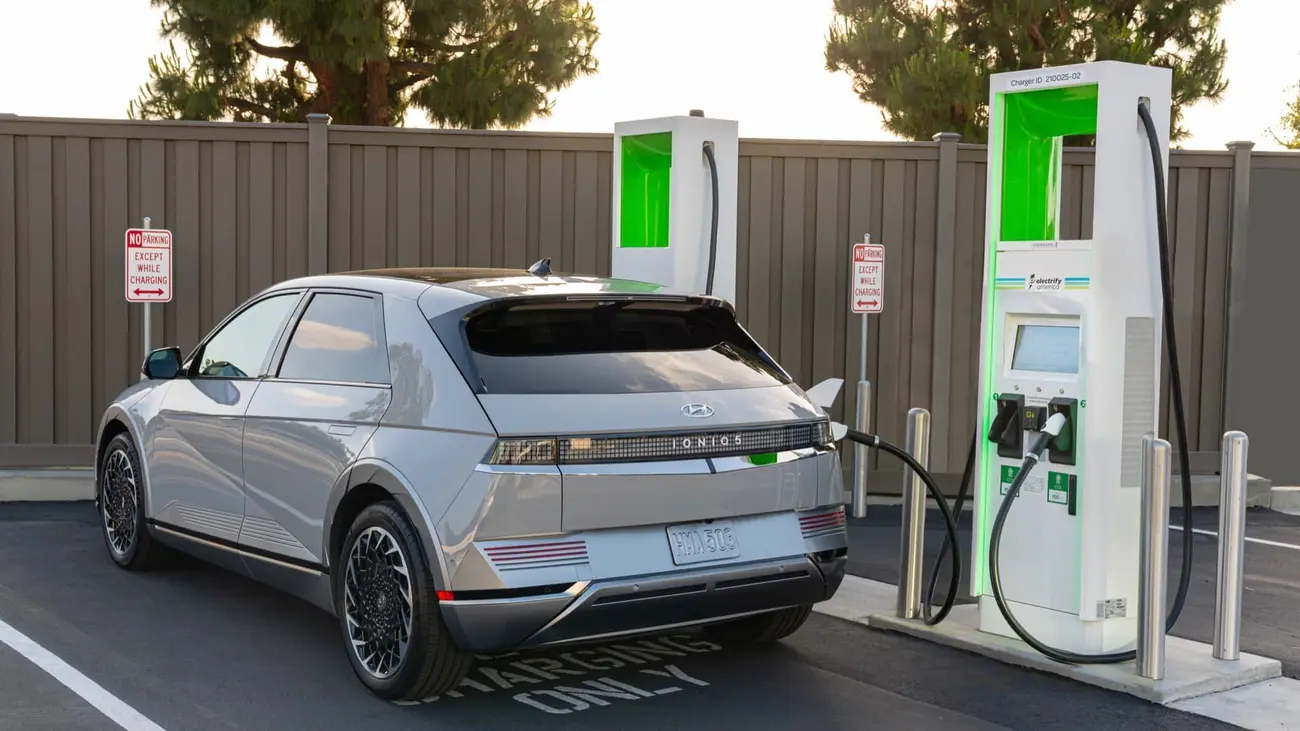
| Hyundai IONIQ 5 | 97.2% | 92.8% |
| Volvo XC40 Recharge | 95.2% | 92.8% |
| Ford Mustang Mach-E | 95.1% | 92.5% |
| Polestar 2 | 95.0% | 92.5% |
| Cupra Born | 94.8% | 91.9% |
| VW ID.3 | 94.6% | 91.8% |
| Audi Q8 e-tron | 95.7% | 91.3% |
| Skoda Enyaq iV | 95.1% | 91.0% |
| Peugeot e-208 | 94.2% | 90.7% |
| Opel Corsa-e | 94.1% | 90.7% |
| VW ID.4 | 95.3% | 90.6% |
| Audi Q4 e-tron | 95.0% | 90.6% |
| Tesla Model Y | 94.5% | 90.3% |
| Tesla Model 3 | 93.8% | 88.9% |
| Renault Zoe | 91.6% | 87.3% |
| MINI Cooper SE | 94.1% | 87.1% |
| Nissan Leaf ZE1 | 91.1% | 86.3% |
Sixteen of the twenty models still hold a median of 90% or better at 150,000 km. The remaining four sit in the 85–90% band. None comes anywhere near the 70% threshold most manufacturers use to trigger a battery warranty claim — which in practice means almost none of these cars will ever earn their owner a replacement pack under warranty.
The report plots the same curve at 100,000 km, but the full model-by-model figures were not released in detail. From what is known, the IONIQ 5 leads that milestone above 95%, with the EQA close behind near 95% and the Kona and i4 around 94% — treat those as indicative until the full data is out.
Why small packs age worse
The pattern at the bottom of the table is no accident. The 40 kWh Leaf, the Zoe, the MINI Cooper SE: all small batteries. To cover the same 150,000 km, a small pack has to complete far more charge cycles than a 78 kWh one — and it is the cycle count, more than the odometer, that wears cells down.
Climate matters too, and that carries a note for our market. Temperature affects both the chemistry of degradation and how quickly a battery accepts charge; cooler climates slow charging rates and shift the wear pattern compared with warmer ones. Portugal is a hot-climate market, with long summers inland and in the Algarve — a car that spent its life fast-charging in the sun does not age the same way as the identical model imported from Norway.
Where it really bites: identical cars, different range
This is the part that should change how you buy used. Between the best and worst example of the same model, AVILOO found SoH gaps of up to 13.5 percentage points.
- Tesla Model Y: up to 11 points, about 46 km of range
- VW ID.4: 11 to 12 points, about 45 km
- Hyundai IONIQ 5: more than 12 points, about 42 km
- Nissan Leaf ZE1: 13.5 points, about 29 km
Converted into real-world range per charge, using AVILOO's own figures: a 78.8 kWh Model Y covers roughly 379 km at 50,000 km and 362 km at 150,000 km; the 77 kWh ID.4 drops from 373 to 354 km; the 72.6 kWh IONIQ 5 from 335 to 319 km; the 40 kWh Leaf from 196 to 185 km.
Now look at what that implies. The median loses 17 km of range on a Model Y between 50,000 and 150,000 km. The spread between individual examples is 46 km. Which specific car you end up with matters nearly three times more than the mileage on the paperwork.
AVILOO chief executive Marcus Berger puts it better than any table: "A difference of ten or fifteen per cent in State of Health is a real difference in range, in what a car is worth, and in what you can rely on it for. You simply can't know where your car sits in that range without testing it independently."
What to demand before you sign, in Portugal
AVILOO launched a Battery Warranty in summer 2026 — a one-year, financially backed guarantee that pays out €3,000 in most European countries if the battery drops below an individually calculated SoH limit over 20,000 km. It is live in the UK, Germany, the Netherlands, Finland, Austria, Belgium, Ireland, Switzerland, France, Sweden, Norway and Denmark. Portugal is not on that list, so do not plan around it here.
What is within reach is the step before it, and it is the one that counts: insist on an independent battery health certificate before you close the deal. Not the dashboard readout, not the spec sheet, not the seller's word — a third-party test on certified equipment. In Portugal, inspection and diagnostics centres such as Dekra run SoH tests for somewhere around €125; confirm the price and availability with your nearest centre before booking. Either way, €125 on a €25,000 car is cheap insurance on the component that carries much of the vehicle's value.
Three practical rules if you are shopping right now:
- Get the certificate in writing, with a date and an odometer reading. A test done two years and 30,000 km ago tells you nothing.
- Compare the SoH against the model median at that mileage — that is exactly what the table above is for. An ID.4 showing 88% at 150,000 km is below par; use it in the negotiation.
- Always test small packs. On a Zoe or a Leaf, five points of SoH eat a far bigger slice of usable range than they do on a 78 kWh SUV.
Frequently Asked Questions
The only reliable way is an independent State of Health (SoH) test carried out by a third party with certified equipment. The AVILOO FLASH Test, for instance, plugs into the car's OBD port and takes around 3 minutes, calculating remaining capacity with a statistical model trained on more than 500,000 real-world tests. In Portugal, diagnostic centres such as Dekra run SoH tests for around 125 euros (check the price and availability at your nearest centre). Always ask for the certificate in writing, with the date and the odometer reading: a test done two years and 30,000 km ago tells you nothing about the car you are buying today.
According to the AVILOO Certified EV Battery Report published on 2 September 2026, 16 of the 20 models analysed still hold a median SoH of 90% or more at 150,000 km, and the remaining four sit in the 85-90% band. The best result is the Mercedes-Benz EQA at 94.0% and the worst the Nissan Leaf ZE1 at 86.7%. Every single one is comfortably above the 70% threshold that typically triggers a manufacturer battery warranty claim (usually 8 years or 160,000 km).
Yes, and that is the study's most useful finding for a used-car buyer. The gap in SoH between the best and worst example of the same model reaches 13.5 percentage points. In practice that means roughly 46 km of range separating two Tesla Model Y, about 45 km between two VW ID.4 and more than 42 km between two Hyundai IONIQ 5 with the same mileage. Neither the dashboard readout nor the spec sheet tells you where a specific car sits within that band; only a test does.
It can be, but only with a test in hand. Smaller packs need more charge cycles to cover the same distance and therefore age faster: at 150,000 km the Nissan Leaf ZE1 (40 kWh) shows a median of 86.7% and the Renault Zoe 87.3%, against 94.0% for the Mercedes EQA. And in a small pack every SoH point counts for more: a 40 kWh Leaf delivers roughly 185 km of real range at 150,000 km, so five points below the median cost you a far bigger slice of daily usability than they would in a 78 kWh SUV.
No. The AVILOO Battery Warranty, launched in summer 2026, pays 3,000 euros in most European countries if the battery drops below an individually calculated SoH limit over 20,000 km within one year, but it is only live in the UK, Germany, the Netherlands, Finland, Austria, Belgium, Ireland, Switzerland, France, Sweden, Norway and Denmark. Portugal is not on the launch list. What a Portuguese buyer can and should do is demand an independent battery health certificate (AVILOO FLASH or equivalent) before signing, then compare the reading with the model's median at that mileage and use the difference in the price negotiation.
The case for buying a used EV just got stronger
Worth putting the myth to bed: a 2019 EV with 150,000 km is not a car with a worn-out battery. On the overwhelming majority of these models it is a car with nine out of every ten kilowatt-hours still there, nowhere near the warranty threshold and entirely up to a Lisbon or Porto commute — and, with charging planned, a Lisbon-Algarve run.
It is no accident that Mercedes-Benz, Volvo and Porsche Holding have each picked AVILOO as their preferred independent battery testing provider for European dealerships, or that leasing giants Ayvens and Arval use it at end of lease while BCA and Cox Automotive have built the FLASH Test into their auction operations. The trade no longer buys used EVs without measuring the battery. Neither should you.