
Rivian R2 in Portugal: Price, Range and Tesla Model Y Comparison
Published: 25/08/2026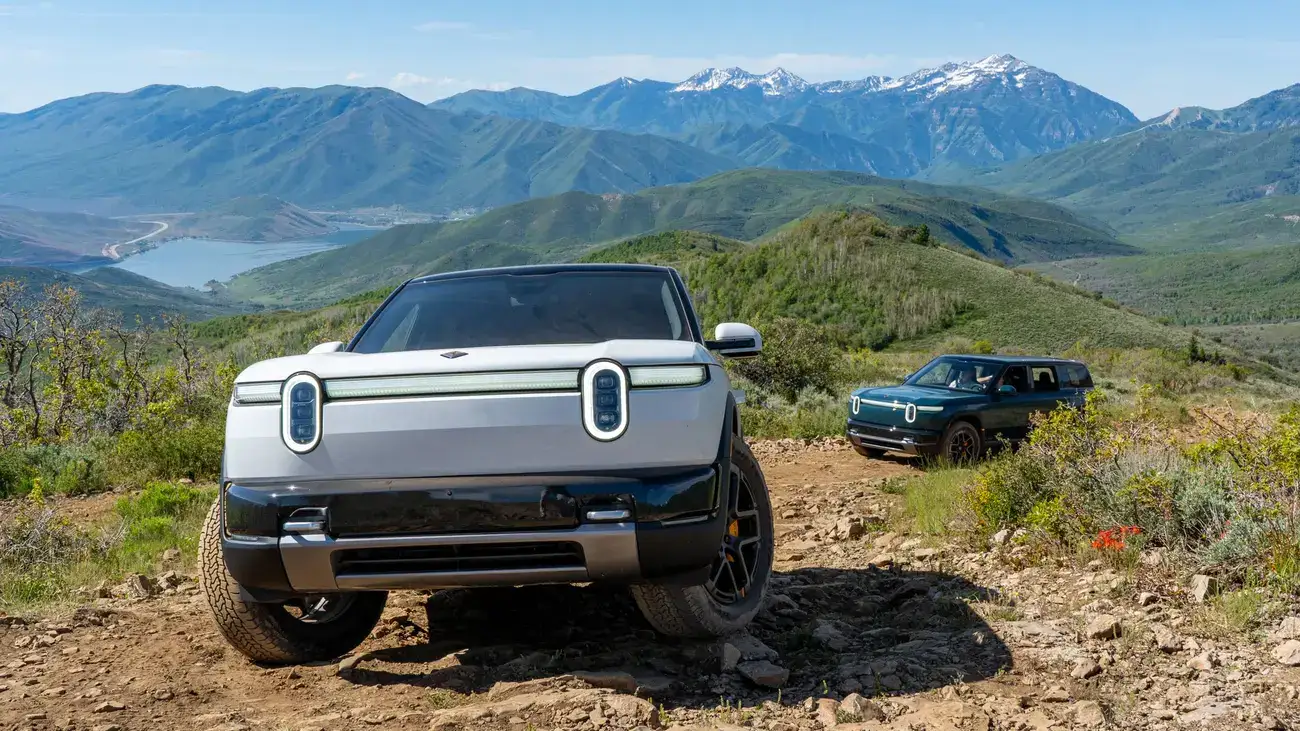
Rivian is delivering the R2 in the US — and quietly deleted Europe's date
On 9 June 2026, the first American customers took delivery of the R2. Four months earlier, Rivian had done something far less celebratory: it quietly removed the 2027 reference from the model's European page. Where a date used to sit, there is now only a sign-up form.
That is the starting point for anyone in Portugal eyeing this electric SUV as a Tesla Model Y alternative. The car exists, it is in series production and it is already on Illinois roads. What remains undefined is when it gets here — and for how much.
Rivian R2 Portugal price: the sum nobody wants to do
In the US the numbers are settled. The Performance Launch Edition starts at $57,990, the Premium at $53,990, the Standard Long Range at $48,490 (due early 2027) and the smaller-battery Standard at $45,000, arriving late 2027. Add $1,495 destination to each.
Converting those figures into euros is not enough. An R2 imported from the US into the European Union pays a 10% tariff on electric vehicles, then local VAT (23% in Portugal), and it still needs homologation changes. Together those add roughly 8,000 to 12,000 euros on top of the converted US price.
Which makes the estimate Rivian itself let slip in Munich look sensible: 40,000 to 50,000 euros in Europe, with the UK from around £45,000. That is precisely where the Model Y sits in Portugal. Good news for anyone waiting: as a pure EV, the R2 is exempt from ISV (Portugal's one-off vehicle registration tax) and pays a token IUC (the annual road tax) — two levies that hit any petrol or diesel equivalent hard.
One honest caveat: none of these figures is confirmed. A company that just pulled its launch date is unlikely to have a European price list locked down.
Range, battery and charging: the R2 spec sheet
The R2 launches with an 87.9 kWh structural battery pack. EPA-rated range runs from 275 to 345 miles depending on trim — 443 to 555 km. Performance and Premium versions sit at around 330 miles, about 531 km.
Worth noting: the EPA cycle is more conservative than Europe's WLTP. If and when the R2 is homologated here, the published numbers will probably rise without the car travelling a metre further. In practice, a 531 km EPA version covers Lisbon to Porto without stopping, with comfortable margin for winter and for motorway cruising at 120 km/h.
Fast charging peaks at 217 kW, with Rivian quoting 10-80% in about 29 minutes. Translated into a real journey: one coffee stop at an A1 service area gives back more range than you need for the rest of the drive.
There is a technical wrinkle with real consequences, though. The R2 was born with a native NACS port, Tesla's standard, which in the US opens up more than 21,000 Superchargers without an adapter. Europe runs on CCS2. The European version will have to switch connectors to work on the MOBI.E network — Portugal's national public charging system — and on motorway rapid chargers. Another job on the list before any delivery happens.
Rivian R2 vs Tesla Model Y: where each one wins
| Rivian R2 | Tesla Model Y | |
|---|---|---|
| Segment | Midsize electric SUV, 5 seats | Midsize electric SUV, 5 seats |
| Length | 4.715 m | about 4.79 m |
| Battery (launch) | 87.9 kWh structural | varies by version |
| Range | 443 to 555 km (EPA) | varies by version |
| Power (top trim) | 656 hp, 826 Nm, dual-motor AWD | varies by version |
| 0-100 km/h | 3.6 s (Performance Launch Edition) | varies by version |
| DC charging | 217 kW peak, 10-80% in 29 min | varies by version |
| Towing capacity | 2,268 kg | 1,600 kg (braked) |
| Estimated European price | 40,000 to 50,000 euros | already on sale in Portugal |
The R2's most concrete argument is towing. Its 5,000 lb rating — 2,268 kg — leaves the Model Y more than 600 kg behind. If you pull a caravan, a work trailer or a boat, that is not brochure trivia. It is the difference between can and cannot.
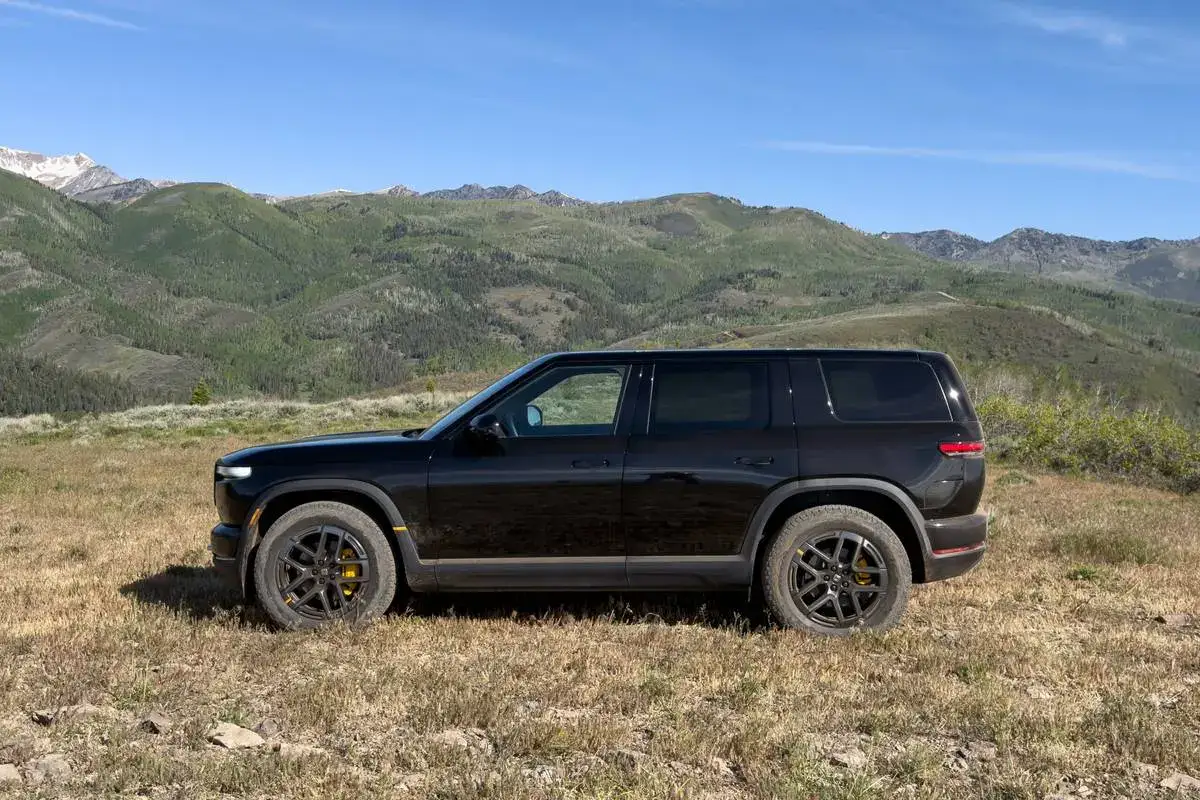
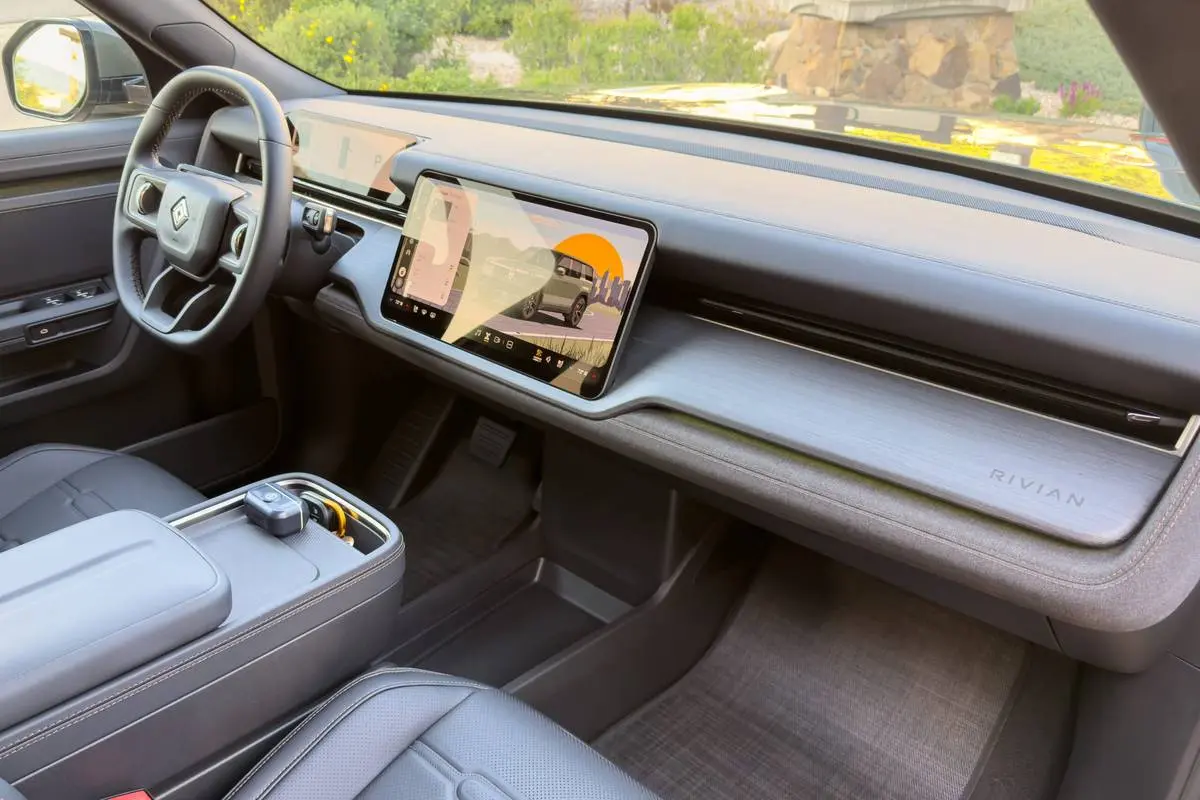
The rest of the case is competitive without being crushing. Dual motors with 656 hp and 3.6 seconds to 100 km/h at the top of the range, single-, dual- and tri-motor versions planned, dimensions of 4.715 x 1.90 x 1.70 m and 249 mm of ground clearance — more proper SUV, less low-slung crossover. Inside, Rivian fixed R1 complaints: two gloveboxes, a torch built into the door, a removable speaker, panoramic glass roof, seats that fold completely flat, and infotainment running on Unreal Engine. There is also Camp Mode, Pet Mode and vehicle-to-load for powering equipment off the car.
And there is an argument that appears on no spec sheet. Rivian CEO RJ Scaringe has publicly stressed the distance between his brand and Tesla, particularly in communication and in Elon Musk's political profile. For a slice of buyers who want a premium EV without the discourse attached, that counts.
The European rivals you can already buy today
In Portugal the R2 will not just find the Model Y waiting. The Skoda Enyaq, Renault Scenic E-Tech and Peugeot e-3008 occupy the same price band, with dealer networks in place, parts on the shelf and delivery in weeks. Add the Koreans and the wave of Chinese electric SUVs already dominating the sharper end of the price lists.
That is where waiting costs you. A buyer who needs a car in 2026 has half a dozen solid options around 40,000 euros. Holding out for the R2 means holding out for a model with no date, no European price and not a single branded service centre on Portuguese soil.
Why the 2027 date vanished
The likeliest reading is straightforward: Rivian is protecting its American launch. The R2 is the brand's first high-volume model, built at Normal, Illinois since April 2026, and a European rollout would pile on regulatory complexity, logistics, service coverage and, for Britain, right-hand drive.
The move repeated what had already happened in Canada, where launch slipped to 2027 and pricing came off the website. Pulling a published date rarely signals acceleration. Several analysts now point to 2028 or later for Europe — with no official confirmation of a delay, to be fair.
In the R2's favour, some European homework is already done. The bonnet and front end were designed to meet EU pedestrian-impact rules, and the car's proportions and footprint were shaped for European cities, unlike the far larger R1. Selling here still requires amber indicators, a rear fog light, and the cybersecurity and data-protection type approval the EU demands. None of it is impossible. All of it takes time.
Frequently Asked Questions
Rivian has signalled a 40,000 to 50,000 euro band for Europe, but there is no official Portuguese price list. On top of US prices ($45,000 to $57,990, plus $1,495 destination) come a 10% import tariff on electric vehicles, 23% Portuguese VAT and homologation changes, adding roughly 8,000 to 12,000 euros to the converted figure. As a pure EV the R2 is exempt from ISV (the one-off registration tax) and pays only a token IUC road tax, which offsets part of that increase compared with a petrol or diesel equivalent.
There is no date. The official target was 2027, with first deliveries in the second half, but in early 2026 Rivian removed that date from the R2's European page and left only a sign-up form — the same move it made in Canada. Several analysts now point to 2028 or later, with no official confirmation of a delay. In the US the car is already real: series production since April 2026 and first deliveries on 9 June 2026.
With its 87.9 kWh structural battery pack, the R2 is EPA-rated between 275 and 345 miles depending on trim, or 443 to 555 km; Performance and Premium versions sit at 531 km. The US EPA cycle is more conservative than Europe's WLTP, so figures published here should be higher without the car travelling any further. In practice a 531 km version covers Lisbon to Porto without stopping, with margin for 120 km/h motorway cruising and for winter.
It will have to. The R2 was born with a native NACS port, Tesla's standard, which in the US gives it direct access to more than 21,000 Superchargers, but Europe runs on CCS2. Without that connector change the car cannot use Portugal's MOBI.E network or motorway rapid chargers. DC charging peaks at 217 kW with 10-80% in about 29 minutes, and those figures hold whichever connector is fitted.
It depends on your timeline. Anyone who needs a car in 2026 or 2027 has alternatives available in weeks with a service network already in place — Tesla Model Y, Skoda Enyaq, Renault Scenic E-Tech and Peugeot e-3008, all in the same price band. Waiting for the R2 means waiting for a model with no confirmed European date, no euro pricing and not a single brand workshop in Portugal. The strongest argument for waiting is towing: 2,268 kg against the Model Y's 1,600 kg braked limit, a decisive gap for anyone pulling a caravan or trailer.
What to watch from here
Two signals matter more than any rumour. The first is the Georgia plant, opening in 2028 with initial capacity of 300,000 units a year — without that volume there is no way to supply Europe properly. The second is the Volkswagen Group partnership: VW invested $5.8 billion in Rivian in 2024 under a technology-sharing deal, and a European partner of that size could speed up homologation and distribution.
Until then, anyone shopping for an electric SUV in this bracket in Portugal will have to decide with what is on the market today. Signing up to Rivian's European waiting list is worth doing. Planning a 2026 or 2027 purchase around the R2 means betting on a date the brand itself chose to erase.