
Renault 5 Five in Portugal: Price, LFP Battery and Standard Fast Charging
Published: 08/09/2026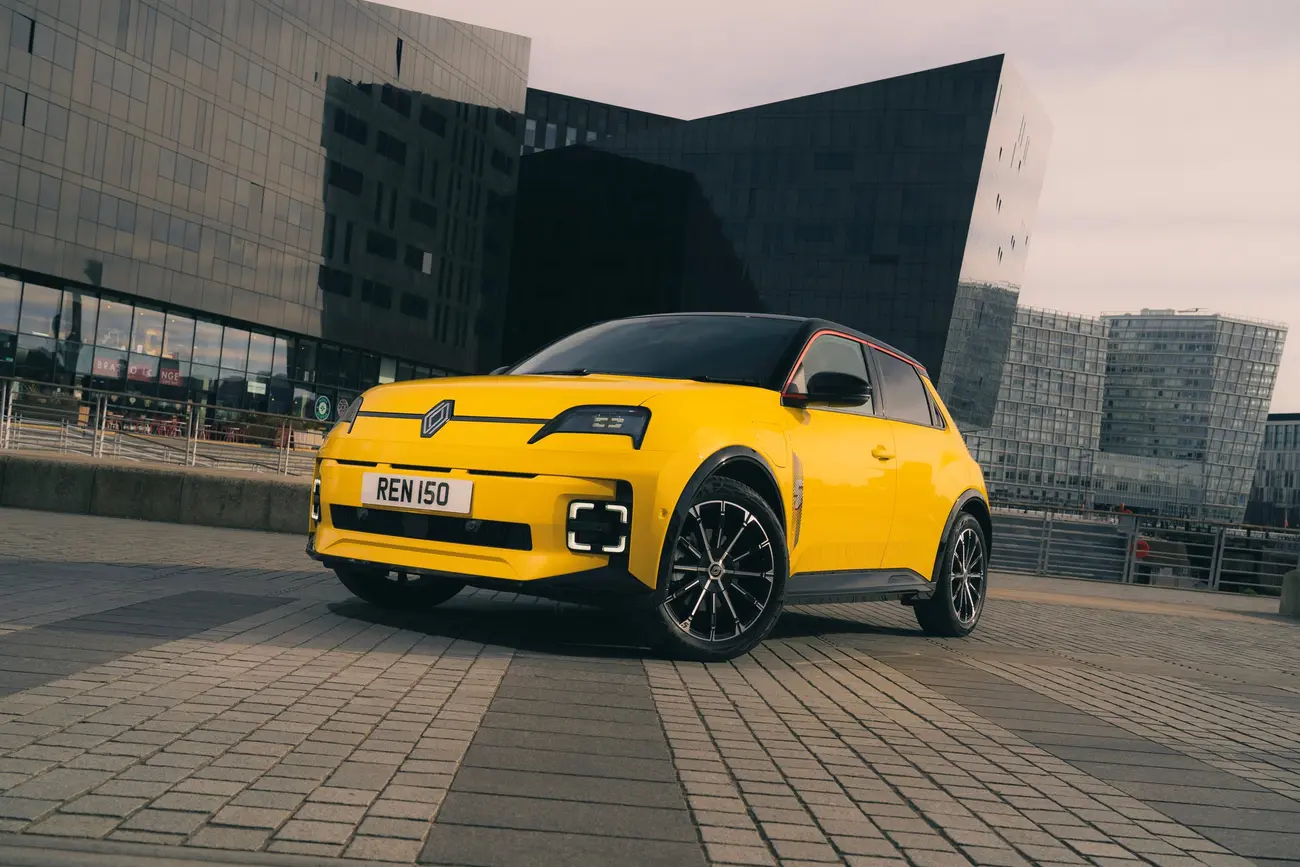
Fast charging as standard on an EV under €25,000
The entry-level Renault 5 had one flaw that was hard to look past: it couldn't charge on DC at all. No motorway rapid chargers, no topping up during a coffee stop. That's over. Renault has reworked the Five for the 2026 model year and now fits 80 kW DC fast charging as standard — without touching the price.
In France, where the new list has already been published, the Five holds at €24,990. Renault Portugal lists the Five from €24,900 (PVPR, the recommended retail price). That makes it one of very few EVs on sale here with rapid charging included below €25,000, and the only one among the cheap city EVs that doesn't charge extra for it.
What changed: a 36.5 kWh LFP battery and 110 hp
This is more than a trim reshuffle. The Five swaps its 95 hp motor and 40 kWh NMC battery for an entirely new package borrowed from the Renault Twingo E-Tech: an 80 kW (110 hp) motor derived from the Shanghai e-Drive unit, and a 36.5 kWh LFP battery built cell-to-pack — no intermediate module layer, which cuts weight and cost.
Claimed range is up to 305 km WLTP. That's 7 km less than the 40 kWh version it replaces, and that's the trade-off in a nutshell: you lose a little on paper and gain a lot in practice. A car with 305 km and 80 kW charging is usable on a long trip. A car with 312 km and AC charging only is not.
There's one more swap worth noting: the onboard AC charger drops from 11 kW to 6.6 kW. Plugged in at home overnight, that changes nothing. At a public 22 kW AC post, it roughly doubles your wait. Worth knowing before you sign.
Performance hasn't suffered. Renault quotes 3.5 seconds from 0 to 50 km/h, which is the figure that actually matters in a city car — pulling away from lights, joining a roundabout, merging out of a garage into traffic.
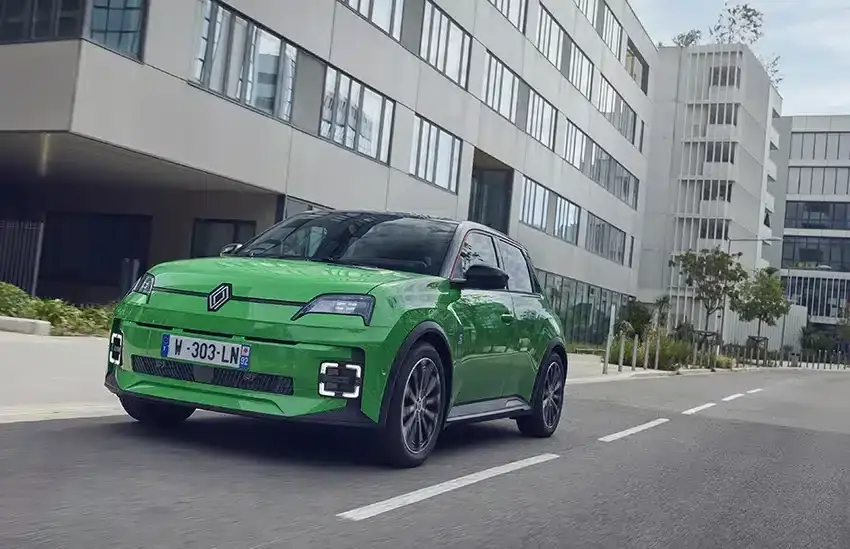
Renault 5 Five specs and the rest of the 2026 range
The NMC-battery versions gained kilometres too, thanks to aerodynamic work (lower ride height, redesigned mirrors) and optimised battery electronics.
| Specification | Five | Urban Range | Comfort Range |
|---|---|---|---|
| Power | 80 kW / 110 hp | 90 kW / 120 hp | 110 kW / 150 hp |
| Battery | 36.5 kWh LFP | 40 kWh NMC | 52 kWh NMC |
| WLTP range | up to 305 km | up to 315 km (was 312) | up to 430 km (was 410) |
| AC charging | 6.6 kW | 11 kW | 11 kW |
| DC charging | 80 kW | 80 kW | 100 kW |
| Trims | Five | Evolution, Techno | Evolution, Techno, Iconic Cinq, Roland-Garros |
The Comfort Range makes the biggest jump: 20 km more, to 430 km WLTP. Allowing for the usual gap between WLTP and real-world figures, that's a car that does Lisbon–Porto with one short stop.
Prices: why the numbers you read vary so much
Be careful here, because each European market got a different adjustment. The French list from August 2026 is the most complete published so far:
| Version | Power | Battery | Price in France |
|---|---|---|---|
| Five | 110 hp | 36.5 kWh LFP | €24,990 |
| Evolution | 120 hp | 40 kWh | €28,490 |
| Techno | 120 hp | 40 kWh | €30,490 |
| Evolution | 150 hp | 52 kWh | €31,990 |
| Techno | 150 hp | 52 kWh | €33,990 |
| Iconic Cinq | 150 hp | 52 kWh | €35,490 |
| Roland-Garros | 150 hp | 52 kWh | €36,490 |
Those are French prices. In Germany, Renault cut €1,710 across the whole range — but does not sell the LFP Five at all. In the Netherlands, Evolution and Techno came down €800. In other words there is no single "European" Renault 5 price, and the Portuguese list has to be confirmed on renault.pt.
One important caveat if you're shopping: the LFP-battery Five has not been confirmed for Portugal yet. Germany was left out, and Renault hasn't detailed every market. If DC fast charging on the entry trim is specifically what you're after, check with the dealer before ordering.
Renault 5 vs Citroën ë-C3, Dacia Spring and Twingo: who charges fastest?
This is where the update earns its keep. Among cheap electric city cars, rapid charging is nearly always a paid option — and even when you pay, the power on offer is modest.
| Model | Battery | WLTP range | DC charging |
|---|---|---|---|
| Renault 5 Five | 36.5 kWh LFP | 305 km | 80 kW, standard |
| Renault Twingo E-Tech | 27.5 kWh | 263 km | 50 kW, optional (around €500) |
| Citroën ë-C3 | 29–30 kWh | up to 320 km | 30 kW, optional (+€400) |
| Dacia Spring | 24.3 kWh LFP | 225 km | 40 kW, optional |
Not one rival includes DC charging as standard, and the quickest of the options tops out at 50 kW. At 80 kW, the Five puts range back at a rate that makes a weekend run to the Alentejo or the Algarve manageable — provided you plan the stop around the Mobi.E network, Portugal's interoperable public charging system. The other three are city cars that occasionally leave the city. The Renault 5 Five no longer belongs in that group.
Longevity works in its favour too: LFP cells tolerate frequent charges to 100% better than NMC and tend to degrade more slowly. If you charge at home every day, that's a quiet but real advantage.
Screens, Gemini and a phone charger that doesn't overheat
The 2026 update brings new software and equipment across the range. Google Gemini replaces Google Assistant via an over-the-air update, with 2 GB of monthly data included for three years. A new Smart mode switches automatically between Eco, Comfort and Sport, replacing the old MySense system. The emergency call system moves to 4G.
From Techno trim upwards there's a magnetic, cooled Qi2 wireless phone charger good for 50% battery in an hour — the cooling solves the familiar problem of induction pads throttling once the phone heats up.
Outside, Flame Red and Metallic Schist Grey join the palette, along with 18-inch alloys in gold and Hyper5 and Vibrant5 roof decals. The Iconic trim swaps its yellow upholstery for blue.
Frequently Asked Questions
Renault Portugal lists the entry-level Five from €24,900 (PVPR, the recommended retail price). Watch out for the figure you see elsewhere: €24,990 is the French list price from August 2026, and every European market got a different adjustment — Germany cut €1,710 across the range, while the Netherlands took €800 off the Evolution and Techno versions. There is no single European price, so always check the current national list on renault.pt or with a dealer before ordering.
It has not been confirmed yet. Renault opened order books across Europe on 25 August 2026 but did not detail every market, and Germany, for one, does not get this LFP-battery version at all. If standard DC fast charging on the entry trim is specifically what you want, check with the dealer exactly which configuration is being sold in Portugal before you place an order.
The Five now accepts up to 80 kW on DC as standard — the previous 95 hp, 40 kWh NMC version could not charge on DC at all. With a 36.5 kWh battery, a 10–80% top-up at a rapid charger on the Mobi.E network should take in the region of 30 minutes, though Renault has not yet published an official time. AC charging is slower than on the higher trims: the onboard charger drops from 11 kW to 6.6 kW, which works out at roughly six hours for a full charge — irrelevant overnight at home, but twice the wait at a public 22 kW AC post.
Five is the entry trim and the only one with the new 36.5 kWh LFP battery and 80 kW (110 hp) motor, rated at up to 305 km WLTP. Evolution and Techno use NMC batteries: 40 kWh with 90 kW (120 hp) and up to 315 km WLTP, or 52 kWh with 110 kW (150 hp) and up to 430 km WLTP, both with an 11 kW AC charger. The gap between Evolution and Techno is mostly equipment — Techno and above is where you get the magnetic, cooled Qi2 wireless phone charger, good for 50% battery in an hour.
It depends on how you drive, but on charging the gap is wide. None of the cheap electric city cars includes DC charging as standard: the Citroën ë-C3 offers 30 kW as a €400 option, the Dacia Spring 40 kW optional, and the Renault Twingo E-Tech 50 kW for around €500. The Five's standard 80 kW is the highest figure in the group and turns it into a car that can genuinely handle a long trip, unlike its rivals, which remain essentially urban. On top of that, LFP cells cope better with frequent charges to 100% and tend to degrade more slowly than NMC.
Worth waiting for?
Order books are open in the European markets where the Renault 5 is sold, with a public debut at the Paris Motor Show between 12 and 18 October. If you're shopping for an electric city car in Portugal, two things are worth tracking: the updated national price list, and confirmation that the LFP-battery Five is coming. If it arrives here at the current price, paying extra for optional rapid charging on a rival gets hard to justify.