
Renault 4 E-Tech 40 kWh vs 52 kWh: Real Range Test and Which to Buy in Portugal
Published: 20/11/2026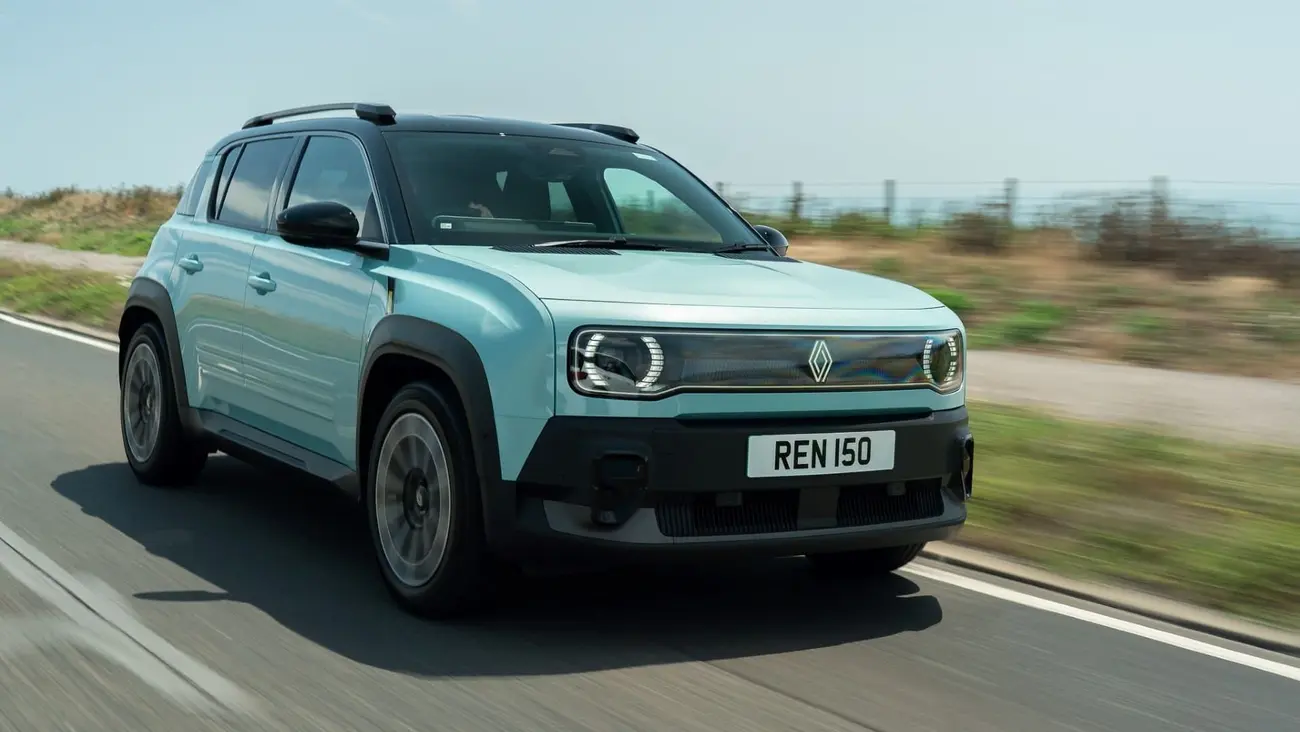
Renault 4 E-Tech 40 kWh vs 52 kWh: what the road test reveals
Close to 300 km around town, roughly 200 km on the motorway. That's the short version of French magazine Caradisiac's test of the small-battery Renault 4 E-Tech. The headline — "bonjour et bientôt au revoir", or "hello and soon goodbye" — tells you the rest: this 40 kWh entry version is about to be replaced by a new LFP battery.
If you're weighing up the Renault 4 E-Tech 40 kWh vs 52 kWh in Portugal, the timing is awkward. The cheaper version is still around in dealer stock and on the used market, the 52 kWh gained range with the October 2026 update, and the new Jogging trim has no confirmed price or launch date here yet. Let's untangle it.
Renault 4 E-Tech 40 kWh: real range measured in the test
On paper, the Urban Range version is rated at 308 km WLTP (310 km for model year 2027, thanks to aerodynamic tweaks). In practice, Caradisiac measured two very different scenarios:
- Mostly urban driving: around 13 kWh/100 km, which works out to close to 300 km of range.
- Motorway: around 19 kWh/100 km, cutting estimated range to roughly 200 km.
EV Database's figures are in the same ballpark. Its combined real-world estimate is 245 km, with 220 km on the motorway (110 km/h) in mild weather and 170 km in the cold. In the city, it ranges from 370 km in summer to 240 km in winter.
What that means in Portugal: if you live in Lisbon or Porto and mostly commute, the 40 kWh battery comfortably covers a full week without plugging in. A Lisbon–Porto run (about 310 km) needs a charging stop — and in winter, at motorway pace, you'll want to plan it with some margin.
What Caradisiac liked and didn't
Quiet, comfortable and pleasant to drive, with some body roll if you push it. Standard equipment is generous for an entry trim. The editorial score landed at 12.7/20.
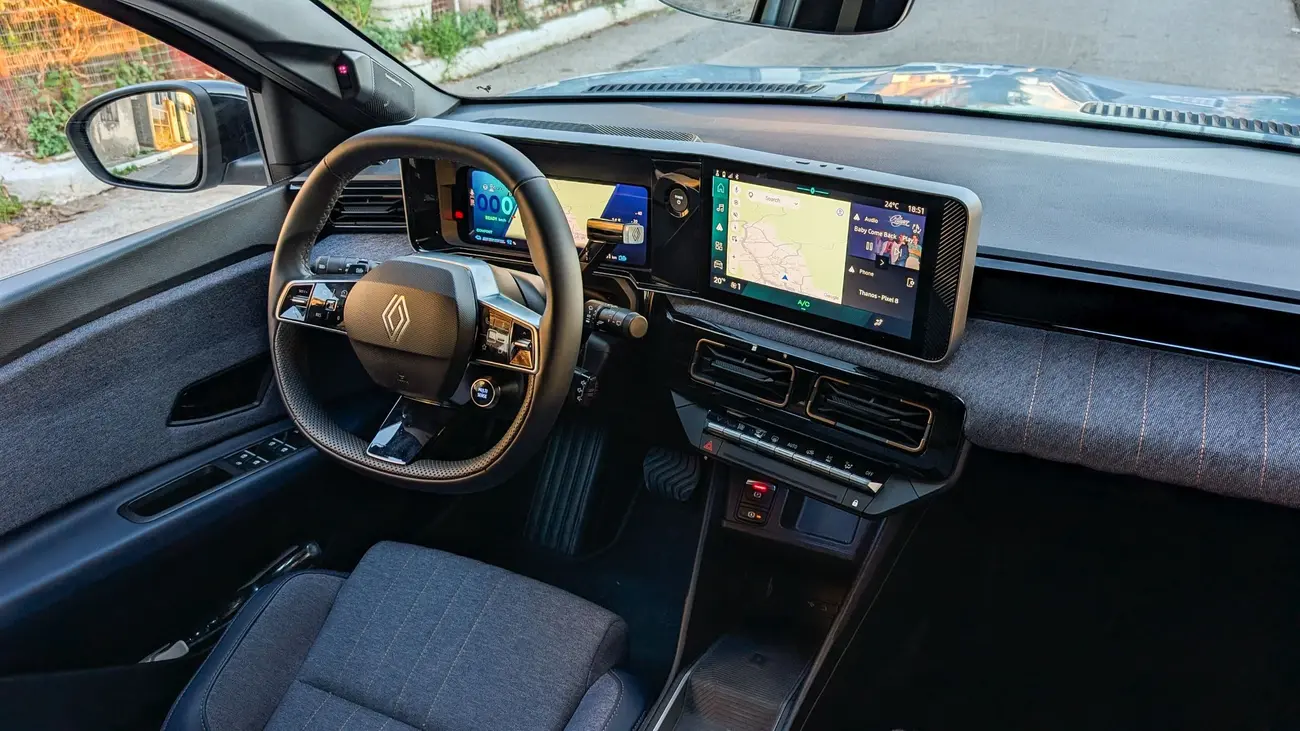
The weak points are mostly about finish and practicality. On this trim, the padded dashboard section in front of the driver is swapped for hard plastic, the front passenger seatback doesn't fold, and the boot floor isn't flat with the rear seats down. Rear legroom beats the Renault 5, but passengers around 1.80 m tall won't have much to spare.
Renault 4 E-Tech 40 kWh vs 52 kWh: the differences that matter
| 40 kWh Urban Range | 52 kWh Comfort Range | |
|---|---|---|
| Power | 90 kW (120 hp) | 110 kW (150 hp) |
| Torque | 225 Nm | 245 Nm |
| Usable battery | 40 kWh (NMC) | 52 kWh |
| WLTP range (MY27) | 310 km | 415 km (Plein Sud: 400 km) |
| Official consumption | 14.7 kWh/100 km | 14.4 kWh/100 km |
| Real motorway range | ~200 km (Caradisiac) | 250–280 km (Carscoops) |
| 0–100 km/h | 9.2 s | 8.2 s |
| Top speed | 150 km/h | 150 km/h |
| Max DC charging | 80 kW | 100 kW |
| DC 15–80% | ~30 min | ~30 min |
| Onboard AC charger | 11 kW | 11 kW |
| Boot | 420 L | 420 L |
The key difference isn't power — it's the motorway. With 12 kWh more usable capacity, the 52 kWh adds 105 km of WLTP range and around 50 to 80 km in real highway driving. And because it charges at 100 kW rather than 80 kW, it takes the same time (about 30 minutes) to go from 15% to 80%, but puts more energy back in during that stop.
Quick maths: 65% of 40 kWh is 26 kWh, enough for about 135 km at 19 kWh/100 km. On the 52 kWh, the same stop adds roughly 34 kWh — close to 180 km at a similar consumption. On a Lisbon–Algarve trip, that can be the difference between one stop and two.
Renault 4 E-Tech price in Portugal
This needs a caveat. We couldn't find a confirmed current Portuguese price for the 2027 model year. What's available are figures from other markets and from the launch period:
| Market | 40 kWh | 52 kWh |
|---|---|---|
| France | from €29,990 | — |
| Netherlands | €29,990 | — |
| Germany | €29,400 | — |
| Greece | €28,900 | €33,500 (Evolution) |
| Portugal (2025 launch, Portuguese press) | ~€29,500 | ~€33,000 |
The Portuguese figures reported in 2025 (around €29,500 for the 40 kWh Evolution and €33,000 for the 52 kWh) aren't confirmed for the current range. Before you commit, check the configurator on renault.pt or ask a dealer — and ask about promotions, which can be substantial on a version that's being phased out.
Based on those reference prices, stepping up from 40 to 52 kWh costs somewhere between €3,500 (Portuguese launch pricing) and €4,600 (Greece). As electric cars, both are exempt from ISV (Portugal's one-off vehicle registration tax) and IUC (the annual road tax), and may qualify for the Fundo Ambiental purchase incentive, depending on the rules in force the year you buy.
How much it costs to charge the Renault 4 E-Tech at home
Using the test's consumption figures, cost per km is easy to work out. As an example, on a two-period ("bi-horária") tariff at €0.15/kWh off-peak (check your own contract):
- City (13 kWh/100 km): about €1.95 per 100 km
- EV Database real-world average (16.3 kWh/100 km): about €2.45 per 100 km
- Motorway (19 kWh/100 km): about €2.85 per 100 km
Fast chargers on the Mobi.E network (Portugal's national public charging network) cost considerably more per kWh, so if you do a lot of motorway driving and charge away from home, the savings shrink. The 11 kW AC charger handles a full charge in about 4h30 on a three-phase wallbox.
The new LFP battery: the Renault 4 E-Tech's "goodbye"
In June 2026, Renault confirmed that the Urban Range versions would switch to LFP batteries. In October, it unveiled the new Jogging entry trim, due before the end of the year:
- 37 kWh gross (36.5 kWh usable) LFP cell-to-pack battery
- 80 kW (110 hp) motor, from the same family as the Twingo E-Tech
- Up to 305 km WLTP
- 0–100 km/h in 10.2 s
- 6.6 kW AC charging (about 3h30 from 10% to 80%) and 80 kW DC (about 25 minutes)
The swap has already happened on the sister Renault 5: in France, the 36.5 kWh LFP version replaced the 40 kWh NMC in August 2026. EV Database already lists the 2025-26 model year Renault 4 40 kWh as "no longer for sale".
The Jogging's price hasn't been published, and its arrival in Portugal isn't confirmed. Until official numbers appear, any value comparison with the 40 kWh is guesswork.
Will the LFP battery hurt used values?
This is the question that matters if you're buying now. The LFP version is simpler, with 3.5 kWh less usable capacity, 5 km less WLTP range and a slower AC charger (6.6 kW vs 11 kW). On paper, the 40 kWh NMC actually holds up well.
The risk is price. If the Jogging lands well below today's 40 kWh, used 40 kWh cars could take a residual-value hit — used buyers will compare them against a cheaper new car. The 52 kWh is better shielded, since no direct replacement has been announced. Either way, the 8-year / 160,000 km battery warranty helps.
Frequently Asked Questions
There is no confirmed Portuguese price yet for the 2027 model year. At launch in 2025, Portuguese press reported around €29,500 for the 40 kWh Evolution and around €33,000 for the 52 kWh; elsewhere, the 40 kWh costs €29,990 in France and the Netherlands and €29,400 in Germany. Check the current figure on the renault.pt configurator or with a dealer, and ask about offers, since the 40 kWh version is being phased out. As an EV, it is exempt from ISV and IUC.
On a DC fast charger, the Renault 4 E-Tech 40 kWh accepts up to 80 kW and goes from 15% to 80% in about 30 minutes, the same time as the 52 kWh at 100 kW. At home, the 11 kW onboard AC charger delivers a full charge in roughly 4.5 hours on a three-phase wallbox. The upcoming Jogging LFP version gets a slower 6.6 kW AC charger (about 3.5 hours from 10% to 80%) and 80 kW DC charging in around 25 minutes.
Yes. According to the EV Database spec sheet, the Renault 4 E-Tech 40 kWh offers V2L up to 3.7 kW, letting you power electrical devices from the battery, for example at a campsite. The same spec sheet lists AC V2G/V2H capability up to 11 kW, but this requires a compatible bidirectional wallbox and depends on what is offered in each market. Check with Renault Portugal whether V2H is available on the version you want.
Both share the same platform, powertrains and digital cockpit, but the Renault 4 is the more practical choice: it is 4.14 m long, has a 420-litre boot (1,405 L with the seats folded) and 18 cm of ground clearance. Caradisiac's test found rear space better than in the Renault 5, though adults around 1.80 m will not be roomy. In France, the Renault 5 already swapped its 40 kWh NMC battery for a 36.5 kWh LFP pack in August 2026, the same change the Renault 4 will get with the Jogging version.
In October 2026 Renault announced the new entry-level Jogging trim, due before the end of the year, with a 36.5 kWh usable LFP battery, a 110 hp motor and up to 305 km WLTP. Pricing has not been published and Portuguese availability is not confirmed. Until official figures are out, any comparison with the current 40 kWh (310 km WLTP, 120 hp, 11 kW AC) can only be based on specs.
Is the Renault 4 E-Tech worth it? Which version to pick
Go for the 40 kWh if you mostly drive in and around town, charge at home and only hit the motorway occasionally. On a run-out model, negotiate hard — and check the used market, where the discount may already be baked in.
Go for the 52 kWh if you regularly drive between cities, don't have a home charger, or want the better resale prospects. Its 250 to 280 km of real motorway range makes Lisbon–Porto far less stressful.
Wait for the Jogging if price is what decides it for you and you can hold off a few months — but that only makes sense once there's a confirmed Portuguese price to compare against.
Two numbers to watch over the coming weeks: the official Jogging price in Portugal, and the deals dealers offer to clear out the 40 kWh. Between them, they'll decide which Renault 4 is actually the cheapest to drive home.