
VW ID Battery Recall in Portugal: Which ID.3, ID.4 and Cupra Born Are Affected
Published: 30/10/2026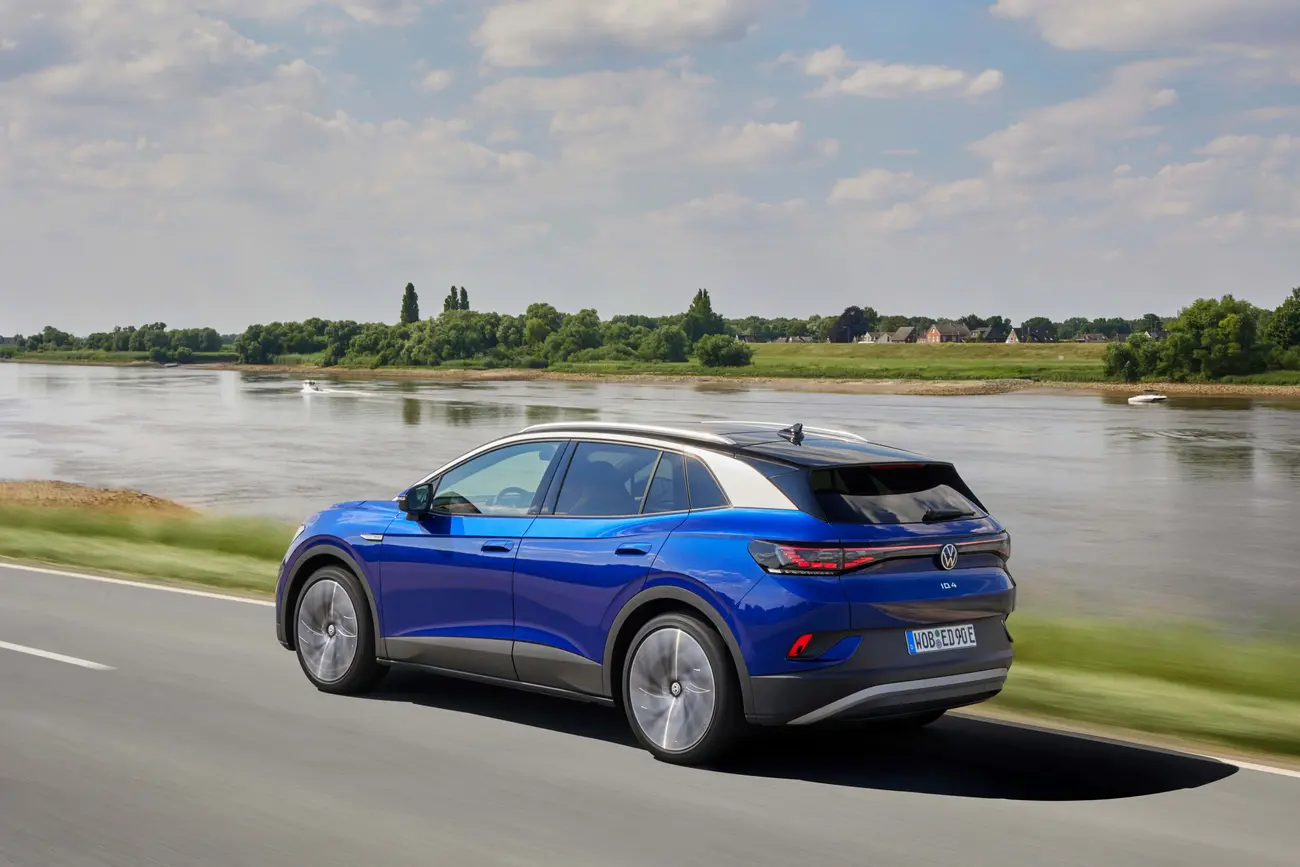
72,668 EVs called back to the workshop: what we know about the new recall
An 80% charging cap and a trip to the dealer for a battery check. That's what owners of 72,668 Volkswagen Group EVs worldwide are facing, after Germany's Federal Motor Transport Authority (KBA) confirmed a new battery recall this week. Headlines have rounded it to 72,700 cars; the exact figure is 72,668. If you drive an ID.3, ID.4 or Cupra Born here, this is the VW ID battery recall Portugal owners need to know about.
The recall covers specific batches of the VW ID.3, ID.4, ID.7 and ID. Buzz, plus the Cupra Born — cars you see every day on Portuguese roads and that turn up regularly on the used market. Whether you already own one or you're shopping for one, it's worth knowing what's at stake and what to do.
In Germany, 9,881 vehicles are affected, spread across three recall campaigns. No figure has been published for Portugal so far. The only reliable way to know whether a particular car is included is to check its VIN — more on that below.
VW ID.3, ID.4 and other models: which cars are affected
The list is short, but it covers almost the entire range of Volkswagen EVs built on the MEB platform:
| Model | Production years affected |
|---|---|
| VW ID.3 | 2022–2025 |
| VW ID.4 | 2022–2025 |
| VW ID.7 | 2022–2025 |
| VW ID. Buzz and ID. Buzz Cargo | 2022–2025 |
| Cupra Born | 2022–2024 |
The KBA has logged three campaigns: 93MV and 93MF for the Volkswagen models (93MF includes the ID. Buzz) and 93W4 for the Cupra Born.
One important detail: only certain production periods are included. Owning a 2023 ID.3 doesn't automatically mean your car is affected. For the ID. Buzz, Volkswagen UK explains that eligibility depends on when the battery was made, not on the model year.
Is the VW ID.5 included in the battery recall?
No. Even though it shares its platform with the ID.4, the ID.5 is not part of this campaign. The same goes for the Cupra Tavascan, every Audi model and all Škodas. If you drive an Enyaq or a Q4 e-tron, this recall doesn't concern you.
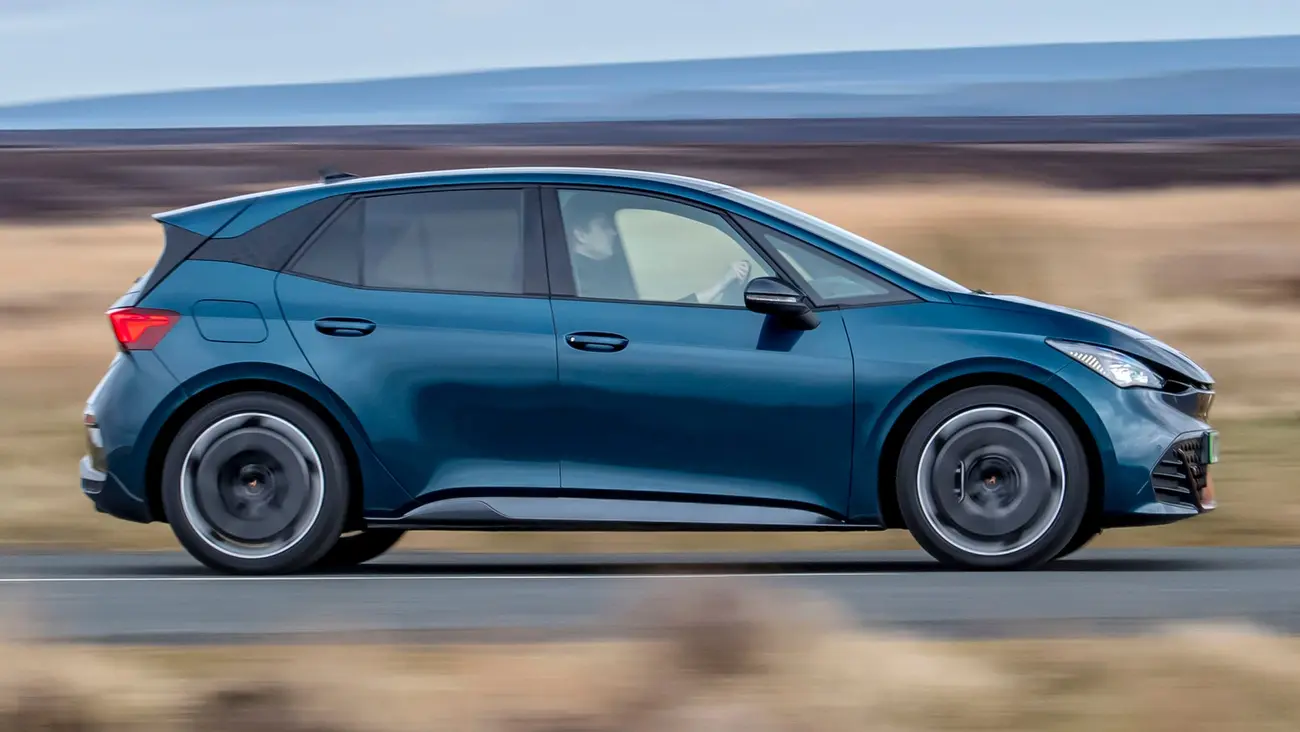
Cupra Born battery recall: the Spanish brand is in too
The Cupra Born has its own campaign, code 93W4, covering cars built between 2022 and 2024. Secondary reports citing the KBA put the figure at around 4,691 Borns built between September 2022 and May 2024, though the brand hasn't officially confirmed that number.
The Born has become a popular pick in Portugal for anyone wanting a compact EV with a bit of personality, so it's likely some Portuguese owners are affected. How many, nobody knows yet.
What's wrong with the battery cells
The problem traces back to a supplier. Volkswagen's internal quality checks found high-voltage battery cells that were out of spec — the KBA describes them as "overlapping cells". VW hasn't publicly named the European supplier.
In Volkswagen's own words, "certain charging profiles combined with a state of charge over 80% may trigger thermal propagation". Put simply: in rare cases a cell can overheat, especially during fast charging, and in the worst case start a fire.
Volkswagen ID battery fire risk: how serious is it?
Some perspective helps here. According to the KBA, there are no known injuries or property damage linked to this campaign. Volkswagen Commercial Vehicles UK's official page does mention "individual cases of property damage", with no confirmed injuries. In the US, where a parallel recall covers 22,524 ID.4s from model years 2023 to 2026, VW reported 22 claims between January 2024 and August 2026.
Scale matters too. Around 660,000 ID.3, ID.4, ID.7 and ID. Buzz were registered in Europe between 2023 and 2025. The affected cars are a fraction of that.
VW ID.4 80% charge limit: what changes for owners
Until there's a permanent fix, the interim measure is simple: don't charge the battery above 80%. Where possible, Volkswagen applies the cap remotely via an over-the-air (OTA) update. On cars where it can't, the driver has to stick to the limit manually, and VW fits warning stickers to the vehicle.
This cap is not the same as the regular Battery Care Mode many owners already use. It's a safety lock that the driver can't switch off, and it only comes off once an authorised workshop has cleared the battery.
The practical impact? Roughly a fifth less range compared with a full charge, according to estimates in the specialist press. For daily driving around Lisbon or Porto, you'll barely notice. On a long run up the A1 motorway or down to the Algarve, plan on one extra stop.
Can I still fast charge my ID.4 during the recall?
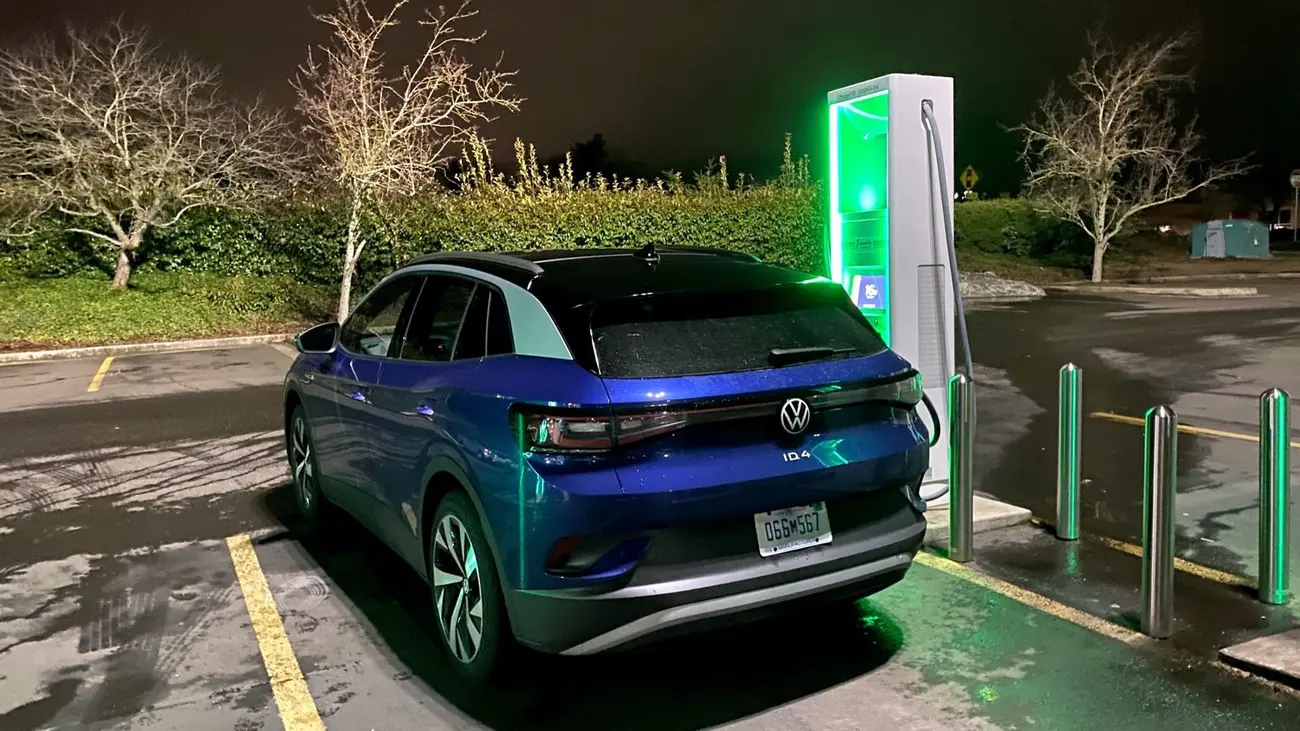
Yes. DC fast charging is still allowed — the 80% ceiling is the only restriction. In practice, most drivers already unplug around that point at fast chargers on the MOBI.E network (Portugal's national public charging network), since charging speeds drop sharply above it. So the change is smaller than it sounds.
If a yellow warning lamp appears on the dashboard, the official advice is to contact a dealer promptly. In the event of smoke or fire: stop, park outdoors if you can, switch off, get out and call 112.
VW ID.4 recall in Portugal: what to do
Affected owners will be notified by letter and asked to book a visit to an authorised dealer, where the high-voltage battery will be inspected. The key steps:
- Wait for the letter, but don't just sit on it. If you haven't been contacted and you own one of the affected models, you can ask an authorised Volkswagen or Cupra dealer to check your car.
- Stick to the 80% limit if your car isn't enforcing it automatically yet.
- Book the inspection. The check takes about an hour and is free of charge. Waiting times will depend on how busy the workshop is.
- Expect one of two outcomes: some cars only need a software update; others get battery modules replaced, also at no cost.
Once the battery is cleared, the cap is lifted and the original range is restored. Volkswagen is still developing the final fix, though, so there's no guaranteed date for when the restriction ends on every car.
How to check a car recall by VIN in Portugal
It all comes down to the VIN (vehicle identification number), the 17-character code on your Documento Único Automóvel (the Portuguese registration certificate) and usually visible at the base of the windscreen. With it, any authorised dealer in the SIVA network (Volkswagen's importer in Portugal) or a Cupra dealer can look up whether there are open recall campaigns for that specific car.
Other signs a car is affected: charging stops at 80%, there's a warning sticker on the vehicle, or the yellow warning lamp comes on.
Buying a used VW ID.3 in Portugal: recall checks first
If you're shopping for a used EV, this recall isn't a reason to cross the ID.3, ID.4 or Born off your list. It is a reason to ask one extra question before you sign.
- Ask the seller for the VIN and confirm with an authorised dealer whether any campaigns are outstanding.
- If there's an open recall, insist the work is done before purchase, or get it in writing that the car will go to the dealer right after. The cost is always covered by the manufacturer.
- Be wary of a car that won't charge past 80% with no explanation. The recall lock may still be active.
- Confirm the battery warranty, which on the ID range is 8 years or 160,000 km. A car built between 2022 and 2025 is still well within that window.
A car with the recall already sorted may actually be a safer buy than one that's never been checked.
Frequently Asked Questions
No. Although it shares the MEB platform with the ID.4, the ID.5 is not part of the October 2026 campaign, which covers only specific batches of the ID.3, ID.4, ID.7 and ID. Buzz (built 2022 to 2025) and the Cupra Born (2022 to 2024). The Cupra Tavascan, every Audi and every Škoda, including the Enyaq, are also excluded.
No figure for Portugal has been published yet. Germany's KBA has confirmed 72,668 affected EVs worldwide across three campaigns (93MV, 93MF and 93W4), 9,881 of them in Germany. Because only certain production periods are included, the only reliable way to know whether a car is affected is to have its VIN checked by an authorised Volkswagen or Cupra dealer.
Volkswagen says the high-voltage battery check takes about an hour and is free of charge. Some cars only need a software update, while others get replacement battery modules, also at no cost to the owner. Once the battery is cleared, the 80% charge cap is removed and the original range is restored.
Yes, as long as the recall work gets done, since it is always free and paid for by the manufacturer. Ask the seller for the VIN, confirm with an authorised dealer whether any campaigns are outstanding, and insist the work is completed before purchase or agreed in writing. The ID range battery warranty runs for 8 years or 160,000 km, so a 2022 to 2025 car is still well within it.
No, they are two separate campaigns. In March 2026 a different battery issue led to the recall of 94,031 EVs (74,579 from the ID family and 19,452 Cupra Borns), around 28,000 of them in Germany. The October 2026 recall covers 72,668 vehicles and adds an 80% charge cap until inspection, so being covered (or not) by one campaign tells you nothing about the other: always check by VIN.
VW EV battery recalls in 2026: the second this year
Searching for the VW ID battery recall in Portugal turns up news of two different campaigns, so don't confuse this one with March 2026's. Back then, a different battery issue led Volkswagen to recall 94,031 EVs: 74,579 from the ID family and 19,452 Cupra Borns, around 28,000 of them in Germany.
| March 2026 recall | October 2026 recall | |
|---|---|---|
| Vehicles affected (worldwide) | 94,031 | 72,668 |
| ID family | 74,579 | ID.3, ID.4, ID.7, ID. Buzz |
| Cupra Born | 19,452 | included (campaign 93W4) |
| Germany | around 28,000 | 9,881 |
| Interim measure | — | charging capped at 80% |
Two battery recalls in one year isn't great publicity for the ID range, and some in the specialist press argue it's eroding confidence at a time when competition is getting tougher. Still, the process itself — internal detection, a precautionary cap, a free inspection — is what you'd want from a manufacturer that takes the problem seriously.
If you own an ID.3, ID.4, ID.7, ID. Buzz or Cupra Born built between 2022 and 2025, the most useful next step is simple: have your VIN handy and call your dealer. A five-minute phone call settles the question, and the inspection costs you nothing.