
Porsche Taycan Discontinued by 2030? What It Means for Used Buyers in Portugal
Published: 21/08/2026
What is reported, and what is not confirmed
Just over 6,000 units in the first half of 2026. That figure sits behind the story that shook Stuttgart this week: according to German business weekly WirtschaftsWoche, Porsche management and the works council have agreed in principle to end Taycan production in 2029 or 2030.
One thing needs saying before anything else. This is a press report, not an official announcement. The agreement described by WirtschaftsWoche has not been put in writing, Porsche declined to comment, and in late July 2026 CEO Michael Leiters told the Frankfurter Allgemeine Zeitung the opposite: "We do not plan to discontinue the Taycan in the short term. We have invested a lot in the model and want to observe how demand develops."
So the two accounts do not line up. The reason the market took the report seriously anyway is simple: the sales numbers back it.
Why Porsche might stop building the Taycan
The fall was fast and steep. The Taycan entered series production in 2019 as the symbol of the brand's electric shift, and it sold well at first. Then:
| Year | Taycan deliveries |
|---|---|
| 2023 | around 41,000 |
| 2025 | around 16,000 |
| First half of 2026 | just over 6,000 |
Two thirds of the volume vanished in two years. WirtschaftsWoche reports that production at Stuttgart-Zuffenhausen has been halted repeatedly in recent months for lack of demand, and it is that underused factory line that drove the decision. The idea of moving assembly to Leipzig — on the table since late 2024 — has been dropped: if the Taycan has an expiry date, relocating it makes no sense.
The causes are well known and they compound. The Macan Electric, launched in 2024, cannibalised the Taycan in the most obvious way: buyers who wanted an electric Porsche suddenly had a choice, and they picked the SUV. Luxury buyers in general have migrated from low saloons to tall bodies. Add soft European EV demand, Chinese competition and unstable US trade policy. Porsche's operating profit fell more than 90% last year and the company announced job cuts.
The car is still being developed — and that matters
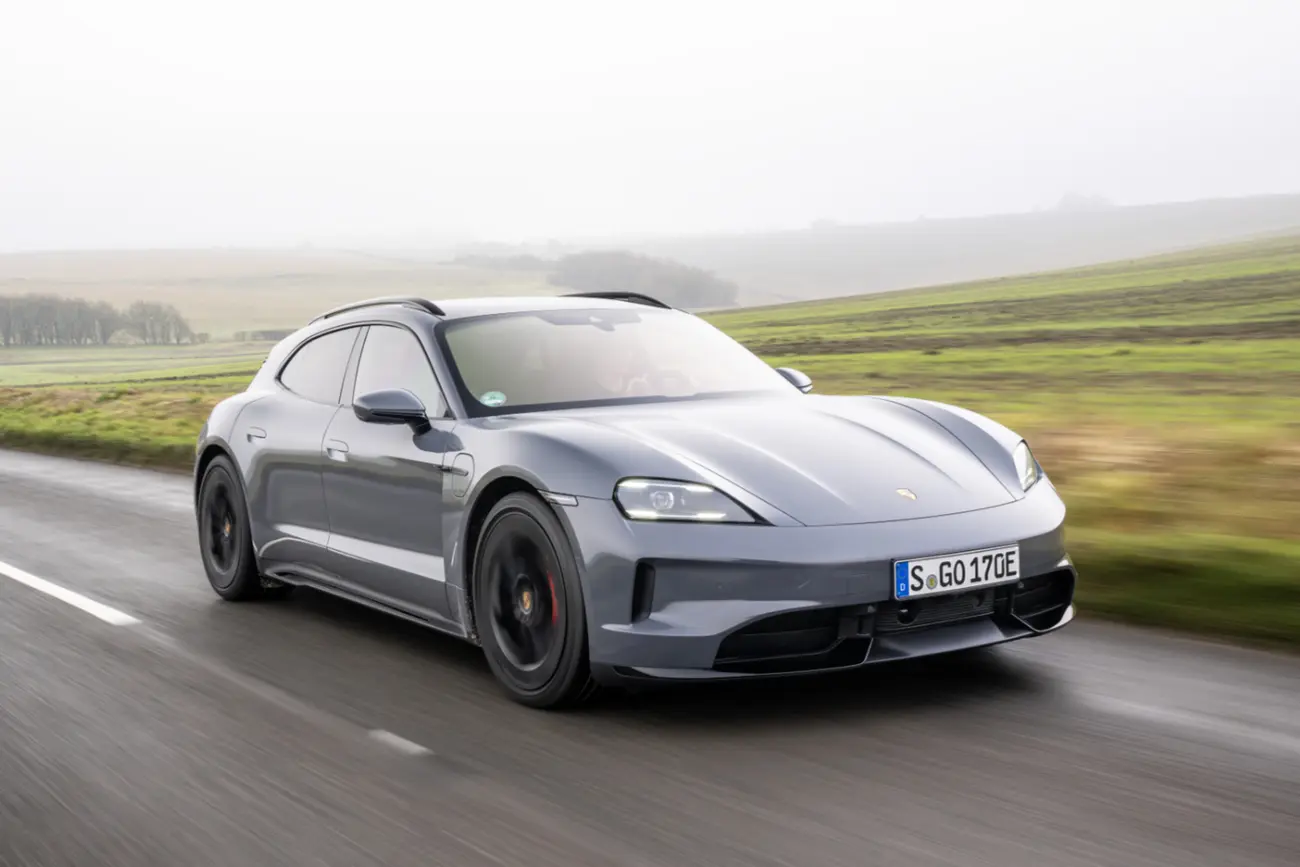
Here is the part most headlines skip. In June 2026 Porsche revealed the 2027 model year Taycan, and it was not a cosmetic refresh.
- The 105 kWh Performance Battery Plus becomes standard on the Taycan, Taycan 4 and Taycan 4S, replacing the 89 kWh pack.
- DC charging up to 320 kW on the 800-volt architecture — a short motorway stop puts most of the usable range back.
- EPA range of roughly 507 km (315 miles) for the 4 and 4S with the bigger battery; the European WLTP cycle is typically more generous.
- E-Shift: eight virtual gears with paddle shifters, simulated engine braking and a virtual rev counter. Around €1,000 as an option in Europe, standard on the Turbo GT.
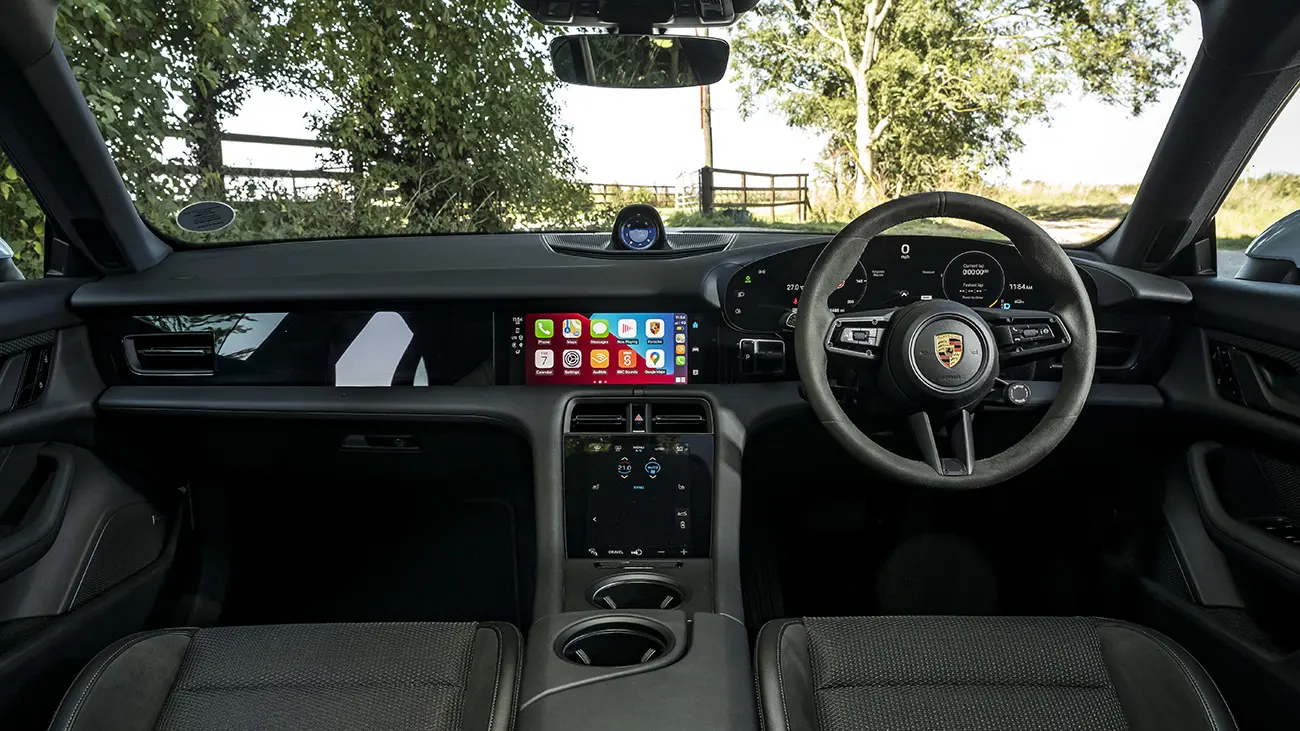
- A new Porsche DI infotainment system with AI voice assistant and over-the-air updates.
- And one detail that matters enormously for used buyers: a built-in battery state-of-health display.
The European line-up is unchanged: 18 variants, 300 kW to 760 kW, €102,600 to €241,100, in sports saloon, Sport Turismo and Cross Turismo form. The Turbo GT with Weissach Package and Manthey Kit still holds a 6:55.553 Nürburgring lap.
Nobody fits a new battery, a ground-up infotainment stack and an SoH readout to a car that disappears the following year. What the report actually describes is a normal end of cycle around 2029/2030 — roughly a decade in production, which is unremarkable in this industry.
Porsche Taycan depreciation in numbers
The question that matters to a buyer: will the Taycan be worth less because it is being discontinued?
The most complete data available comes from iSeeCars, based on more than 15 million vehicles. It is US market data — treat it as a guide to how the car behaves, not as a price list for Portugal.
| Age | Taycan saloon | Taycan Sport/Cross Turismo | Large luxury EV average | All cars average |
|---|---|---|---|---|
| 3 years | 31.7% | 24.6% | 51.8% | 24.0% |
| 5 years | 55.0% | 46.9% | 59.6% | 41.5% |
| 7 years | 67.9% | 58.8% | 75.2% | 52.7% |
| 10 years | 78.2% | 68.3% | 83.3% | 65.4% |
Three things stand out.
The Taycan depreciates clearly less than the large luxury EV average — more than 20 percentage points less at three years. It depreciates considerably more than the market as a whole, and far more than a combustion 911, which loses roughly 4% to 20% over five years. And the estate body holds up better: the Sport Turismo and Cross Turismo lose about seven percentage points less at three years than the saloon.
In short, the Taycan was already a heavy depreciator long before this news broke. The painful part of the curve — the first three years — has already been absorbed by the 2020 to 2022 cars now sitting on the used market.
What it means if you are buying a used Taycan in Portugal
Discontinuation pulls residual value in two opposite directions, and it helps to separate them.
The negative effect is psychological and immediate. A discontinued model spooks the average buyer, who worries about parts, servicing and abandoned software. That fear usually shows up as a price correction in the months after an announcement.
The positive effect is structural and slower. A car built for roughly a decade, on the J1 platform shared with the Audi e-tron GT and backed by Volkswagen Group's service network, is not an orphaned niche EV. The installed base is large enough to justify parts and software support for many years. And falling new-car sales mean that in three or four years there will be fewer Taycans reaching the used market — thinner supply tends to support prices.
There is a Portuguese tax angle too. As a full EV, the Taycan is exempt from ISV (the vehicle registration tax levied on cars entering the Portuguese market) and pays a reduced IUC road tax, which is a large part of why imported used examples can undercut local new prices. On the other side of the ledger, running costs are pure Porsche: wide tyres, big brakes, and a small official network concentrated around Lisbon and Porto.
How to check the battery on a used Taycan
In 2026, battery state of health is the dominant valuation variable — ahead of mileage. A few practical rules:
- Ask for an official SoH report from a Porsche dealer. On 2027 model year cars the figure is shown in the car itself; on earlier ones it needs a diagnostic session.
- Confirm the high-voltage battery warranty and its exact expiry date — premium EV coverage typically runs around eight years. A 2021 car should still have several years left, but get the date in writing.
- Ask about charging history. Constant use of 320 kW fast chargers ages a pack faster than AC charging at home.
- Check software updates are current. Porsche improved thermal management and real-world range on early cars through updates.
Frequently Asked Questions
No. The story comes from German business weekly WirtschaftsWoche, which cites company insiders and the works council in reporting an in-principle agreement to end production in 2029 or 2030. That agreement has not been put in writing and Porsche declined to comment. In late July 2026, CEO Michael Leiters said the opposite: that the company has no short-term plan to discontinue the Taycan.
It depends mainly on the variant and the model year. With the new car ranging from €102,600 to €241,100 in Europe and roughly 31.7% depreciation over three years, a 2021 or 2022 Taycan 4S typically sits between €70,000 and €90,000, while Turbo and Turbo GT versions ask considerably more. Prices swing with battery state of health and with options, which on a Porsche can easily add tens of thousands of euros to the original list price.
Two forces pull in opposite directions. In the short term, the "discontinued model" label usually triggers a correction in asking prices because it unsettles the average buyer. Over the medium term, residual values are supported by the collapse in new sales — from around 41,000 deliveries in 2023 to just over 6,000 in the first half of 2026 — which means far fewer Taycans will reach the used market in three or four years, and thinner supply tends to hold prices up.
Almost certainly. The Taycan has been in series production since 2019, so a 2029/2030 phase-out would mean about a decade of manufacturing and a large installed base. It also uses the J1 platform shared with the Audi e-tron GT and is backed by the Volkswagen Group service network, which is a very different case from an orphaned niche EV. In Portugal, bear in mind the official Porsche network is small and concentrated in Lisbon and Porto.
As a fully battery-electric car, the Taycan is exempt from ISV (vehicle tax), including when imported used from another EU country, and pays only a reduced IUC road tax. That exemption is why an imported used example can be so competitive in Portugal. Running costs, however, remain Porsche-grade: wide tyres, large brakes and servicing at an official dealer.
Taycan or Macan Electric on the used market?
It is the inevitable comparison, because the Macan caused this situation. The Macan Electric is newer, in higher demand and matches the body style the market wants — which is exactly why it costs more used and leaves less room to negotiate.
The Taycan offers the reverse: more car per euro, performance the Macan cannot touch, and a depreciation curve that has largely already happened. Buy a 2021 or 2022 Taycan today and you are stepping in after the drop, not before it.
If the WirtschaftsWoche report proves right, the Taycan will go down as Porsche's first production EV — the car that pushed 800-volt architecture into the mainstream and the brand's only model with a full decade of electric history. That is no guarantee of future appreciation, and nobody should buy a six-figure car betting on it. But it is one more argument for anyone already weighing the idea, and the listings are worth watching over the coming months: any official confirmation tends to move asking prices before it moves selling prices.