
Porsche Macan 22 kW AC Charging: What It Means for Home Charging in Portugal
Published: 27/08/2026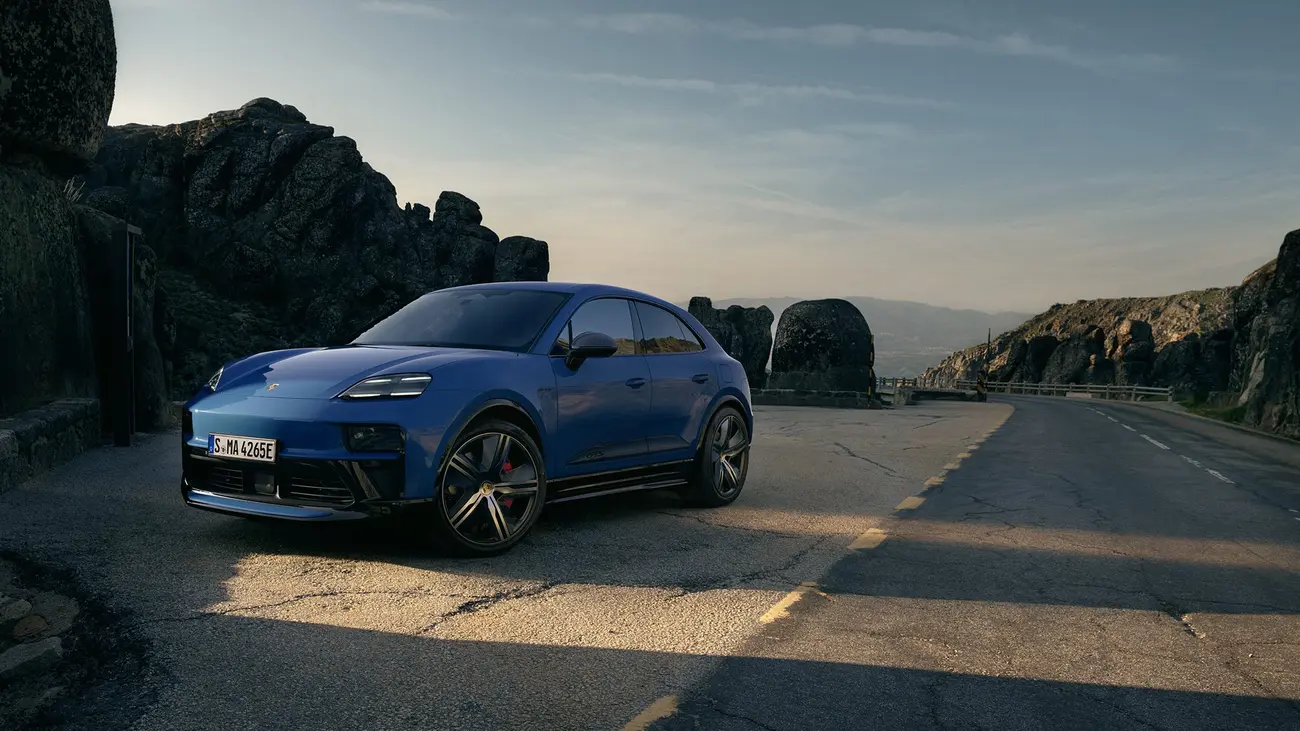
Porsche Macan 22 kW AC charging now standard on GTS and Turbo
Five hours instead of ten. That is what Porsche Macan 22 kW AC charging actually buys you, and from model year 2027 the GTS and Turbo get that 22 kW onboard charger as standard. The Macan, Macan 4 and Macan 4S stay on 11 kW, with 22 kW offered as a paid option. Porsche announced the change on 13 August 2026.
It sounds like a footnote in a spec sheet. It isn't — but how much you gain depends almost entirely on the electrical supply feeding your parking space, and in Portugal that part rarely makes it into the press release.
What changes at home: 11 kW vs 22 kW
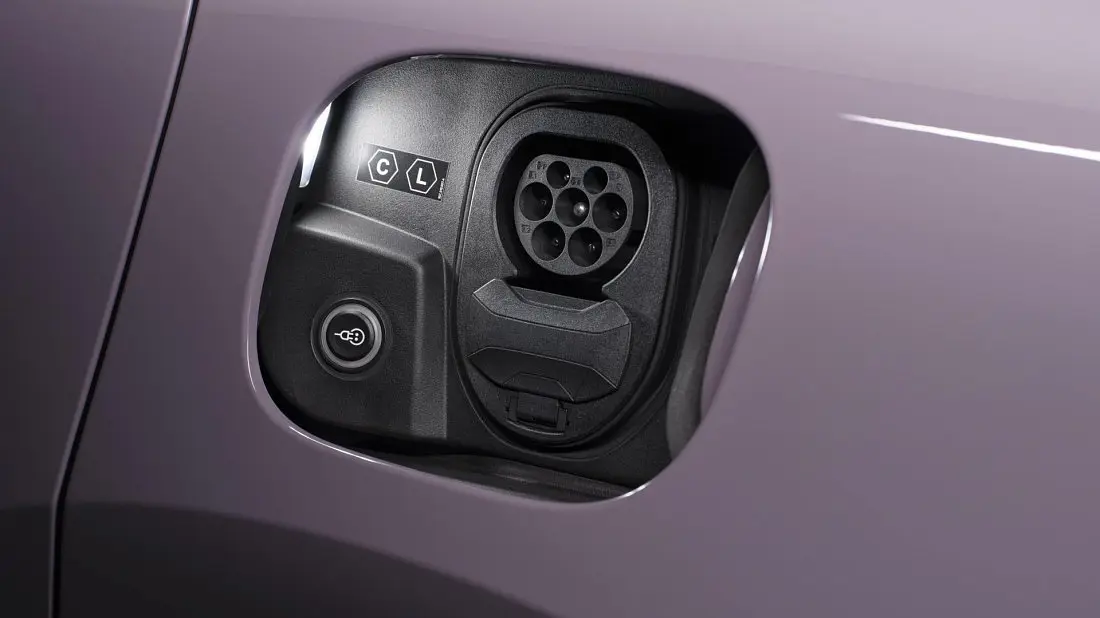
The onboard charger is the component that converts the grid's alternating current into direct current for the battery. It alone sets the ceiling for AC charging — a socket, a wallbox or a street post can never push past it.
The electric Macan carries a 100 kWh gross battery, roughly 94.9 kWh of it usable. The maths follows from there:
| Supply | Power | 0–100% charge |
|---|---|---|
| Household socket (10 A) | 2.3 kW | 48h 45m |
| Single-phase 16 A | 3.7 kW | 30h 15m |
| Single-phase 32 A | 7.4 kW | 15h 15m |
| Three-phase 16 A | 11 kW | 10h 15m |
| Three-phase 32 A | 22 kW | around 5 h |
In plain terms: at 11 kW a full charge eats the whole night and spills into the morning. At 22 kW the car is done before three. Drive 40 km a day and none of this matters, because the battery never drops far enough to care. Get home at 15% at eight in the evening and head out again at eleven, and it matters a great deal.
The catch: you need three-phase at 32 A
This is where Portugal complicates things. Charging at 22 kW requires a three-phase 32 A connection. Most Portuguese homes run on single-phase supply, often with contracted power of 6.9 or 10.35 kVA — not even enough for 11 kW, let alone double that.
Switching to three-phase is possible, but it means an application to the grid operator, potentially a reinforced service line, and a much higher contracted power with the fixed monthly cost that comes with it. Across much of Europe a 22 kW wallbox needs prior approval from the grid operator before installation, while an 11 kW unit is usually cleared by simple notification.
The hardware, oddly, is the cheap part. A go-e Charger Gemini 2.0 is €819 in 11 kW form and €829 in 22 kW form — a €10 gap. Installation and your energy contract are what cost money. One more detail that quietly ruins installations: the weakest link sets the power. A 22 kW car and a 22 kW wallbox joined by an 11 kW cable charge at 11 kW.
Where 22 kW genuinely pays off
Away from home. Destination AC posts — hotels, shopping centres, office car parks, plenty of public points on Portugal's MOBI.E network — are frequently three-phase 22 kW units, and many bill for time connected rather than energy alone. A Macan GTS recovers over a two-hour lunch what an 11 kW car needs four hours to take on.
If you have rooftop solar, the logic flips. A domestic PV array rarely produces a sustained 22 kW surplus, so 11 kW covers surplus charging comfortably.
Everything else stays the same, and stays very good
On the road nothing changed, and nothing needed to. The Macan keeps its 800 V architecture, accepts up to 270 kW on DC and covers 10–80% in roughly 21 minutes at a suitable fast charger. At 400 V posts, still common on the Portuguese network, the car splits its battery into two sections through a high-voltage switch and takes up to 135 kW.
The numbers that shape daily use: the GTS is rated at 531 to 586 km WLTP, with a real-world figure around 530 km in mild weather and 395 km in cold. Consumption sits between 18.5 and 20.5 kWh/100 km. The entry Macan reaches 641 km WLTP; the Turbo lands between 528 and 589 km. Battery warranty runs 8 years or 160,000 km.
Plug and Charge does away with apps entirely: connect the cable and the car authenticates itself with the charger. The Porsche Charging Service opens up more than a million charging points across 27 European countries, over 95,000 of them rated 150 kW or higher, with a Preferred Partner rate of 39 cents per kWh.
Porsche Macan 2027 model year changes beyond charging
Charging is the headline, but MY2027 adds standard kit across the range:
- Adaptive cruise control
- Automated Parking with 2D Surround View, which detects both parallel and perpendicular spaces
- Wireless phone charging raised from 15 W to 25 W
- Remote Park Assist, now optional, for smartphone-controlled manoeuvres
Porsche also created a Business Package — the Advanced Package in its international communication — for the Macan, Macan 4 and Macan 4S. It bundles a panoramic roof, Matrix LED headlights, auto-dimming mirrors, paint from the Shades and Contrasts palettes, 14-way Comfort seats, the black leather package, Bose surround sound, Power Steering Plus, adaptive air suspension with levelling, and PASM. German pricing is €5,990.46 for the Macan and Macan 4 and €5,299.07 for the Macan 4S — up to 45% below the cost of ticking each option individually.
Pricing: what to expect in Portugal
German MY2027 prices rose between €1,000 and €2,300 depending on version:
| Version | Previous price | MY2027 price |
|---|---|---|
| Macan | €81,200 | €82,200 |
| Macan 4 | €84,600 | €85,600 |
| Macan 4S | €91,200 | €92,200 |
| Macan GTS | €104,200 | €106,100 |
| Macan Turbo | €115,500 | €117,800 |
Portuguese figures will differ, but one structural advantage works in the buyer's favour here: as a fully electric car the Macan is exempt from ISV, Portugal's vehicle registration tax, and pays reduced IUC, the annual circulation tax. That pulls Portuguese pricing closer to German pricing than any combustion equivalent manages. Worth confirming with your dealer whether 22 kW comes standard on the version you want — on the Macan, Macan 4 and Macan 4S it remains a paid extra.
Frequently Asked Questions
No. 22 kW charging requires a three-phase 32 A connection, and most Portuguese homes have a single-phase supply with contracted power of 6.9 or 10.35 kVA. On single-phase, even a Macan GTS or Turbo with the 22 kW onboard charger is capped at roughly 7.4 kW (32 A single-phase), which means a full charge takes about 15 hours instead of the roughly 5 hours possible on three-phase.
From model year 2027, only the Macan GTS and Macan Turbo come with the 22 kW onboard charger as standard, as announced by Porsche on 13 August 2026. The Macan, Macan 4 and Macan 4S keep 11 kW as standard and only reach 22 kW if the option is ticked when ordering. It is worth confirming this with the dealer before signing, because on a used car the difference rarely shows up in the listing.
In practice, yes. Across much of Europe a 22 kW wallbox needs prior approval from the grid operator before installation, while an 11 kW unit usually only requires notification. In Portugal you will typically also need to switch your contract from single-phase to three-phase and raise your contracted power, with the higher monthly standing charge that implies. The hardware itself is the cheap part: a go-e Charger Gemini 2.0 costs 819€ in the 11 kW version and 829€ at 22 kW.
The battery holds about 94.9 kWh usable, so a full 0–100% charge draws roughly that much energy. On a Portuguese off-peak domestic tariff of around 0.10€ to 0.15€ per kWh, a full charge typically costs between 10€ and 15€ — enough for 500 to 600 km of WLTP range. Public fast charging costs considerably more: the Porsche Charging Service Preferred Partner tariff sits at 39 cents per kWh.
Porsche raised German model year 2027 prices by between 1,000€ and 2,300€ depending on the version, with the range now running from 82,200€ for the entry Macan to 117,800€ for the Turbo. Portuguese prices will differ, but because the Macan is fully electric it is exempt from ISV and pays reduced IUC, which brings Portuguese prices closer to German ones than for any equivalent combustion SUV.
So, is 22 kW worth paying for?
It comes down to where you plug in. If the car sleeps in a garage on single-phase supply, the option gives you nothing — you will still be charging at 7.4 kW. If you have three-phase at home, or you park daily at an office or hotel with 22 kW AC posts, the extra repays itself quickly in hours saved.
There is also a used-market angle worth keeping in mind three or four years from now: an MY2027 GTS or Turbo carries this capability from the factory, with no reliance on the first owner having ticked a box. It is the sort of detail that never shows up in a classified listing, yet separates two apparently identical cars.
For now, combustion Macan production ended in July 2026, and no petrol successor is expected before 2028. The Macan you can buy in Portugal today is electric — and it now charges faster at home, provided the home keeps up.