
Porsche Cayenne Coupé Electric Review: Range, Power and Price in Portugal
Published: 28/05/2026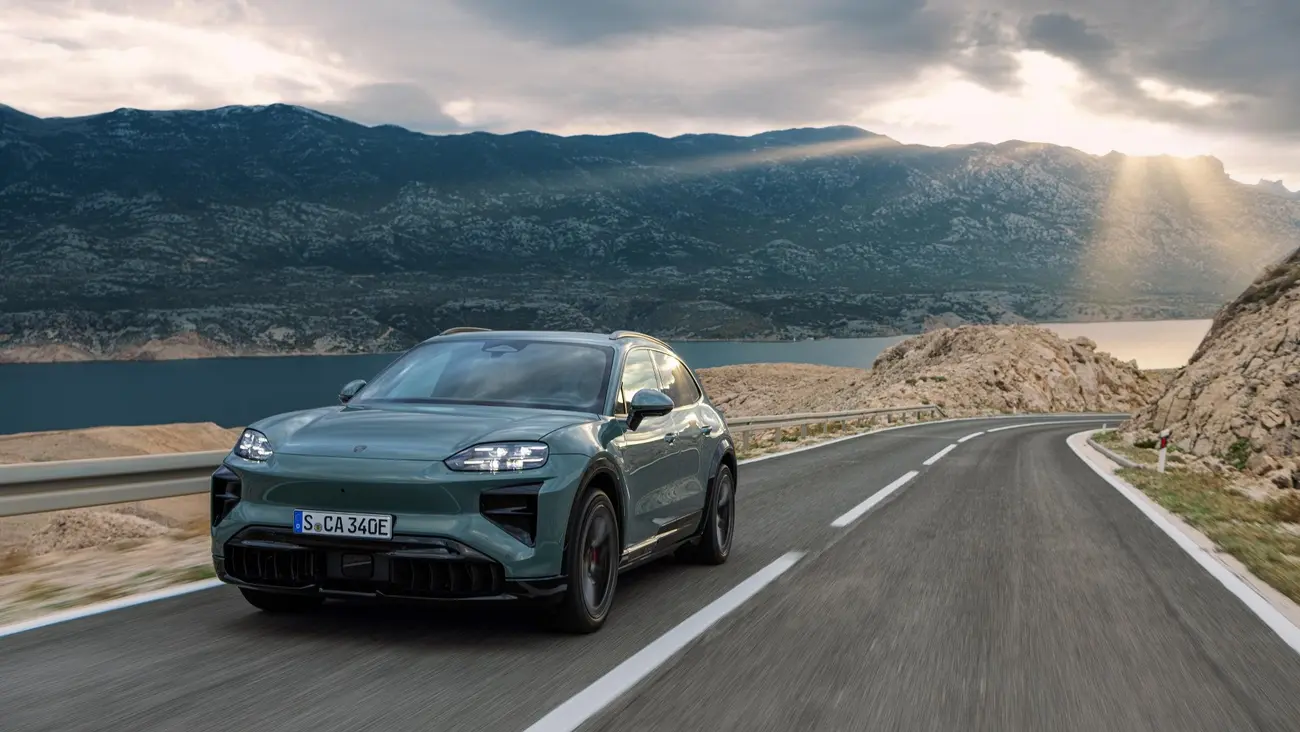
Does an electric Porsche really drive like a Porsche?
That is the question hanging over the new Porsche Cayenne Coupé Electric, and for buyers in Portugal it matters more than the headline numbers. Porsche promises up to 669 km of WLTP range, as much as 1,156 PS in the Turbo, and the title of most powerful series-production Porsche ever — all in a coupé-SUV weighing over 2.6 tonnes. The international press that has driven it calls it a "quiet force." Whether that, and the price, add up for a Portuguese buyer is another matter.
The Cayenne Coupé now arrives in a third, fully electric form, sitting alongside the combustion and plug-in hybrid versions that remain on sale. That is deliberate. Porsche has stepped back from its target of 80% electric sales by 2030 and prefers to let the customer choose. Roughly 40% of Cayenne buyers historically pick the coupé body, so this is no niche — it is where much of the market already is.
What the coupé body changes
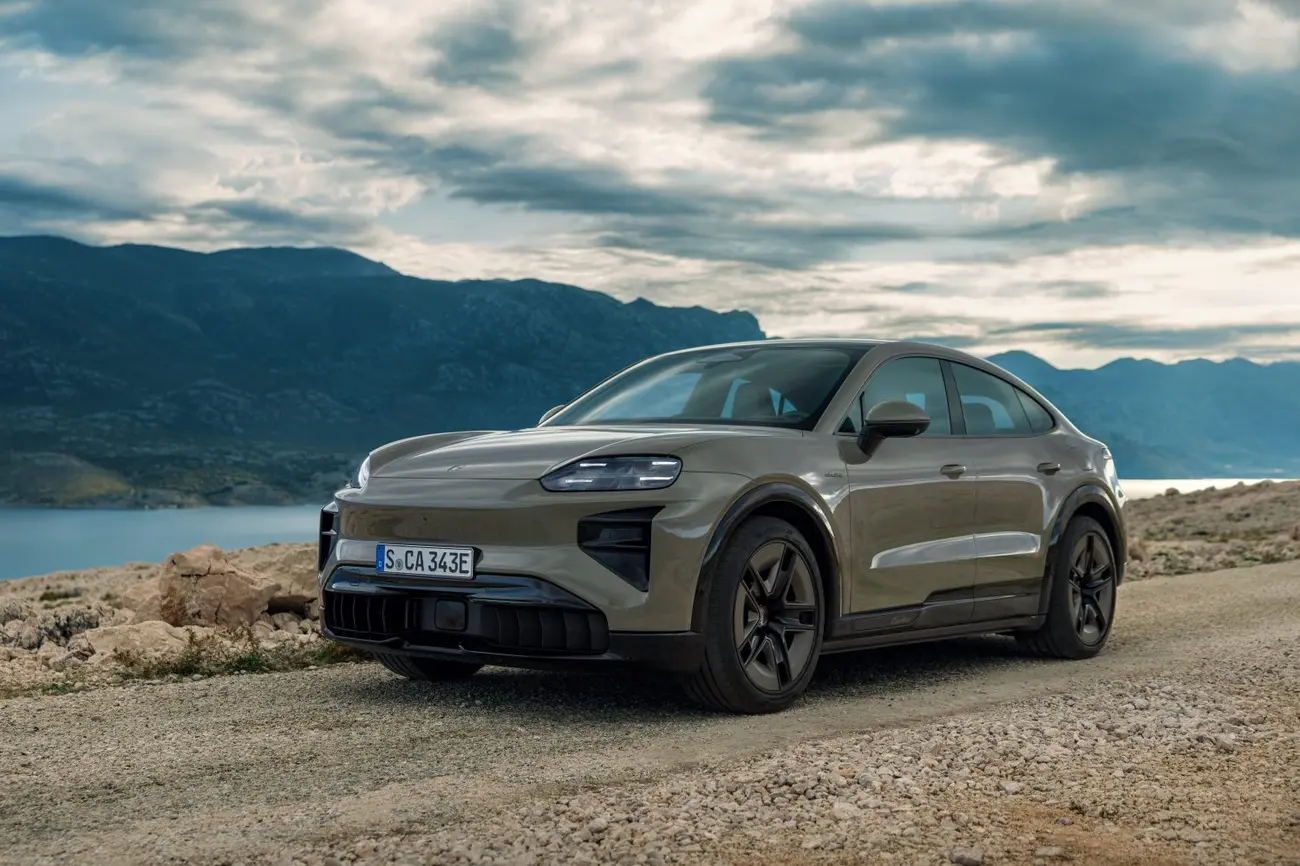
The roofline is the central argument. Inspired by the 911's "flyline," it drops more sharply than the SUV's and cuts the drag coefficient to Cd 0.23, against 0.25 for the Cayenne Electric SUV. It sounds like a technicality, but it translates into up to 18 km of extra range from aerodynamics alone. The result is a maximum WLTP range of up to 669 km depending on the version.
The trade-off is practicality. The boot drops to 534 litres (1,347 litres with the rear seats folded), plus a 90-litre frunk up front — around 250 litres less than the SUV. It is not a true five-seater either: the standard layout is two separate rear seats, with an optional three-seat bench whose narrow middle position is uncomfortable. Anyone who needs to carry five adults and proper luggage should look at the SUV instead.
Inside, rear headroom is fine for adults up to 1.85 m despite the lower roof. The cockpit gets a curved central screen, a 14.25-inch digital cluster and even an optional third display for the passenger. Build quality is precise, but some mid-range plastics jar with the premium positioning — and the standard leather feels ordinary, with the pricier upholstery packages (from around €3,300) doing most of the work to lift the ambience.
Power: three versions, from fast to absurd
Every version uses two motors, one per axle, with all-wheel drive. The difference is scale.
| Version | Power (overboost) | 0-100 km/h | Top speed |
|---|---|---|---|
| Cayenne Coupé | 408 PS (442 PS) | 4.8 s | 230 km/h |
| Cayenne S Coupé | 544 PS (666 PS) | 3.8 s | 250 km/h |
| Cayenne Turbo Coupé | 857 PS (1,156 PS) | 2.5 s | 260 km/h |
The Turbo is the most powerful series-production Porsche ever. With overboost and Launch Control it reaches 1,156 PS and does 0-100 km/h in 2.5 seconds — acceleration What Car? likens to "being shot out of a cannon." It is genuinely startling. But both Auto Express and What Car? reach the same verdict: through corners the S feels nearly as capable, and the S already has enough to explore the car's limits of grip. The Turbo's extra shows up more on the spec sheet than on a real road.
The driving itself, according to those who have tried it, keeps the Porsche signature: well-weighted steering, minimal body roll even in Sport Plus, and adaptive air suspension as standard. The regenerative braking transition is not always seamless, but that is a minor flaw in a coherent whole. Hence the "quiet force" tag — fast without drama, dynamic without being nervous.
Battery, range and charging
The foundation is a 113 kWh battery (around 108 kWh usable), shared across all versions. WLTP range varies with power and wheels: the S is the most efficient at up to 414 miles (about 666 km), the base sits near 409 miles, and the Turbo around 390 miles. Combined consumption runs between 18.9 and 22.0 kWh/100 km depending on the version.
The standout is the 800V architecture. On a DC fast charger it pulls up to 390 kW (400 kW in ideal conditions), meaning 10% to 80% in under 16 minutes. In ten minutes at the right charger it recovers about 300 km of range — enough to turn a coffee stop into a Lisbon-Porto trip without anxiety. At home, 11 kW comes as standard (22 kW optional), so a full charge takes overnight; on a regular 7.4 kW supply it is roughly 17 hours.
For Portugal, 800V matters. The fast-charging network along the motorways (the MOBI.E system) keeps expanding, and this Cayenne uses the highest-power posts better than most electric rivals. Buyers who mostly drive in town and charge at home will rarely touch the battery's limits.
How much the Porsche Cayenne Coupé Electric costs in Portugal
This is the filter between wanting one and buying one. Indicative Portuguese prices start at €114,226 for the base, rise to €136,546 for the S and reach €175,089 for the Turbo. Being fully electric, it is exempt from ISV (Portugal's vehicle purchase tax) and benefits from reduced IUC road tax, which helps — but it remains a six-figure car.
The good news is that the road-test verdict simplifies the choice. The base version offers the best balance of price and ability, and the S is the sweet spot for anyone wanting more performance without going overboard. The Turbo is an engineering feat, but the price jump is hard to justify for almost anyone — on the road, the gap to the S is too small for the cost. If the question is which Cayenne Coupé Electric to buy, the reviewers agree: not the Turbo.
Orders open in mid-2026, with a world premiere at Auto China 2026 in Beijing and deliveries from late summer. It is worth tracking each version's standard equipment, because options such as Porsche Active Ride suspension or rear-axle steering add up quickly on the final invoice.
Frequently Asked Questions
Indicative Portuguese prices start at €114,226 for the base version, rise to €136,546 for the Cayenne S Coupé and reach €175,089 for the Turbo. Being fully electric, it is exempt from ISV (vehicle purchase tax) and benefits from reduced IUC road tax, but it remains a six-figure car.
Every version uses a 113 kWh battery (around 108 kWh usable) and WLTP range reaches up to 669 km. The S is the most efficient at about 666 km, the base sits near 658 km and the Turbo around 628 km, with consumption between 18.9 and 22.0 kWh/100 km depending on version and wheels.
Thanks to its 800V architecture, on a DC fast charger it pulls up to 390 kW and goes from 10% to 80% in under 16 minutes, recovering about 300 km of range in just ten minutes. At home, with 11 kW AC charging as standard (22 kW optional), a full charge takes overnight.
The first road-test verdict is unanimous: not the Turbo. The base version offers the best balance of price and ability, and the S is the sweet spot for more performance. The Turbo has 1,156 PS and does 0-100 km/h in 2.5 s, but on the road the gap to the S is too small to justify the price jump.
Orders open in mid-2026, following the world premiere at Auto China 2026 in Beijing, with first deliveries expected from late summer 2026. It is worth tracking each version's standard equipment, as options such as Porsche Active Ride suspension add up quickly on the final invoice.
Reconciling sportiness with electricity? Going by the first drives, Porsche has pulled it off — the electric Cayenne Coupé drives like a Porsche. The lingering doubt is not technical. It is whether, at a moment when the brand itself is easing off electric, it makes sense to pay this much for one. For someone who already wanted a Cayenne and wants to go electric, this is probably the best way to do it.