
Polestar 4 vs Skoda Peaq in Portugal: Which Large Electric Family SUV to Buy
Published: 22/10/2026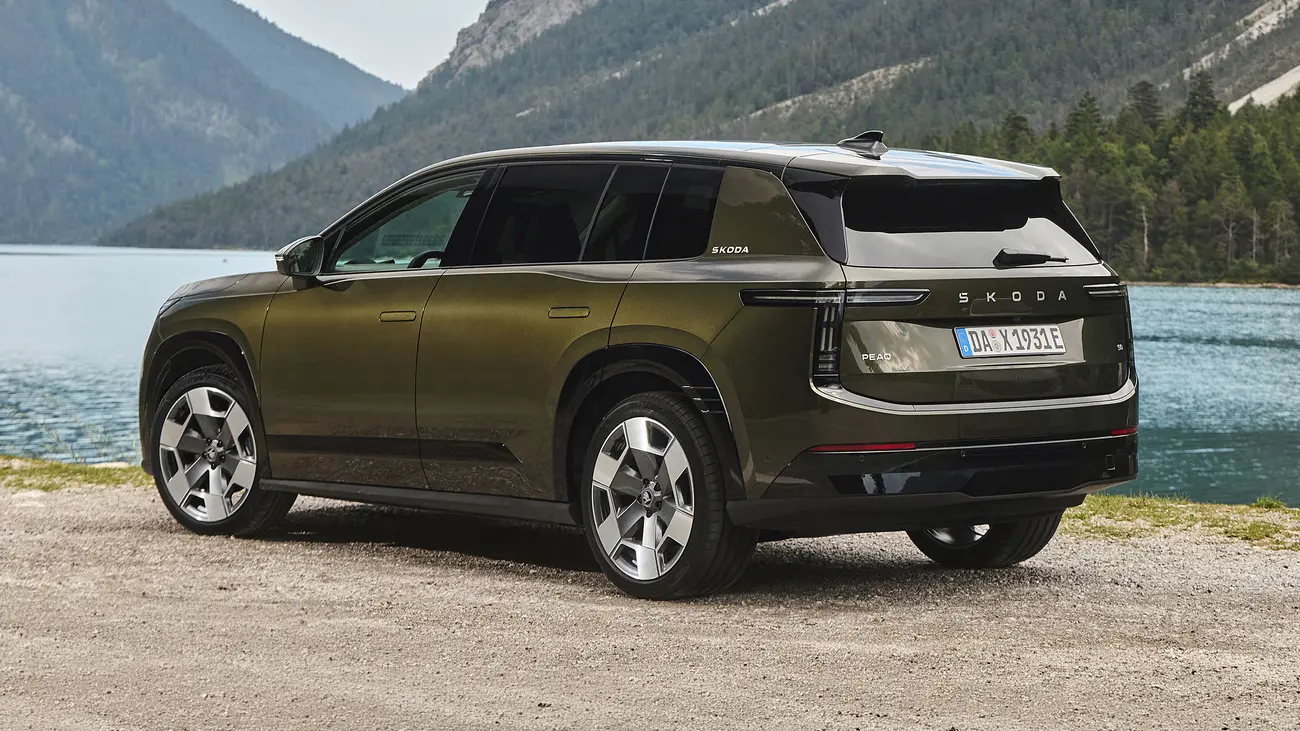
Polestar 4 vs Skoda Peaq: same size, two ideas of a family car
They are within a few centimetres of each other in length, both claim around 600 km of WLTP range, and both hit the market in the same autumn of 2026. Yet anyone weighing up the Polestar 4 vs Skoda Peaq in Portugal quickly finds that these two large electric SUVs answer very different questions. The Polestar wants to be the fast, stylish, premium family car. The Skoda wants to carry seven people and all their luggage without any fuss.
There is one more catch for buyers here: neither brand has published official Portuguese prices yet. So we use the German and Italian price lists as a reference and explain what that means if you are planning to buy in Portugal.
Polestar 4 SUV: more estate than SUV
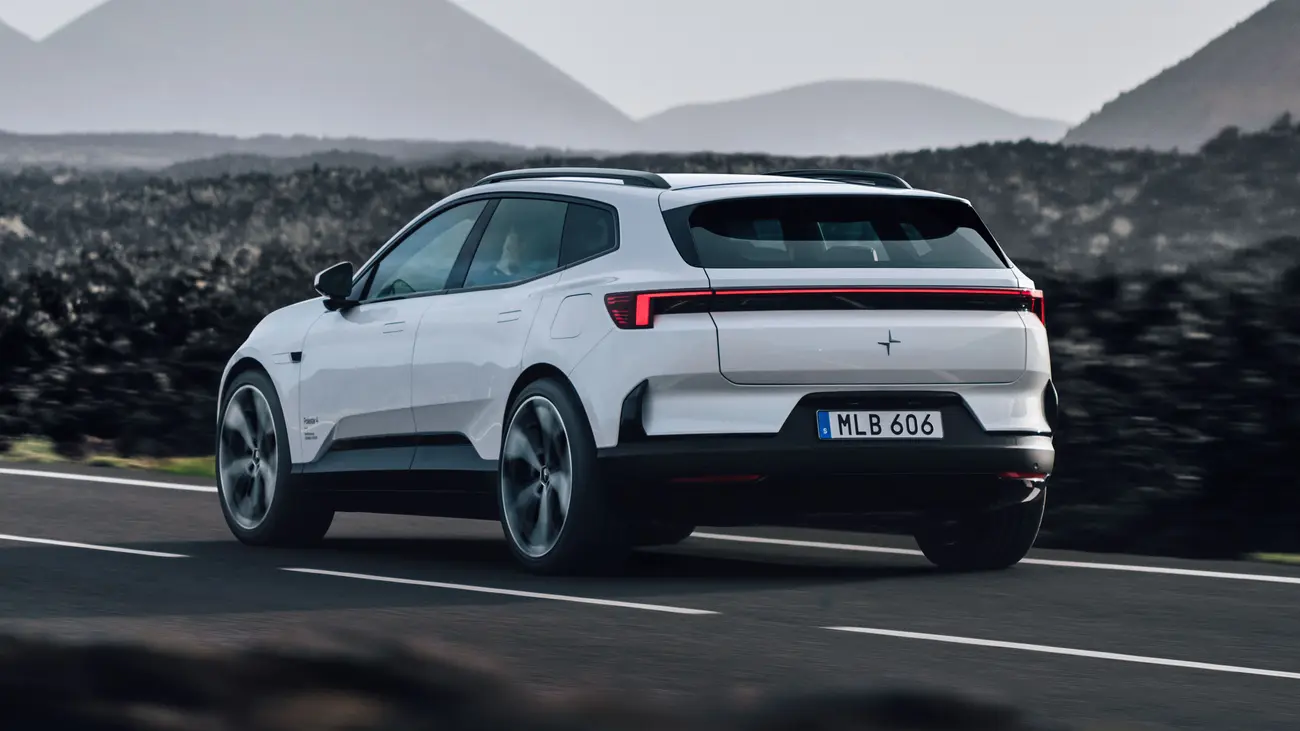
The big change from the 4 Coupé happens behind the B-pillar. The roofline runs flatter to the back, the tail is more upright, and there is a proper rear window again — the Coupé relied entirely on a camera and a digital rear-view mirror. Ground clearance stays at 166 mm, the same as the Coupé, so don't expect a raised SUV driving position.
It measures 4.84 m long, roughly 2.14 m wide including mirrors and 1.556 m tall, with a wheelbase of almost 3 m. In practice, it is a premium estate with fastback looks. Even the British press says so plainly: "this new Polestar 4 'SUV' is an estate. And that's a good thing."
Skoda Peaq: the biggest Skoda ever
At 4.874 m long, 1.867 m wide and about 1.67 m tall, the Peaq is 21 cm longer than the Enyaq and 12 cm longer than the combustion Kodiaq. Its 2.965 m wheelbase is what makes a usable third row possible.
It sits on the Volkswagen Group's MEB+ platform and debuts Skoda's Modern Solid design, with a black "Tech-Deck" front panel instead of a grille and flush door handles — a first for the brand. The Peaq makes its public debut at the Paris Motor Show, running from 12 to 18 October 2026.
Skoda Peaq and Polestar 4 SUV: specs side by side
| Polestar 4 SUV | Skoda Peaq | |
|---|---|---|
| Platform | Geely SEA, 400 V | VW MEB+, 400 V |
| Length | 4,840 mm | 4,874 mm |
| Height | 1,556 mm | about 1,660–1,670 mm |
| Wheelbase | about 3,000 mm | 2,965 mm |
| Seats | 5 | 7 (5 available) |
| Battery | 100 kWh gross / 94 kWh net, NMC | 60: 63 / 59 kWh; 90 and 90x: 91 / 86 kWh, NMC |
| Versions | Rear Motor 200 kW (272 hp), 343 Nm; Dual Motor 400 kW (544 hp), 686 Nm | 60: 150 kW (204 hp), 350 Nm; 90: 210 kW (286 hp), 545 Nm; 90x: 220 kW (299–300 hp), 545 Nm |
| 0-100 km/h | 7.3 s / 3.9 s | 8.4 s (60) / 7.1 s (90, 7-seat) / 6.7–6.8 s (90x, 7-seat) |
| Top speed | 200 km/h | 160 km/h (60) / 180 km/h (90 and 90x) |
| WLTP range | 630 km (RM) / 600 km (DM) / 520 km (Performance) | 446–456 km (60) / 553–644 km (90) / 527–611 km (90x) |
| DC charging | 200 kW, 10-80% in about 30 min | 160 kW (60) / 199 kW (90 and 90x), 10-80% in 27–28 min |
| AC charging | 11 kW (22 kW optional) | 11 kW |
| Boot | 530 L / 655 L (to roof) / 1,665 L + 15 L frunk | 299 L (7 seats) / 890–935 L / 2,075–2,150 L + 37 L frunk |
| Towing (braked) | 1.5 t (RM) / 2.0 t (DM) | 1.8 t (60 and 90) / 2.0 t (90x) |
The Peaq's range figures come as bands because that is how Skoda quotes them: they vary with wheels, equipment and the five- or seven-seat layout. Be wary of anyone giving you a single number.
Space and boot: the Skoda Peaq's 7 seats change everything
No contest here. With all seven seats in use, the Peaq still has 299 litres behind the third row. Fold that row and you get 890 litres (Italian figure) or 935 litres in the five-seat configuration; fold everything and it reaches 2,075–2,150 litres, depending on the source. There is also a 37-litre frunk, perfect for charging cables.
Does the Skoda Peaq come with 7 seats as standard? That depends on the market. In Italy and the UK, yes; in Germany the extra two seats are an option; elsewhere a five-seat version is offered at no extra cost. We will only know the Portuguese configuration once Skoda Portugal publishes its line-up.
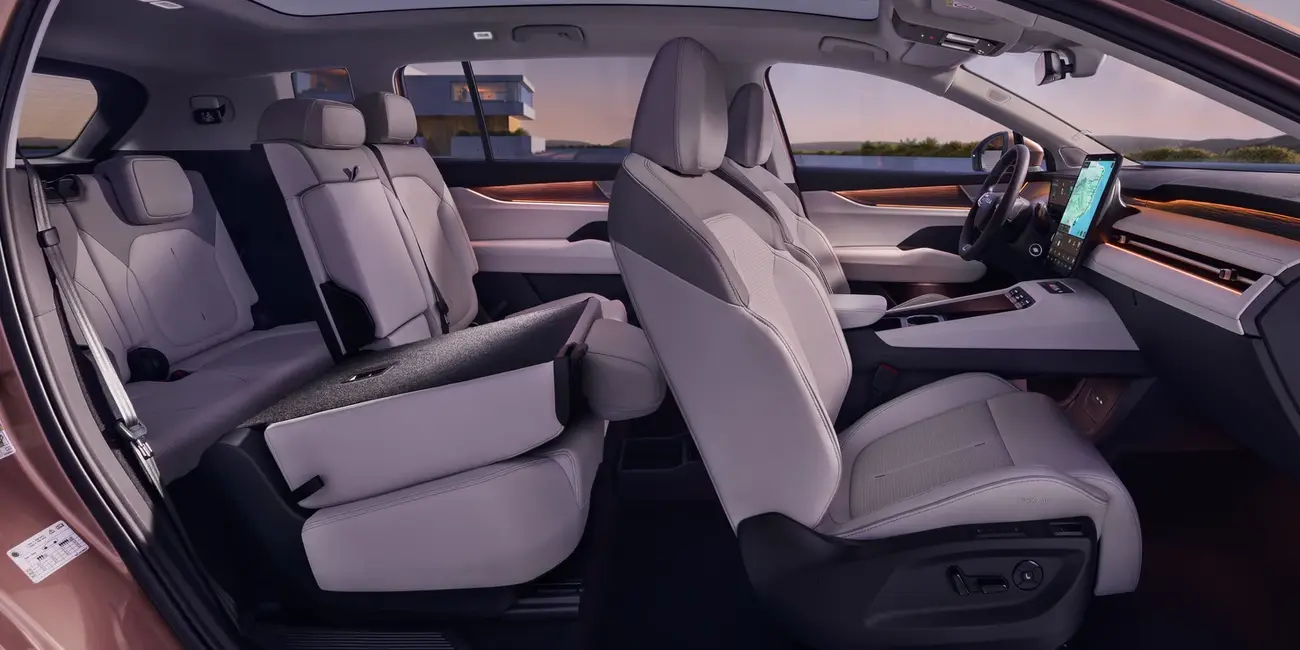
On usability, Autocar's road test is candid: adults fit in the third row but won't want to spend long there. The middle bench slides forward to free up more legroom for those in the back.
The Polestar 4 SUV plays a different game. It offers 530 litres up to the top of the seatbacks, 655 litres loaded to the roof and 1,665 litres with the seats folded, plus a 15-litre frunk. Those are good estate-car numbers, and the roof rails take up to 100 kg — enough for bikes or a roof tent. Rear-seat space is generous too: a 1.91 m reviewer sat comfortably behind his own driving position. But it is a five-seater, full stop.
Range and charging: the Peaq 90 goes further on paper
This one surprises people: the rear-wheel-drive Skoda Peaq 90 claims up to 642–644 km WLTP, more than the 630 km of the Polestar 4 Rear Motor, despite a smaller battery (86 kWh usable against 94 kWh). The all-wheel-drive Peaq 90x drops to 527–611 km, and the Peaq 60 manages 446–456 km.
In the real world, those numbers shrink. Autocar averaged about 3.4 miles/kWh in a Peaq 90x over mountain passes, motorway and heavy rain — pointing to roughly 480 km of real range. Electrifying estimates 547–612 km of real-world range for the Polestar 4 SUV, though that is an estimate rather than a test. There is no extended test of the rear-drive Peaq 90 yet.
Polestar 4 SUV range and charging
Both cars use a 400 V architecture, so neither gets the 800 V advantage of a Kia EV9 or Hyundai Ioniq 9. The Polestar accepts up to 200 kW on DC and goes from 10 to 80% in about 30 minutes. The Peaq 90 and 90x peak at 199 kW and do the same in 28 minutes; the Peaq 60 takes 160 kW and needs 27 minutes.
On AC, the Polestar wins. It has 11 kW as standard and an optional 22 kW charger (€800 in Germany) that cuts a full charge to about 5.5 hours. The Peaq is limited to 11 kW: roughly 9 hours on a three-phase wallbox.
What this means between Lisbon, Porto and the Algarve
For a Lisbon-Porto or Lisbon-Algarve run, any of the big-battery versions will make the trip without a charging stop, even with real-world range well below the WLTP figure. The return leg means one stop at a fast charger on MOBI.E, Portugal's national public charging network, and there the 28–30 minute 10-80% times of both cars are effectively the same.
Watch out with the Peaq 60: at 446–456 km WLTP, it is really the version for city and suburban driving. It's also worth checking the heat pump — it is standard in Germany, but in other markets it is a €1,130 option you will miss in winter.
Performance, towing and V2L
If acceleration matters, the Polestar 4 Dual Motor has no rival in this comparison: 544 hp, 686 Nm and 0-100 km/h in 3.9 seconds. Even the Rear Motor, at 7.3 s, beats the Peaq 60 (8.4 s) and is close to the Peaq 90x (6.7–6.8 s). Top speed separates them too: 200 km/h for the Polestar, 160–180 km/h for the Skoda.
The Peaq fights back with comfort. Autocar praises a ride that soaks up almost everything, a very quiet cabin and a tight turning circle that hides its size well. Driving thrills? Not many — and nobody buys this car for them.
Skoda Peaq towing capacity
If you tow a caravan or a boat trailer, the Peaq pulls 1.8 t in the 60 and 90 versions and 2.0 t in the 90x. On the Polestar 4 SUV, the Dual Motor is rated at 2.0 t; the Rear Motor is listed at 1.5 t in the German spec sheet and 2.0 t in the UK. If towing is a deal-breaker, check the figure homologated for Portugal before you order.
Both offer V2L to power external devices: 3.3 kW on the Polestar via a separately sold adapter, 3.6 kW on the Peaq through a 230 V socket in the boot. Skoda also says the Peaq is designed for V2H and V2G via its partner Moon, although the official price list only mentions V2L.
What they cost: Skoda Peaq and Polestar 4 SUV price in Portugal
Portuguese prices? Not confirmed yet for either car. Until then, these are the official European references:
| Version | Germany | Italy |
|---|---|---|
| Skoda Peaq 60 | €49,900 | €49,950 (Selection) |
| Skoda Peaq 90 | €57,900 | not listed |
| Skoda Peaq 90x | €60,400 | €59,950 (Selection) |
| Polestar 4 SUV Rear Motor | €57,900 | €55,900 |
| Polestar 4 SUV Dual Motor | €65,900 | €62,900 |
| Polestar 4 SUV Dual Motor Performance | €76,300 | €73,900 |
At entry level, the Peaq is €6,000 to €8,000 cheaper than the Polestar. Interestingly, in Germany the Peaq 90 costs exactly the same as the Polestar 4 Rear Motor (€57,900) — and gives you more WLTP range plus two extra seats. In return, the Polestar brings a more premium finish, more power and the 22 kW AC charger as an option.
The Skoda's bill can climb quickly, too. In the official MY2027 list published by Electra, the Peaq 90 Clever starts at €56,460 and the 90x Plus reaches €66,420, while packs such as Technology (€1,600), Relax (€1,570) or the electrochromic roof (€1,930) push a well-equipped Clever past €60,000.
What to expect in Portugal
Don't simply re-calculate these prices with Portugal's 23% VAT. Note that the Polestar is cheaper in Italy (22% VAT) than in Germany (19% VAT): each importer sets its own price list. The sensible expectation is figures in the same ballpark, confirmed with a dealer.
Both cars are fully electric, so they are exempt from ISV (Portugal's one-off vehicle registration tax) and IUC (the annual road tax). For company buyers, the €62,500 ceiling for the autonomous taxation exemption and VAT deduction on EVs matters: the Peaq should sit comfortably below it, the Polestar Rear Motor probably too, while the Dual Motor and especially the Performance may exceed it. Check the rules in force at the time of purchase with your accountant.
When they arrive in Portugal
The Polestar 4 SUV has been orderable since September 2026, is built in Busan (South Korea) and first deliveries are planned for the fourth quarter — although the German configurator already points to January-February 2027. Peaq orders opened in June in some markets, with first deliveries starting in October 2026. No Portuguese launch date has been announced for either car.
Frequently Asked Questions
Skoda Portugal has not published official Peaq pricing yet. For reference, the car costs €49,900 (Peaq 60), €57,900 (Peaq 90) and €60,400 (Peaq 90x) in Germany, and starts at €49,950 (60 Selection) in Italy. As a fully electric car it is exempt from ISV and IUC in Portugal, but the final local price will only be known once the brand announces its range.
Polestar Portugal has not released a price list for the 4 SUV yet. European references are €57,900 (Rear Motor), €65,900 (Dual Motor) and €76,300 (Dual Motor Performance) in Germany, or €55,900, €62,900 and €73,900 in Italy. For companies, the €62,500 threshold for the autonomous taxation exemption and VAT deduction on EVs may be exceeded by the Dual Motor and especially the Performance, while the Rear Motor will probably stay below it; always check with your accountant.
No Portuguese launch date has been announced yet. The Peaq has been orderable in some markets since June 2026, first European deliveries start in October 2026, and its public debut is at the Paris Motor Show from 12 to 18 October. Its direct rival, the Polestar 4 SUV, has been orderable since September 2026, with deliveries expected in Q4 or January-February 2027 according to the German configurator.
It depends on the market: 7 seats are standard in Italy and the UK, optional in Germany, and elsewhere the 5-seat version is a no-cost alternative. With all seven seats in place the boot holds 299 litres, rising to 890–935 litres with the third row folded and 2,075–2,150 litres with everything folded, plus a 37-litre frunk. The Portuguese configuration has not been confirmed by Skoda Portugal yet.
The Polestar 4 SUV has a straighter roofline, a more upright tail and a proper rear window again, whereas the Coupé relies on a camera and a digital rear-view mirror. Ground clearance stays at 166 mm, so the SUV behaves more like a premium estate than a tall SUV. It offers 530 litres of boot space to the seatbacks, 655 litres to the roof and 1,665 litres with the seats folded, always with 5 seats.
Polestar 4 vs Skoda Peaq: which one to choose?
If you have three or more children, regularly carry their friends or tow a caravan, the Skoda Peaq 90 is the rational pick: more space, more seats, more range on paper and, in Germany, the same price as the entry Polestar. Among 7-seat electric SUVs, it also sits well below the German prices of the Kia EV9 (€63,690) and Hyundai Ioniq 9 (€69,850), both of which are over 5 metres long.
If your family fits in five seats and you value finish, performance and a shape that doesn't scream "people carrier", the Polestar 4 SUV Rear Motor is the more desirable alternative — and 655 litres to the roof is enough for most holidays.
Before deciding, wait for the Portuguese price lists. The gap between these two could shift depending on how Skoda Portugal and Polestar Portugal position them in our market.