
2026 Polestar 3 with 800V in Portugal: 350 kW Charging and 635 km Range
Published: 14/05/2026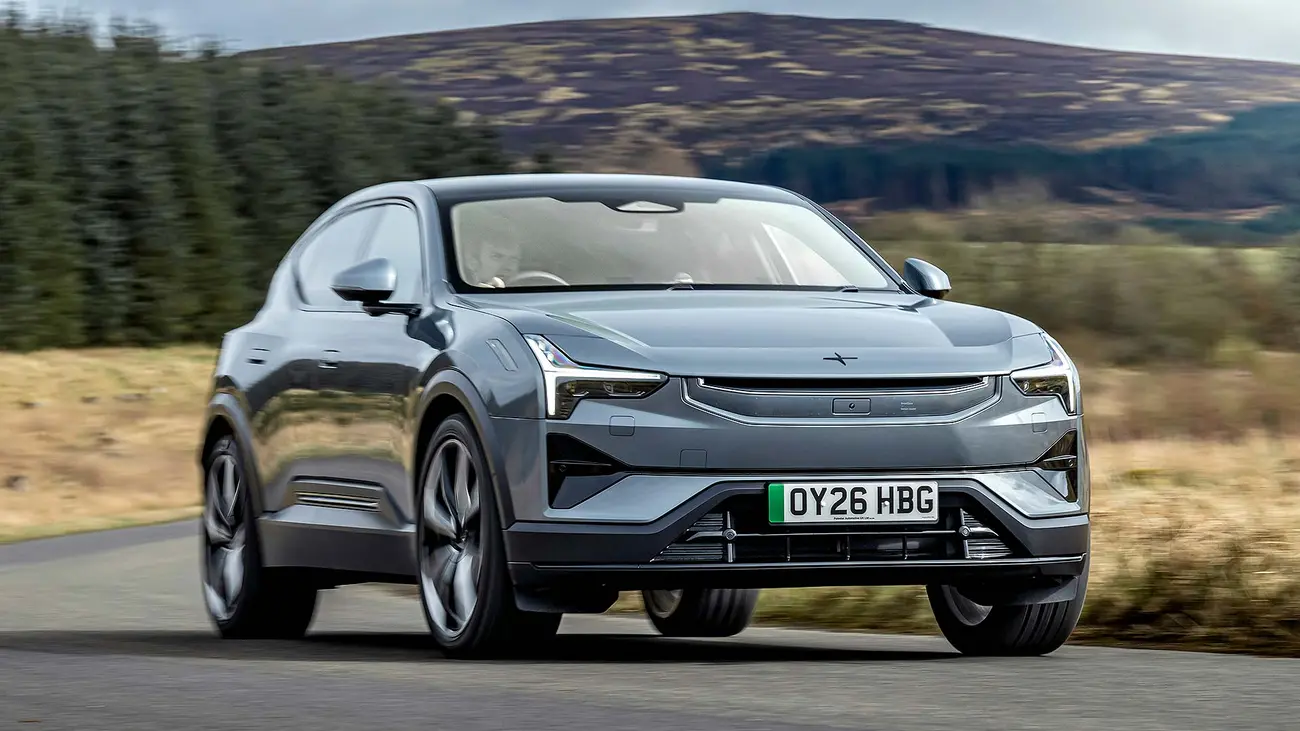
22 minutes from 10 to 80%: the Polestar 3 finally charges like it should
The 2026 Polestar 3 is no longer just a handsome premium SUV with decent range. The switch to an 800V architecture on the SPA2 platform — the same one Volvo Cars will use — pushes peak DC charging to 350 kW, brings new motors and lifts power across the entire lineup. For Portuguese buyers torn between the Polestar 3 and its German rivals, there is now a hard technical argument to consider.
The entry-level Long Range Single Motor starts at €79,890 on Polestar's official site (handover fee included), with UK deliveries beginning in early 2026 and the rest of Europe following shortly after.
The 800V jump: what it actually means
The most relevant change is not horsepower, it is minutes. The previous Polestar 3 peaked at 250 kW DC and took roughly 30 minutes for a 10–80% top-up. The new generation climbs to 350 kW (310 kW on the rear-motor version) and closes the same window in 22 minutes — over 25% faster.
For a Lisbon-to-Porto run, that means coffee-break stops instead of lunch-break stops. At an IONITY 350 kW charger on the A1 motorway, 22 minutes is enough to leave with a nearly full battery. It is the first time a production Polestar plays in the same charging-speed league as the Porsche Taycan and Audi e-tron GT.
The battery setup changes too. CATL supplies two new packs — 92 kWh on the entry version and 106 kWh on the Dual Motor and Performance variants. The old 111 kWh pack has been discontinued because it is not 800V-compatible.
WLTP range: 635 km at the top, with better efficiency
Polestar claims efficiency gains of up to 6% on the WLTP cycle. The headline numbers:
| Version | Battery | WLTP range | Power | 0-100 km/h | DC charging |
|---|---|---|---|---|---|
| Rear Motor | 92 kWh | 604 km | 245 kW / 333 hp | 6.5 s | 310 kW |
| Dual Motor | 106 kWh | 635 km | 400 kW / 544 hp | 4.7 s | 350 kW |
| Performance | 106 kWh | 593 km | 500 kW / 680 hp | 3.9 s | 350 kW |
In real Portuguese conditions — motorway at 120 km/h, air-conditioning running, mild winter — the Dual Motor should deliver 450 to 500 km between charges. If you live in Lisbon and drive to Porto every couple of weeks, that means making the trip with a single short stop.
New motors: how it feels to drive
Every version gets a new in-house permanent magnet synchronous rear motor. All-wheel-drive variants pair it with an asynchronous front motor that disconnects on its own when not needed — a trick Porsche and Audi already use to save energy on long trips.
The Performance jumps to 680 hp (up from 517 hp) and clears 0-100 km/h in 3.9 seconds, with a 225 km/h top speed. The Dual Motor moves from 489 to 544 hp. Even the base model gains 38 hp over its predecessor.
NVIDIA Orin: an eight-fold compute jump
The less obvious but possibly most important change long-term sits in the central computer. The 2026 Polestar 3 swaps NVIDIA's Xavier chip for the DRIVE AGX Orin — going from 30 to 254 trillion operations per second. That is an eightfold increase in processing capacity.
In practice, this improves battery thermal management, active safety systems and opens the door to driver-assist features the old hardware could not handle. Polestar will retrofit the new computer free of charge to existing Polestar 3 owners — a rare move in this industry, and a real benefit for early buyers.
The software also gains Breathe Charge, an adaptive system from Breathe Battery Technologies that learns your charging habits and tunes the power curve to reduce battery wear without sacrificing speed.
Polestar 3 vs BMW iX3 vs Mercedes EQE SUV: who wins
The big question in the premium electric SUV segment above €80,000 is simple: what do you actually buy today?
| Model | Architecture | DC charging | WLTP range (top) | Notes |
|---|---|---|---|---|
| Polestar 3 2026 | 800V | 350 kW | 635 km | New rear motor, Orin 254 TOPS |
| BMW iX3 Neue Klasse | 800V | 400 kW | 805 km | 108.7 kWh battery, iDrive X |
| Mercedes EQE SUV | 400V | around 170 kW | 590 km | Pre-MMA platform, slower charging |
| Audi Q8 e-tron | 400V | 170 kW | 600 km | Older platform |
The BMW iX3 Neue Klasse is the most dangerous rival — also 800V, even faster charging at 400 kW, and more range. The Mercedes EQE SUV and Audi Q8 e-tron, on the other hand, fall behind: still 400V, still capped under 200 kW. For a buyer who prioritises charging speed on road trips, the choice starts to make itself.
In the UK, the Performance is priced at £91,990 — more than £23,000 below the BMW iX M70 and Mercedes-AMG EQE 53 SUV. A strong commercial argument if Polestar keeps that positioning in continental Europe.
What it will cost in Portugal and where to charge it
There is no official Portuguese price yet, but the €79,890 European baseline for the Long Range Single Motor is the starting point. Since the Polestar 3 is classified as a fully electric vehicle, it benefits from full ISV exemption (Portugal's vehicle registration tax) and reduced IUC (annual circulation tax) — two fiscal advantages that significantly cut total cost of ownership versus an equivalent combustion SUV.
For company buyers, electric vehicles also benefit from reduced autonomous taxation — a factor that has driven a large share of Portugal's premium EV sales over the past two years.
Where to use 350 kW in Portugal
Portugal's ultra-rapid charging network is ready for the Polestar 3. IONITY has 350 kW stations along every major corridor — A1 (Aveiras, Pombal, Mealhada), A2 (Marateca), A6 and A22. MOBI.E (the Portuguese national charging network) integrates operators such as Galp Electric, Repsol, Prio and EDP Comercial with dozens of stations from 150 to 400 kW already running. For city-only drivers, any home wallbox is enough — the 800V advantage only shows up on long trips.
Frequently Asked Questions
Around 22 minutes on a 350 kW DC charger, compared to 30 minutes on the previous model — a cut of more than 25%. The Rear Motor version peaks slightly lower at 310 kW, but the 10–80% window stays the same thanks to its new 92 kWh CATL battery. In Portugal, IONITY 350 kW stations on the A1, A2, A6 and A22 motorways are already able to deliver full speed.
Official Portuguese pricing has not been announced yet, but the European baseline is €79,890 for the Long Range Single Motor (handover fee included) on Polestar's official site. The Performance version costs £91,990 in the UK — over £23,000 below the BMW iX M70 and Mercedes-AMG EQE 53 SUV. As a fully electric vehicle, it qualifies for full ISV exemption and reduced IUC annual circulation tax in Portugal.
WLTP range on the Dual Motor (106 kWh CATL) is 635 km, the highest in the lineup. In real Portuguese conditions — motorway at 120 km/h with the air-conditioning running — expect 450 to 500 km between charges. Efficiency improves up to 6% over the previous model thanks to the new in-house permanent magnet rear motor and an asynchronous front motor that disconnects automatically when not needed.
Both are 800V, but the BMW iX3 Neue Klasse charges up to 400 kW (vs 350 kW), carries a bigger battery (108.7 kWh) and offers more WLTP range (805 km vs 635 km). The Polestar 3 counters with sharper Performance pricing, a 254 TOPS NVIDIA Orin computer and a more distinctive design. If range and peak charging speed matter most, the iX3 wins; if design, software and price-to-power ratio rank higher, the Polestar 3 remains competitive.
The 2026 brings three upgrades that are hard to ignore: DC charging 25% faster (22 min vs 30 min), an extra 60 hp on the Dual Motor (544 vs 489 hp) and an eight-fold more powerful NVIDIA Orin computer (254 TOPS vs 30 TOPS). For mostly urban use, a discounted 2025 unit still makes sense. For drivers who regularly cover Lisbon-Porto or Algarve trips, the move to 800V justifies the wait — first European deliveries begin in early 2026.
Is it worth waiting for the 2026 version?
Anyone considering a Polestar 3 today has a clear choice: grab a discounted 2025 unit (there is still stock in the Portuguese dealer network) or wait for the 2026. The gap is not cosmetic — 22 minutes versus 30 minutes of charging, 60 extra horsepower on the Dual Motor and a computer eight times more powerful make the 2026 a meaningfully better long-distance car.
Still to confirm in the coming months: official Portuguese pricing, exact delivery timing, and whether Polestar keeps the Plus pack standard in the local configuration. Worth keeping an eye on.