
New Hyundai Tucson PHEV in Portugal: 292 PS, 17.1 kWh Battery and 81 km EV Range
Published: 13/10/2026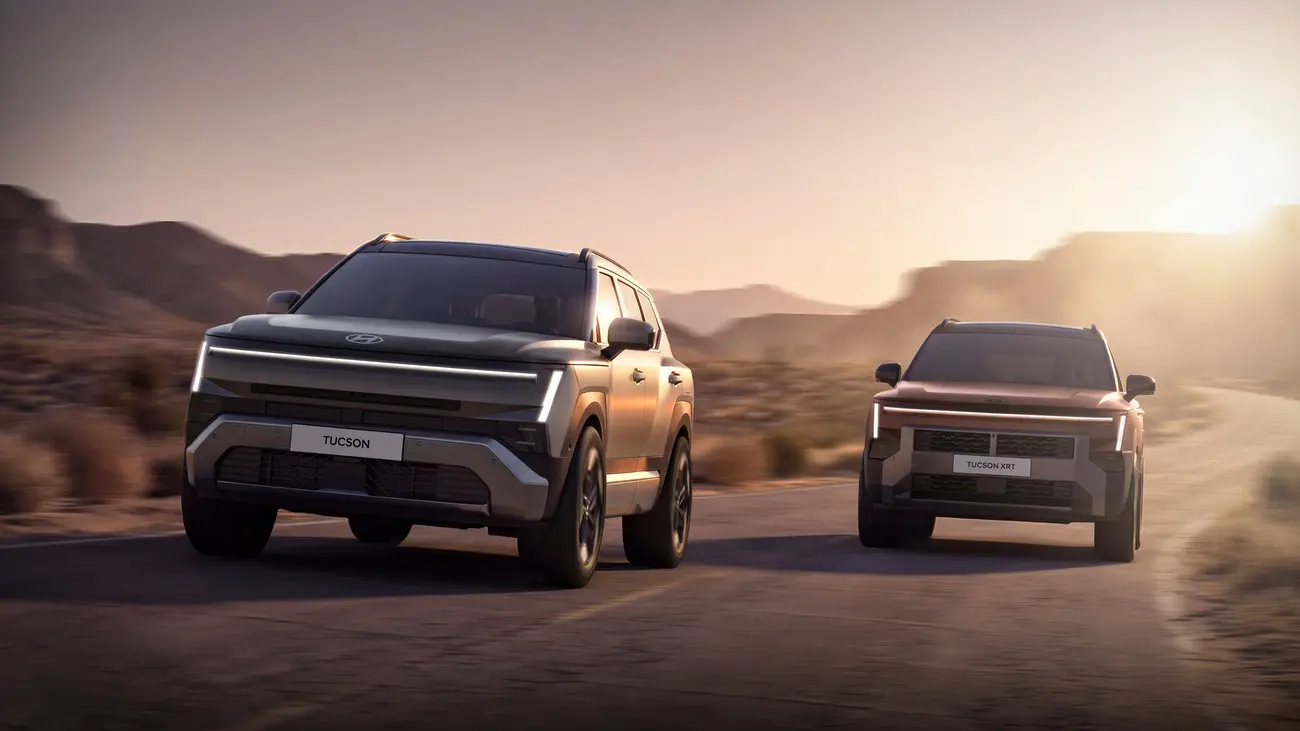
81 km on electricity: what's new in the Hyundai Tucson PHEV
A bigger battery, more power and more electric range. Hyundai revealed the fifth-generation Tucson on 1 October, and for drivers in Portugal the version worth watching is the plug-in hybrid. The new Hyundai Tucson PHEV heading to Portugal brings 292 PS, a 17.1 kWh battery and an 81 km electric range — a target figure still awaiting WLTP homologation.
European deliveries start in early 2027, with production at Hyundai's plant in Nošovice, Czech Republic. Prices haven't been announced yet. Still, there's enough data to judge whether it's worth waiting for — and where it still trails the competition.
New Tucson PHEV vs old Tucson PHEV: what changed
The battery is the headline. It grows from 13.8 kWh to 17.1 kWh, and Hyundai is targeting 81 km of electric range (on 17" wheels). That's enough to cover the school run, the commute and the afternoon errands without starting the petrol engine.
| New Tucson PHEV (5th gen) | Outgoing Tucson PHEV | |
|---|---|---|
| Engine | 1.6 T-GDi + 107 PS P2 electric motor | 1.6 T-GDi + electric motor |
| System output | 292 PS | 248 PS (Hyundai Portugal) |
| Torque | 380 Nm | — |
| Battery | 17.1 kWh | 13.8 kWh |
| Electric range | 81 km (WLTP, pending homologation) | up to 86 km (figure advertised by Hyundai Portugal) |
| AC charging | 7.2 kW | 7.2 kW |
| DC charging | No | No |
| 0-100 km/h | 7.9 s | — |
| Drive / gearbox | AWD / 6-speed automatic | AWD / 6-speed automatic |
| Towing capacity | 1,810 kg | — |
A word of caution on range: the new car's 81 km is a target still awaiting homologation. The 86 km Hyundai Portugal currently advertises for the outgoing PHEV may not be measured on the same basis — it likely includes the urban cycle. The exact like-for-like gain will only be clear once the new model is homologated.
Those 292 PS and 380 Nm come courtesy of a new 107 PS electric motor built into the gearbox. The sprint to 100 km/h takes 7.9 seconds. Hardly a hot SUV, but plenty for merging onto the A1 or overtaking with a full load of luggage.
Does the Hyundai Tucson PHEV have DC fast charging?
No — and it's the one weakness Hyundai left untouched. The onboard charger still tops out at 7.2 kW AC, with no DC capability at all.
On a home wallbox that can deliver the full 7.2 kW, a full charge of the 17.1 kWh battery should take around two and a half hours (our own estimate based on battery capacity). On a regular household socket, plan on an overnight charge. If you can plug in at home or at work, that's more than adequate. If you rely on MOBI.E — Portugal's national public charging network — the rapid chargers along the motorways won't do anything for this car.
The BYD Seal U DM-i, by contrast, accepts up to 18 kW DC and goes from 30 to 80% in 35 minutes. Not fast by EV standards, but it's an option the Tucson simply doesn't have.
2027 Hyundai Tucson: bigger outside, roomier inside
Europe gets the short-wheelbase body: 4,560 mm long, 1,900 mm wide, 1,670 mm tall, with a 2,720 mm wheelbase. North America, Korea and Australia get a long-wheelbase version stretching to 4,700 mm — so if you spot spec sheets quoting 4.70 m, they're not describing the Tucson sold here.
2027 Hyundai Tucson dimensions and boot space
The extra 40 mm of wheelbase goes straight to the back seat: rear legroom reaches 1,003 mm and the rear doors swing open to 83 degrees, which helps a lot with child seats. Hyundai quotes 691 to 695 litres of boot space, but that figure most likely applies to versions without a traction battery. The outgoing PHEV offered 558 litres, so expect the new plug-in to give up some space compared with the headline number.
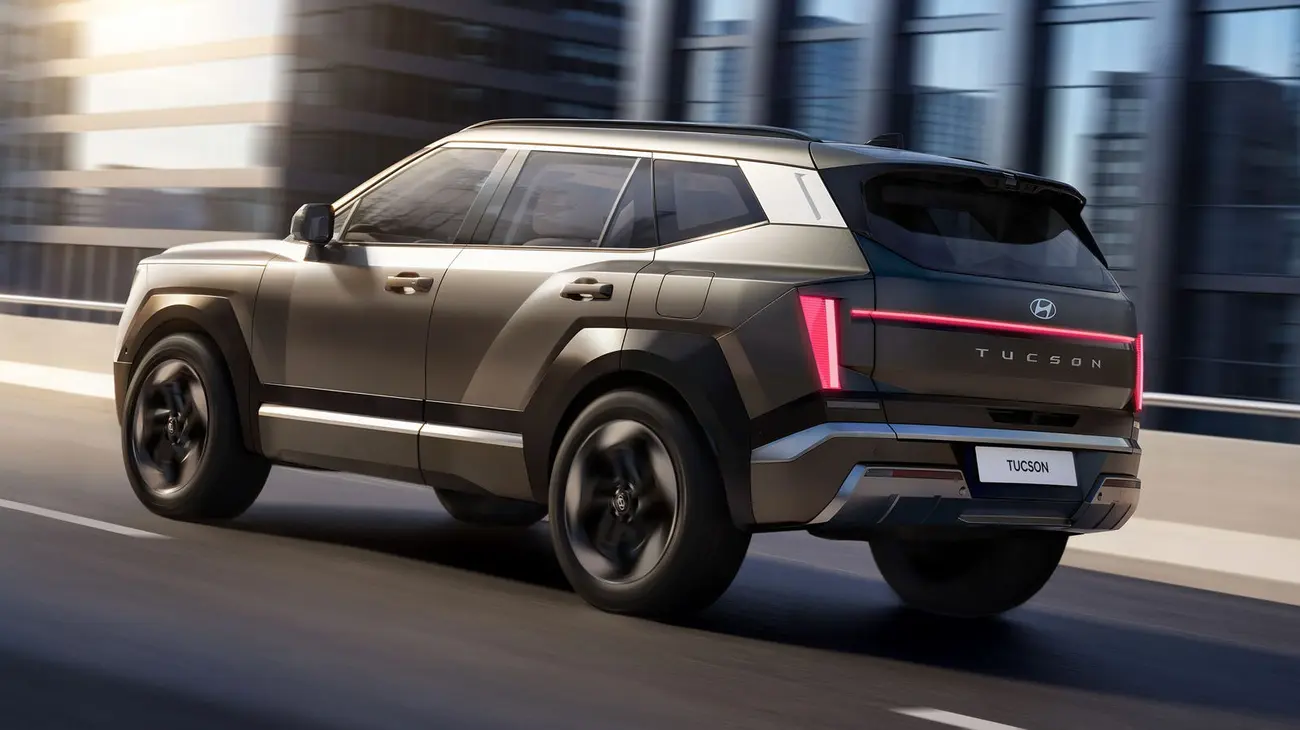
Styling follows Hyundai's "Art of Steel" design language, with H-shaped light signatures front and rear, squared-off surfaces and chunky wheel arches. Hyundai itself admits the look will divide opinion.
Pleos Connect and the return of physical buttons
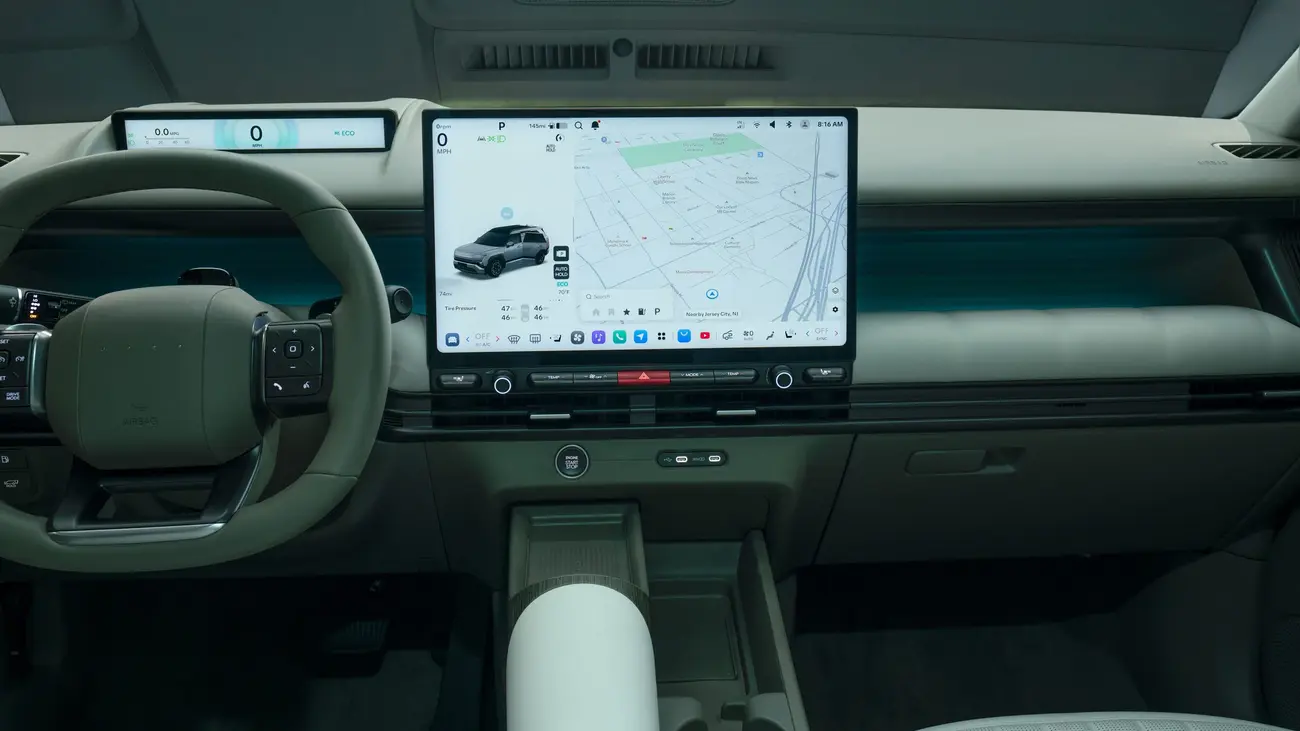
Inside, the Tucson debuts Hyundai's Pleos Connect system, built on Android Automotive and running on either a 12.9" or 17" screen, paired with a 9.9" digital cluster and the Gleo AI voice assistant. Apps run natively, without needing your phone.
Better news for anyone tired of digging through menus to change the temperature: physical controls stay for the climate and volume. You also get two 15 W Qi2 wireless chargers, 100 W USB-C ports, optional Bang & Olufsen audio and Memory Reverse Assist, which records up to 50 metres of driving to reverse back out automatically — handy in the tight underground garages of older Lisbon and Porto buildings.
Hyundai Tucson PHEV price in Portugal: what to expect
There's no official pricing yet. The current Tucson PHEV starts at around €47,370 in Portugal, while in France the outgoing model started at €41,050. With a bigger battery, more equipment and an all-new body, it's reasonable to expect the new Hyundai Tucson PHEV to land at the same level or higher — somewhere north of €47,000 is our estimate, not a confirmed figure.
Portugal's tax rules work in favour of plug-in hybrids. With more than 50 km of electric range and low emissions, PHEVs currently qualify for a 75% reduction in ISV, the one-off vehicle registration tax, and 81 km leaves a comfortable margin above that threshold. For company cars, qualifying PHEVs benefit from reduced autonomous taxation rates and deductible VAT within the acquisition cost limits set by law. It's worth double-checking the rules in force when the car arrives, since the State Budget can change them.
When does the new Hyundai Tucson arrive in Portugal?
Korea gets it first, later in 2026, with Europe following in early 2027. Hyundai will show a sportier version, most likely an N Line, at the Paris Motor Show on 12 October. Portuguese prices should be published closer to launch.
Hyundai Tucson PHEV vs BYD Seal U DM-i and other rivals
The toughest rival comes from China. In AWD form, the BYD Seal U DM-i packs an 18 kWh battery, 323 hp and 405 Nm, hits 100 km/h in 5.9 seconds and accepts DC charging. In the UK it costs between £34,995 and £39,995, undercutting both the Tucson and the Kia Sportage PHEV.
| New Tucson PHEV | BYD Seal U DM-i (AWD Design) | |
|---|---|---|
| Power / torque | 292 PS / 380 Nm | 323 hp / 405 Nm |
| Battery | 17.1 kWh | 18 kWh |
| Electric range | 81 km (WLTP, pending homologation) | ~70 km (up to 78 miles WLTP on some versions) |
| DC charging | No | Yes, 18 kW |
| Boot | 691-695 L (non-PHEV versions) | 425 L |
On paper, the BYD wins on power, price and charging. British reviewers, however, criticise its disappointing ride and numb steering. The Tucson should hit back with a bigger boot, Hyundai's well-established dealer and service network in Portugal and more electric range — provided the 81 km survives homologation.
New Hyundai Tucson PHEV vs Kia Sportage PHEV
The Kia Sportage PHEV shares its hardware with the current Tucson, so today they're near-mechanical twins. With the new generation, the Tucson pulls ahead on battery size and range until Kia updates the Sportage. The Toyota RAV4 PHEV remains the other C-segment benchmark worth putting on your shortlist.
Frequently Asked Questions
Hyundai has not yet announced prices for the fifth-generation Tucson. The current Tucson PHEV starts at around €47,370 in Portugal, and with a bigger 17.1 kWh battery and more equipment, the new model is expected to sit at that level or higher. Portuguese pricing should be confirmed closer to the European launch in early 2027.
The new Tucson PHEV keeps a 7.2 kW AC onboard charger and does not support DC fast charging. On a 7.2 kW wallbox, a full charge of the 17.1 kWh battery should take roughly two and a half hours (our estimate), while a standard 230 V household socket will need a full night. DC fast chargers on Portugal's MOBI.E network offer no benefit for this car.
Plug-in hybrids with at least 50 km of electric range and low emissions currently qualify for a 75% reduction in ISV (vehicle registration tax), and the new Tucson PHEV's claimed 81 km clears that threshold comfortably. For companies, eligible PHEVs benefit from reduced autonomous taxation rates and deductible VAT within the legal acquisition-cost limits. These rules can change with each State Budget, so check them at the time of purchase.
No. The fifth-generation Tucson will not get a fully electric version, so the 292 PS PHEV with 81 km of electric range is the most electrified option. In Europe the lineup also includes a 150 PS 1.6 T-GDi (6-speed manual or 7-speed DCT with 48V mild hybrid) and a 245 PS / 380 Nm full hybrid.
Today the two share the same hardware (1.6 T-GDi, 13.8 kWh battery and 7.2 kW charger). With the new generation, the Tucson PHEV pulls ahead with a 17.1 kWh battery, 292 PS and a claimed 81 km of electric range, an advantage it should keep until Kia updates the Sportage. Neither offers DC fast charging.
Buy now or wait for the new generation?
If you charge at home and drive less than 80 km a day, the new Tucson PHEV could turn most of your trips into fully electric ones — something the current model, with its 13.8 kWh battery, manages with less margin. There won't be a fully electric Tucson in this generation, so the PHEV is the most electrified Tucson you'll be able to buy.
If you need a car now, the outgoing Tucson PHEV could become a smart buy as dealers clear stock with discounts. If you can hold off until 2027, the sensible move is to wait for Portuguese pricing and final WLTP figures — and compare them against whatever the Seal U DM-i costs by then.