
Electric Citroën 2CV: Target Price, Range Estimates and the Portugal Link
Published: 22/10/2026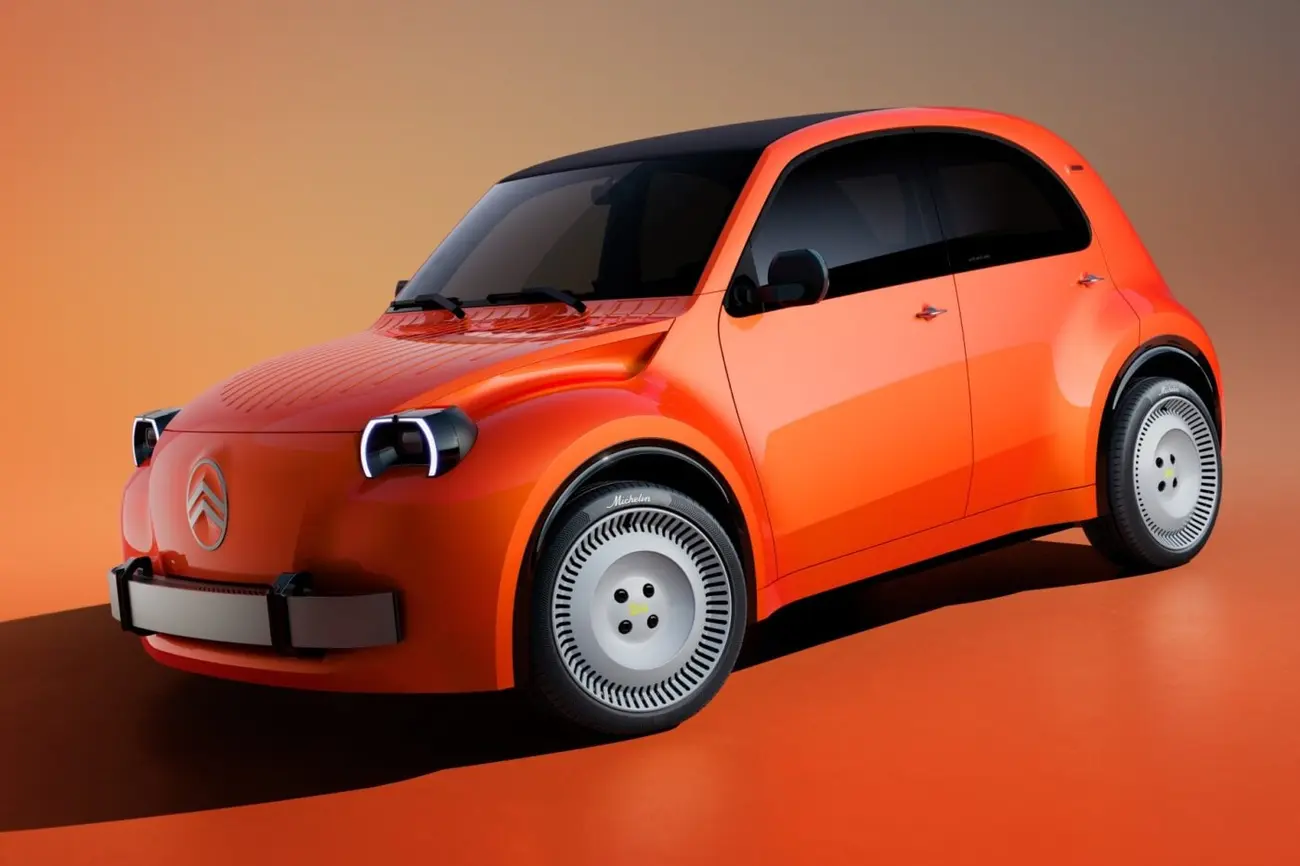
The new electric Citroën 2CV: a comeback unveiled in Paris
Around €15,000, roughly one tonne and a fabric roof that rolls all the way back. That's the pitch for the new electric Citroën 2CV, revealed as the 2 CV Concept on 11 October and on display at the Paris Motor Show, running 12–18 October 2026. This isn't a nostalgia exercise: Citroën wants to put a simple, affordable, European-built electric city car on sale by 2028.
If you're living in Portugal, there are two reasons to care. The first is the price target, which would make the 2CV one of the cheapest new EVs on the market. The second is local history: the very last 2CV left the Citroën plant in Mangualde, in central Portugal, in 1990.
"Reinventing the 2 CV isn't about replicating a car from the past," said Citroën CEO Xavier Chardon. That line sums up the concept nicely.
What's changed since the original 2CV
The original "Deux Chevaux" ("two horses", named after France's fiscal horsepower rating) debuted at the 1948 Paris Motor Show and stayed in production for 42 years, until 1990. Around 3.87 million saloons were built — 5.1 million including the Fourgonnette van and other derivatives. Power ranged from 9 to 29 hp, and the brief became legendary: carry two farmers and 50 kg of potatoes, or a basket of eggs, across a ploughed field without breaking anything.
The new car is 3.76 m long, about 10 cm shorter than the original. The overall silhouette survives, but the bonnet is taller and boxier, the wheel arches sit lower and the windows wind down instead of flipping up. If the production version lands in 2028, it will mark the 2CV's 80th anniversary.
Design and interior: doing more with less
Free-standing round LED headlights, subtly flared wings and vertical creases on the bonnet and tailgate come straight from the original and from the TPV ("Toute Petite Voiture") prototype. The rest is clever cost engineering:
- Flat steel panels and flat glass, cheaper to produce
- Bumpers separate from the bodywork, so they can be replaced on their own — cheaper repairs
- Moulded-in black tailgate finish instead of paint
- Fabric roof that rolls back manually
- Steel wheels with Michelin tyres (18-inch according to some outlets, 19-inch according to others; production cars will likely get smaller wheels)
Citroën also worked with Michelin on a "universal digital tyre twin": a virtual model that tracks tyre pressure, temperature and wear in real time, letting the car adapt its driver-assistance systems.
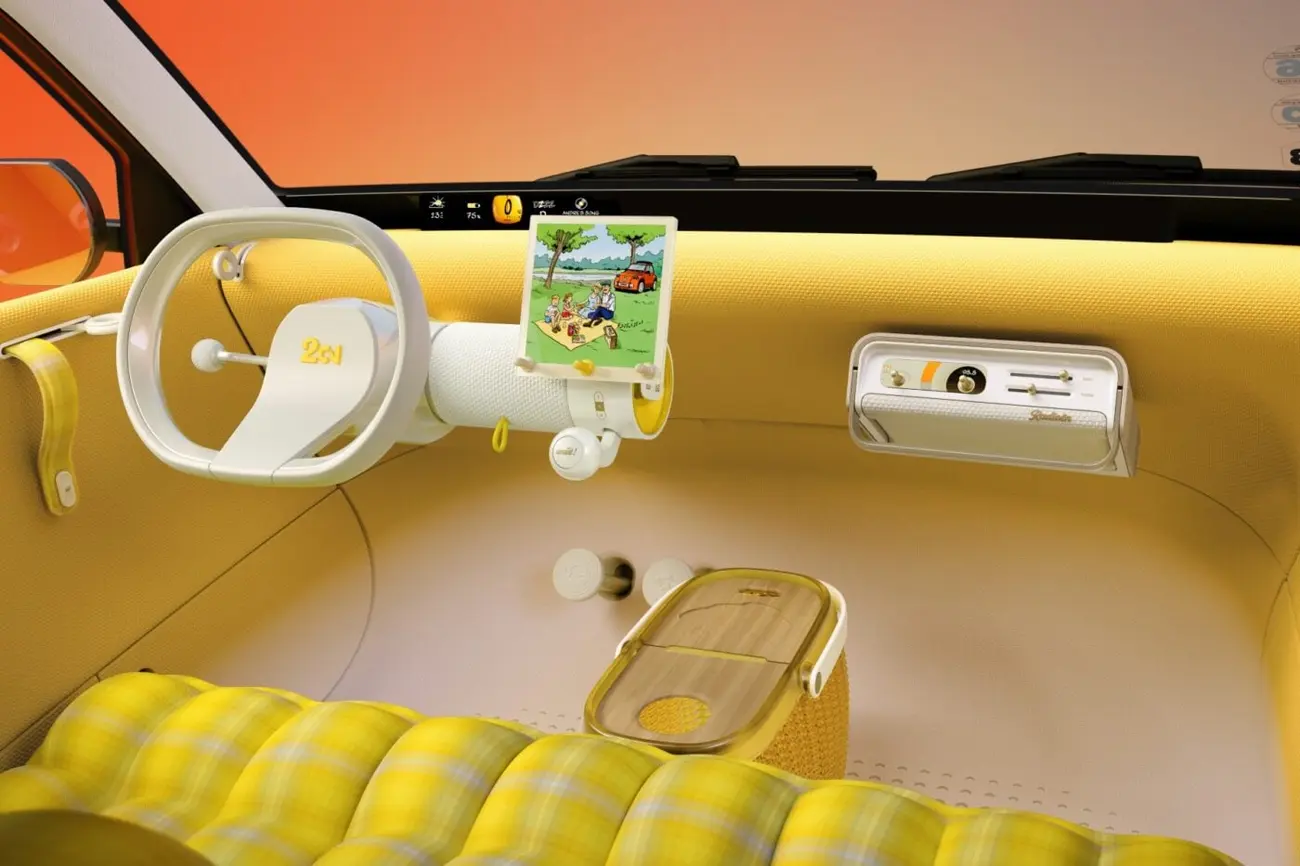
Inside, there's no conventional dashboard. A horizontal bar carries the controls, the steering wheel has a single spoke, and an 8-inch square touchscreen works alongside Citroën Smart Vision, which projects information into the driver's line of sight. The centre console is replaced by a removable basket 3D-printed from wood and bio-based plastic, and the "Radioën" radio detaches to double as a portable speaker.
The playful details keep coming: egg holders in the doors, a tortoise on the brake pedal and a rabbit on the accelerator. The front seat can be lifted out and used outside the car for a picnic. Some of this — the basket, the bright colours — probably won't make it to production.
Specs: what's official and what's estimated
Citroën hasn't released battery, power or range figures yet. The table separates confirmed facts from reported numbers:
| Item | Value | Status |
|---|---|---|
| Length | 3.76 m | Official (concept) |
| Seats | 4 | Reported |
| Target weight | about 1,000 kg | Official (target) |
| Target price | about €15,000 before incentives | Official (target) |
| Launch | by 2028 | Official |
| Motor | about 80 hp | Reported |
| Top speed | about 130 km/h | CEO hint |
| Battery | LFP, 20 to 30 kWh | Estimate |
| WLTP range | 160 to 210 km | Estimate |
| DC charging | 50 kW | Estimate |
Citroën 2CV electric range and battery
The estimates vary widely. Electrifying suggests around 20 kWh, 160–210 km WLTP and 50 kW rapid charging. New Atlas reports a 30 kWh LFP pack based on ë-C3 chemistry. For reference, Electrek notes that comparable small urban EVs carry about 30 kWh and manage around 250 km.
In practice, even the most modest scenario covers a week of commuting in Lisbon or Porto. A Lisbon–Porto run, a little over 300 km, would need a charging stop on the MOBI.E network, Portugal's national public charging network. The one-tonne weight is the trump card here: a light car uses less energy and doesn't need a big, expensive battery.
Where it will be built — and the Mangualde connection
The new 2CV will comply with the upcoming EU E-Car (M1E) category for small, affordable EVs: it must be built in Europe and be no longer than 4.20 m. According to reports, it will use a new Stellantis platform with Leapmotor technology (derived from the T03), shared with a small Fiat — a possible Panda successor — and possibly an Opel. Production is pencilled in for Pomigliano d'Arco, Italy, from 2028.
So the new 2CV won't be made in Portugal. But the model's Portuguese chapter is worth telling. Citroën's Mangualde plant opened in 1964 assembling 2CVs — 472 of them in that first year. In 1988, after the Levallois plant in Paris closed, Mangualde became the only place in the world still building the 2CV. On 27 July 1990, the last one, a grey Charleston, rolled off that line.
Today, Mangualde builds the Citroën Berlingo, Peugeot Partner and Opel Combo vans.
Citroën 2CV electric price in Portugal: what to expect
The only figure with an official source comes from Xavier Chardon: "under €15,000 before subsidies". It's a target, not a price list, and nothing has been announced for Portugal.
Two caveats apply. First, it's not clear whether the figure includes or excludes national incentives. Second, Portuguese VAT is 23%, against 20% in France, so a price set with the French market in mind could end up slightly higher here. Taxes work in your favour, though: electric cars in Portugal are exempt from ISV (the registration tax paid on new cars) and IUC (annual road tax), and the Fundo Ambiental has offered purchase incentives for private buyers — although the amounts change every year.
If the target holds, it would be Citroën's cheapest car (the Ami is a quadricycle, so it doesn't count) and would fill the gap left by the old C1 and C2.
How it stacks up against rivals
The 2CV is heading into the electric A-segment, which should be far more crowded by 2028. Rivals named by the motoring press include the Renault Twingo E-Tech, Dacia Spring, Leapmotor T03, BYD Dolphin Surf and the upcoming VW ID. Up, plus Citroën's own ë-C3.
The Renault 5 and 4 E-Tech are the natural point of contrast. They also play the retro card, but they're bigger and pricier cars; the 2CV is expected to undercut both the Renault 5 E-Tech and the ë-C3. The philosophy is different too: less design drama, more simplicity and low running costs.
On safety, the E-Car category is still going through the EU legislative process, and the European Transport Safety Council (ETSC) worries it could freeze safety requirements for this class. Citroën says the production 2CV will have airbags and ESC.
2CV Fourgonnette electric: an idea, not a promise
Alongside the 2 CV Concept, Citroën showed the 2 CV Fourgonnette, an electric van that revives another classic — the original Fourgonnette was built around 1.2 million times.
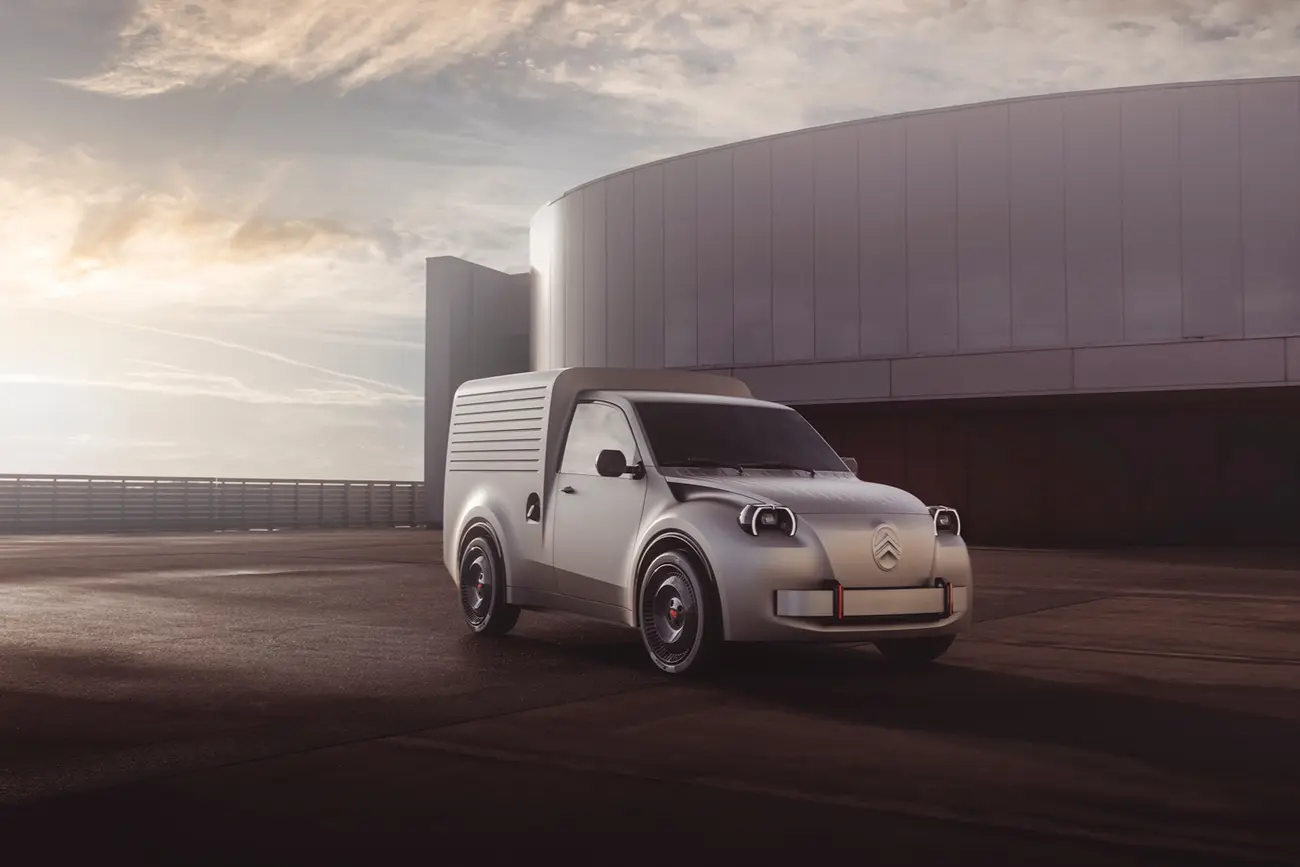
There are no specs, and Citroën says it doesn't preview a near-term production model; it's meant to "open up avenues". If it does go ahead, it would make sense on the same E-Car base, as a compact alternative to vans like the Renault Kangoo E-Tech.
Frequently Asked Questions
There is no official Portuguese price yet. The only figure from Citroën is a target of around €15,000 before subsidies, given by CEO Xavier Chardon for Europe. That would undercut the Citroën ë-C3 in the brand's line-up, although Portugal's 23% VAT (versus 20% in France) could push the final price slightly higher. As an EV, it will be exempt from ISV and IUC road taxes.
Citroën plans to reveal the production version within about two years and add it to the range by 2028, the original 2CV's 80th anniversary. Some outlets expect production to start in 2027 with sales from 2028. There is no Portugal-specific date yet, but as a high-volume European model it is likely to arrive in the same launch wave, which remains unconfirmed.
Citroën has not disclosed the battery or range. Press estimates point to an LFP battery of 20 to 30 kWh, with 160 to 210 km WLTP in the more conservative scenario and DC fast charging at around 50 kW. The target weight of about 1,000 kg should help keep consumption low, but all of these figures remain estimates until the production car is revealed.
According to reports, the new 2CV will be built at Pomigliano d'Arco in Italy from 2028, on a new Stellantis E-Car platform using Leapmotor technology, not in Portugal. It must be made in Europe to qualify for the EU E-Car (M1E) category, which is capped at 4.20 m in length. The Portuguese link is historic: the last original 2CV rolled out of the Mangualde plant on 27 July 1990.
Both lean on retro design, but the 2CV will be smaller (3.76 m long) and simpler, focused on low cost and a target weight of around 1,000 kg. Specialist press expects it to undercut both the Renault 5 E-Tech and the ë-C3 on price. Its most direct rivals will be A-segment city cars such as the Renault Twingo E-Tech, Dacia Spring, Leapmotor T03 and BYD Dolphin Surf.
When will it arrive in Portugal?
The official timeline points to the production model being revealed within the next two years and joining the range by 2028; Electrifying suggests production in 2027 with sales from 2028. There's no specific date for Portugal. Since the 2CV is designed as a high-volume European model, it's likely to reach us in the same launch wave, but that hasn't been confirmed.
Until then, the numbers that matter — battery, real-world range and the final price in euros — are still open. If Citroën hits €15,000 with a range around 200 km, the new electric Citroën 2CV could be Europe's answer to cheap Chinese city cars. Keep an eye out for the production version's reveal.