
New BMW i3 Electric Sedan: 900 km Range, 400 kW Charging and Portugal Pricing
Published: 21/03/2026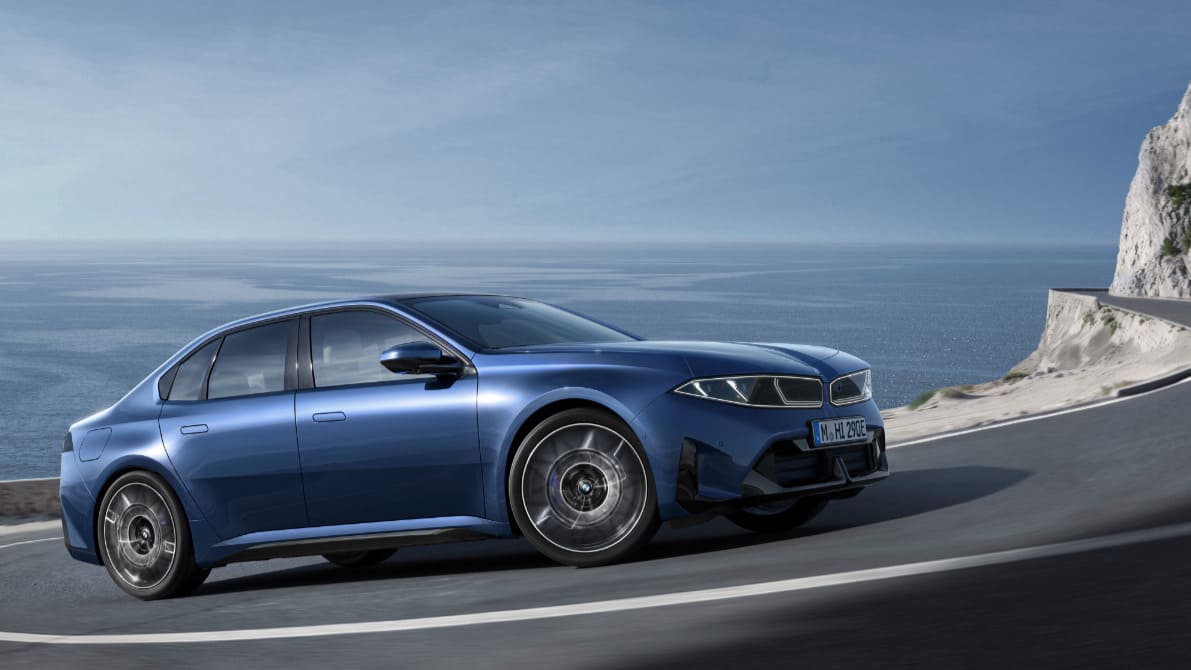
The new BMW i3 electric sedan rewrites the 3 Series playbook
900 km of WLTP range, 400 kW charging, and 469 hp from dual motors. The new BMW i3 isn't just another addition to the lineup — it's the first fully electric 3 Series ever built, designed from scratch on BMW's Neue Klasse platform. European deliveries start autumn 2026, and Portugal should follow shortly after.
BMW didn't simply electrify the 3 Series. They rebuilt it. An 800V architecture, 108.7 kWh usable battery, and standard bidirectional charging position the i3 as a premium electric sedan aimed squarely at the Tesla Model 3, Mercedes C-Class EQ, and BYD Seal.
BMW i3 Neue Klasse full specs
The launch model is the i3 50 xDrive, equipped with two electric motors — one per axle — delivering a combined output of 345 kW (469 hp) and 645 Nm of torque.
| Specification | Value |
|---|---|
| Platform | Neue Klasse, 6th-gen eDrive |
| Architecture | 800V |
| Battery (usable) | 108.7 kWh (NMC, cylindrical cells) |
| Power | 345 kW / 469 hp |
| Torque | 645 Nm |
| Drivetrain | AWD (rear-biased, front on demand) |
| 0-100 km/h | < 4.9 seconds (est.) |
| WLTP range | Up to 900 km |
| Max DC charging | 400 kW |
| 10-80% DC (ideal) | ~20 minutes |
| AC charging | 11 kW standard / 22 kW optional |
| V2L / V2H / V2G | Yes (hardware included) |
| Length | 4.76 m |
| Width | 1.86 m (excl. mirrors) |
| Height | 1.48 m |
The all-wheel drive system prioritizes the rear motor for efficiency. The front motor only kicks in when extra grip or performance is needed — during hard acceleration or on slippery surfaces.
900 km range: what to expect in real-world driving
BMW claims up to 900 km under the WLTP test cycle. In real-world Portuguese driving conditions — a mix of motorway and city — expect somewhere between 550 and 650 km. That's still enough to drive from Lisbon to Porto and back without stopping to charge. Even a Lisbon-Algarve-Lisbon round trip would sit comfortably within a single charge.
The improvement over the outgoing generation is substantial: 30% more range and 30% faster charging compared to the current BMW i4. In practical terms, a 10-minute stop at a compatible fast charger adds roughly 400 km of range. That's Lisbon to Porto in one quick coffee break.
Bidirectional charging adds real versatility. The i3 can power external devices (V2L), supply your home during a grid outage (V2H), or — in the future — feed energy back to the grid (V2G).
Interior and tech: the Heart of Joy system
Inside, the i3 goes minimalist, breaking away from the cluttered interiors of recent BMWs. The centrepiece is a 17.9-inch touchscreen paired with BMW Panoramic Vision — a display strip that spans the full width of the windscreen above the steering wheel.
The Heart of Joy system manages vehicle dynamics (motor, brakes, steering, and stability), promising responses ten times faster than the previous generation. Over 60 apps are available onboard, from streaming services to video conferencing, alongside wireless Apple CarPlay and Android Auto.
Four customizable "mood" settings let you tailor the cabin ambiance. A "Silent Mode" strips back on-screen information for those who prefer fewer distractions — a thoughtful touch that puts the driver first.
BMW i3 2026 price in Portugal and availability
BMW hasn't announced official Portuguese pricing yet, but we can make a reasonable estimate. The base model (single-motor variant, yet to be detailed) is expected to start around €46,900 in the European market. The launch version, the i3 50 xDrive, will likely sit between €55,000 and €60,000.
For Portugal specifically, prices may run slightly higher with 23% IVA (VAT), but fully electric vehicles are exempt from ISV (Portugal's vehicle registration tax) and pay zero IUC (annual road tax). This makes the total cost of ownership highly competitive against equivalent combustion-engine sedans in the same price bracket.
Production begins in August 2026 at BMW's Munich plant, with first European deliveries scheduled for autumn. Accounting for typical import timelines, the first units should reach Portugal between late 2026 and early 2027.
The BMW i4 is being discontinued — the i3 takes over
Here's news that may catch some BMW followers off guard: the i4 Gran Coupé will be discontinued after the 2026 model year. The electric sedan BMW launched in 2021 is making way for the i3, which delivers better range, faster charging, and a purpose-built electric platform — unlike the i4, which shared its underpinnings with the combustion 4 Series.
If you own an i4 or were considering one, it may be worth waiting for the i3: 30% more range and potentially a lower price thanks to the more efficient new platform. BMW has also confirmed an i3 Touring (estate) variant for 2027 and an electric M3 within the next two years.
How does it compare to the competition?
In the premium electric sedan segment, the i3 arrives with strong credentials:
| BMW i3 50 xDrive | Tesla Model 3 Long Range | BYD Seal AWD | |
|---|---|---|---|
| Power | 469 hp | ~500 hp | 530 hp |
| WLTP range | 900 km | ~630 km | ~570 km |
| Max DC charging | 400 kW | 250 kW | 150 kW |
| Battery | 108.7 kWh | ~82 kWh | 82.5 kWh |
| Est. price (Portugal) | ~€55,000-60,000 | ~€45,000-50,000 | ~€45,000 |
The i3's range advantage is hard to ignore — 900 km WLTP is nearly 50% more than the direct competition. Charging speed at 400 kW also leads the segment. The price will be higher, but BMW is betting on the overall value proposition: more range means fewer stops and less range anxiety in daily life.
Frequently Asked Questions
BMW hasn't confirmed official Portuguese pricing yet, but the base model (single-motor variant) is expected to start around €46,900 in Europe. The launch version, the i3 50 xDrive, will likely sit between €55,000 and €60,000. In Portugal, prices may be slightly higher due to 23% VAT, but fully electric vehicles are exempt from ISV (registration tax) and pay zero IUC (annual road tax), making total ownership costs competitive.
BMW claims up to 900 km under the WLTP test cycle, thanks to the 108.7 kWh battery and 800V architecture of the Neue Klasse platform. In real-world Portuguese driving conditions, expect between 550 and 650 km — still enough to drive from Lisbon to Porto and back without charging. The 400 kW DC charging recovers approximately 400 km in just 10 minutes.
Neue Klasse is BMW's new purpose-built electric platform, designed from scratch for EVs. Unlike the BMW i4 (which shared its underpinnings with the combustion 4 Series), the i3 is built entirely on this 800V architecture, featuring cylindrical NMC battery cells and standard bidirectional charging (V2L, V2H, and V2G). The platform delivers 30% more range and 30% faster charging compared to the previous generation.
The BMW i3 50 xDrive leads in range and charging speed: 900 km WLTP and 400 kW DC, versus 630 km and 250 kW for the Tesla Model 3 Long Range, and 570 km and 150 kW for the BYD Seal AWD. Power output is 469 hp (vs. ~500 hp for Tesla and 530 hp for BYD). The i3's estimated price (€55,000-60,000) is higher than the Tesla (~€45,000-50,000) and BYD (~€45,000), but the nearly 50% range advantage means fewer charging stops.
Production begins in August 2026 at BMW's Munich plant, with first European deliveries scheduled for autumn 2026. Accounting for typical import timelines, the first units should reach Portugal between late 2026 and early 2027. Official Portuguese pricing is expected around summer 2026.
Is the new BMW i3 worth waiting for?
For anyone shopping for a premium electric sedan in Portugal, the i3 deserves a spot on your shortlist. The combination of 900 km range, ultrafast 400 kW charging, and the driving reputation of the 3 Series makes it one of the most significant EV launches of 2026.
Price will be the deciding factor. If BMW manages to position the base model below €50,000 in Portugal, they'll have a compelling package that's difficult to overlook. Official Portuguese pricing is expected around summer 2026 — worth keeping an eye on.