
Nio Firefly in Portugal: Price €29,900 and Why It Is Failing in Europe
Published: 20/04/2026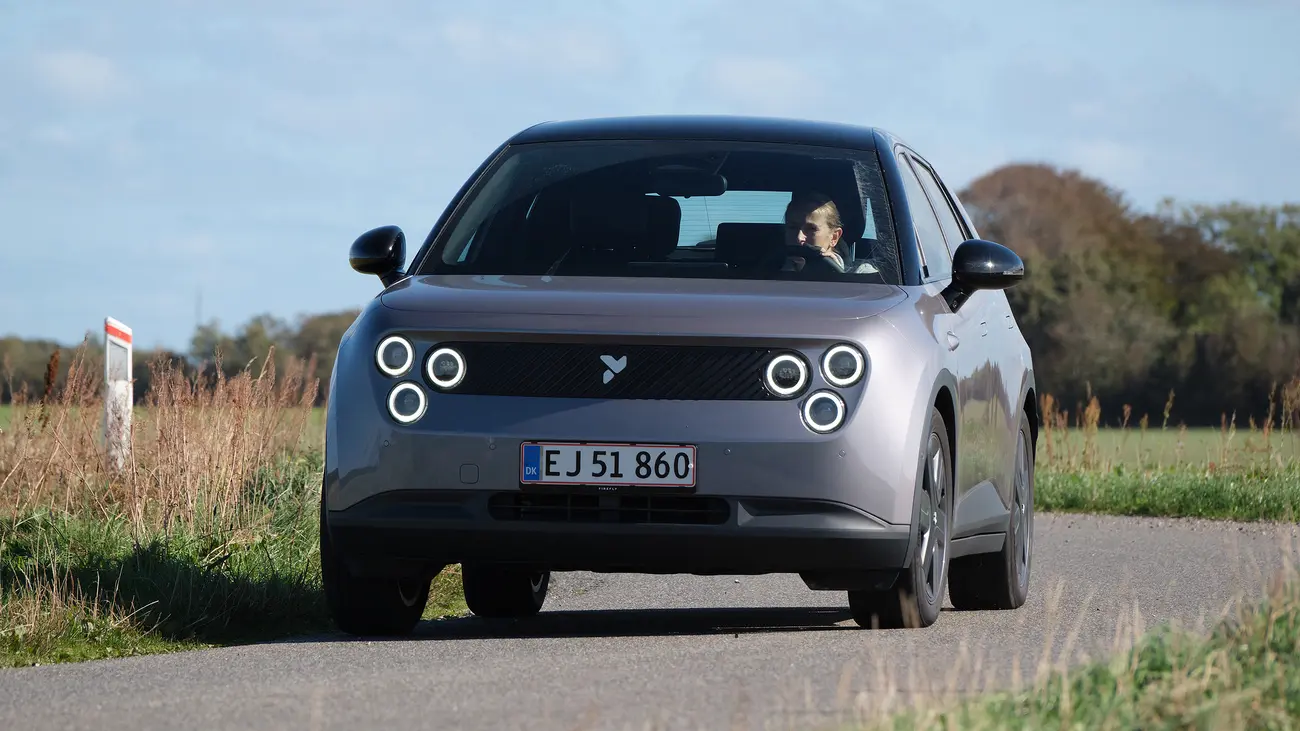
Nio Firefly: 50,000 cars sold globally, 54 in Europe
The contrast is hard to ignore. At the end of March, Nio announced its 50,000th Firefly delivery — a milestone reached in just eleven months. The same month in Europe? Only a handful of registrations. February closed with exactly 54 units across nine European countries. The Nio Firefly Portugal price conversation is happening, but the sales numbers across Europe tell a different story — one of a car that looks great on paper and struggles on the street.
The question for a Portuguese buyer is straightforward: if the product is good — and it is — why isn't anyone buying it? And does it make sense here?
Specs: more power, more storage, less range
The obvious benchmark is the Renault 5 E-Tech. That's the city EV Firefly chose as its direct rival, and the €29,900 First Edition puts it in exactly the same bracket as the French car.
| Spec | Nio Firefly (Europe) | Renault 5 E-Tech |
|---|---|---|
| Motor | 105 kW / 141 hp, rear-wheel drive | 70 / 90 / 110 kW, front-wheel drive |
| Battery | 42.1 kWh LFP (swappable) | 40 or 52 kWh NMC |
| WLTP range | 330 km | 312 / 410 km |
| 0–100 km/h | ~8.2 s | 7.9–9.0 s |
| DC charging | 100 kW (10–80% in 29 min) | 80 kW (15–80% in 30 min) |
| AC charging | 11 kW three-phase | 11 kW (22 kW optional) |
| Boot + frunk | 348 L + 92 L | 326 L + no frunk |
| Warranty | 5 yr car / 8 yr battery (150,000 km) | 3 yr car / 8 yr battery |
| Starting price | €29,900 | €24,900 |
Firefly wins on power, on drivetrain (rear-wheel drive is rare in this class and gives a more engaging feel), on the 92-litre frunk the Renault simply doesn't offer, and on warranty — five years on the car and eight years or 150,000 km on the battery beats Renault's three-year warranty.
Where it falls behind is top-end range. The Renault 5 with the larger 52 kWh pack hits 410 km WLTP. Firefly tops out at 330 km with its single European battery option — and without a heat pump, which matters during a Portuguese winter in the north or interior, where cold-weather consumption climbs noticeably.
The Chinese refresh hasn't reached Europe yet
In April 2026, Nio launched the 2026 Firefly in China: motor up from 105 to 120 kW (161 hp), 0–100 km/h in 7.9 seconds and 420 km CLTC range. Price held flat. If this upgrade lands in Europe — and there are reasons to expect it will — the European Firefly would essentially match the Renault 5 110 kW model on power, with the added benefits of rear-wheel drive and a swappable battery.
Price in Portugal: the tariff problem
Here's the uncomfortable part. In China, the Firefly sells for 119,800 yuan — roughly €16,000 at current rates. In Portugal, it starts at €29,900. Almost double.
Part of the gap is tax. In October 2024 the EU added a 21% tariff on Chinese-made EVs on top of the existing 10% customs duty. Add logistics, European homologation and distributor margins, and you arrive at what you see in showrooms.
Portugal does help: ISV (the country's vehicle tax) doesn't apply to fully electric cars, and IUC (annual road tax) is low. But €29,900 for a city EV with 330 km of range is not an obvious deal in a market where the Dacia Spring starts under €18,000 and the Renault 5 itself opens at €24,900.
Why the Firefly is failing in Europe
Brand chief Daniel Jin was blunt in a recent interview: "Brand awareness is our biggest roadblock, and it's not something we can overcome in a short time." Three factors weigh heaviest:
1. Nobody knows what a Firefly is. Nio itself has some European presence with the ET5, ET7 and EL7, but it's nowhere near Tesla, BYD or MG in volume. Launching a sub-brand — Firefly — into a market that barely knows the parent brand multiplied the problem. Renault sells the 5 with 126 years of history behind it. Nio has to build that trust from zero.
2. Battery-swap stations don't work for Firefly. One of Nio's biggest arguments globally is its swap network — five-minute battery swaps instead of charging. Nio has 60 stations across Europe (one in Belgium, the rest elsewhere). Problem: none of them is compatible with the Firefly's battery pack. And BaaS (Battery-as-a-Service), which in China lets you buy the car without the battery and pay for it monthly, isn't available in Europe for this model. Fifth-generation compatible stations are promised for 2026, but there's no firm date.
3. The sales model broke. Nio started with a direct-to-consumer strategy — own stores, no dealers. In February 2026 it dismantled its European management structure, split operations into six departments and admitted it had "paid tuition" on that approach. It's now pivoting to local distributors and traditional dealerships. In Portugal, Grupo JAP took over distribution — and that makes sense: an established dealer network reaches far more buyers than a single flagship store in Lisbon.
Frequently Asked Questions
The Nio Firefly starts at €29,900 in the First Edition trim and goes up to €32,500 for the Comfort version. That is almost double the Chinese price (around €16,000), driven mainly by the 21% tariff the EU imposed on Chinese-made EVs in October 2024, stacked on top of the usual 10% customs duty. In Portugal, fully electric cars are exempt from ISV vehicle tax and pay reduced IUC road tax, which offsets part of the cost.
The Nio Firefly is rated at 330 km WLTP with its 42.1 kWh LFP battery — the only pack offered in Europe. Real-world figures of 250 to 290 km are more realistic, especially during a Portuguese winter: the Firefly has no standard heat pump, which noticeably increases consumption in colder weather in the north and interior. DC fast charging at 100 kW takes the battery from 10% to 80% in about 29 minutes.
The Renault 5 E-Tech is €5,000 cheaper at entry (€24,900) and reaches 410 km WLTP with its 52 kWh battery, compared with 330 km for the Firefly. The Firefly wins on power (141 hp versus 110 hp on the top Renault trim), rear-wheel drive, a 92-litre frunk and warranty (5 years car / 8 years battery). If price, dealer density and resale value matter most, the Renault 5 is the safer choice today; if you want engaging dynamics, a richer standard kit and are willing to back a new brand, the Firefly has real arguments.
In February 2026, Firefly registered just 54 units across nine European countries — a 37.5% year-on-year decline, even as the brand hit 50,000 global deliveries. Brand chief Daniel Jin openly cites brand awareness as the biggest roadblock. Add to that the fact that Nio's 60 European battery-swap stations are not compatible with the Firefly, that Battery-as-a-Service (BaaS) is not offered outside China, and that the original direct-to-consumer sales model collapsed — forcing Nio to dismantle its European management structure and pivot to local distributors like Grupo JAP in Portugal.
Nio Firefly distribution in Portugal has been handled by Grupo JAP since 2025, which means an established dealer and after-sales network — a clear improvement over Nio's original flagship-store strategy. The warranty is among the most generous in the segment: 5 years or 150,000 km on the car and 8 years on the battery, above the 3-year warranty offered by the Renault 5. Battery-swap stations compatible with the Firefly (5th-generation) are planned for 2026, but no firm rollout dates for Europe have been announced yet.
Is it worth it in Portugal?
Depends what you're after. The Firefly has been on sale in Portugal since 2025 — alongside Norway, the Netherlands, Belgium, Denmark, Greece and Austria. Coverage and after-sales are handled by Grupo JAP, which is good news on the service side.
If you want a city EV with character, rare rear-wheel drive in this segment, above-average interior finish (standard 14-speaker Dolby Atmos audio included), a generous warranty, and you're comfortable being an early adopter of a new brand — the Firefly has real arguments. International reviews (Autocar, Electrifying.com) rate it around 7 to 7.5 out of 10, praising the driving dynamics and criticising intrusive ADAS, heavy reliance on the touchscreen and the missing heat pump.
If you want the best price-range-resale-value balance, the Renault 5 is still easier to justify. €5,000 cheaper at entry, a dense dealer network across the whole country, a name everyone knows. On a car you'll probably trade in five years from now, resale value clearly favours the French car right now.
If you do go with the Firefly, watch for one thing: if and when the 161 hp motor and 420 km range reach Europe, and whether Nio trims the price closer to the Renault. That would change the math. For now the tech is ahead — but the commercial disadvantage is real.