
Single Phase or Three Phase EV Charger in Portugal: Onboard Charger and kVA
Published: 21/11/2026
Single phase or three phase: the car decides more than the house
Plug a car that only accepts 7.4 kW into an 11 kW wallbox and it charges at 7.4 kW. Plug a car with a single-phase onboard charger into an 11 kW three-phase wallbox and it may crawl along at 3.7 kW. Neither is a fault.
Most people asking whether they need a single phase or three phase EV charger in Portugal are asking the questions in the wrong order. The car's onboard charger comes first, then your contracted power, and only then the wallbox. That's the order we follow here, with the numbers that matter if you charge at home in Portugal.
The maths: 3.7, 7.4, 11 and 22 kW
On alternating current (AC), power comes from a simple sum: voltage × current × number of phases.
| Connection | Current | Power |
|---|---|---|
| Single phase, 230 V | 16 A | 3.68 kW |
| Single phase, 230 V | 32 A | 7.36 kW |
| Three phase, 400 V | 16 A per phase | 11.04 kW |
| Three phase, 400 V | 32 A per phase | 22.08 kW |
7.4 kW is the practical ceiling for single phase. Anything above that needs three phases, and 22 kW is the ceiling for AC charging full stop: no onboard charger goes beyond it. DC rapid charging is a different story, because it bypasses the onboard charger entirely.
The onboard charger is the real limit
Batteries store direct current; the grid supplies alternating current. When you charge at home or at an AC post, the conversion is done by the onboard charger (OBC), a component inside the car. The wallbox is essentially a smart, safe socket.
Real-world speed is always set by the weakest link: onboard charger, wallbox, cable or home wiring. A car with a 7.4 kW OBC on a 22 kW wallbox charges at 7.4 kW. An 11 kW car stays at 11 kW, even if the wallbox could deliver twice that.
One detail matters when you buy: the onboard charger can't be swapped later. Some brands offer 11 or 22 kW as a factory option, and that's the moment to decide. On a used car, check the spec sheet for that exact version, because AC charging power varies between trims and markets.
The trap: a single-phase car on a three-phase wallbox
This is the case that confuses people most. An 11 kW wallbox or public post delivers 16 A on each of its three phases. A car with a single-phase onboard charger only uses one of them, which means 16 A at 230 V: roughly 3.7 kW.
The MG4 with the 51 kWh battery (2022 to 2025 versions) shows it well. According to the EV Database, it accepts a maximum of 6.6 kW AC on a single phase. On a 32 A single-phase wallbox it charges at 6.6 kW and goes from 0 to 100% in about 9h15. On an 11 kW three-phase post (16 A per phase) it drops to 3.7 kW and the same charge stretches to about 16h15.
The reverse is no drama. A three-phase car on a single-phase supply simply charges at single-phase speed, 7.4 kW at most, with no harm done.
Which electric cars only charge on single phase
There's no rule by brand, but the patterns are clear:
| Car | Max AC charging | Phases |
|---|---|---|
| VW ID.3 / ID.4 | 11 kW | 3 |
| BMW i4 / iX | 11 kW | 3 |
| Mercedes EQA / EQB | 11 kW | 3 |
| Hyundai IONIQ 5 / IONIQ 6 | 11 kW | 3 |
| Tesla Model 3 / Model Y | 11 kW | 3 |
| Renault Megane E-Tech | 11 kW (22 kW optional) | 3 |
| Renault Zoe (to 2023) | 22 kW | 3 |
| MG4 51 kWh (2022 to 2025) | 6.6 kW | 1 |
| Citroën Ami / Fiat Topolino | 2.3 kW | 1 |
| Plug-in hybrids (most) | 3.6 or 7.4 kW | 1 |
The trend: mid-range and premium EVs almost always reach 11 kW on three phases, while quadricycles, many plug-in hybrids and some entry-level versions stick to single phase.
How long it takes to charge at home
These are theoretical 0 to 80% times, with no losses and ignoring the natural slowdown of the charging curve. Use them to compare, not to set a stopwatch.
| Power | 40 kWh battery (0–80%) | 77 kWh battery (0–80%) | Range added per hour |
|---|---|---|---|
| 3.7 kW (single phase, 16 A) | about 8.6 h | about 16.6 h | about 15 km |
| 7.4 kW (single phase, 32 A) | about 4.3 h | about 8.3 h | about 30 km |
| 11 kW (three phase, 16 A) | about 2.9 h | about 5.6 h | about 60 km |
| 22 kW (three phase, 32 A) | about 1.5 h | about 2.8 h | about 120 km |
In real life, hardly anyone gets home with an empty battery. Park with 40% left, plug in for the evening, and even at 3.7 kW you'll be full in 6 to 8 hours. One night is enough, and you can make the most of the off-peak hours on a bi-hourly (bi-horária) tariff.
Factor in efficiency too: AC charging runs at around 88 to 90%. A wallbox delivering 7.4 kW puts roughly 6.7 kW into the battery.
A household socket wastes more energy
Charging from a regular Schuko socket with the cable that comes with the car (the "granny cable") works, but it costs more than you'd think. In a study by ADAC, the German automobile club, charging at 2.3 kW from a household socket lost between 12.7% and 24.2% of the energy. On an 11 or 22 kW wallbox, losses were between 5.1% and 7.0%.
The reason is simple. The car's electronics draw 100 to 300 W for the whole session, so the longer the session, the more energy goes just to keeping the system awake.
Home EV charger in Portugal: contracted power
This is where Portugal does things its own way. Every home electricity contract has a "potência contratada" (contracted power), which caps how much you can draw at once and sets the fixed part of your bill. According to ERSE, the energy regulator, homes can choose from 13 tiers, from 1.15 kVA to 41.4 kVA. The most common are 3.45 kVA and 6.9 kVA.
ERSE also explains that single-phase installations essentially cover contracted power up to and including 10.35 kVA, and that anything above 10.35 kVA needs a three-phase installation. The single-phase tiers are 1.15, 2.3, 3.45, 4.6, 5.75, 6.9 and 10.35 kVA.
Rule of thumb: the wallbox plus whatever usually runs in the house at the same time must fit within your contracted power. If it doesn't, the main breaker trips in the middle of the night.
Can I install a 7.4 kW wallbox on 6.9 kVA?
Yes, but not running at 7.4 kW. At 230 V, 6.9 kVA works out at about 30 A, less than the 32 A a 7.4 kW wallbox wants, and that's before the fridge or water heater kicks in.
You have three options:
- Set the wallbox to a lower power. An electrician can cap it at, say, 16 A (3.7 kW), which covers most nights.
- Choose a wallbox with dynamic load balancing. It measures the household's consumption and throttles charging when the oven or washing machine starts, so the breaker doesn't trip.
- Move up to 10.35 kVA. That's still single phase and leaves room for a 7.4 kW wallbox, but the fixed part of your bill goes up.
You change tier through your electricity supplier, and ERSE states that the tier change itself is free. E-Redes, the grid operator, says that once your smart meter is connected to its remote-reading network, contract changes can be made remotely without a technician visit. If your home wiring isn't ready for the higher power, the work and certification are on you.
Switching from single phase to three phase in Portugal: is it worth it?
Only if the car can use it. Upgrading to three phase for a car with a 7.4 kW single-phase OBC gains you nothing; on a three-phase 16 A wallbox it can even be slower.
It makes sense when the pieces line up: your car (or your next one) accepts 11 kW, the house needs more than 10.35 kVA for other reasons (heat pump, induction hob, solar panels), or two EVs share the garage. For normal mileage and overnight charging, 7.4 kW on single phase is usually enough.
How to tell if your home is single phase or three phase
- Contract and bill: your contracted power is a strong clue. Up to 10.35 kVA is normally single phase; above that, three phase.
- Meter: a three-phase meter typically reads 3 × 230/400 V.
- Consumer unit: a two-pole main breaker (live and neutral) points to single phase; a four-pole one (three phases and neutral) to three phase.
If in doubt, an electrician can confirm it in minutes.
The process, step by step
- Electrician first. They assess the consumer unit, wiring and service cable, and tell you what work your home installation needs.
- Request through your supplier. Your electricity supplier handles the contract change and passes the request on to E-Redes, the distribution grid operator.
- E-Redes steps in. Switching from single to three phase generally means a different metering setup and may require a new meter or work on the service connection. Where grid connection work is needed, E-Redes sends a quote.
How much does it cost? There's no published fixed price for this conversion. It depends on the state of your installation, consumer unit and service cable, and on what E-Redes has to do. Always get quotes from the electrician and the supplier before going ahead, and add in the higher fixed charge on your bill once you're on a tier above 10.35 kVA.
Frequently Asked Questions
At 230 V, a 7.4 kW wallbox draws 32 A, more than the roughly 30 A a 6.9 kVA contract allows. The next tier up, 10.35 kVA, is still single phase and leaves room to charge at 7.4 kW, although the fixed part of your bill rises. ERSE, the energy regulator, states that the tier change itself is free, and you request it through your electricity supplier. If you'd rather stay on 6.9 kVA, you can cap the wallbox at 16 A (3.7 kW) or choose one with dynamic load balancing.
No. Charging speed is always set by the weakest link, and a car with a 7.4 kW onboard charger never goes above 7.4 kW, whatever the wallbox. If that charger is single phase, an 11 kW three-phase wallbox (16 A per phase) only gives it one phase, so it drops to about 3.7 kW. The MG4 51 kWh (2022 to 2025), for example, charges at 6.6 kW on a 32 A single-phase wallbox but only at 3.7 kW on an 11 kW three-phase post.
In theory, 0 to 80% takes about 4.3 hours for a 40 kWh battery and about 8.3 hours for a 77 kWh one, which works out at roughly 30 km of range per hour of charging. In practice, with AC efficiency of 88 to 90%, around 6.7 kW actually reaches the battery. Since hardly anyone gets home with an empty battery, one night in the off-peak hours of a bi-hourly tariff is usually enough.
There is no published fixed price for this conversion. The cost depends on the state of your consumer unit, wiring and service cable, and on what E-Redes, the grid operator, has to do, such as fitting a new meter or working on the grid connection, in which case it sends you a quote. Get quotes from an electrician and your supplier before going ahead, and budget for a higher fixed charge on your bill, since three phase means a tier above 10.35 kVA.
Both need a three-phase 400 V supply: 11 kW means 16 A per phase and 22 kW means 32 A per phase, the ceiling for AC charging. On a 77 kWh battery, 0 to 80% takes about 5.6 hours at 11 kW and about 2.8 hours at 22 kW. Few cars accept 22 kW, such as the Renault Zoe (to 2023) or the Megane E-Tech as an option, and the onboard charger can't be swapped after purchase. At home, 22 kW is rarely worth it unless you run two EVs or cover very high mileage.
Wallbox 7.4 kW or 11 kW: which to choose in Portugal
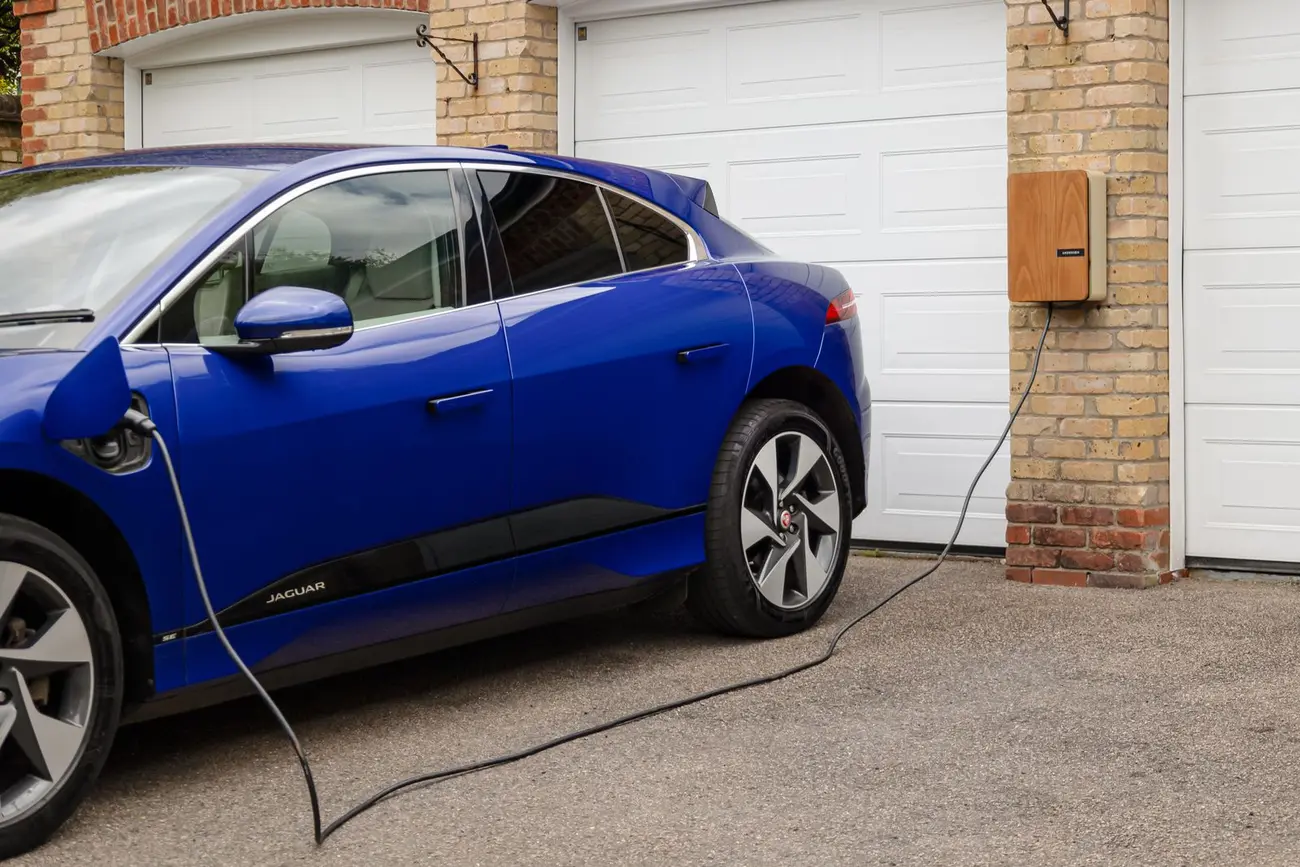
Once you know your car and your supply, the choice is straightforward:
- Single-phase home: a 7.4 kW wallbox, set to suit your contracted power. On 6.9 kVA, go for dynamic load balancing or cap the current.
- Three-phase home and an 11 kW car: an 11 kW wallbox is the sweet spot.
- 22 kW at home: rarely worth it. Few cars accept it, it needs a lot of contracted power, and it only makes sense with two EVs or very high mileage.
The price gap between a 7.4 kW and an 11 kW wallbox is small. Picking a three-phase-capable model, even if it's installed on single phase today, keeps the door open for your next car or a future supply upgrade. If you have solar panels, look for a wallbox with automatic phase switching: on single phase it can start charging from about 1.4 kW of surplus, while on three phase it only starts at about 4.1 kW.
Before you buy a wallbox, change your contract or pick a car, the vehicle's spec sheet tells you almost everything: check the maximum AC charging power and whether it's single or three phase. That number, not the one on the wallbox, will set the pace of your nights on charge.