
Used MG4 in Portugal: Prices, 51 vs 64 kWh Battery, Problems and Warranty
Published: 12/11/2026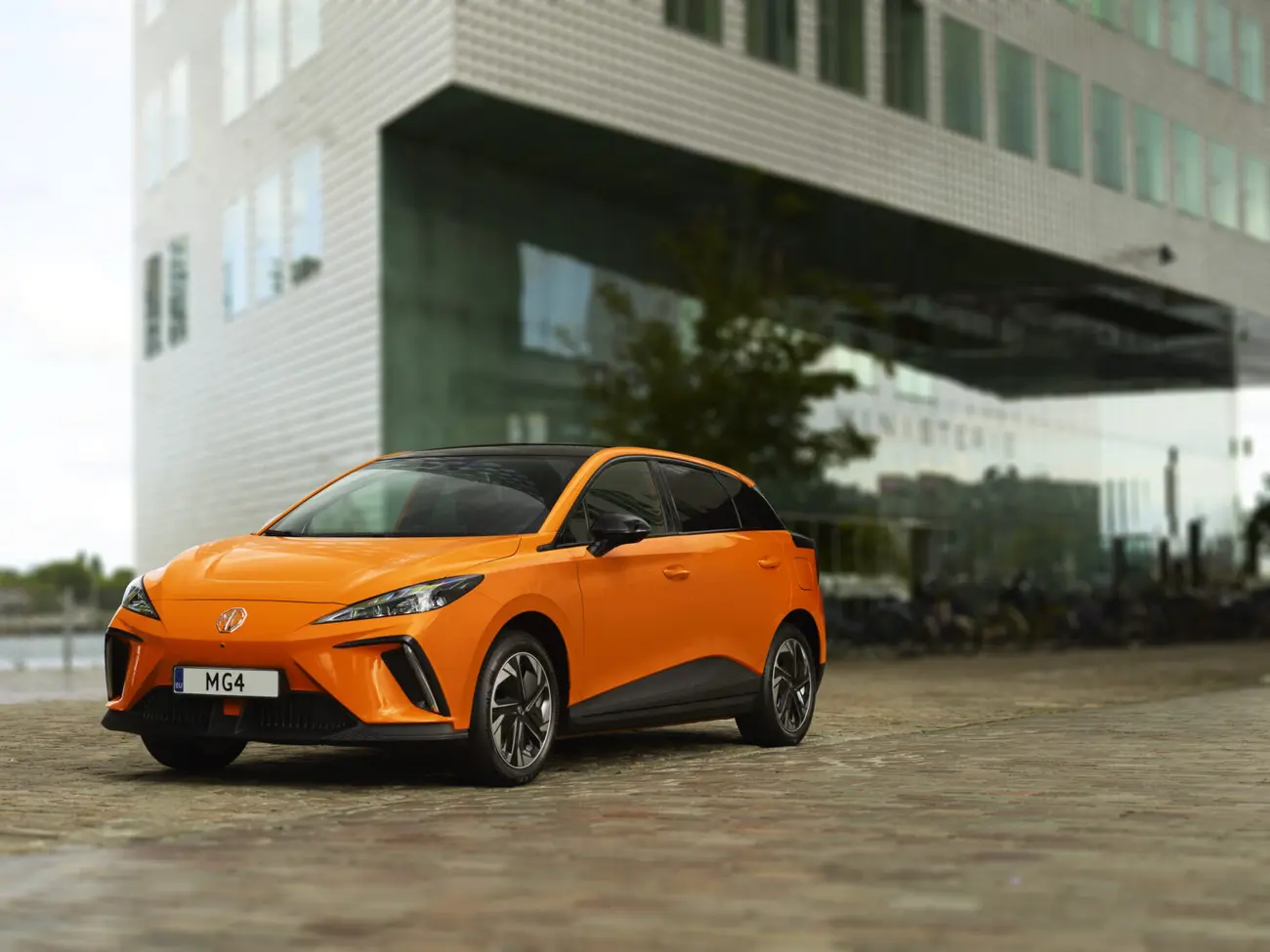
How much does a used MG4 cost in Portugal in 2026
Around €19,000. That's roughly where Portuguese listings start today for a 2022 MG4 Electric with the 51 kWh battery and about 40,000 km on the clock. In France, the same car is already showing up at €15,000 to €16,000 — and that gap is what makes the used MG4 price in Portugal worth a closer look. If you're after a used electric car with rear-wheel drive, decent range and generous kit, the used MG4 is one of the most sensible options on the Portuguese market. It's just not a car to buy blind.
Reliability is far from spotless, and the battery you pick changes almost everything: range, charging speed, even standard equipment. Before deciding whether a used MG4 is worth it, it pays to understand exactly what you're buying.
Reference prices in Portugal
In the Portuguese listings we found during research, asking prices run from about €19,000 to over €27,000. A few concrete examples:
| Year | Version | Mileage | Asking price |
|---|---|---|---|
| 2022 | 51 kWh | 39,670 km | €18,990 |
| 2023 | 64 kWh Luxury | 36,000 km | €24,900 |
| 2024 | 64 kWh Luxury | n/a | €25,399 |
These are asking prices, not sale prices — there's room to negotiate, especially on dealer cars with higher mileage.
European context: France and Germany
Elsewhere in Europe, the used MG4 is noticeably cheaper. In France, according to Bevolt, values look like this:
- 51 kWh: from about €15,000 (2022, 50,000 km); roughly €2,000 more for a 2023 car under 30,000 km
- 64 kWh: about €20,000 (2023, 50,000 km) to €23,000 (under 30,000 km)
- 77 kWh: usually €4,000 to €5,000 more than an equivalent 64 kWh
- XPower: from about €25,000 with 30,000 km
In Germany, FirstEV records an average of €17,989 for 4-year-old cars and €21,670 for 3-year-old cars (small samples). For reference, the new MG4 cost between €28,990 and €34,990 at launch in France.
Importing is a realistic option. Electric cars are exempt from ISV (Portugal's vehicle registration tax), so the price gap isn't swallowed by tax. You'll still pay for transport, homologation and Portuguese plates — and you lose the chance to see the car in person before buying. Run the numbers case by case.
MG4 51 kWh vs 64 kWh: which one to choose
This is the big decision. The two batteries don't just differ in size — they use different chemistries and come with different on-board chargers.
| 51 kWh | 64 kWh | 77 kWh | XPower | |
|---|---|---|---|---|
| Chemistry | LFP | NMC | NMC | NMC |
| Usable capacity | 49 kWh | 62 kWh | 74 kWh | 62 kWh |
| Power / torque | 170 hp / 250 Nm | 204 hp / 250 Nm | 245 hp / 350 Nm | 435 hp / 600 Nm |
| 0–100 km/h | 7.7 s | 7.9 s | 6.5 s | 3.8 s |
| WLTP range | 350 km | 435–450 km | 520 km | 385 km |
| Real-world range | ~305 km | ~400 km | ~450 km | ~320 km |
| AC charging | 6.6 kW | 11 kW | 11 kW | 11 kW |
| DC peak | 117 kW | 135–144 kW | 144 kW | 142 kW |
| WLTP consumption | 17.0 kWh/100 km | 16.0–16.6 kWh/100 km | 16.5 kWh/100 km | 18.7 kWh/100 km |
Real-world range: 51 kWh vs 64 kWh
About 305 km versus 400 km in mixed driving — those are Electrifying's real-world estimates. On the motorway at 120 km/h, expect 65% to 75% of the WLTP figure. In practice, Lisbon to Porto without a stop is tight even with the 64 kWh battery; with the 51 kWh, you'll definitely be stopping.
If you mostly drive in town and the suburbs, the 51 kWh is plenty. Its LFP battery is happy being charged to 100% regularly, which is a real day-to-day advantage. The weak spot is the 6.6 kW AC charger: on an 11 kW wallbox or a public post on MOBI.E (Portugal's national charging network), it charges more slowly than the 64 kWh.
Equipment: the detail that matters
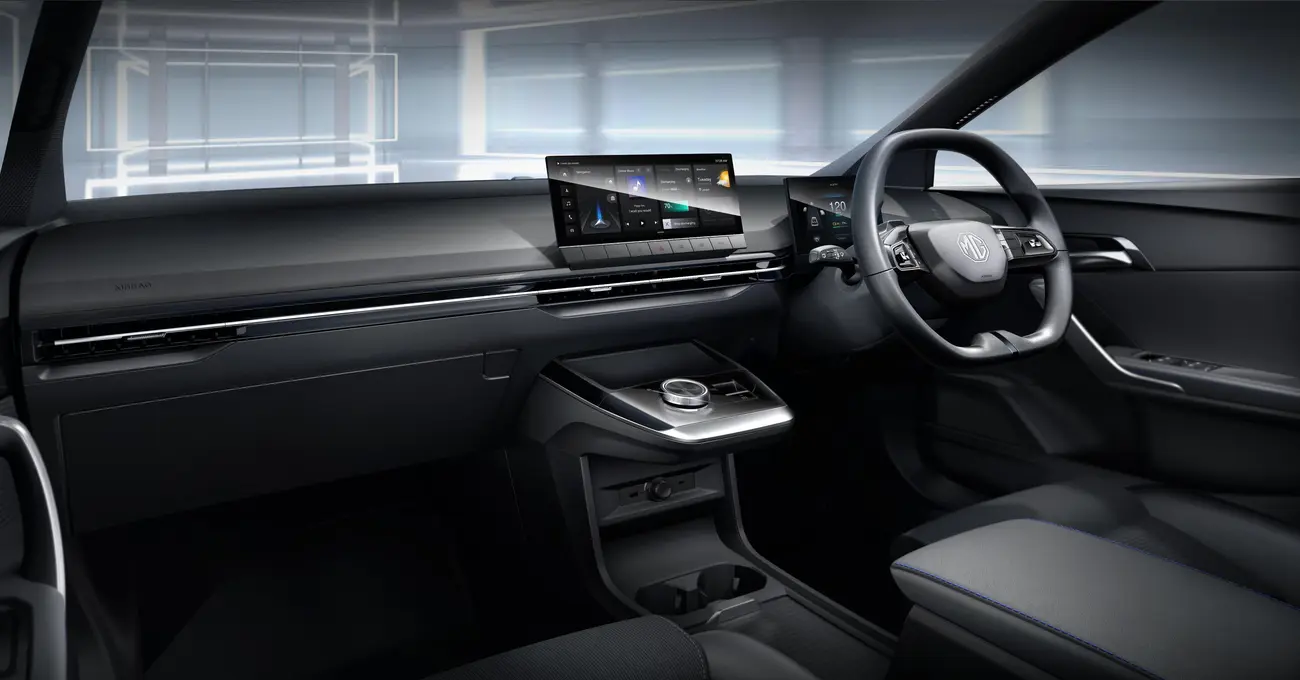
Heat pump, heated seats and the 360° camera only come on the Luxury trim (called Trophy in some markets). The 51 kWh has no heat pump, which pushes winter consumption up. Bevolt rates the 64 kWh Luxury as the best used buy: the right balance of range, charging and equipment. The 77 kWh saves only around 15 minutes of charging over 500 km — hard to justify for an extra €4,000 to €5,000.
Used MG4 battery health check: how to verify SoH
The good news: MG4 batteries are ageing well. Typical degradation is 1% to 2% a year, and owners report around 4% loss over the first 80,000 km, with the curve flattening after that. In German listings that declared a state of health (SoH), figures ranged from 90% to 99%, with a calculated median loss of 1.3% a year.
Battery health depends more on charging habits than on mileage. Frequent rapid charging and leaving the battery very full or very empty speed up wear. So:
- Insist on a dated SoH report, done by an MG dealer or a workshop with proper diagnostic equipment
- Don't trust the range shown on the dashboard — it's an estimate, and an unreliable one, especially in cold weather
- Ask for the charging history if the seller has it
MG4 common problems: what the data says
Here's the Achilles' heel. In the What Car? reliability survey, the MG4 scored 76.1% in 2023 (18th of 20 EVs), dropped to 63.8% in 2024 (last of 18) and recovered to 12th of 19 in 2025. MG as a brand finished last of 30 in 2025.
The most common faults were non-motor electrics (15%), interior trim (9%), bodywork (7%), motor (7%) and infotainment (7%). More worrying: 68% of cars with a fault were off the road for more than a week.
What to check when buying a used MG4
- AC charging: on-board charger and software faults are common. Test it on a wallbox and make sure the cables are included and in good condition
- DC rapid charging: early cars had compatibility issues with some chargers, fixed by a dealer software update
- 12V battery: it can drain quickly
- Infotainment: frequent crashes on 2022–2023 cars. Check the software version
- Air conditioning: test it at full blast — there are reports of noises and failures
- Recalls: door locks (1,960 cars from 2022) and the battery management system (BMS). Confirm both have been done
- Rear brakes: strong regenerative braking means they're barely used, which leads to corroded discs
- Body and interior: panel gaps and flimsy plastics, especially on high-mileage cars
- Driver assistance: early systems were irritating on the motorway; updates at servicing improved them
Keep the boot in mind too: 350 litres officially, small for a 4.29 m car.
MG4 warranty in Portugal: the used buyer's ace
This may be the strongest argument in its favour. In Europe, the MG4 comes with a 7-year or 150,000 km warranty covering both the car and the battery. A 2024 MG4 is covered until 2031, and the warranty transfers to the next owner. (UK guides quote different mileage terms — those don't apply here.)
There's one important condition: servicing must follow MG's schedule, or the brand can refuse a claim. Given the reliability data, an incomplete service history should be a red flag — or a strong bargaining chip.
Frequently Asked Questions
Portuguese listings ask from about €19,000 (2022, 51 kWh, around 40,000 km) to over €27,000; a 2023 64 kWh Luxury with 36,000 km shows up at around €24,900. In France, the same 51 kWh MG4 starts at €15,000 and a 2023 64 kWh sits between €20,000 and €23,000. These are asking prices, so there is room to negotiate, especially on higher-mileage dealer cars.
It can be: in Germany, a 3-year-old MG4 averages €21,670 and a 4-year-old €17,989, below Portuguese asking prices. Because electric cars are exempt from ISV (Portugal's registration tax), the gap isn't swallowed by tax. You still need to budget for transport, homologation and Portuguese plates, and you lose the chance to see and test the car before buying.
Typical MG4 battery degradation is 1% to 2% a year, and owners report only around 4% loss over the first 80,000 km. In German listings that declared SoH, figures ranged from 90% to 99%, with a median loss of 1.3% a year. A 2022 or 2023 car well below 90% deserves suspicion: always insist on a dated SoH report from an MG dealer or a workshop with proper diagnostic equipment.
It depends on the battery: the 51 kWh (LFP, 49 kWh usable) has a 6.6 kW AC charger and needs roughly 7 to 8 hours for a full charge on a wallbox, while the 64 kWh (NMC, 62 kWh usable) charges at 11 kW and takes about 6 hours. On DC rapid chargers, peak power is 117 kW for the 51 kWh and 135 to 144 kW for the 64 kWh. On early cars, check that the software update fixing compatibility issues with some DC chargers has been done.
Yes. In Europe, the MG4 carries a 7-year or 150,000 km warranty on both the car and the battery, and it transfers to the next owner: a 2024 MG4 is covered until 2031. The condition is that servicing has followed MG's schedule, otherwise the brand can refuse repairs. UK guides quote different mileage limits, which don't apply in Portugal.
Is a used MG4 worth buying in Portugal?
Yes, if you choose carefully. The used MG4 delivers rear-wheel drive, agile handling, good rear space and competitive range for a price few compact EVs can match. Portugal's ISV and IUC (annual road tax) exemptions for electric cars make the numbers even better.
The trade-off is patchy reliability and an after-sales network that doesn't always respond quickly. The recipe for keeping risk low is simple: go for a 2023-or-later 64 kWh Luxury with an SoH report, full MG service history and recalls completed. With the warranty still running for several years, it's one of the most affordable ways into electric driving in Portugal.