
MG4 Urban vs VW ID.3 Neo in Portugal: Prices, Range and Which to Buy
Published: 18/11/2026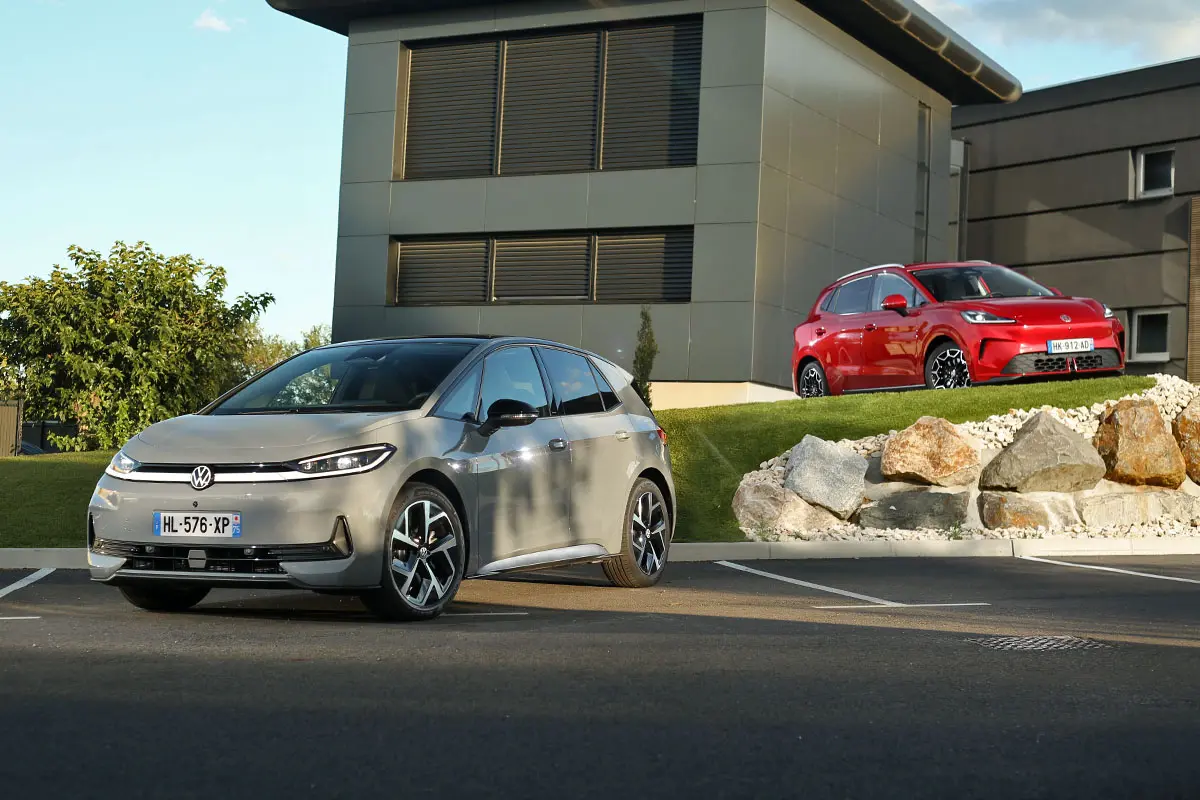
MG4 Urban vs ID.3 Neo: same segment, two philosophies
Six to nine thousand euros. That's the list-price gap between the MG4 Urban and the Volkswagen ID.3 Neo in Germany and Spain, and it frames everything else in this comparison. The MG bets on price, space and simplicity. The VW answers with quicker charging, a long-range battery and a cabin that finally has physical buttons again.
If you're shopping for a compact EV in Portugal, the MG4 Urban vs VW ID.3 Neo matchup makes a lot of sense: both are just over 4.2 metres long, seat five and promise around 416 km WLTP in their entry versions. After that, they go their separate ways, and the right pick depends far more on how you drive than on the spec sheet.
One thing to clear up first: the MG4 Urban is not a replacement for the MG4 you may already know. It's a separate model on a new platform (E3), slightly bigger and with a larger boot, but with front-wheel drive and smaller batteries. Both MG4s are sold side by side.
How much do they cost in Portugal? What we know (and don't)
Official Portuguese prices? Neither car has them confirmed at the time of writing. What we have are reference prices from neighbouring markets and a figure from the consumer association DECO Proteste for the MG, which is worth treating with some caution.
| Market | MG4 Urban | VW ID.3 Neo |
|---|---|---|
| Germany (from) | €24,990 | €33,995 |
| Spain (from) | €25,490 (43 kWh) / €27,900 (54 kWh) | €31,370 (50 kWh) / €34,050 (58 kWh) / €38,945 (79 kWh) |
| Portugal (reference) | around €23,900 (DECO, unconfirmed) | not published |
MG4 Urban price Portugal
DECO Proteste lists the MG4 Urban from €23,900, but we couldn't find official confirmation from MG. Adjusting purely for VAT (23% in Portugal versus 21% in Spain and 19% in Germany), the Spanish price of €25,490 would work out at roughly €25,900 here. The gap to €23,900 isn't implausible — importers set prices market by market, and MG has been pricing aggressively — but that's exactly why we treat it as a reference rather than a list price.
VW ID.3 Neo price Portugal
Here, there's nothing official at all. Caetano, Volkswagen's Portuguese importer, has only said pre-sales are "coming soon". Using the same VAT logic, the Spanish price of €31,370 points to around €31,900 and the German €33,995 to about €35,100. An honest estimate for the entry ID.3 Neo in Portugal lands somewhere between €32,000 and €35,000 — but that's an estimate, not a price.
Whatever the final figures, both cars benefit from Portugal's EV tax regime: no ISV (the vehicle registration tax) and no IUC (the annual road tax), plus possible eligibility for Fundo Ambiental purchase incentives, depending on the rules in force when you buy.
Spec sheet side by side
| MG4 Urban | VW ID.3 Neo | |
|---|---|---|
| Battery (net) | 41.9 / 52.8 kWh (LFP) | 50 / 58 kWh (LFP), 79 kWh (NMC) |
| WLTP range | 325 / 416 km | 417 / 494 / 630 km |
| Power | 110 kW (150 hp) / 118 kW (160 hp) | 125 kW (170 hp) / 140 kW (190 hp) / 170 kW (231 hp) |
| Drive | Front-wheel | Rear-wheel |
| 0–100 km/h | 9.6 / 9.5 s | 8.6 / 8.0 / 7.0 s |
| Top speed | 160 km/h | n/a |
| AC charging | 11 kW | 11 kW |
| DC charging (max) | 82 / 87 kW | 105 / 105 / 183 kW |
| DC 10–80% | 28 / 30 min | 26–29 min |
| Length | 4,395 mm | 4,265 mm |
| Wheelbase | 2,750 mm | 2,766 mm |
| Boot | 470 L (+98 L underfloor), 1,362 L max | 385 L, 1,267 L max |
| Warranty | 7 years / 150,000 km | 2 years (vehicle); battery 8 years / 160,000 km |
Range: a tie at the bottom, the VW pulls away at the top
In entry form, the two are neck and neck: 416 km WLTP for the 54 kWh MG4 Urban against 417 km for the 50 kWh ID.3 Neo. The gap opens up further up the range. The MG tops out at 416 km, while the VW offers 494 km with the 58 kWh battery and 630 km with the 79 kWh pack.
A technical footnote: the ID.3 Neo's 50 kWh battery is physically the same 58 kWh pack, limited by software — Volkswagen has confirmed it. Both cars use LFP chemistry in their smaller batteries, which is cheaper and more durable but more sensitive to cold. Only the VW's 79 kWh pack sticks with NMC.
MG4 Urban real-world range
In an electrive test in Munich, at around 20 °C and mostly urban driving at a 30 km/h average, the 54 kWh MG4 Urban used 11 kWh/100 km. Extrapolated, that's close to 400 km — in near-ideal conditions. Other tests put consumption under 14 kWh/100 km, which makes the MG one of the most efficient compacts around.
The 58 kWh ID.3 Neo averaged 15 kWh/100 km on a route that was roughly two-thirds motorway, 10.5 kWh/100 km in flowing city traffic and 20 kWh/100 km on the motorway at the recommended speed. Its calculated real-world range was 387 km. In Portuguese terms: a Lisbon–Porto run on the A1 (just over 300 km) is doable in either car, but the margin gets thin in winter at motorway speeds.
Fast charging: the ID.3 Neo's biggest advantage
This is where the ID.3 Neo earns a good chunk of its price premium. The MG4 Urban charges at 82 or 87 kW DC, with 10–80% in 28 to 30 minutes. The VW claims 105 kW on its LFP batteries and 183 kW on the 79 kWh pack, with 10–80% in 26 to 29 minutes.
On paper, the time difference looks small. On the road, less so. In electrive's test, the 58 kWh ID.3 Neo peaked at 126 kW — above the official figure — and added 44 kWh in 25 minutes, enough for about 200 km of motorway. It covered more than 550 km of motorway with a single 25-minute stop. The MG held a steady curve (87 kW at 26%, 85 kW at 55%, 82 kW at 71%), but needed just under 40 minutes to go from 26% to 90%.
If you regularly drive Lisbon to the Algarve and rely on the fast chargers along the motorways (most public charging in Portugal runs through the national MOBI.E network), those minutes add up. If you charge at home and mostly drive in town, they barely matter. Both accept 11 kW on AC, which is plenty for a home wallbox or a standard public post.
Space and boot: the MG4 Urban wins on points
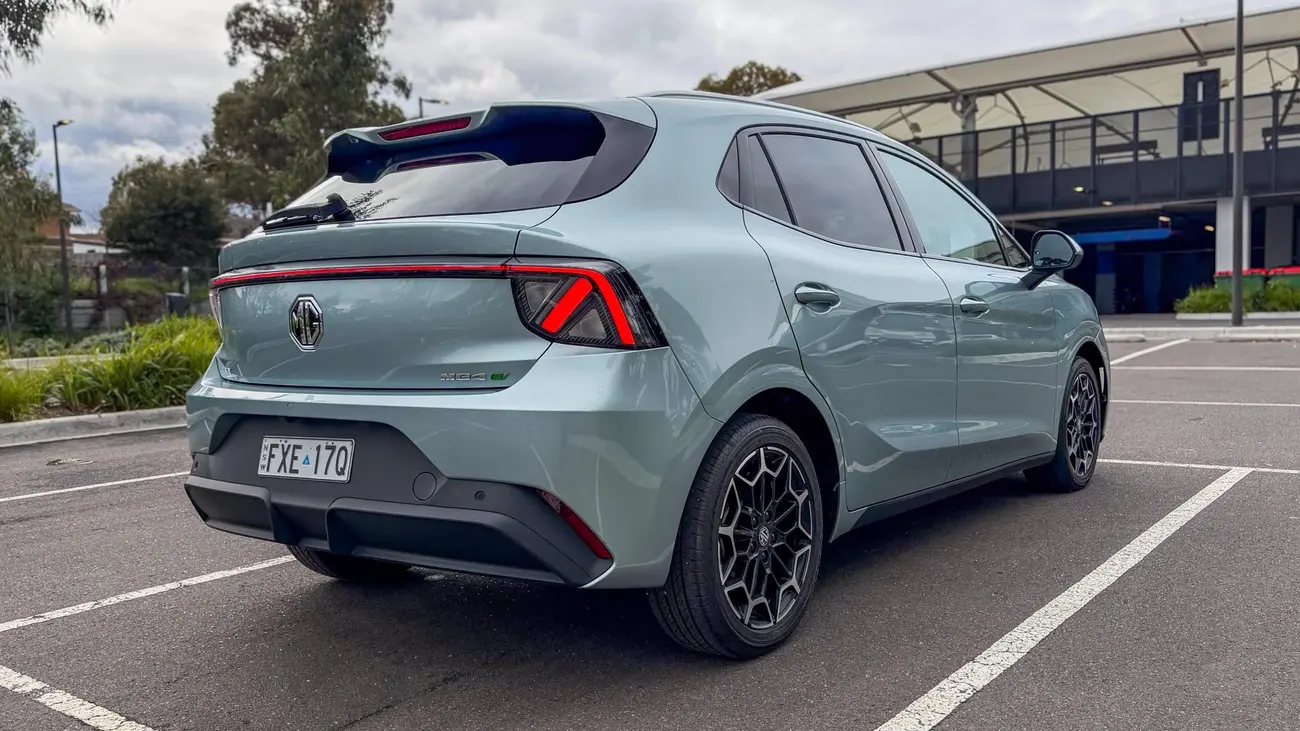
The MG is 130 mm longer (4,395 versus 4,265 mm), and you notice it most at the back. The MG4 Urban's boot holds 470 L, plus 98 L in an underfloor compartment, and reaches 1,362 L with the seats folded. The ID.3 Neo manages 385 L and 1,267 L at most.
Nearly 100 litres more in the main boot is a lot for a compact. For a family with a pushchair, or anyone who wants one car to do everything, it's a strong argument for the MG. Interestingly, the wheelbases are almost identical (2,750 versus 2,766 mm), so rear legroom shouldn't differ much.
Driving, interior and warranty
Front-wheel drive vs rear-wheel drive
The MG4 Urban uses front-wheel drive with 110 or 118 kW motors, 0–100 km/h in 9.6 or 9.5 seconds and a 160 km/h top speed. electrive sums it up neatly: not exciting, but surprisingly good. It's built for everyday life — easy to use and efficient.
The ID.3 Neo sticks with rear-wheel drive and raises the bar: 125, 140 or 170 kW, with 0–100 km/h between 8.6 and 7.0 seconds. A 10.2 m turning circle helps in the tight streets of Lisbon or Porto, and the steering is described as precise. Better sound insulation and improved brake-pedal feel round things off.
Interior: hard plastics vs physical buttons
The MG4 Urban's cabin is dominated by hard plastics — clearly cost-driven, but not unpleasant. There's a 12.8-inch screen with wireless CarPlay and Android Auto, both of which worked reliably in testing, and a blind-spot camera that's handy in town. No version gets a panoramic roof, and the seat and steering-wheel heating are simply on or off.
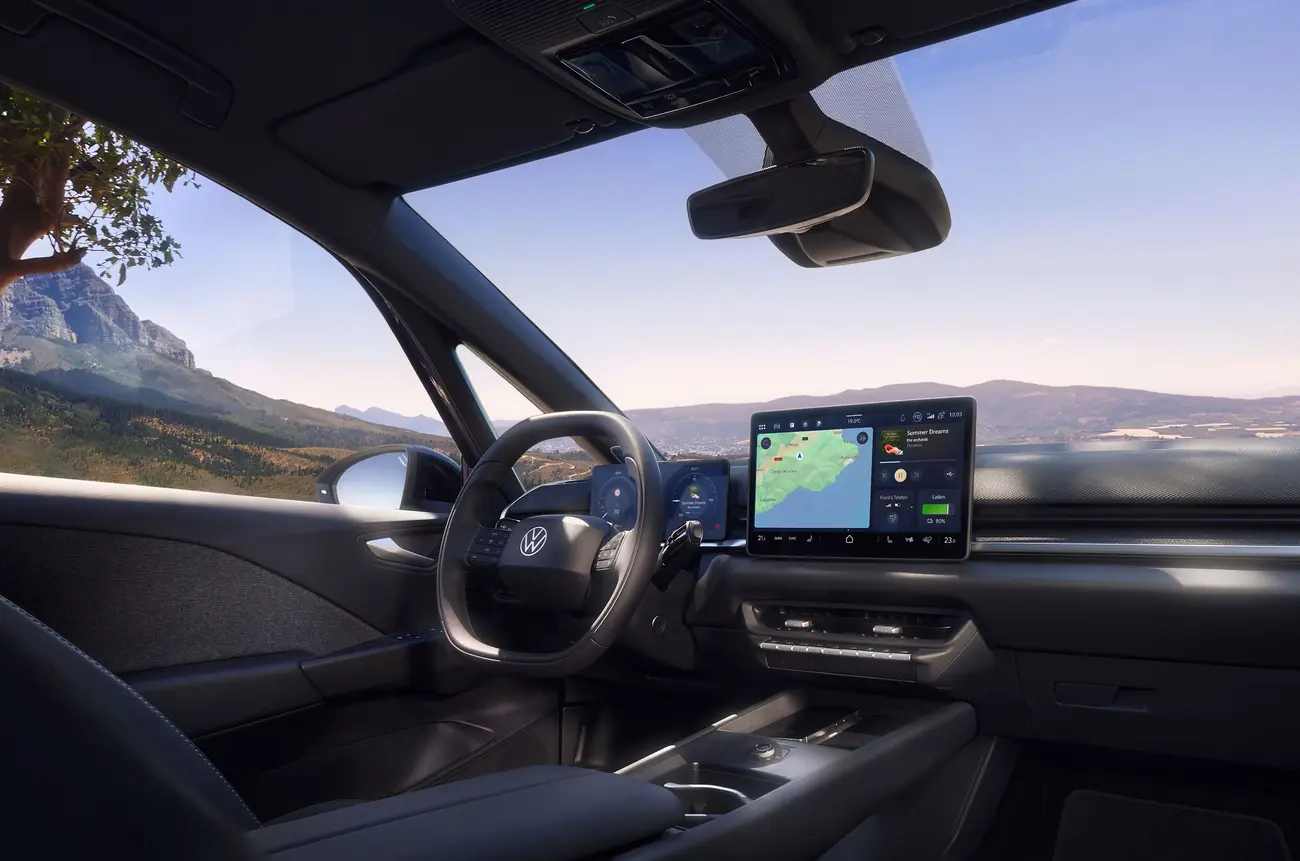
Volkswagen has completely redesigned the ID.3 Neo's interior: better materials, physical buttons and rotary controls replacing the much-criticised touch sliders. There's also V2L (powering external devices from the battery), over-the-air updates and an optional Travel Assist that can recognise traffic lights and stop at red.
Warranty and safety
MG offers a 7-year or 150,000 km warranty and has a 5-star Euro NCAP rating. For buyers still unsure about a Chinese brand, that's one of the strongest reassurances on offer. On the Volkswagen side, the factory vehicle warranty is the usual 2 years, with the battery covered for 8 years or 160,000 km. Worth knowing: in Portugal, the legal guarantee on new goods is 3 years, regardless of what the manufacturer advertises.
Frequently Asked Questions
Neither car has a confirmed official price in Portugal yet. For the MG4 Urban, DECO Proteste quotes around €23,900 (not confirmed by MG), while the Spanish price of €25,490 adjusted for Portugal's 23% VAT works out at roughly €25,900. For the ID.3 Neo, our estimate based on Spanish (€31,370) and German (€33,995) prices lands between €32,000 and €35,000. Both are exempt from ISV and IUC and may qualify for Fundo Ambiental incentives, depending on the rules in force at the time of purchase.
Caetano, Volkswagen's Portuguese importer, has only said ID.3 Neo pre-sales are "coming soon", with no date or official price at the time of writing. The car is already on sale in Germany (from €33,995) and Spain (from €31,370) with 50, 58 and 79 kWh batteries. The MG4 Urban, by contrast, already has a Portuguese price reference via DECO Proteste, although MG has not confirmed it.
In an electrive city test at around 20 °C, the 54 kWh MG4 Urban used 11 kWh/100 km, which points to close to 400 km in near-ideal conditions against 416 km WLTP. The 58 kWh ID.3 Neo returned a calculated real-world range of 387 km (494 km WLTP), using 10.5 kWh/100 km in town and 20 kWh/100 km on the motorway. Because both use LFP batteries, which are more sensitive to cold, expect lower figures in winter and at motorway speeds.
The ID.3 Neo has the edge: it charges at 105 kW DC with the LFP batteries and 183 kW with the 79 kWh pack, which reaches 630 km WLTP. In electrive's test, the 58 kWh ID.3 Neo peaked at 126 kW and covered more than 550 km of motorway with a single 25-minute stop. The MG4 Urban tops out at 82 to 87 kW and needed almost 40 minutes to charge from 26% to 90%, which adds up on regular runs such as Lisbon to the Algarve using MOBI.E fast chargers.
The MG4 Urban comes with a 7-year or 150,000 km warranty and a 5-star Euro NCAP rating. The ID.3 Neo has a 2-year factory vehicle warranty, with the battery covered for 8 years or 160,000 km. In Portugal, every new car also carries a 3-year legal guarantee, regardless of the warranty the manufacturer advertises.
MG4 Urban or ID.3 Neo: which should you buy?
Go for the MG4 Urban if:
- Budget comes first and you want the cheapest compact EV with over 400 km of range
- You mostly drive in town and the suburbs, and charge at home or at work
- You need a big boot for family or luggage
- You value a long 7-year warranty
Go for the VW ID.3 Neo if:
- You regularly drive long distances and depend on fast chargers
- You want the 630 km WLTP option with the 79 kWh battery
- You prefer rear-wheel drive, more power and a more refined interior
- You'd rather have a brand with a decades-old service network in Portugal
European testers broadly agree: the MG4 Urban is the rational pick for value, city driving and space; the ID.3 Neo is the compact for people who cover serious mileage. The big unknown remains the Volkswagen's Portuguese price — if it lands near €32,000, the contest gets much closer; if it drifts towards €35,000, the MG looks even stronger. It's worth waiting for Caetano's official announcement before signing anything, and keeping an eye on the first listings of both cars on the used market in the meantime.