
MG Factory in Spain (Galicia): What It Means for Car Buyers in Portugal
Published: 07/06/2026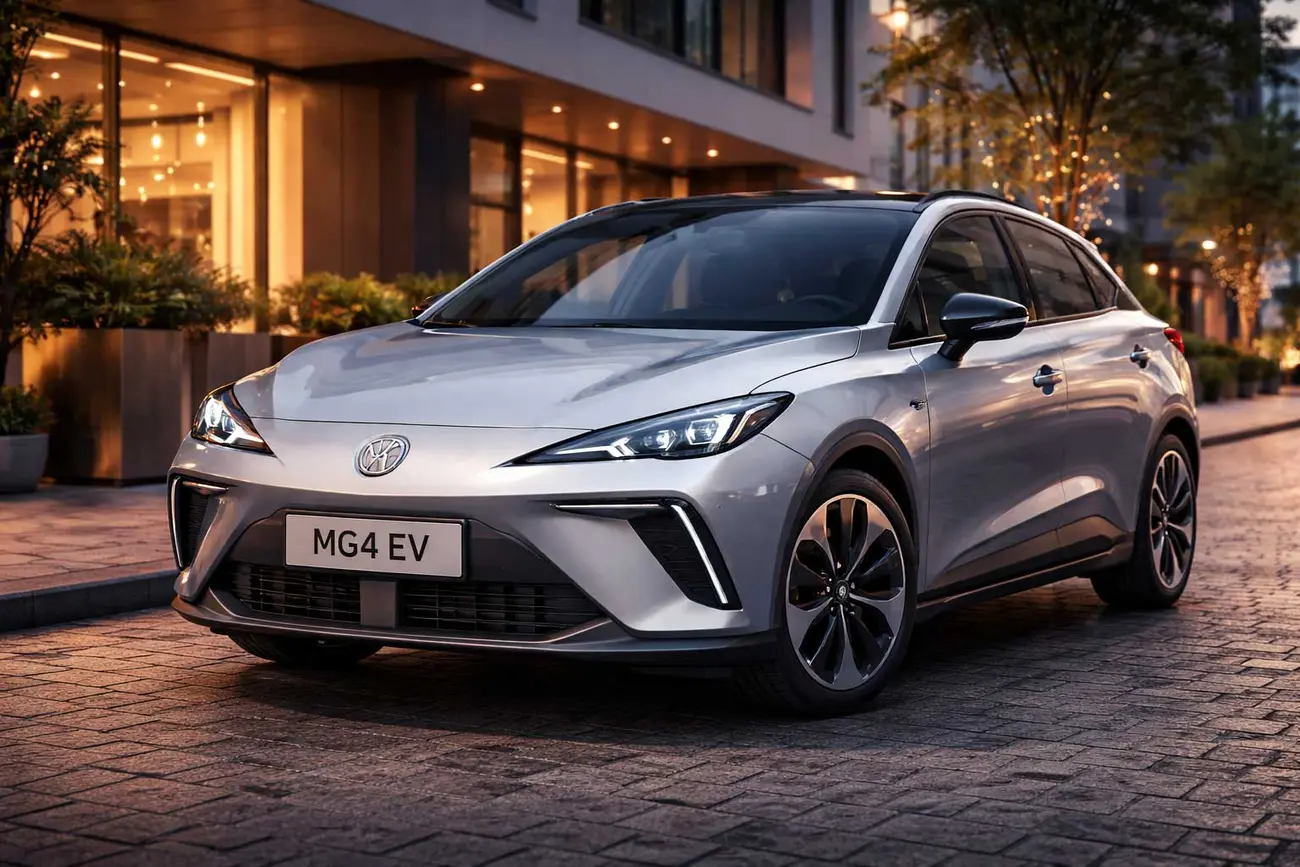
MG will build cars just across the border from Portugal
MG has confirmed its first European factory in Ferrol, in the Galicia region of north-west Spain — only a few hours' drive from Portugal's northern border. It's an initial investment of around €200 million, with production due in 2028 and a target capacity of 120,000 vehicles per year. For anyone in Portugal eyeing an MG, this factory in Spain could be the difference between today's price and a noticeably more competitive one within two years.
It's worth understanding why. MG didn't pick Galicia by chance, and the decision is all about what we pay for a Chinese car in Europe.
Why MG is building a factory in Spain
The answer fits in one word: tariffs. SAIC, MG's parent company, is the Chinese carmaker hit hardest by Europe's tariffs on electric cars. On top of the standard 10% import duty, Brussels added a 35.3% anti-subsidy duty on SAIC's electric vehicles — a total of 45.3%. That's among the steepest rates applied to any Chinese brand.
Building inside the European Union makes that burden disappear. An MG assembled in Galicia is, for all practical purposes, a European car — without the anti-subsidy tariff that makes every China-built EV more expensive today. That's the logic behind the strategy MG calls "In Europe, For Europe": manufacture in Europe to sell in Europe.
Interestingly, not every MG suffers the heavy tariff. The combustion, hybrid and plug-in hybrid models pay only the standard 10% — and MG's hybrids grew 300% last year, to 137,000 units. It's the battery-electric vehicles that gain most from local production, which is why they're the most likely focus for the new plant.
What we know about the MG factory in Galicia
The project was first announced by the Xunta, Galicia's regional government, and confirmed by MG Motor in early June 2026. Here are the numbers that matter:
| Item | Value |
|---|---|
| Location | Ferrol (outer port), Galicia, north-west Spain |
| Initial investment | around €200 million |
| Production start | 2028 (construction from 2027) |
| Target capacity | 120,000 vehicles per year |
| Jobs | around 2,000 (up to 2,300 in the initial phase) |
| On-site functions | production, R&D, components and logistics |
The factory will be built in two phases. The 120,000-vehicle annual capacity only arrives once the second phase is complete — and that date hasn't been confirmed. In the first stage, several analysts expect knockdown-kit assembly (CKD or SKD), where parts shipped from China are put together locally. It's a way for SAIC to establish an EU manufacturing presence without committing all the capital at once.
Ferrol wasn't picked at random. It sits near Stellantis' plant in Vigo, has a port with strong shipping links — especially to the UK, MG's biggest European market — and an established supplier base. The chassis and suspension tuning, meanwhile, stays at MG's technical centre in Birmingham.
Which MG models will be built in Spain
Here's the honest part: officially, nobody knows yet. MG hasn't confirmed models or powertrains. Given the tariff advantage, battery-electric vehicles are the logical bet, and the MG4 EV — the brand's most successful electric car, now reinforced by the cheaper MG4 EV Urban variant — is the natural candidate. But treat this as a likely scenario, not a settled fact.
Will the MG factory make cars cheaper in Portugal?
That's the question buyers care about. The straight answer: it could help, but there are no guarantees.
The logic is simple. If an MG4 stops paying a 45.3% tariff and pays zero because it's built in Galicia, there's real room for lower prices — or, at the very least, for MG to hold current prices steady instead of raising them. In a market where Chinese electric cars in Portugal compete mainly on price, that slack matters.
But there are caveats. The factory only opens in 2028, and full capacity comes later still. Until then, the MGs you buy in Portugal keep arriving from China with the tariff on top. And even with local production, MG might choose to keep prices where they are and improve its margin rather than pass savings to the customer. If you're hoping for a cheaper MG in Portugal, 2028 is the realistic horizon, not sooner.
MG isn't alone — Spain is becoming a Chinese carmaking hub
MG's move is part of a bigger trend. Chery has been building the Ebro S700 at a former Nissan plant in Barcelona since late 2024. Leapmotor will assemble the B10 at a Stellantis site near Zaragoza. BYD is ramping up its plant in Hungary, and Xpeng uses SKD assembly in Austria. Spain is quickly becoming the industrial gateway for Chinese brands in Europe.
For Portugal, the geographic proximity is a concrete advantage. A factory in Galicia means supply chains, parts and support closer to home than any plant in Hungary or Austria. And it strengthens a brand that's already China's most successful in Europe: MG sold more than 300,000 cars on the continent in 2025 (307,000, up 26% year-on-year), is the only Chinese brand in the European top 20, and passed one million cumulative deliveries in early 2026, with over 1,300 dealers across 34 countries.
For now, we have the numbers and the date. If you're planning to buy an electric car in the next few years, it's worth following MG's pricing announcements as 2028 draws closer — because that's when this factory stops being news and starts affecting what you pay for the car.
Frequently Asked Questions
MG's new factory in Ferrol, Galicia, is due to begin production in 2028, with construction starting in 2027. The plant is being built in two phases and only reaches its target capacity of 120,000 vehicles per year once the second phase is complete — a date that hasn't been confirmed yet. For buyers in Portugal, 2028 is the realistic horizon to keep in mind.
MG's first European factory is in Ferrol, at the outer port of Galicia, in north-west Spain — only a few hours' drive from Portugal's northern border. The location was chosen for its proximity to Stellantis' plant in Vigo, a port with strong shipping links (especially to the UK), and an established supplier base.
It could help, but there are no guarantees. An MG built in Galicia no longer pays the 45.3% anti-subsidy tariff that makes China-built EVs more expensive today, creating room for more competitive prices. However, the factory only opens in 2028, and MG might choose to hold prices and improve its margin rather than pass the savings on to buyers.
Officially, no models or powertrains have been confirmed yet. Given the tariff advantage, battery-electric vehicles are the most logical bet, and the MG4 EV — the brand's best-selling electric car, now reinforced by the cheaper MG4 EV Urban variant — is the natural candidate. Treat this as a likely scenario rather than a confirmed fact.
The main reason is tariffs. SAIC, MG's parent company, pays 45.3% on EVs imported from China (a standard 10% duty plus a 35.3% anti-subsidy duty) — among the highest rates applied to any Chinese brand. Building inside the European Union removes that burden. MG isn't alone: Chery already builds cars in Barcelona and Leapmotor will assemble near Zaragoza, with Spain becoming the industrial hub for Chinese brands in Europe.