
MG 07 PHEV Electric Range: 245 km CLTC, 185 km WLTC and a 30 kWh Battery
Published: 16/08/2026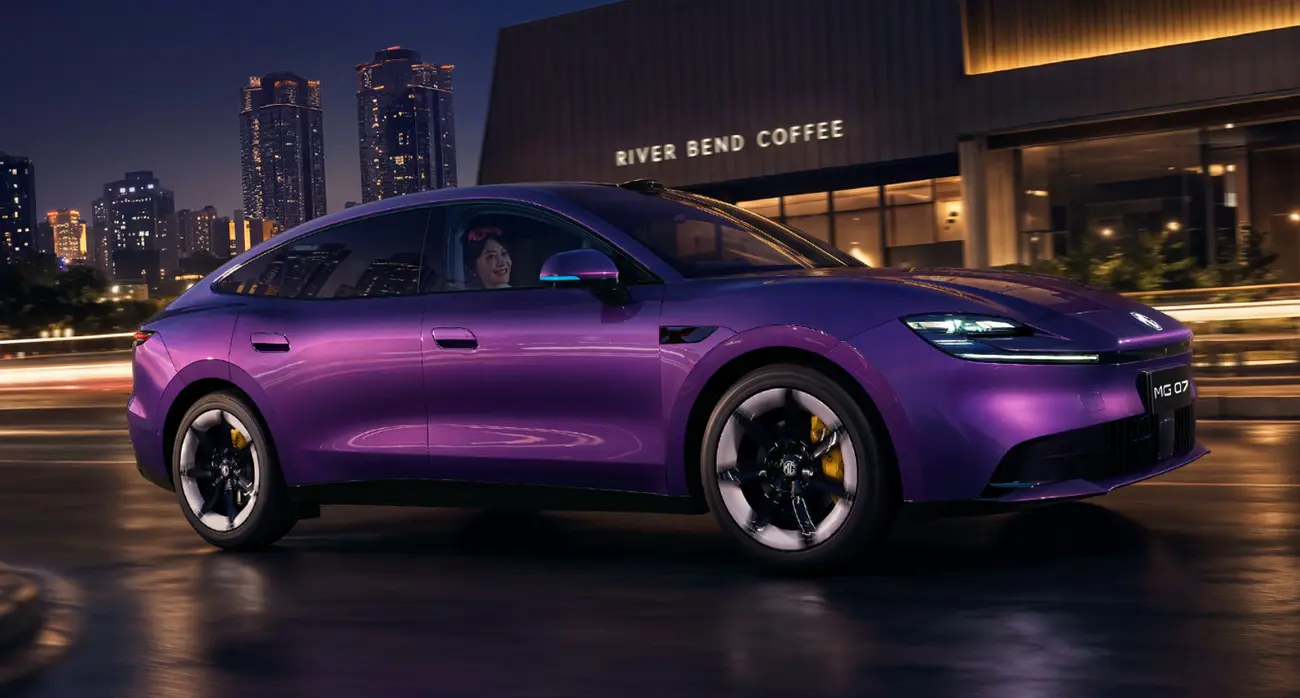
245 km on electric power: the number MG just published
A plug-in hybrid that covers 245 km without burning a drop of petrol. That is what MG listed on its official Chinese site on 10 August, when it introduced the hybrid version of the MG 07 — the fastback sedan-coupe the brand had already shown in June as a full EV.
There is a footnote to the MG 07 PHEV electric range, though: those 245 km come from the CLTC cycle, China's own test, which is far more generous than Europe's. The MIIT filing published in June quoted 185 km on the WLTC cycle for the same car, and that is the figure to hold on to when comparing with what is actually sold here. Even so, 185 km is well beyond what a plug-in normally manages.
What sits under the MG 07 plug-in hybrid's skin
The system is SAIC's DMH setup: a 1.5-litre naturally aspirated engine acting mostly as a generator, paired with an electric motor strong enough to carry the car on its own most of the time.
| Specification | Value |
|---|---|
| Combustion engine | 1.5L, 82 kW (110 hp), 135 N·m |
| Electric motor | 152 kW (204 hp), 302 N·m |
| Battery | CATL LFP, around 30 kWh |
| Electric range | 245 km CLTC (185 km WLTC per MIIT filing) |
| Combined range | 1,745 km |
| Length | 4,886 mm |
| Width | 1,900 mm |
| Height | 1,478 mm |
| Wheelbase | 2,858 mm |
The 30 kWh battery is the centrepiece. A typical European plug-in runs 12 to 20 kWh; this is close to double, using CATL's LFP chemistry — cheaper, happier being charged to 100% every night, and slower to degrade over the years. For a driver covering 40 km a day between home and the office, that means plugging into the wallbox once a week and going months without visiting a petrol station.
The claimed 1,745 km combined range is the argument at the other end: a full battery plus a full tank crosses the Iberian Peninsula without a refuelling stop. In Portugal, that is the difference between planning the drive to the Algarve and simply doing it.
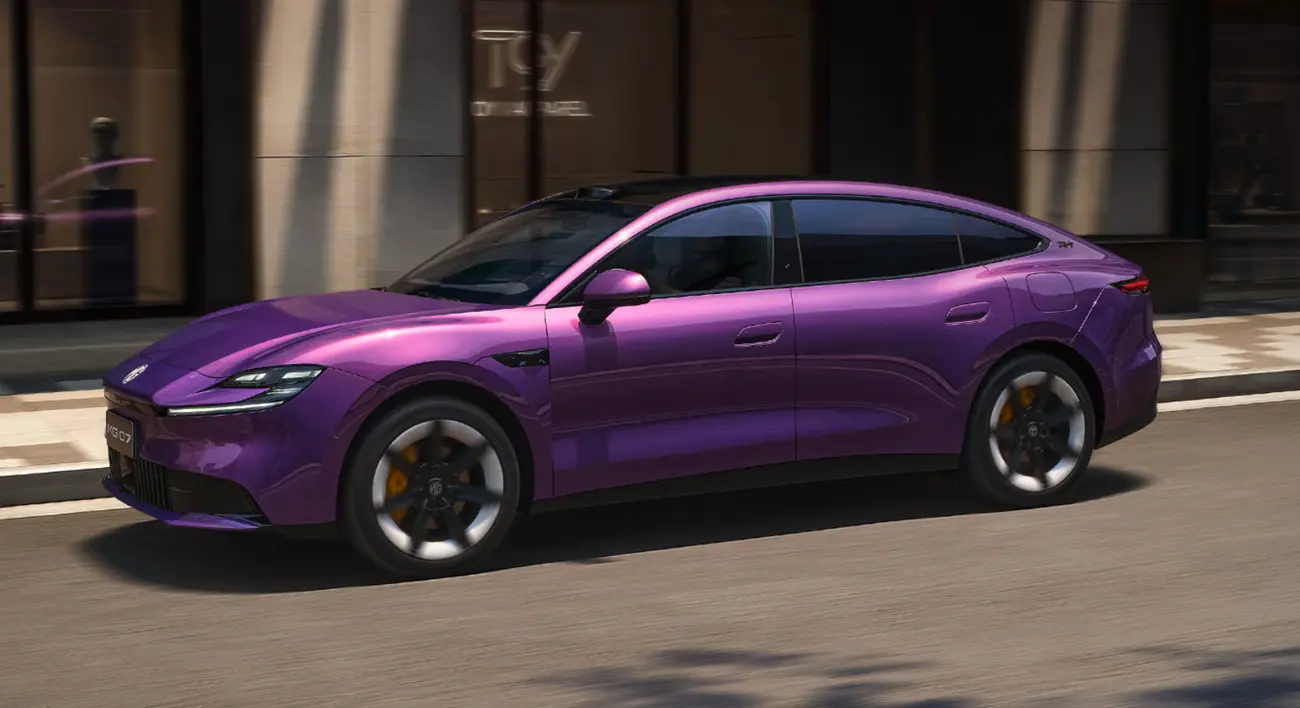
Dimensionally the MG 07 plays in Tesla Model 3 and BYD Seal territory: 4.89 metres long, a 2.86-metre wheelbase, fastback roofline, semi-hidden door handles and a panoramic glass roof.
Comfort or LiDAR: the two versions announced
MG launched the PHEV in two configurations, 245 Comfort Edition and 245 LiDAR Edition. The difference is driver assistance: the LiDAR car adds a roof-mounted lidar sensor and the Momenta R7 system, the same package debuting on the electric MG 07 and the one SAIC positions against international autonomous-driving software.
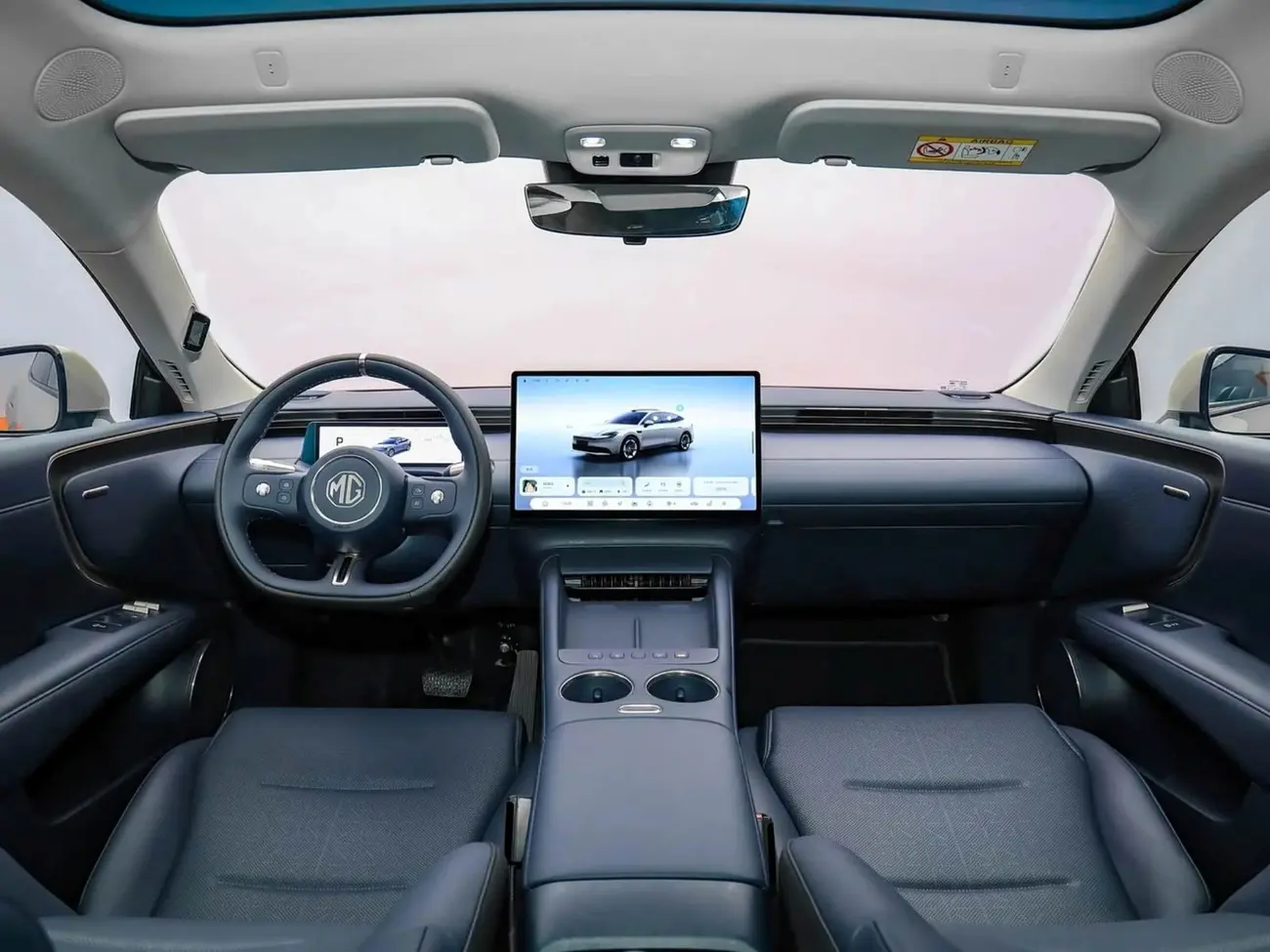
Everything else is generous for the class: an 8.88-inch digital cluster, a 15.6-inch central screen, a double-layer silver-plated sun-blocking panoramic roof, ventilated and heated front seats, 256-colour ambient lighting, a powered tailgate and 50 W wireless phone charging.
Price? Not yet. MG published the specs with no price list, in China or anywhere else.
MG 07 EV vs plug-in hybrid: what actually changes
The full-electric sibling is further along. Pre-sales opened in China on 29 July from 125,900 yuan (about $18,500), with a 67 kWh pack and 610 or 650 km CLTC. The top version, with an 800V architecture and around 320 hp, is reported at up to 840-845 km CLTC — roughly 600 km in WLTP terms.
| MG 07 EV | MG 07 PHEV | |
|---|---|---|
| Battery | 67 kWh | around 30 kWh (LFP) |
| Electric range | 610-650 km CLTC | 245 km CLTC / 185 km WLTC |
| Power | 176 kW (239 hp); top version around 320 hp | 152 kW electric plus 82 kW petrol |
| Combustion engine | no | 1.5L |
| Price in China | from 125,900 yuan | not announced |
| Europe | launch planned for late 2026 | not confirmed |
The choice between them is the familiar one, but the margins have narrowed a lot. If most of your driving happens inside Lisbon or Porto and their commuter belts, the practical difference has largely disappeared: 185 km WLTC of electric running covers a full week for the average Portuguese driver. If you do the Lisboa-Porto run regularly and would rather not depend on how the MOBI.E public charging network is behaving on a Sunday afternoon, the petrol tank behind it earns its keep.
Where it lands among Europe's longest-range plug-in hybrids
It is worth setting those 185 km WLTC next to what you can already buy here. WLTC and WLTP are not identical tests, but they are close enough to give the scale.
| Model | Battery | WLTP electric range | Price |
|---|---|---|---|
| Lynk and Co 08 | 39.6 kWh | 200 km | from €52,995 |
| MG 07 PHEV (MIIT filing) | around 30 kWh | 185 km WLTC | not announced |
| Mercedes GLC 300 e | 31.2 kWh | 124 km | from €68,113 |
| Cupra Terramar VZ e-Hybrid | 25.7 kWh | 122 km | from €52,210 |
| Jaecoo 7 SHS | 18.3 kWh | 90 km | from €27,990 |
| Peugeot 3008 Hybrid Plug-in | 21 kWh | 85 km | from €37,130 |
Only the Lynk and Co 08 stays ahead, and it needs a much bigger battery to do it. The MG 07 would land on the podium of that ranking — and, judging by where the brand usually prices things, well under the €50,000 its rivals ask. The electric MG 07 was filed for China's 150,000 to 200,000 yuan bracket (€18,910 to €25,220).
EU tariffs on Chinese plug-in hybrids could rewrite the maths
Here is the brake. Since 31 October 2024, Chinese battery-electric cars pay a brand-specific countervailing duty on top of the standard 10% import tariff: +17% for BYD (27% total), +18.8% for Geely (28.8%) and +35.3% for SAIC, MG's parent — 45.3% in total, the heaviest rate on the list.
Plug-in hybrids escaped that surcharge and pay only the 10%. The effect was immediate: Chinese brands started pushing plug-ins into Europe and reached 34% of the European PHEV market in June 2026, according to Dataforce, alongside 11% of all new car registrations.
Brussels responded. An anti-subsidy investigation is under way and the Commission is preparing PHEV-specific countervailing duties, expected to be lower than the EV ones since batteries make up a smaller share of a hybrid's value. No final rates have been published — this remains a proposal under examination. Meanwhile SAIC is building a plant in northern Spain, precisely so it can produce inside the EU and sidestep the issue.
Frequently Asked Questions
MG claims 245 km of electric-only driving, but that figure comes from China's CLTC cycle, which is considerably more optimistic than European testing. The June 2026 MIIT filing lists 185 km on the WLTC cycle for the same car, and that is the number to use when comparing it with plug-in hybrids sold in Europe. Combined range with a full battery and a full tank is quoted at 1,745 km.
No price has been announced. MG listed both versions (245 Comfort Edition and 245 LiDAR Edition) on its official Chinese website without a price list, and there is no price for any European market. For reference, the fully electric MG 07 opened in China from 125,900 yuan (around $18,500) and was filed in the 150,000-200,000 yuan bracket, or €18,910 to €25,220 — figures that would rise substantially in Portugal once import duties, homologation, VAT and margins are added.
There is no confirmed European launch for the plug-in hybrid version. So far only the fully electric MG 07 is reported for Europe, expected in late 2026 with speculative pricing from around €19,400 before duties and margins. If the PHEV does arrive, it would qualify for Portugal's favourable tax treatment of plug-in hybrids with more than 50 km of electric range and under 50 g/km of CO2, which cuts the ISV registration tax.
The electric MG 07 carries a 67 kWh battery and 610-650 km CLTC (the 800V flagship with around 320 hp is quoted at up to 840-845 km CLTC, close to 600 km WLTP), while the PHEV pairs a 1.5-litre 82 kW engine with a 152 kW electric motor and roughly 30 kWh of CATL LFP battery. For mostly urban and suburban driving, the plug-in's 185 km WLTC covers an average Portuguese driver's full week without burning fuel. For regular Lisbon-Porto runs where you would rather not depend on charger availability, the PHEV's petrol tank is still the safety net.
Right now it is the Lynk and Co 08, with a 39.6 kWh battery and 200 km WLTP, from €52,995. Behind it come the Mercedes GLC 300 e (31.2 kWh, 124 km), the Cupra Terramar VZ e-Hybrid (25.7 kWh, 122 km), the Jaecoo 7 SHS (18.3 kWh, 90 km, from €27,990) and the Peugeot 3008 Plug-in Hybrid (21 kWh, 85 km). At 185 km WLTC, the MG 07 PHEV would land on that podium if it ever reached European showrooms.
Not yet. Since 31 October 2024 Chinese electric cars pay brand-specific countervailing duties — +35.3% for SAIC, MG's parent, taking the total to 45.3% — while plug-in hybrids still pay only the standard 10% import duty. That gap is what pushed Chinese brands to 34% of Europe's PHEV market in June 2026, according to Dataforce. Brussels has an anti-subsidy investigation under way and is preparing PHEV-specific duties, but the measure is still at proposal stage and no final rates have been published.
What this means if you are buying in Portugal
Start with the important part: the MG 07 PHEV has no confirmed European launch. Only the full-electric version is reported for Europe, in late 2026, with speculative pricing from around €19,400 before duties, homologation and dealer margins — meaning the real sticker will be considerably higher.
If the plug-in does eventually arrive, it walks into a favourable tax setup. In Portugal, plug-in hybrids with more than 50 km of electric range and CO2 emissions under 50 g/km get a reduction on ISV, the vehicle registration tax, and a car with 185 km WLTC clears that bar comfortably. For company cars and fleets, the gap against an equivalent petrol model widens further once autonomous taxation is factored in.
Two dates are worth watching over the coming months: the PHEV's price announcement in China, which gives the first real anchor, and Brussels' decision on duties for Chinese plug-ins. That second one decides whether a 185 km plug-in reaches Portuguese showrooms at a price that genuinely hurts the European competition — or never makes the trip at all.