
633 km and 320 kW: the new Mercedes GLB electric arrives in Portugal
Published: 03/07/2026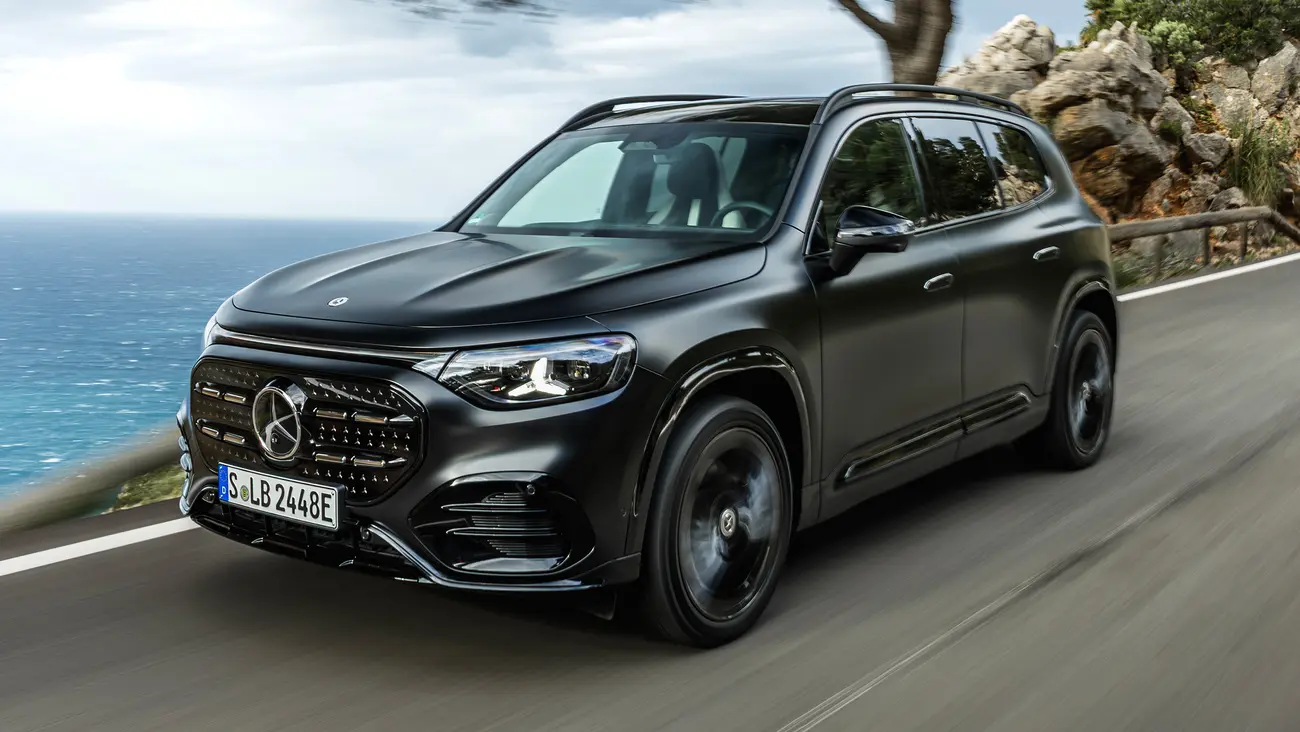
633 km and 320 kW: the new Mercedes GLB electric arrives in Portugal
Recover 255 km of range in ten minutes. That single promise is what makes the new Mercedes GLB electric hard to ignore in Portugal — and what lifts it to a level the old EQB never reached. The second-generation family SUV lands in Europe in summer 2026, now built on the 800-volt MMA platform and rated at up to 633 km WLTP on paper. For anyone here hunting for an EV with real room for the family, it is one of the launches of the year.
The change starts with the name. What used to be the EQB is now the GLB with EQ Technology, part of Mercedes' new naming logic. But this is no cosmetic rebadge: the technical foundation is entirely new.
The range of the Mercedes GLB 250+ and the rest of the line-up
The battery sets the tone. The 250+ and 350 4Matic versions use an 85 kWh usable NMC pack — 21% more capacity than the EQB. That translates into concrete numbers:
| Version | Power | Drive | WLTP range | 0-100 km/h |
|---|---|---|---|---|
| GLB 200 | 224 hp (165 kW) | Rear | (58 kWh battery) | 8.2 s |
| GLB 250+ | 272 hp (200 kW) | Rear | up to 633 km | 7.4 s |
| GLB 350 4Matic | 354 hp (260 kW) | All-wheel | up to 616 km | 5.5 s |
The Mercedes GLB 250+ range is the headline: up to 633 km on the combined WLTP cycle, with the entry-level 200 introducing a smaller 58 kWh battery. On the road, European tests point to something more realistic — between 464 and 537 km in mixed use, thanks to a very restrained 15.8 to 18.3 kWh/100 km consumption. In town, Mercedes even quotes over 670 km. Those figures put Lisbon-Porto-Algarve within a single charge, without the anxiety.
For buyers who want pace, the GLB 350 4Matic fits two motors, 354 hp and all-wheel drive, dispatching 0-100 km/h in 5.5 seconds. Every version shares an oddity that is rare in an EV: a two-speed transmission, with top speed capped at 210 km/h.
Fast charging: the argument that changes everything
This is the real revolution over the EQB. The 800-volt architecture allows DC charging up to 320 kW — more than triple the speed of its predecessor, which topped out on a 400V system.
What that means in practice: a stop of around 22 minutes takes the battery from 10 to 80%. And in just ten minutes hooked up to a rapid charger, you recover up to 255 to 260 km of WLTP range. On a long trip, that is the time it takes for a coffee and a bathroom break. At home or at work, AC charging reaches 22 kW, and there is V2L too, letting you power external equipment straight from the car's battery.
Portugal's MOBI.E network and the rapid chargers on the motorways make these numbers usable day to day — as long as the station delivers enough power to let the GLB show what it can do.
More space than the EQB, and up to 7 seats
The GLB has grown. It now measures 4.72 metres long (about 98 mm longer than the EQB) with a 2.89-metre wheelbase, up 60 mm. You feel that stretch mostly in the second row, with more legroom and more headroom.
The family brief stays intact. Five seats come as standard, but the optional third row — for an extra €1,350 — turns it into a seven-seater, a rarity in a compact SUV. That third row suits children or short hops best, with limited legroom, but the flexibility is there when you need it.
On cargo, the figures are generous:
- Frunk (front trunk): 127 litres for the cables
- Standard boot: 540 litres (around 145 litres with all seven seats up)
- Seats folded: up to 1,715 litres
- Towing capacity: 2,000 kg
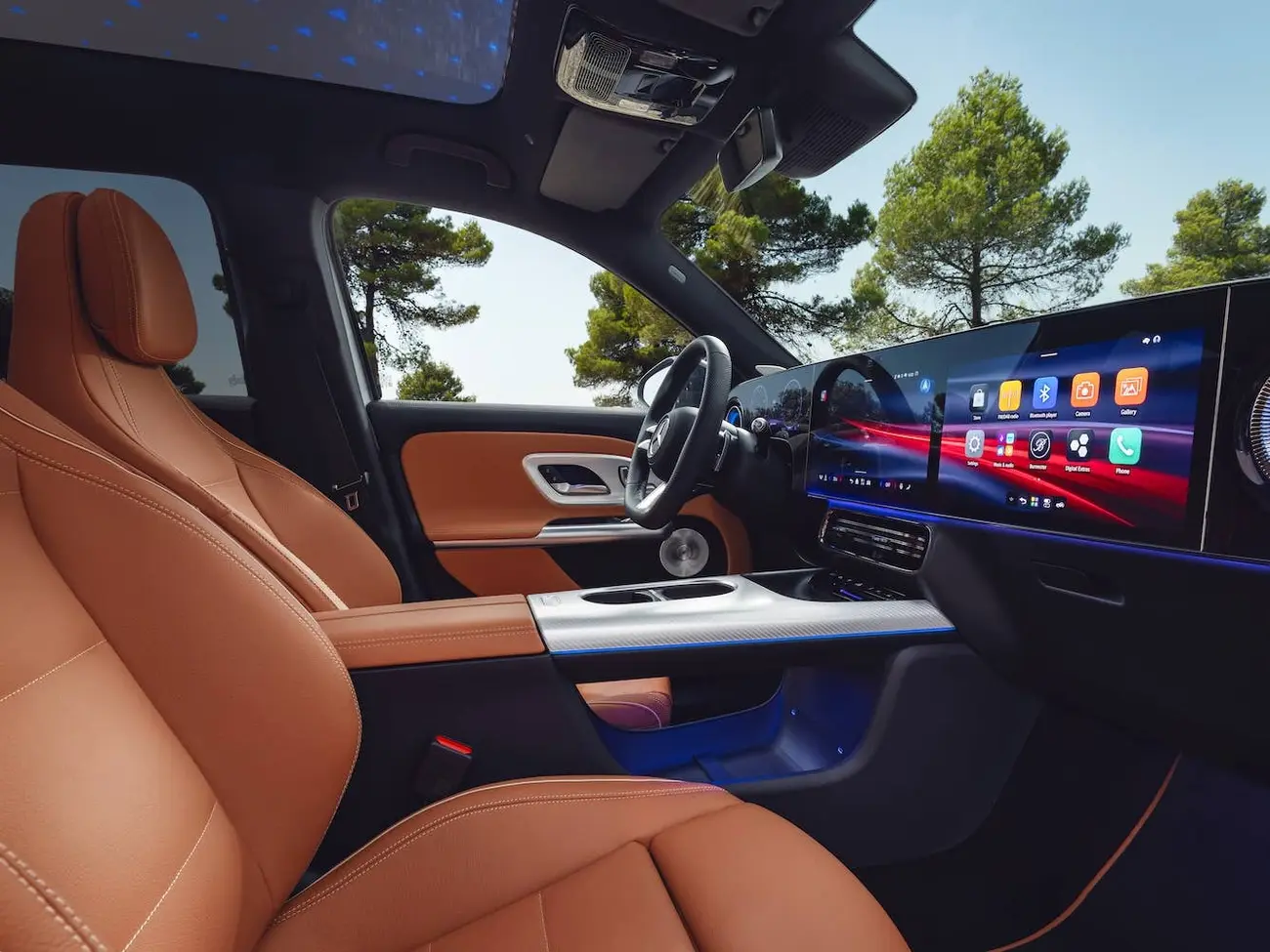
Inside, Mercedes offers the optional MBUX Superscreen with three displays — a 10.25-inch cluster, a 14-inch centre screen and a 14-inch passenger screen — under one continuous glass surface. It runs the new MB.OS system, with over-the-air updates and navigation via Google Maps. The panoramic roof can integrate 158 LED stars and Magic Sky tech, which darkens the glass at a touch.
How much does the Mercedes GLB electric cost in Portugal
Portuguese prices are already confirmed for the main versions: the GLB 250+ starts at around €57,500 and the GLB 350 4Matic at around €65,450. The more affordable entry-level GLB 200 has no firm Portuguese price yet. As a European reference, the French range opens at €46,950 (GLB 200), €55,900 (250+) and €61,100 (350 4Matic).
Being fully electric, the GLB benefits from Portugal's tax incentives: exemption from ISV (the vehicle purchase tax) and IUC (the annual road tax), plus advantages on autonomous taxation for anyone running it as a company car. Over the car's life, those savings help offset the entry price.
In the local market, the most obvious rivals are the Tesla Model Y in seven-seat form and the Peugeot E-5008. The Tesla offers similar range at a comparable price, but the GLB stakes its difference on 320 kW charging and Mercedes' pedigree for quality.
Frequently Asked Questions
Portuguese prices are confirmed for the main versions: the GLB 250+ starts at around €57,500 and the GLB 350 4Matic at around €65,450. The entry-level GLB 200 has no firm Portuguese price yet. As a full EV it qualifies for exemption from ISV (purchase tax) and IUC (road tax), lowering its total cost versus a comparable combustion model.
On the combined WLTP cycle the GLB 250+ claims up to 633 km from its 85 kWh usable pack, but real-world European tests point to 464 to 537 km in mixed driving. Its low consumption (15.8 to 18.3 kWh/100 km) helps, and in town Mercedes even quotes over 670 km. In practice a Lisbon-Porto run fits within a single charge.
Thanks to the MMA platform's 800-volt architecture, it accepts up to 320 kW DC charging — more than triple the EQB's speed. A 10-80% charge takes around 22 minutes, and in just ten minutes at a rapid charger you recover up to 255 to 260 km of WLTP range. At home, AC charging reaches 22 kW.
Five seats come as standard, but an optional third row for an extra €1,350 turns it into a seven-seater — a rarity among compact electric SUVs. The third row suits children or short trips best given its limited legroom. With all seven seats up the boot drops to around 145 litres, against 540 litres in the standard layout.
The new GLB electric is the direct successor to the EQB, rebadged as the GLB with EQ Technology. The differences run deep: a new 800-volt MMA platform (instead of 400V), DC charging up to 320 kW (more than triple), an 85 kWh battery with 21% more capacity and up to 633 km WLTP. It is also larger, 98 mm longer with a 60 mm longer wheelbase, improving second-row space.
Is the new GLB worth the wait?
If you need a family EV with the option of seven seats, few rivals pack this much space, technology and charging speed into a compact footprint. Arrivals at Portuguese dealers track the European rollout in summer 2026, with the hybrid variant (1.5 turbo) following in 2027. For anyone torn between versions, the 250+ is the sweet spot between range, price and performance — and the one that best earns the "lightning charge" label Mercedes has pinned on it.