
Best Electric Car for Long Trips in Portugal: What the ADAC 2026 Test Found
Published: 15/11/2026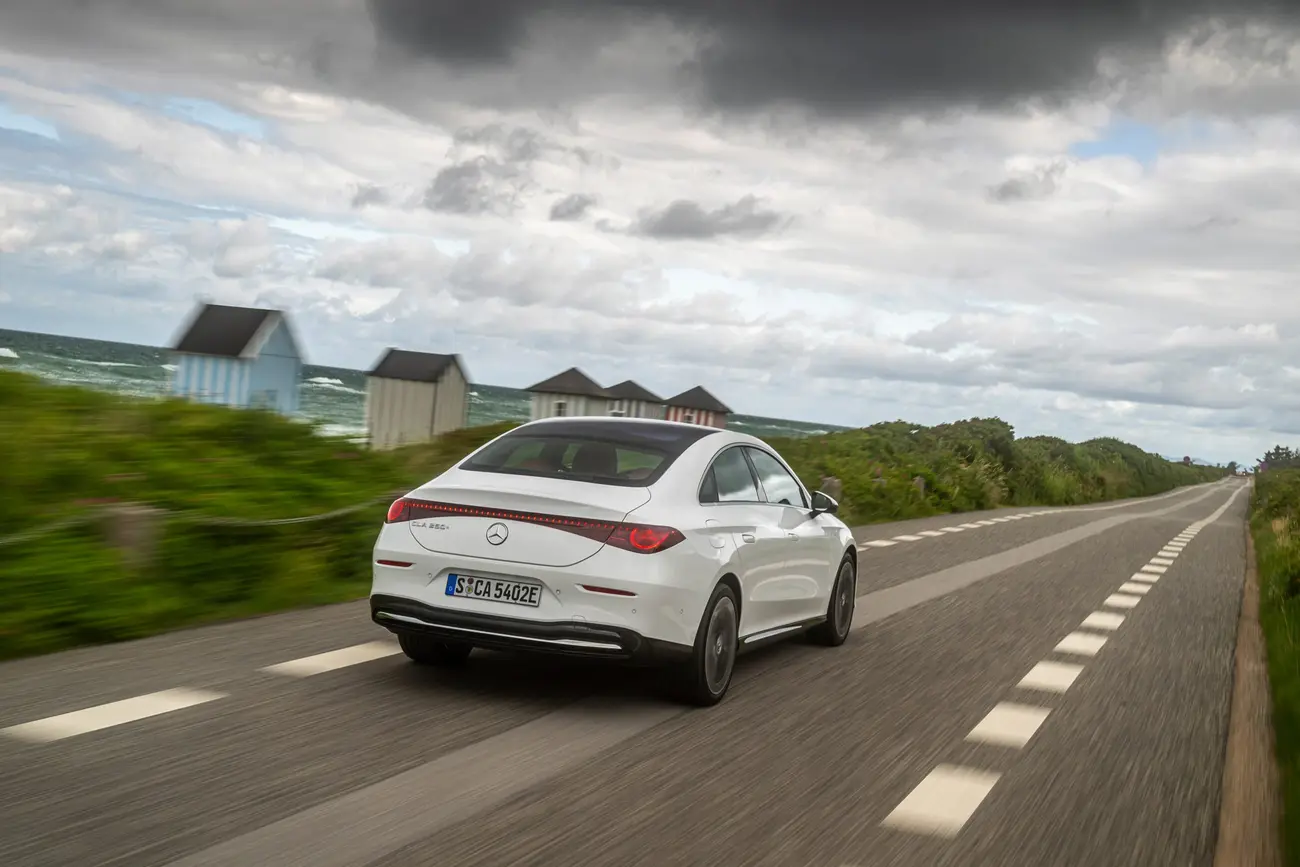
1,071 km with one stop: what the ADAC 2026 test found
Over a thousand kilometres with a single 20-minute charging break. That's what the Mercedes CLA 350 4MATIC managed in the ADAC long-distance EV test for 2026, the annual ranking from Germany's largest motoring club. Just 12 km behind came the BMW iX3 50 xDrive, at 1,059 km.
If you're looking for the best electric car for long trips in Portugal, this ranking is more useful than any WLTP brochure. ADAC measures range under its own test conditions and adds the number that actually matters on a road trip: how many kilometres you get back during a short stop. We've translated the results to Portuguese roads — Lisbon–Porto, Lisbon–Algarve and even the full length of the N2.
How ADAC calculates real range with a 20-minute charge
The formula is straightforward. ADAC takes 90% of the range measured on a full battery (the safety buffer nobody likes to dip into) and adds the kilometres the car recovers in 20 minutes on a fast charger. Charging is tested on a 300 kW Alpitronic charger, with the full charging curve recorded.
Based on that total, each car lands in one of five categories:
| Total with one 20-min stop | ADAC rating |
|---|---|
| over 750 km | fully suitable for long distance |
| 600–750 km | suitable for long distance |
| 500–600 km | suitable, with more charging time |
| 400–500 km | conditionally suitable |
| under 400 km | barely suitable |
One important caveat: ADAC changed its test method in 2026. Earlier rankings — such as a list published over the summer that had the CLA 250+ at 1,226 km — use the old methodology and can't be compared directly with the 2026 figures.
ADAC 2026 ranking: the 7 best EVs for long distance
| # | Model | Total with one 20-min stop |
|---|---|---|
| 1 | Mercedes CLA 350 4MATIC | 1,071 km |
| 2 | BMW iX3 50 xDrive | 1,059 km |
| 3 | Mercedes GLC 400 4MATIC | 906 km |
| 4 | Hyundai Ioniq 6 (84 kWh) | 885 km |
| 5 | Xpeng P7+ Long Range | 864 km |
| 6 | Audi S e-tron GT | 855 km |
| 7 | Volvo EX90 Twin Performance Ultra AWD | 810 km |
All seven clear the 750 km bar comfortably. At the other end, only two cars in the comparison were rated unsuitable for long trips: the Kia EV2 at 363 km and the Renault Twingo Electric at 255 km. They're not bad cars — they're city cars, and they were built for that job.
Mercedes CLA electric: real range and efficiency
Consumption is where the CLA wins. ADAC measured around 14.8 kWh/100 km, a remarkably low figure for an all-wheel-drive saloon with 260 kW (354 hp). That gives roughly 605 km on the first leg (the 90% of range that ADAC counts) plus about 466 km recovered in 20 minutes of charging.
The hardware helps: an 85 kWh NMC battery, 800-volt architecture, DC charging up to 320 kW and 10–80% in 22 minutes, according to Mercedes. Claimed WLTP range is 771 km, or 792 km for the rear-wheel-drive CLA 250+. It does 0–100 km/h in 4.9 s, with 515 Nm of torque.
BMW iX3 50 xDrive real range: the SUV with the biggest battery
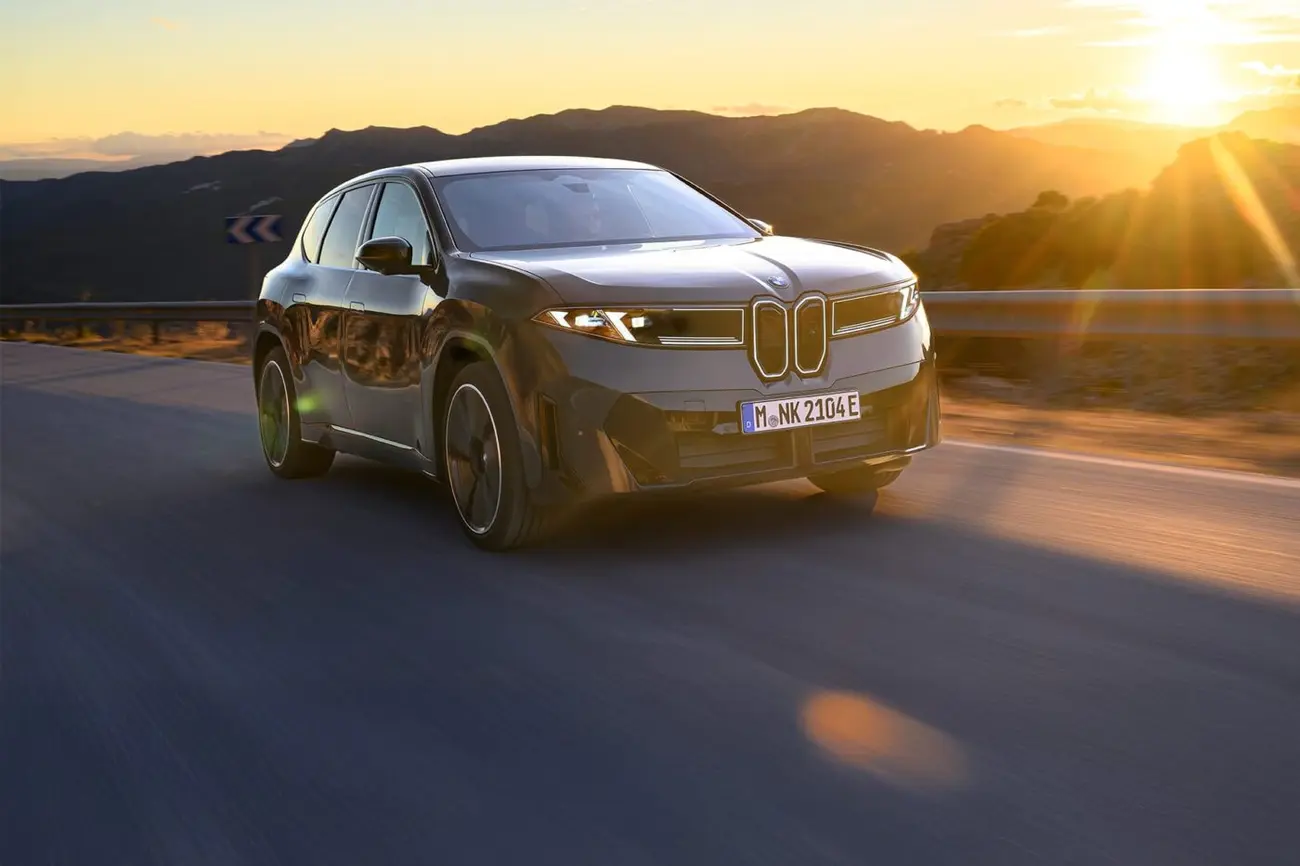
The iX3 50 xDrive gets to almost the same result by a different route: sheer capacity. The battery holds 108.7 kWh net and DC charging peaks at 400 kW. In ADAC's standalone test it achieved 669 km of practical range, which works out to 602 km in the formula, plus 457 km in 20 minutes.
ADAC measured consumption at 18.3 kWh/100 km — higher than the CLA, but around 10% below its direct rivals in a comparison with the Mercedes GLC 400, Tesla Model Y Performance and Volvo EX60. BMW claims 10–80% in 21 minutes; ADAC recorded 25 minutes, but the 300 kW charger used in the test was the limiting factor.
| Mercedes CLA 350 4MATIC | BMW iX3 50 xDrive | |
|---|---|---|
| ADAC total (one 20-min stop) | 1,071 km | 1,059 km |
| First leg (90% of range) | ~605 km | ~602 km |
| km recovered in 20 min | ~466 km | 457 km |
| ADAC consumption | ~14.8 kWh/100 km | 18.3 kWh/100 km |
| Battery | 85 kWh (NMC) | 108.7 kWh net |
| WLTP range | 771 km | up to 805 km |
| Max DC charging | 320 kW | 400 kW |
| 10–80% (manufacturer) | 22 min | 21 min (ADAC: 25 min) |
| Power / torque | 260 kW / 515 Nm | 345 kW / 645 Nm |
| 0–100 km/h | 4.9 s | 4.9 s |
Mercedes CLA vs BMW iX3: which is better for long-distance driving?
On the numbers, it's essentially a tie. The real difference is body style and price. The CLA is a low, efficient saloon; the iX3 is a roomier SUV, quieter at 130 km/h (63.6 dB(A) in the ADAC comparison) and with some of the best motorway driver assistance around, according to electrive's test drive. The same review, though, criticised the iX3's firm steel suspension (no air springs) and noticeable tyre noise.
If family and luggage drive the decision, the iX3 makes more sense. If running costs per kilometre come first, the CLA has a clear edge.
What they cost in Portugal
The prices below are indicative, taken from published Portuguese dealer and price-guide listings. Always confirm with a dealer before deciding, as prices shift with campaigns and options.
- Mercedes CLA 350 4MATIC: from around €60,050 in Portugal, according to the price list published by dealer Caetano. In Germany, the launch price was €60,380.60 (the CLA 250+ started at €55,858.60).
- BMW iX3 50 xDrive: from €72,900 in Portugal, according to Guia do Automóvel and Caetano. In Germany it starts at €70,900.
One advantage of buying here: electric cars are exempt from ISV (Portugal's vehicle registration tax) and IUC (the annual road tax), so big batteries don't push up the tax bill. For company buyers, the CLA sits below the €62,500 threshold that matters for Portugal's company EV tax benefits; the iX3 sits above it, which is worth raising with your accountant.
Electric car from Lisbon to the Algarve on one charge? The numbers on Portuguese roads
Applying the ADAC results to Portugal shows what these figures mean in practice:
- Lisbon–Porto (around 300 km on the A1): by ADAC's numbers, even the 7th-placed car should make it without stopping. With around 600 km on the first leg, the CLA and iX3 can almost do the return trip too.
- Lisbon–Algarve (around 280 km on the A2): a non-stop run for the cars in the ranking, with plenty of margin for detours.
- Porto–Faro (around 550 km): the top two can still do it in one go, with little margin. The rest of the top 7 will likely need one stop — which is exactly what the 20-minute metric is designed for.
A local example: BMW Portugal promoted a trip in the iX3 along the 739 km of the N2, from Chaves to Faro. It was a brand event run under conditions BMW chose, so treat it as a curiosity rather than an independent test. The same goes for the 1,007.7 km BMW announced on a run from Debrecen to Munich, driven with a focus on efficiency.
Portugal's public charging network, MOBI.E, already has fast chargers along the A1 and A2, but not all of them deliver the power these cars can accept. On a 50 kW unit, 20 minutes buys you far fewer kilometres than ADAC's 300 kW charger. It pays to plan your stops around ultra-fast stations.
Cold weather and shared chargers matter too
ADAC adds two warnings that apply to any EV. First, the cold: at −7 °C, a Tesla Model Y without a pre-warmed battery saw its stop grow from 33 to 56 minutes, and a VW ID.3 started charging below 50 kW, against around 125 kW at 23 °C. Portuguese winters are milder, but a January morning in Trás-os-Montes is enough to notice the difference.
Second, sharing: on many chargers, two cars plugged into the same unit split the power — 150 kW becomes 75 kW each. And there's a detail many drivers miss: battery preconditioning often only kicks in if the charger is set as the destination in the car's own navigation.
How long does it take to charge from 10 to 80%
Manufacturer claims rarely hold up in practice. In ADAC's comparison, the Volvo EX60 did 10–80% in 17 minutes, the Mercedes GLC 400 in 23, the BMW iX3 in 25 and the Tesla Model Y Performance in 35. That's why ADAC is asking carmakers for standardised 10–80% times, average charging power for summer and winter, manually switchable battery heating, and a battery temperature display for the driver.
Frequently Asked Questions
In the ADAC 2026 test, the Mercedes CLA 350 4MATIC comes first with 1,071 km, closely followed by the BMW iX3 50 xDrive at 1,059 km and the Mercedes GLC 400 4MATIC at 906 km. ADAC adds 90% of the measured full-battery range to the kilometres recovered in 20 minutes on a 300 kW fast charger. Anything above 750 km is rated fully long-distance capable — and the whole top 7 clears that bar.
On distance it is almost a tie: just 12 km separate the CLA (1,071 km) and the iX3 (1,059 km) in the ADAC ranking. The CLA is more efficient, at around 14.8 kWh/100 km versus 18.3 kWh/100 km for the iX3, and cheaper in Portugal (around €60,050 versus €72,900, indicative prices). The iX3 makes up for it with more space, a 108.7 kWh usable battery and DC charging up to 400 kW, which suits families travelling with lots of luggage.
With the cars in ADAC's top 7, none: Lisbon–Algarve (around 280 km on the A2) and Lisbon–Porto (around 300 km on the A1) both fit within the first leg of range. On a Porto–Faro run of around 550 km, only the CLA and iX3 should make it without stopping, with little margin; the others will need one stop. Either way, plan that stop at an ultra-fast MOBI.E charger, because on a 50 kW unit those 20 minutes add far fewer kilometres.
It varies a lot by model, and real-world times rarely match manufacturer claims. In ADAC's comparison, the Volvo EX60 went from 10 to 80% in 17 minutes, the Mercedes GLC 400 in 23, the BMW iX3 in 25 (BMW claims 21) and the Tesla Model Y Performance in 35 minutes. Mercedes quotes 22 minutes for the CLA, which charges at up to 320 kW. That is why ADAC recommends comparing kilometres recovered in 20 minutes rather than peak kW.
Yes, charging especially. At −7 °C, ADAC saw a Tesla Model Y without a preheated battery go from a 33-minute to a 56-minute stop, and a VW ID.3 charge at under 50 kW versus around 125 kW at 23 °C. The fix is to precondition the battery, which in many cars only happens when the charger is set as the navigation destination. Portuguese winters are milder, but you will still notice the difference in the inland north.
ADAC's advice for choosing a road-trip EV
- Start fast charging at a low state of charge and stop at 80% — above that, power drops sharply.
- If you drive long distances often, pick a car with at least 600 km total, including one 20-minute stop.
- In cold weather, precondition the battery or allow extra time at the charger.
- Compare kilometres recovered in 20 minutes, not the headline peak kW figure.
The ADAC 2026 test shows range anxiety no longer applies at the top of the market: the CLA and iX3 can cover Porto–Faro in one go, and any car in the top 7 handles Lisbon–Algarve without stopping. For anyone hunting for the best electric car for long trips in Portugal, the remaining question is budget — close to €60,000 for the CLA, €73,000 for the iX3 — and it's worth watching for when they reach the used market, where that price gap may narrow.