
Mazda 6e 2027 in Portugal: 78 kWh Battery, 560 km Range and 200 kW Charging
Published: 15/09/2026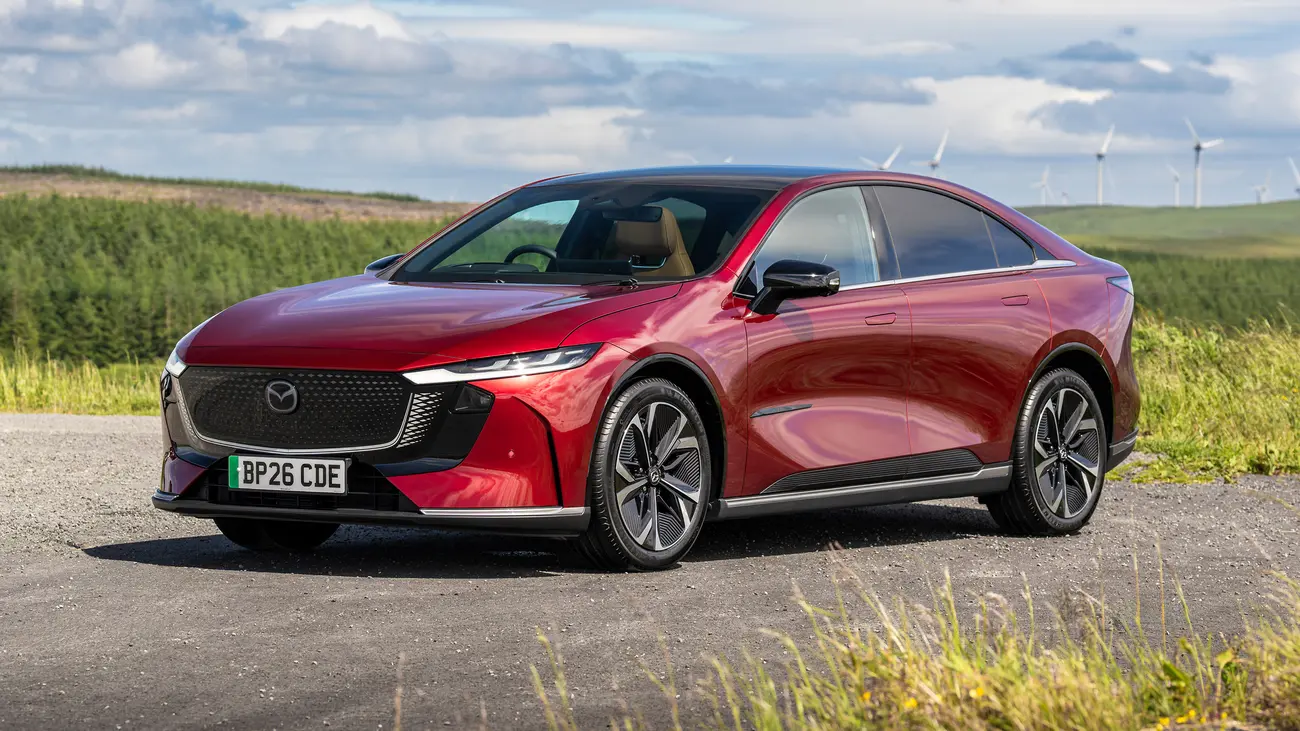
Twenty-four minutes: the number that changes the Mazda 6e
Range was never the Mazda 6e's weak spot. Charging was. Anyone who picked the 80 kWh Long Range — the one rated at 552 km WLTP — was stuck with a modest 90 kW DC peak, which meant roughly 47 minutes plugged in to go from 10 to 80%. For a D-segment electric saloon in 2026, that was hard to defend.
For model year 2027 Mazda fixed it the blunt way: it scrapped both batteries and kept one. The Mazda 6e 2027 with its 78 kWh battery charges at 200 kW and covers 10-80% in 24 minutes. It also goes further.
One LFP battery instead of two compromises
Until now there was a choice, and the choice was a bad one. Either the 68.8 kWh Standard Range (LFP), good for 479 km WLTP with decent 165 kW charging, or the 80 kWh Long Range (NMC), with 73 km more range but half the charging speed. Neither was the complete car.
The new single 78 kWh pack (77 kWh usable, LFP chemistry, prismatic cells, 400 V architecture with 364 V nominal) removes that trade-off. It is rated at 560 km WLTP — more than the old Long Range — with quoted consumption of 16.1 kWh/100 km. And peak DC charging climbs to 200 kW.
| Specification | 2027 (78 kWh) | Current 68.8 kWh | Current 80 kWh Long Range |
|---|---|---|---|
| Battery chemistry | LFP | LFP | NMC |
| Nominal / usable capacity | 78.0 / 77.0 kWh | 68.8 / 68.0 kWh | 80 kWh |
| WLTP range | 560 km | 479 km | 552 km |
| WLTP consumption | 16.1 kWh/100 km | 16.6 kWh/100 km | n/a |
| Power | 190 kW / 258 PS | 190 kW / 258 PS | 180 kW / 245 PS |
| Torque | 320 Nm | 320 Nm | n/a |
| 0-100 km/h | 7.3 s | 7.6 s | n/a |
| Top speed | 175 km/h | 175 km/h | 175 km/h |
| Max DC power | 200 kW | 165 kW | 90 kW |
| Charging 10-80% | 24 min | 23-25 min | about 47 min |
| Max AC power | 11 kW | 11 kW | 11 kW |
| Kerb weight (EU) | 2090 kg | 2037 kg | n/a |
The drivetrain itself is untouched: 190 kW (258 PS), 320 Nm, rear-wheel drive. Oddly, 0-100 km/h drops from 7.6 to 7.3 seconds even though the car has put on 53 kg — 2090 kg against the current version's 2037 kg.
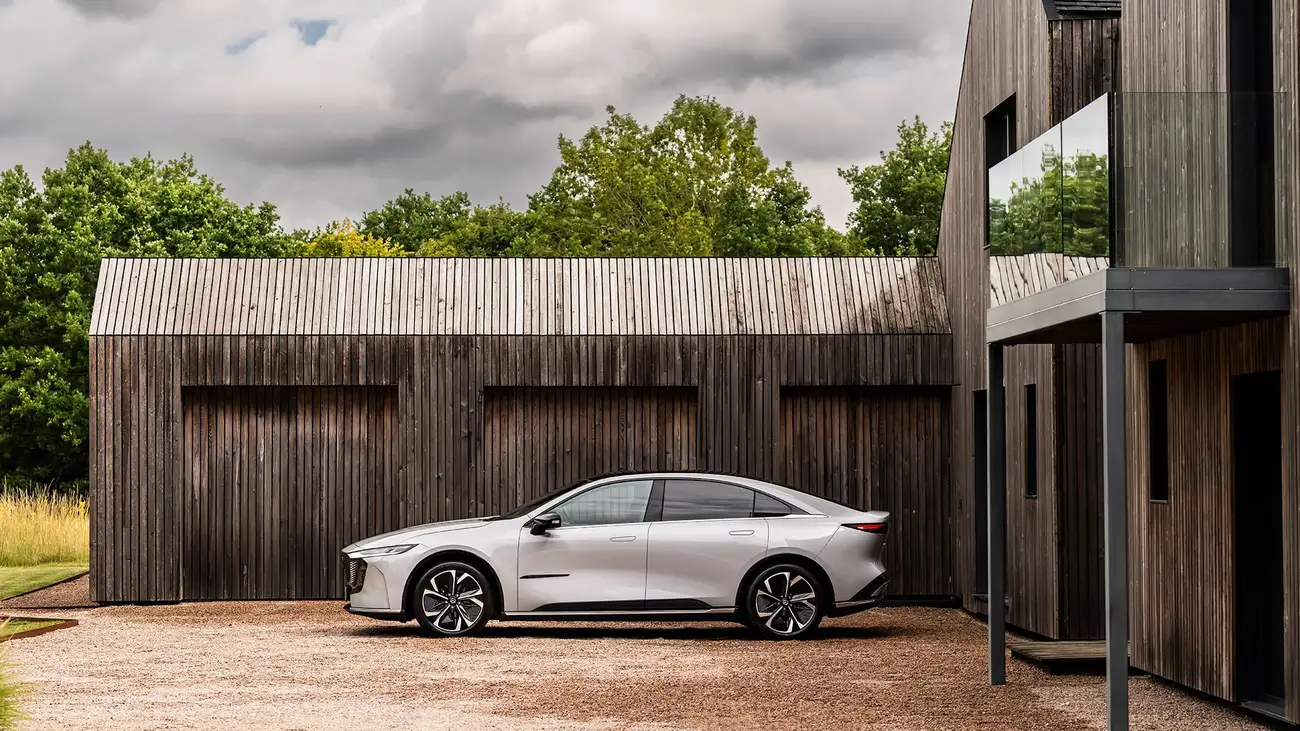
What 200 kW charging actually means on a Portuguese road trip
Mazda's 24-minute claim is measured at ambient temperatures of 23-27 °C on a charger delivering at least 200 kW. That stop puts roughly 400 km of range back in the battery. In Portugal, in summer, at an Ionity-class charger on the A1, that is a realistic scenario.
EV Database, which works with more conservative assumptions, puts average power across 10-80% at 135 kW, with times that depend heavily on the charger you find:
| Charger | Max power | Average power | 10-80% time |
|---|---|---|---|
| CCS 50 kW | 50 kW | 50 kW | 68 min |
| CCS 150 kW | 150 kW | 110 kW | 31 min |
| CCS 350 kW or above | 200 kW | 135 kW | 25 min |
The upgrade, in other words, only pays off on high-power hardware. On the 50 kW units that still make up much of MOBI.E — Portugal's national charging network — away from the motorways, there is no difference at all versus the current car. Worth knowing before you pay for a battery that charges faster than most local chargers can feed it.
AC charging is unchanged: 11 kW three-phase, about 8h15 for a full charge at home or at the office. The heat pump remains standard and V2L output rises slightly, from 3.3 to 3.5 kW.
Real-world range: 467 km on average, 386 km in the cold
The 560 km WLTP figure is the brochure number. EV Database's real-world estimate is 467 km combined — around 539 km in mild weather and 386 km in cold conditions. Since a Portuguese winter is far gentler than the cold-weather scenario those numbers assume, the honest reading is that Lisbon-Porto in one hit is comfortable, and so is Lisbon-Faro.
Beyond the battery: suspension, steering and driver assistance
Mazda used the update to revisit what was already there. Dampers have been retuned and spring rates adjusted. The electric steering has a new calibration and the accelerator pedal a revised response. Regenerative braking recovers more energy, though the company hasn't published figures.
Two concrete changes on the assistance side: Lane Keep Assist now makes gentler corrections, and Cruising & Traffic Support works up to 160 km/h. That matters on Portuguese motorways, where the limit is 120 km/h but the old system gave up well below the top of the useful speed range.
Navigation gained real substance too. It shows live charger availability and lets you set a target state of charge for each intermediate stop and for the destination, recalculating the route as you drive. The 14.6-inch screen carries over with better voice recognition and more languages. There is also a new Pet Comfort Mode that holds cabin temperature when you leave the car with an animal inside.
Pricing: Germany up, the Netherlands down — and Portugal?
This is the awkward part. There is no official Portuguese price for the 2027 6e. And the two markets that have announced numbers moved in opposite directions.
- Germany: €47,490 for the Takumi trim, up from €44,900 for the outgoing car. Homura Plus and Takumi Plus both sit at €49,490.
- Netherlands: €40,990 for the Takumi Business Edition, €4,000 below the 2025 entry point. Homura Business Edition from €43,490, Takumi Plus from €44,490.
- UK: from £38,995, with the car on sale since July 2026.
The gap comes down to each market's tax treatment and commercial positioning, not the product. In Portugal the current 6e starts at €40,047 — a figure that already reflects the ISV exemption for electric cars (ISV is Portugal's vehicle registration tax) and the reduced IUC annual road tax. If Mazda Portugal follows the German logic, the 2027 car gets dearer; if it follows the Dutch one, it could even come down. For now, any Portuguese price you read for the 2027 6e is guesswork.
Frequently Asked Questions
There is no official Portuguese price for the 78 kWh version yet — Mazda Portugal has not published a model year 2027 price list. The known European references vary widely: in Germany the Takumi starts at €47,490 (rising to €49,490 for Homura Plus and Takumi Plus), while in the Netherlands the Takumi Business Edition drops to €40,990 and the UK range opens at £38,995. The 6e currently on sale in Portugal starts at €40,047, and the MY2027 car is more likely to follow the German continental pricing structure than the Dutch one. As a full EV it remains exempt from ISV and IUC road tax.
Production of the new 78 kWh version starts in November 2026, with European deliveries following. In practice, the first cars should reach Portuguese dealers during 2027 — roughly a quarter's wait compared with buying today's 6e now. Until then the existing 68.8 kWh and 80 kWh Long Range versions remain on sale.
The homologated figure is 560 km WLTP at 16.1 kWh/100 km, but EV Database's combined real-world estimate is around 467 km. In mild weather — typical of the Portuguese coast in spring and autumn — that rises to roughly 539 km, while in cold conditions it falls to about 386 km. Even the worst case beats the current 68.8 kWh Standard Range's cold-weather real range of roughly 350 km.
On a 350 kW or faster DC charger the 2027 6e peaks at 200 kW and covers 10-80% in about 24 to 25 minutes, averaging 135 kW. On a 150 kW unit — the most common rating on Portugal's fast-charging network — it takes around 31 minutes, and on a 50 kW charger that stretches to roughly 68 minutes. AC charging stays at 11 kW three-phase, which means about 8 hours 15 minutes for a full charge at home or at work.
By replacing the old 80 kWh NMC Long Range pack with a single 78 kWh LFP battery (77 kWh usable, prismatic cells, 400 V architecture), Mazda gains two things: charging speed — 200 kW versus the NMC pack's 90 kW — and LFP chemistry's tolerance of frequent charges to 100%, which suits anyone plugging in at home every night. The classic LFP trade-off is lower energy density, visible in the extra 53 kg (2,090 kg versus 2,037 kg) and in performance that is more sensitive to cold. Battery warranty is 8 years or 160,000 km, with 6 years or 150,000 km on the vehicle itself.
Buy now or wait for the 2027 car?
Production of the new 6e starts in November 2026, with European deliveries following. A Portuguese buyer looking at the 6e today is therefore about one quarter away from a materially better car.
Waiting makes sense if you drive long distances regularly, have access to 150 kW chargers or better, or wanted the Long Range and hesitated because of its 90 kW ceiling. In those cases the update fixes precisely the thing that stopped you buying.
Waiting makes less sense if you charge at home at 11 kW, mostly cover urban and suburban routes, and can find a good deal on the current car now. With outgoing stock being cleared ahead of the 2027 arrival, the next few months are exactly when the sharpest offers on the 68.8 kWh 6e should appear — a car that still does 479 km WLTP and charges at 165 kW, which is no disgrace.
One thing worth holding on to: the platform doesn't change. The 6e still sits on Changan's EPA1 architecture, shared with the Deepal family, rather than a Mazda-developed EV platform. It also keeps the 337-litre boot (1074 L with the seats folded), 72-litre frunk, 1500 kg braked towing capacity, five-star Euro NCAP results with 93% for both adult and child occupants, an eight-year or 160,000 km battery warranty and a six-year or 150,000 km vehicle warranty.
Next up is Mazda Portugal's price list. Until it lands, anyone eyeing a current 6e has a short window to negotiate — and anyone who wants the 200 kW car should plan for early 2027.