
Chinese Car Brands Market Share in Europe: What 16% by 2030 Means in Portugal
Published: 07/08/2026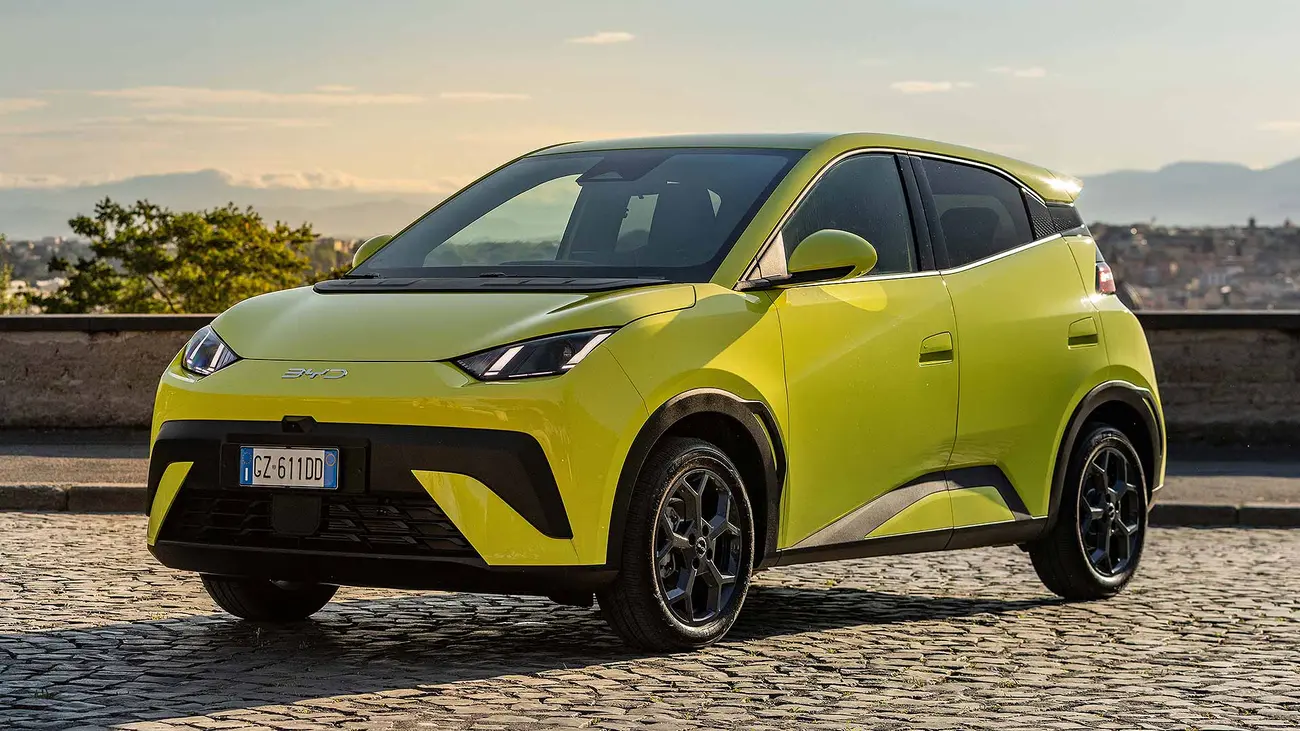
One in six new cars in Europe will wear a Chinese badge
In May 2026, Chinese brands took 10.7% of every new car registered in Europe. That was a record month. According to AlixPartners, it is also only halfway: the consultancy now forecasts a Chinese car brands market share in Europe of 16% by 2030 — and 17% by 2031 once Russia is added to the count.
The number is big on its own. What makes it striking is how fast it was revised upwards. Earlier studies put 2030 at roughly half that level, and AlixPartners itself said 12% in the 2024 edition of the same report. The forecast doubled in two years. For anyone buying a car in Portugal, this is not abstract geopolitics — it means more choice, more price pressure, and before long a used-car market that looks noticeably different.
The doubling is already happening, year after year
You do not need to wait for 2030 to see the trend. The last 24 months of ACEA and JATO Dynamics data tell the story.
| Period | Chinese-brand share | Perimeter |
|---|---|---|
| H1 2025 | 5.1% | 28 European markets (JATO) |
| Jan–Apr 2025 | 3.2% | European Union (ACEA) |
| Jan–Apr 2026 | 6.0% | European Union (ACEA) |
| Jan–Apr 2025 | 3.7% | EU + EFTA + UK |
| Jan–Apr 2026 | 7.3% | EU + EFTA + UK |
| May 2026 | 10.7% | Europe (record month) |
| 2030 (forecast) | 16% | Europe |
Look at the pattern. Across January to April, the EU share went from 3.2% to 6.0% in a single year. In the wider count — EU plus EFTA plus the UK — it climbed from 3.7% to 7.3%. That is a literal doubling in twelve months, and there had already been another one the year before.
One methodological caveat is worth carrying around: these figures are not all comparable. Some counts fold Volvo and Polestar into the Geely group, brands most trackers still treat as European. So whenever a percentage shows up, it pays to know whether it refers to the EU or to wider Europe, and which brands are inside the total.
Who is driving the growth
ACEA's first-half 2026 data shows five groups doing almost all the work.
| Group | Units (H1 2026) | Year-on-year |
|---|---|---|
| Geely (incl. Volvo, Polestar, Zeekr, Lynk and Co, smart, Lotus) | 225,350 | +8.5% |
| SAIC Motor (MG) | 180,659 | +18.0% |
| BYD | 174,144 | +145.5% |
| Chery (Chery, Jaecoo, Jetour, Omoda) | 155,800 | +305.8% |
| Leapmotor (Stellantis joint venture) | 56,005 | +558.3% |
| Tesla (for reference) | 170,351 | +54.6% |
Together those five groups registered 791,958 vehicles in six months. MG is still the highest-volume Chinese brand in Europe — it opened the road — but today's growth is coming from elsewhere. Chery and Leapmotor multiplied their sales fourfold and sixfold from small bases, and BYD more than doubled from a base that was already large.
BYD overtakes Tesla in Europe
The line that jumps off that table: 174,144 against 170,351. BYD outsold Tesla in Europe over the first half of 2026, growing 145.5% against Tesla's 54.6%. Two years ago Tesla led every Chinese carmaker by several hundred thousand units.
Portugal saw the signal even earlier. In November 2025, ACAP data showed 645 BYD registrations (up 119.4% year on year) against Tesla's 425 (down 46.9%). Tesla still finished the year ahead on cumulative volume, but the direction of the two curves leaves little room for argument.
EU tariffs have not slowed anything down
The European Union applies countervailing duties of up to 35.3% on Chinese electric cars, stacked on top of the standard 10% car import duty. In practice, an EV shipped from China can face close to 45% in duties at the border. Chinese exports still hit 1.1 million vehicles in June 2026 alone, up 70% year on year, on track for roughly 10 million exported units for the full year — against 7.1 million in 2025.
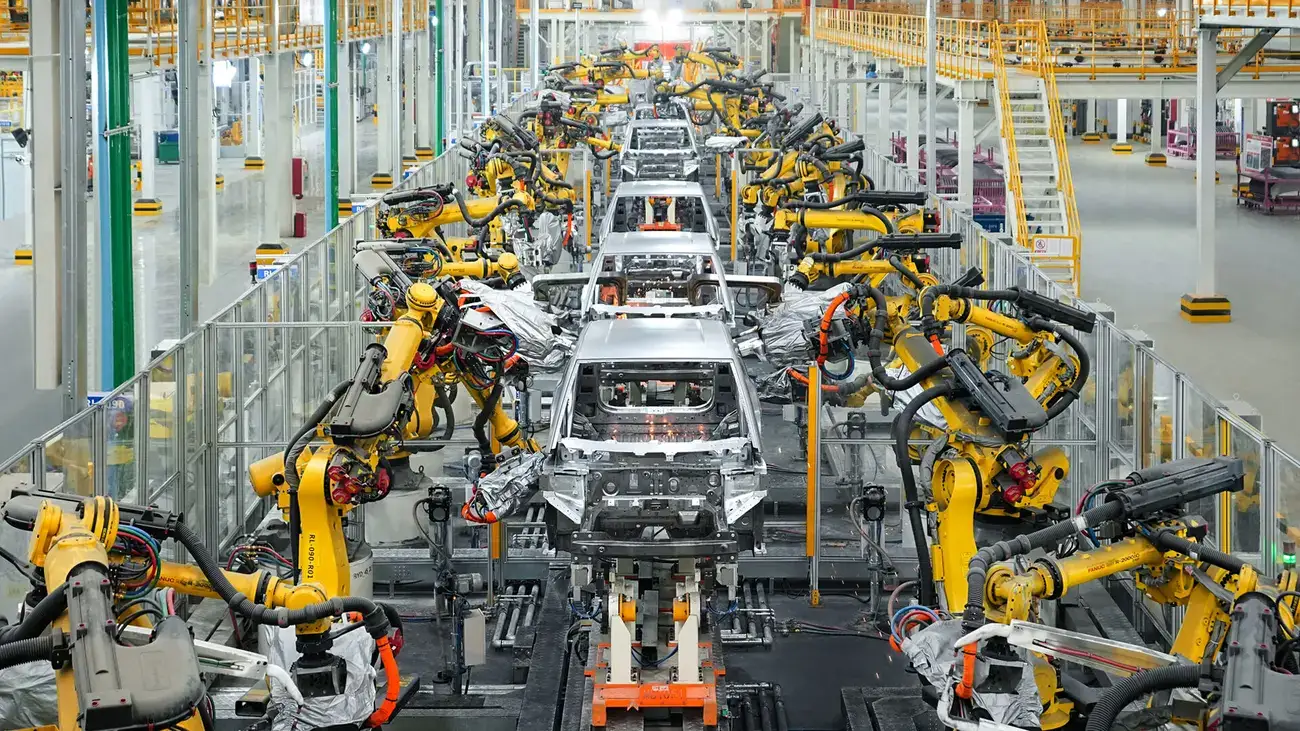
The reason the tariffs failed is simple: build the car in Europe and you do not pay them.
Which Chinese brands build cars in Europe
- BYD — production under way at its Hungarian plant, with a second site planned in Turkey or Spain
- Chery — Omoda and Jaecoo models built in Spain, plus a deal to use part of Nissan's UK factory
- Leapmotor — some EVs produced at Stellantis plants in Spain
- Geely — agreement to take over around a third of Ford's Valencia factory
- Xpeng — in talks with Volkswagen about using one of the four German plants under review
Chinese plug-in hybrids, meanwhile, remain exempt from the extra duties. Brussels is looking at extending them through the Industrial Accelerator Act, but that legislation is not expected to become law until 2027 — three or four years after the race began.
Why Europe's carmakers are so exposed
When Europe set its CO2 rules in 2021, Chinese manufacturers were around five years ahead on battery technology and cost. That lead did not evaporate — it converted into market share.
Germany is the most uncomfortable example. In the first half of 2026, Chinese brands sold just over 38,000 EVs in the German market. BMW sold 39,772. More telling still: 42.9% of everything Chinese brands sell in Germany is already electric, against a 24.8% market average. Volkswagen, Stellantis, Mercedes and Renault all sit below that average.
And the pie is not growing. AlixPartners expects the European market to expand by about 1% a year to 2030, with sales still running almost 4 million units below pre-pandemic levels. Stephen Dyer, who leads the firm's Asia automotive practice, put it plainly: Chinese carmakers "were coming in droves" and are taking share from European rivals rather than creating new demand. On the French side, supplier associations have described halting Chinese expansion as a precondition for their sector's short-term survival. Volkswagen has proposed cutting 100,000 jobs and closing four German plants.
How many Chinese car brands are sold in Portugal — and what changes for buyers
Portugal followed the European move with barely any lag. By the end of 2025 there were 15 Chinese passenger-car brands in the national market and roughly 24,000 Chinese cars on the road. With about 7,300 further deliveries through April 2026, the parc passed 30,000 vehicles.
By brand, the known figures point to:
- BYD — arrived in May 2023 and had accumulated around 10,100 units by 31 December 2025, plus 2,298 more between January and April 2026
- MG — the second largest, with 2,966 units over the same period
- Omoda — passed 500 registrations in the first four months of 2026
- Xpeng — a further 552 units, competing on technology rather than on price alone
Treat these national numbers as orders of magnitude rather than closed accounting. The trend behind them is not in doubt.
The real impact will land in the used-car market
This is the part almost nobody discusses. The Chinese cars that entered Portugal from 2023 onwards went largely to companies, fleets and renting contracts. Those cycles typically run three to four years — which means that between 2026 and 2028 a wave of two-to-four-year-old BYD, MG, Omoda, Jaecoo and Leapmotor cars will reach the second-hand market.
For a buyer that cuts two ways. The good side: far more recent electric and hybrid supply in segments where used options are currently thin and expensive, particularly compact SUVs. The less good side: residual values for these brands are not yet established. A model from a brand with two years of presence in the country and a service network still being built depreciates less predictably than a Volkswagen or a Peugeot. Buy new and you absorb that depreciation; buy used and you benefit from it.
Two checks are always worth making before signing. First, service network coverage in your area — some brands still have few points outside Lisbon and Porto. Second, the exact terms of the battery warranty, usually seven to eight years but with mileage caps and retained-capacity thresholds that vary a lot between brands.
Frequently Asked Questions
AlixPartners, in the 23rd edition of its Global Automotive Outlook (June 2026), forecasts Chinese brands at 16% of the European market by 2030, rising to 17% in 2031 once Russia is included. That is roughly double what earlier studies projected, and the firm itself put the 2030 figure at 12% in its 2024 outlook. In practice it means about one in six new cars sold in Europe would carry a Chinese badge.
By the end of 2025 around 15 Chinese passenger-car brands were present in the Portuguese market, with roughly 24,000 vehicles on the road. Adding about 7,300 deliveries between January and April 2026, the parc passed 30,000 Chinese-brand cars. BYD leads with around 10,100 cumulative units to 31 December 2025, followed by MG. Treat these figures as orders of magnitude rather than closed accounting.
No. The EU applies countervailing duties of up to 35.3% on Chinese EVs on top of the standard 10% import duty, yet Chinese exports reached 1.1 million vehicles in June 2026 alone, up 70% year on year. The reason is simple: cars built inside Europe pay no import duty. BYD already produces in Hungary, Chery and Leapmotor in Spain, Geely will take part of Ford's Valencia plant, and Xpeng is negotiating a site with Volkswagen.
The Chinese cars that entered Portugal from 2023 went largely to companies, fleets and renting contracts running three to four years, so between 2026 and 2028 a wave of two-to-four-year-old BYD, MG, Omoda, Jaecoo and Leapmotor cars reaches the second-hand market. For used buyers that means far more recent electric and hybrid supply in segments such as compact SUVs, usually priced below European equivalents. Before signing, check service network coverage in your area and the exact battery warranty terms — typically seven to eight years, but with mileage caps and retained-capacity thresholds that vary between brands.
Residual values for Chinese brands are not yet established in Portugal, since most have only two or three years of presence and a service network still being built, which makes depreciation less predictable than for a Volkswagen or a Peugeot. That penalises new-car buyers and benefits used-car buyers. The first serious read will come when the earliest BYDs and MGs registered in 2023 turn three and are resold, which starts happening from 2026.
What to watch from here
Three things will decide whether the 16% forecast lands. The first is the Industrial Accelerator Act taking effect in 2027 and whether it extends the extra duties to plug-in hybrids, currently the main growth channel for brands like Leapmotor. The second is how fast the Hungarian and Spanish plants ramp up, since every car built in Europe is a car that escapes the duties. The third, and the closest to home for buyers, is what the first three-year-old BYDs and MGs fetch on the second-hand market — that will be the first serious read on how these brands depreciate in Portugal.