
Lexus TZ Portugal: 7-Seat Electric SUV Debuts on May 7, 2026
Published: 10/05/2026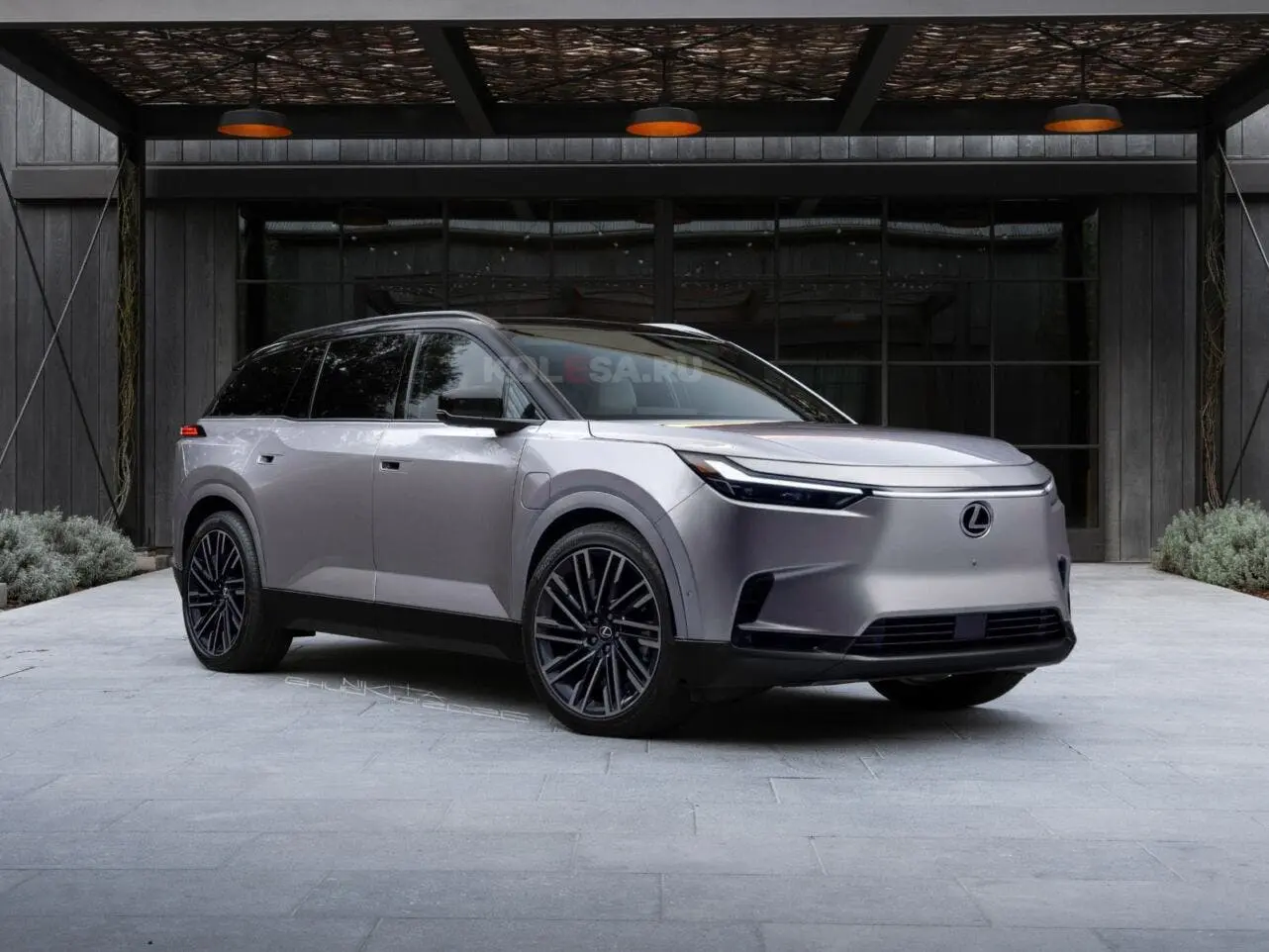
Lexus TZ: the new 7-seat electric SUV debuts on May 7
Lexus has confirmed the world premiere of the TZ for May 7, 2026 at 10:30 JST (around 2:30 AM Lisbon time, streamed on YouTube). It's the brand's first three-row electric SUV, built on a modified version of the TNGA-K platform — the same architecture underpinning the 2027 Toyota Highlander EV and the new Subaru Getaway. For Portuguese families looking for a large electric SUV with seven seats and a premium badge, Lexus TZ Portugal enters a category that until recently was dominated almost entirely by German and Korean options.
The name itself was an open secret since 2023, when Toyota filed European trademarks for "TZ450e" and "TZ550e" with the EUIPO. Within the Lexus electric range, the TZ takes the role the RZ already plays against the RX: the zero-emission counterpart to the TX, which is sold as a hybrid in the United States.
Lexus TZ specs: what we know before the reveal
The TZ is a properly large SUV. Length 5,050 mm, width 1,989 mm, height 1,709 mm, and a 3,050 mm wheelbase — figures very close to a Kia EV9 and slightly above a Hyundai Ioniq 9. The practical takeaway: real space for seven adults across three rows, with a power-folding third row.
Two main variants are expected, based on Toyota's trademark filings:
| Version | Battery | Power | Torque | Range |
|---|---|---|---|---|
| TZ450e FWD | 77 kWh | 165 kW (221 hp) | 269 Nm | 462 km |
| TZ450e AWD | 77 kWh | 252 kW (338 hp) | 438 Nm | 434 km |
| TZ550e AWD | 95.8 kWh | 252 kW+ (338-420 hp) | 438 Nm | 515 km |
The top trim, according to TopElectricSUV, should clear 400 hp combined thanks to a dual-motor setup — putting the TZ550e on par with a BMW iX xDrive50 for outright power. With the larger 95.8 kWh battery, the 515 km of WLTP-equivalent range is enough for Lisbon-Porto without a charging stop, even fully loaded with family and luggage.
TNGA-K platform and Miyata production
The modified TNGA-K platform has been "optimized for interior space and efficiency," according to Toyota. It's the same chassis shared with the American Highlander EV and the Subaru Getaway, but the TZ has one important difference: production runs at the Toyota Motor Kyushu plant in Miyata, Japan. The other two come out of Georgetown, Kentucky.
That choice matters for Europe. Miyata production accommodates right-hand drive, but also serves left-hand drive markets — and the existence of EU trademarks plus a prototype testing at the Nürburgring in April 2026 strongly suggests a formal European arrival between late 2026 and early 2027.
Lexus TZ vs Kia EV9: where it sits in the premium segment
The seven-seat electric SUV segment has grown fast. The TZ will compete with the Kia EV9 (already in Portugal from around 75,000€), the Hyundai Ioniq 9 (arriving this year), the Volvo EX90 and the Mercedes EQS SUV. Compared to the EV9 GT-Line AWD, the TZ matches dimensions and beats it on power in 550e form, but the maximum 515 km range falls slightly short of the 541 km the Hyundai Ioniq 9 claims with its 110.3 kWh pack.
The real difference is positioning. The EV9 and Ioniq 9 are accessible premium; the TZ plays a level above — closer to where a Lexus RX sits relative to a Toyota RAV4. The interior keeps the Highlander EV's dashboard layout but with materials lifted significantly, a 14-inch central touchscreen, 12.3-inch digital cluster, three-zone climate control, and heated second-row seats.
Lexus TZ price Portugal: what to expect
In the United States, estimates range from $60,000 to $70,000 for the entry version, against roughly $50,000 for the Toyota Highlander EV. Applying the usual European adjustment (importer margin, 23% VAT, richer standard equipment), the TZ450e in Portugal should start somewhere between 78,000€ and 85,000€. The TZ550e with the 95.8 kWh battery will likely top 95,000€.
The good news: as a fully electric vehicle, the TZ is exempt from ISV (Portugal's vehicle registration tax) and pays a reduced IUC (annual road tax). For company cars, the autonomous taxation regime is also far more favorable than for a petrol or diesel equivalent. These incentives can shave 15,000-20,000€ off the total cost compared to a large combustion SUV in the same class.
When it arrives in Portugal
The most likely window is late 2026 or the first half of 2027. Lexus Portugal hasn't announced official dates yet, but the European trademarks and the prototype already running on European roads are strong signals. Official pricing and the local-market spec sheet will only firm up after the world premiere and the subsequent European presentation.
Frequently Asked Questions
Official Portuguese pricing is not yet available, but based on US estimates of $60,000-$70,000 for the entry version and the usual European adjustment (23% VAT, importer margin, richer standard equipment), the TZ450e in Portugal should start between 78,000€ and 85,000€. The top TZ550e with the 95.8 kWh battery and over 400 hp will likely exceed 95,000€. Official numbers will only firm up after the European presentation following the May 7, 2026 world premiere.
The most likely window is late 2026 or the first half of 2027. European trademarks for TZ450e and TZ550e have been on file since 2023, and the prototype has already been tested on European roads, including the Nürburgring in April 2026 — strong signals of an EU launch plan. Lexus Portugal has not announced official dates yet; they should follow the European presentation.
On the WLTP-equivalent cycle, the TZ450e FWD with the 77 kWh battery claims 462 km, the TZ450e AWD drops to 434 km because of the dual motors, and the top TZ550e AWD with the 95.8 kWh pack reaches 515 km. In Portuguese driving conditions, the 515 km of the top version is enough for Lisbon-Porto with no charging stop, even fully loaded with seven occupants and luggage. Expect a 15-20% drop versus the official figure at a steady 120 km/h motorway pace.
In dimensions, the Lexus TZ (5,050 mm long) is virtually equal to the Kia EV9 and slightly larger than the Hyundai Ioniq 9. In power, the TZ550e with over 400 hp beats the EV9 GT-Line AWD, but the maximum 515 km range falls short of the Ioniq 9's 541 km (110.3 kWh battery). The biggest difference is positioning: the EV9 and Ioniq 9 play in accessible-premium from around 75,000€, while the Lexus TZ is a true luxury proposition expected to sit 10,000-20,000€ higher.
As a fully electric vehicle, the Lexus TZ is exempt from ISV (Portugal's vehicle registration tax) and pays only a reduced IUC (annual road tax). For company cars, the autonomous taxation regime is far more favorable than for petrol or diesel equivalents, and VAT is partially deductible on electric vehicles up to a defined threshold. Combined, these incentives can shave 15,000-20,000€ off the total cost compared to a large combustion SUV in the same class.
What to watch on May 7
Three points deserve attention. First, the exact top-spec battery — whether Lexus confirms the 95.8 kWh figure or introduces a third option. Second, DC fast-charging speed: none of the current sources mention peak kW, and that number is decisive for long trips in Portugal where the MOBI.E network and motorway hubs reward higher charging curves. Third, towing capacity, which matters for seven-seat buyers hauling boats or caravans.
If you're shopping now for a 7-seat electric SUV in Portugal for 2026, the rational calendar is clear: the EV9 and Ioniq 9 are ready to order; the TZ asks for patience until the first half of 2027. Worth tracking the European pricing announcements that should follow the Japanese debut over the following months.