
Lexus ES 350e in Portugal: Real Range, Charging Speed and Price
Published: 04/08/2026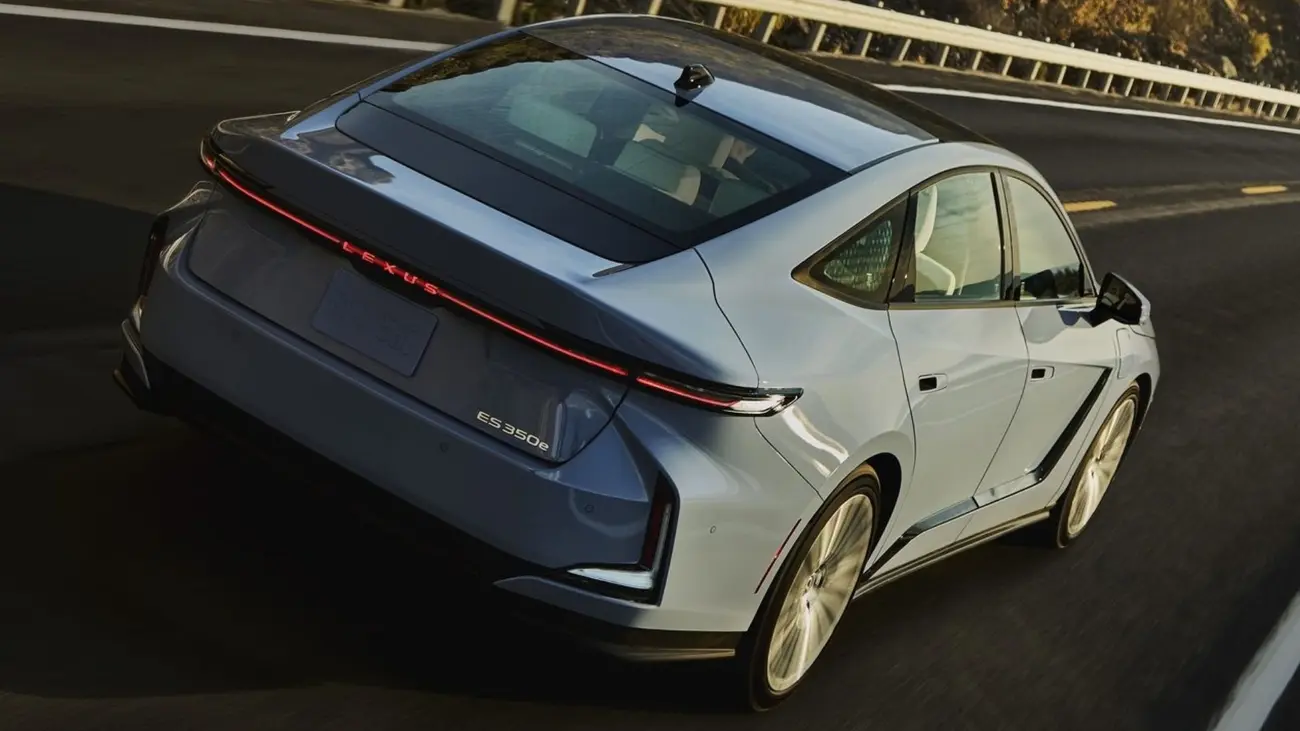
The new electric Lexus ES trades performance for silence
Five metres and fourteen centimetres of saloon, 2,225 kg, and a single 165 kW motor driving the front wheels. The eighth-generation Lexus ES drops the hybrid and goes fully electric, and the first thing the spec sheet tells you is what the car doesn't have: no all-wheel drive, no ultra-fast charging, none of the 400-plus horsepower the Germans hand out at similar money.
What it does have is something else. Limousine-grade refinement, more rear legroom than almost anything in the class, and a battery warranty that makes the rest of the industry look nervous. For a buyer in Portugal the question is whether that's enough — which is where the Lexus ES 350e real range and its charging speed come into play.
Lexus ES 350e real range in Portugal: 581 km on paper, around 445 km on the road
The battery holds 77 kWh gross and 72 kWh usable, on a 400 V architecture with NMC chemistry. On the WLTP cycle with 19-inch wheels, the ES 350e claims up to 581 km. Fit the 21-inch wheels and that drops to roughly 536 km. Lexus Europe is more conservative still, quoting "up to 530 km" — and it flags that European figures are yet to be finalised.
Independent testing fills in the rest. Auto Express measured 467 km in the real world on a car riding 21-inch wheels, which is respectable against its 536 km claim. EV Powered landed between 425 and 460 km. EV Database estimates 445 km in mixed driving in mild weather.
And when it gets cold?
This is the part that matters if you drive the A1 in January. In cold conditions the mixed estimate falls to 330 km — and on the motorway in the cold, to 280 km. Lisbon to Porto on a wet winter day at 120 km/h stops being a one-shot run and starts needing a stop.
Efficiency explains why. On the motorway the ES is surprisingly good, above 4.5 miles/kWh in UK testing (roughly 13.8 kWh/100 km), but on twisty national roads with elevation changes it drops below 3 miles/kWh — over 20 kWh/100 km. It's a heavy car, and it shows.
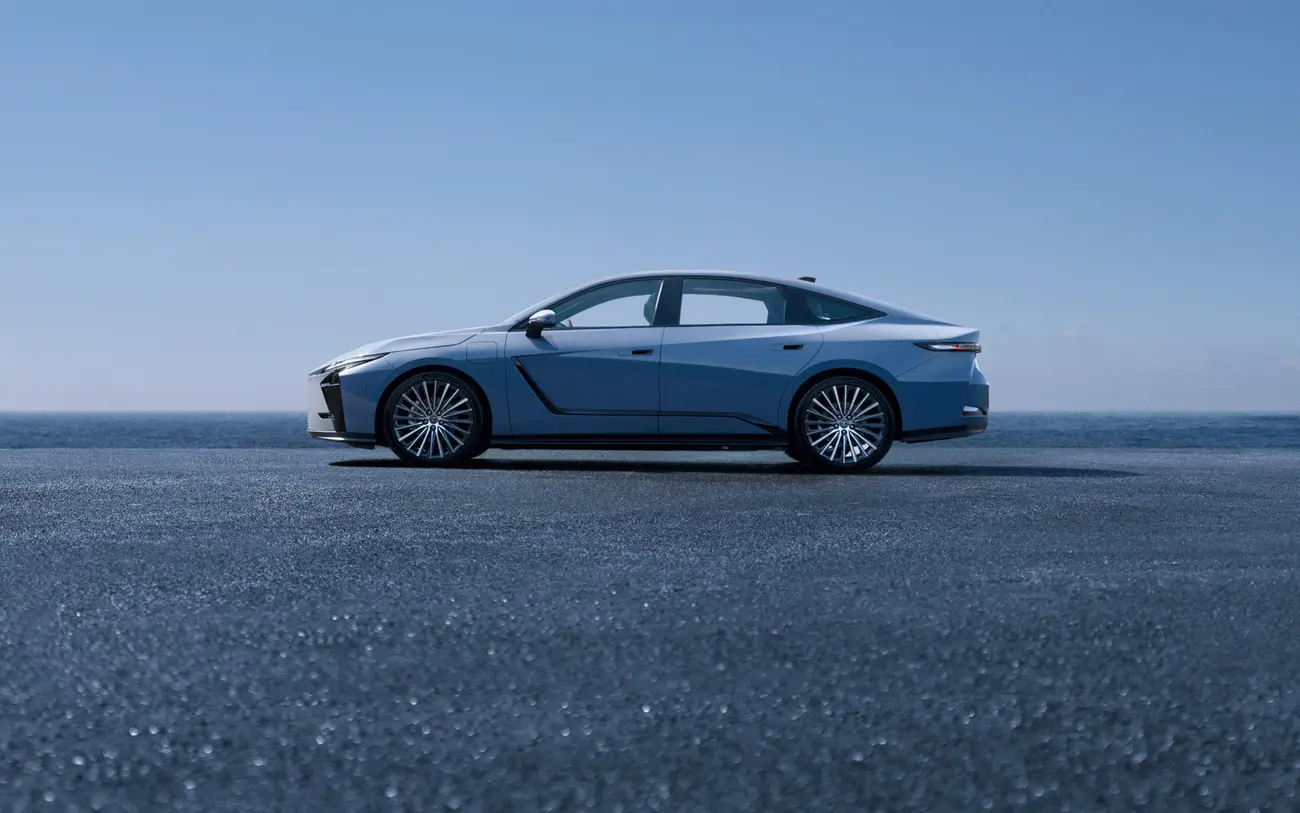
150 kW charging: the weakness no software update fixes
The ES 350e peaks at 150 kW on DC and covers 10-80% in 30 minutes. That isn't bad in isolation. It's bad in context, because its direct rivals are well ahead:
| Model | WLTP range | Peak DC charging |
|---|---|---|
| Lexus ES 350e | 581 km | 150 kW |
| BMW i5 (entry) | around 573 km | 205 kW |
| Audi A6 e-tron (standard battery) | around 618 km | 225 kW |
| Mercedes C-Class Electric | — | 330 kW |
Average power across the 10-80% window is only 105 kW, and the time swings hard with temperature: 30 minutes at +25 °C, 40 minutes at 0 °C and 60 minutes at -10 °C. Battery preconditioning kicks in automatically when you set a charger in the navigation, which helps, but nothing lifts the 150 kW ceiling imposed by the 400 V architecture. There's also no Plug and Charge support, so you'll still be reaching for a card or an app at every MOBI.E charger — MOBI.E being Portugal's interoperable public charging network.
At home, the story flips
The ES comes with a 22 kW three-phase onboard charger as standard, something most German rivals charge extra for or don't offer at all. With a three-phase supply at home or the office, it goes from 0 to 100% in four hours. If you have a garage space with the power available, that's worth more day to day than 50 kW extra at a motorway rapid charger you use once a month.
Lexus ES 350e specifications
| Specification | Value |
|---|---|
| Battery (usable / total) | 72.0 kWh / 77.0 kWh |
| Architecture | 400 V, NMC lithium-ion |
| Motor | Single eAxle, front-wheel drive |
| Power | 165 kW (224 hp) |
| Torque | 269 Nm |
| 0-100 km/h | 8.0 s (8.2 s per Lexus Europe) |
| Top speed | 160 km/h |
| WLTP range | 581 km (19"), around 536 km (21") |
| Real range (mixed, mild) | around 445 km |
| Real range (mixed, cold) | around 330 km; 280 km on motorway |
| WLTP efficiency | 146-148 Wh/km |
| DC charging | 150 kW peak, 105 kW average, 30 min (10-80%) |
| AC charging | 22 kW three-phase, 0-100% in 4 h |
| Heat pump | Standard |
| Length / width / height | 5,140-5,145 / 1,920 / 1,560 mm |
| Wheelbase | 2,950 mm (+80 mm) |
| Kerb weight | 2,225 kg |
| Boot | 517 L (no frunk) |
| Towing | Not permitted |
| Platform | Toyota GA-K / TNGA-K (multi-energy) |
| Screens | 14" touchscreen + 12.3" digital cluster |
| Battery warranty | 15 years / 1,000,000 km |
Look at the 269 Nm figure. For a two-tonne-plus EV that is modest, and it explains the 8.0-second run to 100 km/h — about two seconds behind a BMW i5. The platform is largely to blame: the ES doesn't sit on a dedicated EV architecture but on the multi-energy TNGA-K that also underpins the Toyota Camry and RAV4. Hence the leftover transmission tunnel inside, the 400 V ceiling, and the ban on towing.
Price in Portugal: no official figure yet
Lexus Portugal has not announced pricing for the electric ES — the national site still lists the ES as a hybrid only. Any Portuguese number you see quoted right now is an estimate.
What does exist is a solid European anchor: in the Netherlands the ES 350e lists at €64,995 and has been on sale since March 2026. German press estimated around €65,000 for the entry model before official pricing landed. In the UK the three trims run at £59,345 (Premium), £68,245 (Premium Plus) and £72,545 (Takumi).
Translating that to Portugal needs care. EVs here are exempt from ISV (the vehicle registration tax) and pay reduced IUC (annual road tax), which helps, but list prices swing between European markets on margins and standard equipment alone. The reasonable read is that the ES 350e should land somewhere around the €65,000 mark — without that being a confirmed price. Wait for the official Lexus Portugal list before doing your sums.
One thing is clear from the European positioning: in the UK the ES undercuts the BMW i5 and Volvo ES90 by roughly £10,000 at entry level, and comes in below the Audi A6 e-tron Sport. If that gap survives the trip to Portugal, it's the car's strongest commercial argument.
Lexus ES 350e vs BMW i5: where each one wins
The i5 is quicker, charges faster (205 kW versus 150 kW) and has rear-wheel drive with a far more engaging chassis. The ES answers with space, silence and warranty.
The space isn't marketing talk: 77 mm more rear legroom, a 2,950 mm wheelbase, and on Takumi trim reclining rear seats that are heated, ventilated and come with an extending ottoman leg rest. This is a car built to be ridden in — closer to a limousine than a sports saloon. The boot holds 517 litres, and there's no frunk.
The cabin backs it up. A 14-inch touchscreen, 12.3-inch digital instruments, hidden physical controls that only light up once the car is switched on, translucent bamboo door panels and a 17-speaker Mark Levinson system on higher grades. Lexus Safety System+ is standard, with e-scooter detection, driver fatigue monitoring, front cross-traffic alert and automatic lane change.
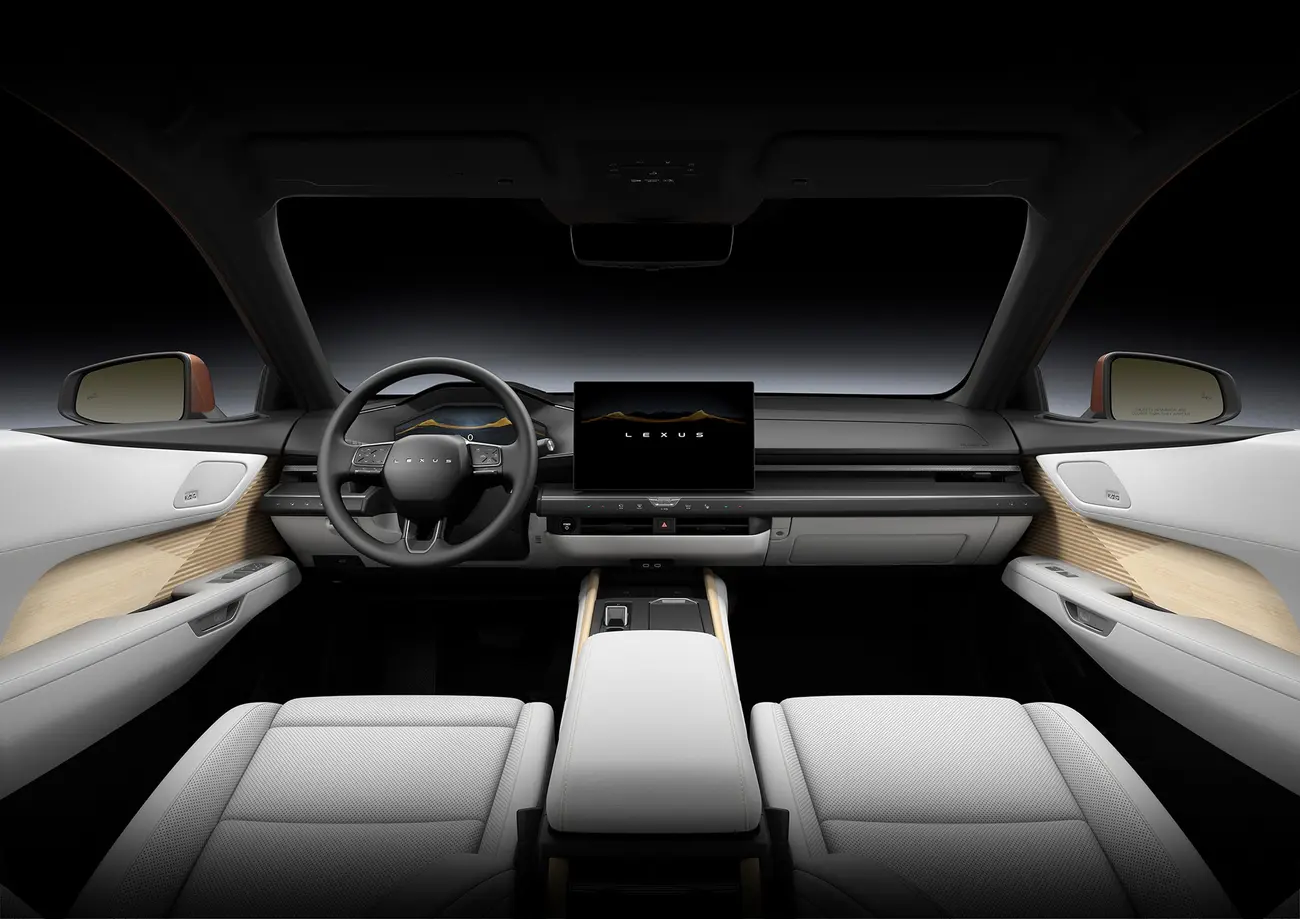
The warranty is the least-discussed trump card. The battery is covered for 15 years or one million kilometres (10 years and one million miles under the UK contract), and the three-year vehicle warranty extends to ten years as long as you service the car within the Lexus network. No German rival comes close.
Frequently Asked Questions
The eighth-generation ES began reaching Europe in spring 2026 and has been on sale in the Netherlands since March 2026. In Portugal, the official Lexus site still lists the ES as a hybrid only, with no announced on-sale date for the fully electric version. Lexus Europe itself notes that European range and charging figures are still to be finalised, so Portuguese dealer availability should be confirmed directly with the brand.
There is no official Portuguese price yet: Lexus Portugal has not published a price list for the electric ES. The strongest European anchor is the Dutch list price of €64,995, with German press estimating around €65,000 for the entry version. In the UK the three trims cost £59,345, £68,245 and £72,545. In Portugal an electric ES is exempt from ISV vehicle tax and pays reduced IUC road tax compared with a combustion equivalent, which helps the final figure, but any Portuguese price you see today is an estimate.
In cold weather, real range falls to roughly 330 km in mixed driving and to just 280 km on the motorway, according to EV Database estimates. In mild weather the mixed figure rises to around 445 km, and Auto Express measured 467 km in the real world on an ES riding 21-inch wheels. Those numbers sit well below the 581 km WLTP claim on 19-inch wheels — a gap explained by the car's 2,225 kg kerb weight and by consumption on national roads, which exceeds 20 kWh/100 km.
On a DC rapid charger the ES 350e peaks at 150 kW and covers 10-80% in 30 minutes at 25 °C, rising to 40 minutes at 0 °C and 60 minutes at -10 °C. Average power across that window is only 105 kW, behind the BMW i5's 205 kW and the Audi A6 e-tron's 225 kW. At home the story flips: a 22 kW three-phase onboard charger is standard, taking the battery from 0 to 100% in four hours. There is no Plug and Charge support, so you will still need a card or app at chargers on Portugal's MOBI.E network.
It depends on how you drive. The i5 is about two seconds quicker from 0 to 100 km/h, charges at 205 kW instead of 150 kW and is rear-wheel drive — the logical pick if you cover long motorway distances and charge on the road. The ES counters with 77 mm more rear legroom, a 517-litre boot, standard 22 kW AC charging and a battery warranty of 15 years or 1,000,000 km that no German rival matches. If you charge at home and value comfort and silence, the ES 350e is one of the most complete cars in the class.
Is the Lexus ES 350e worth it?
International testing was consistent: 3.5 out of 5 from EV Powered and Auto Express, 7 out of 10 from Electrifying. The line that sums up the consensus came from the latter — "it's hard to recommend the Lexus over the equivalent BMW i5."
The logic holds, but the verdict doesn't apply to every buyer. If you cover 30,000 km a year with heavy motorway use and rapid charging on the move, 150 kW will irritate you and the i5 is the right call. If your driving is mostly urban and suburban, you charge at home on three-phase, and you value quiet, ride comfort and the peace of mind of a 15-year battery warranty, the ES 350e is one of the most complete cars you can buy in this class.
The essentials are still missing: a Portuguese price and a firm arrival date at national dealers. Until then, the Dutch €64,995 is the best reference available — and the yardstick to judge the Portuguese list against when it finally appears.