
Leapmotor Opens a European R&D Center and Wants to Design Cars for Us
Published: 25/03/2026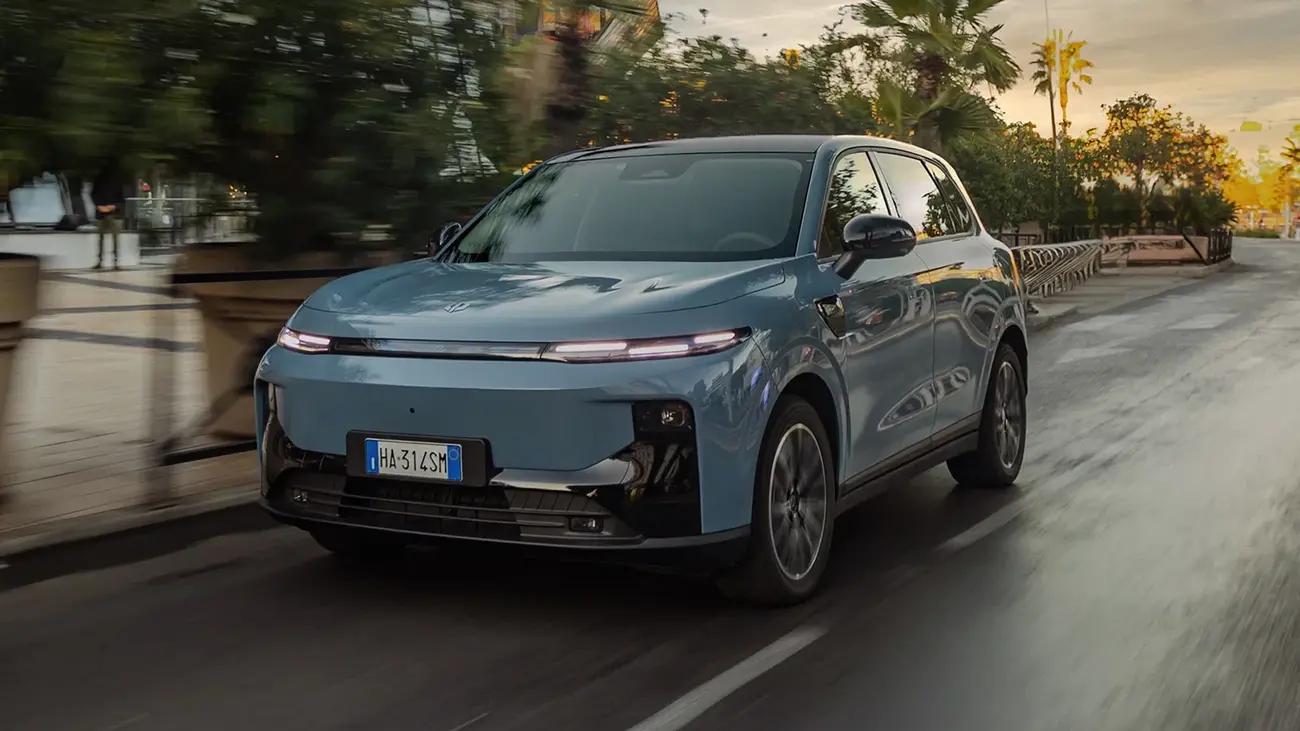
Leapmotor Opens a European R&D Center — And Wants to Design Cars for Us
Until now, Leapmotor did what most Chinese brands do: design cars for the Chinese market and ship them to Europe as-is. That changed on March 23, 2026, when the brand inaugurated its first innovation center outside China — in Munich, right in the heart of Germany's automotive industry. The goal is straightforward: future models will be designed with the European buyer in mind from day one.
This move becomes even more significant when you connect it to the rest of the strategy: production in Spain, a partnership with Stellantis, and a lineup that's expanding fast. For those of us in Portugal, Leapmotor has gone from curiosity to a brand worth watching closely.
What the Munich Innovation Center Changes
The Leapmotor Europe Innovation Centre GmbH sits in Schwabing-Freimann, one of Munich's most dynamic districts — just a few kilometers from BMW and Audi headquarters. That's no accident. Leapmotor wants to tap into European automotive design talent and engineering expertise.
The center will focus on design iteration and conceptual development of future models for international markets. Rather than tweaking Chinese-market cars for Europe, the plan is to build vehicles with European consumers in mind from the concept stage. Leapmotor expects to have over 100 employees at the center by the end of 2026.
This completes a global design network: Munich for Europe, Hangzhou and Shanghai for China. The operational model boils down to one line: management in China, development in Germany, manufacturing in Spain.
Spanish Production: The Zaragoza Factory and What It Means for Portugal
Geographic proximity is a major advantage here. The Figueruelas factory, near Zaragoza, sits just a few hours from the Portuguese border. That's where Stellantis and Leapmotor are investing $200 million to set up production of the B10, a compact electric SUV measuring 4.52 meters.
The timeline is set:
- July 2026: Lieder Automotive (a joint venture between China's Duoli Technology and Spain's Fagor Ederlan) begins producing chassis components
- October 2026: Commercial production of the B10 begins
- June 2026: Trial production of the B05 starts
- 2027: Full production of the B05, followed by the A05 and B03X (A10) models
Producing in Spain solves two problems at once. First, it avoids European Union tariffs on Chinese-built EVs. Second, it meets the EU's 40% local content requirement. A previous attempt to produce at the Tychy plant in Poland didn't work out — only limited T03 units were assembled before production returned to China.
What This Could Mean for Pricing
In Germany, the Leapmotor B10 currently costs between EUR 29,990 (base) and EUR 33,990 (fully equipped with a larger battery). With local production in Spain, prices should become more competitive — lower logistics costs, no import tariffs.
For Portugal, official pricing hasn't been confirmed yet, but the proximity of the Zaragoza factory puts us in a favorable position for distribution. If prices stay around the EUR 30,000 mark, the B10 enters directly into the most contested market segment — competing with models like the BYD Atto 3 or the MG ZS EV.
The Stellantis-Leapmotor Partnership and the European Network
Leapmotor International is a joint venture between Stellantis (51%) and Leapmotor (49%). In practice, this gives the Chinese brand access to Stellantis' vast European distribution network — something no other Chinese brand has at this scale.
The numbers tell the story of rapid expansion:
- 800+ sales and service points across Europe (doubled from 2024)
- 10 new markets opened in 2025: Bulgaria, Croatia, Hungary, Czechia, Denmark, Iceland, Ireland, Slovakia, Slovenia, and Sweden
- European sales in Q4 2025: over 17,000 vehicles (versus roughly 1,300 in Q4 2024 — growth exceeding 1,200%)
Portugal isn't officially on the market list yet, but with the Stellantis network already well established in the country (Peugeot, Citroen, Opel, Fiat) and the factory literally next door, entry into the Portuguese market seems like a matter of when, not if.
The Numbers Behind the Ambition
Leapmotor is not an experimental project. The 2025 results show a brand hitting its stride:
| Metric | Value |
|---|---|
| Global deliveries 2025 | 596,555 vehicles (+103% vs. 2024) |
| Exports 2025 | 67,052 units |
| Annual revenue 2025 | 64.73 billion yuan (+101%) |
| Net profit 2025 | 540 million yuan (~$78.4M) — first profitable year |
| Cumulative exports (to Feb. 2026) | 100,000+ units |
| 2026 target | 1,000,000+ vehicles delivered |
The brand already ranks in the top 3 among Chinese pure-EV brands in Europe. A first annual profit, nearly 600,000 deliveries, and a target to double — these numbers show execution capability, not just ambition.
The Lineup Coming to Europe
Leapmotor currently sells three models in Europe: the T03 (city car), the C10 (mid-size SUV), and the B10 (compact SUV). By the end of 2026, the B05 and B03X will join them. The full lineup planned for European production includes:
- B10 — Compact SUV, 4.52 m, from EUR 29,990 (German price)
- B05 — Production in 2027
- A05 — Expected 2027+
- B03X (A10) — Global strategic model, China launch March 26, 2026, European production 2027+
The B03X was presented by Yu Shuyue, Leapmotor's Head of Global Design, as an example of the brand's evolving design philosophy — something the Munich center will help shape for European tastes.
Frequently Asked Questions
The Leapmotor Europe Innovation Centre GmbH is the brand's first innovation center outside China, inaugurated on March 23, 2026, in Schwabing-Freimann, Munich, Germany — near BMW and Audi headquarters. The center focuses on design and conceptual development of future models for the European market, with plans to have over 100 employees by the end of 2026.
Instead of adapting Chinese-market models for Europe, the Munich center enables creating vehicles designed for European consumers from the concept stage. Leapmotor now has a global design network — Munich for Europe, Hangzhou and Shanghai for China — with management in China, development in Germany, and manufacturing in Spain.
Leapmotor International is a joint venture with Stellantis (51%) and Leapmotor (49%), giving the Chinese brand access to over 800 sales and service points across Europe. Stellantis is also co-investing $200 million in the Figueruelas factory (Zaragoza), where the B10 will be produced from October 2026. In 2025, Leapmotor opened 10 new European markets and sold over 17,000 vehicles in Q4 alone.
Portugal is not yet officially on Leapmotor's market list, but entry seems imminent. The Stellantis network is already well established in the country (Peugeot, Citroen, Opel, Fiat) and the Zaragoza factory is just a few hours from the Portuguese border. The B10, a compact electric SUV priced from EUR 29,990 in Germany, is the most likely model for the Portuguese market launch.
European production at the Figueruelas factory (Zaragoza, Spain) starts with the B10 in October 2026, followed by the B05 (trial production in June 2026, full production in 2027). The A05 and B03X (A10) models are planned for 2027 and beyond. Currently, Leapmotor already sells three models in Europe: the T03 (city car), the C10 (mid-size SUV), and the B10 (compact SUV, from EUR 29,990).
What This Means If You're Car Shopping in Portugal
Leapmotor is building something few Chinese brands have managed so far: a European presence with roots — local development, local production, local service network. This isn't just another brand shipping cars from China.
For the Portuguese market, the B10 deserves the most attention. A compact electric SUV, produced in Spain, with a potential price tag around EUR 30,000, backed by the Stellantis network — it has the right ingredients to matter here. The coming months will be decisive: official pricing for Portugal, dealership openings, and the first test drives in our market.