
New Lancia Gamma EV: 740 km Range, Full Lineup and Portugal Arrival
Published: 30/05/2026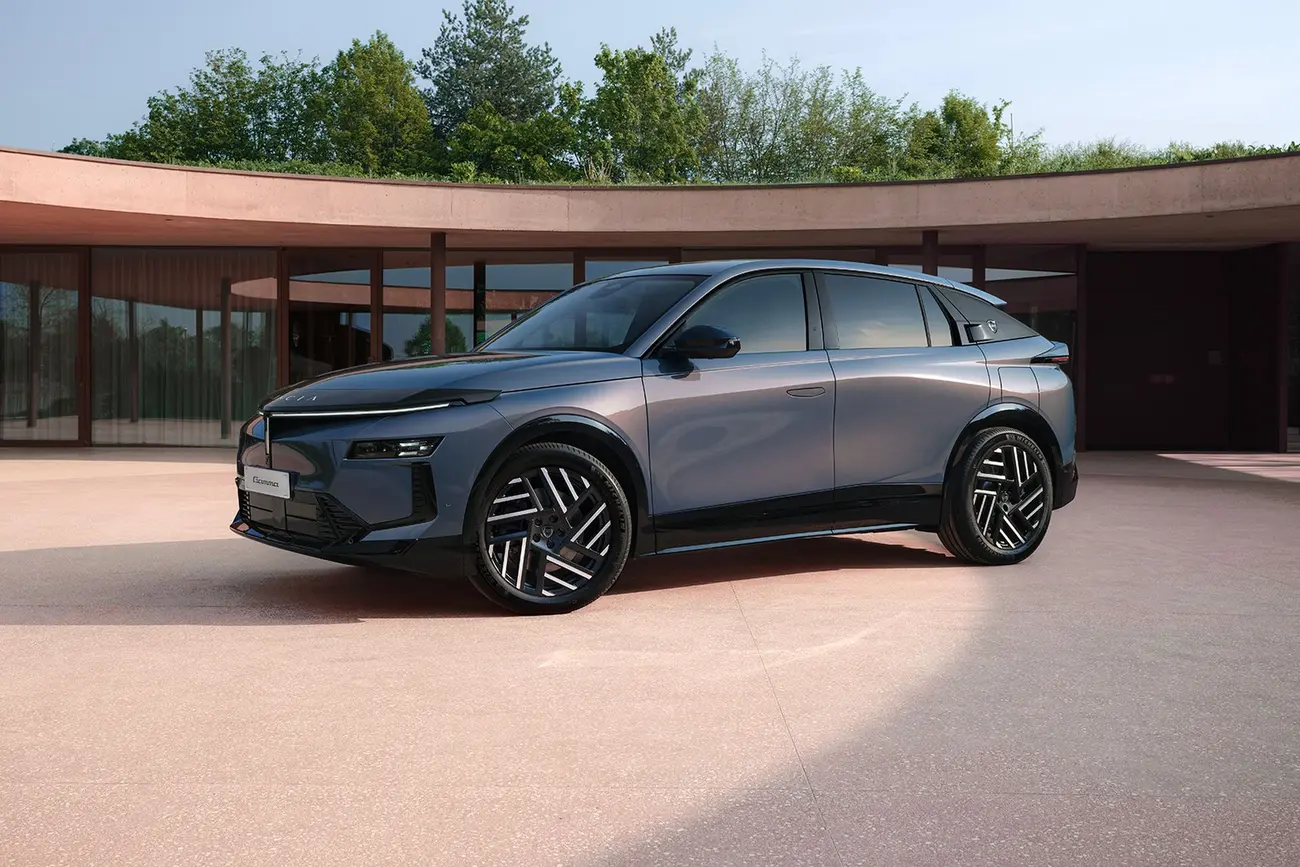
740 km on a single charge: Lancia's ambitious comeback
Lancia has revealed the first images of the new Gamma, and one number stands out: up to 740 km of range in the fully electric version. It's the brand's second model since its revival under Stellantis, after the 2024 Ypsilon, and the first aimed at families. For anyone weighing up the Lancia Gamma EV in Portugal, that range figure is what defines the car.
This isn't the elegant 1970s coupe. The new Lancia Gamma arrives as a premium C-segment crossover-fastback, 4.67 m long. Under the bodywork sits Stellantis hardware shared with half a dozen models already familiar on European roads.
The full lineup: from hybrid to a 375 hp all-wheel-drive
The Lancia Gamma's electric specs cover several powertrains, all on the same base. It's worth understanding what each one offers before fixating on the headline number.
| Version | Power | Range | Notes |
|---|---|---|---|
| Hybrid | 145 hp | over 1,000 km | 1.2 turbo petrol plus hybrid system |
| Electric base | 230 hp | over 540 km | Front-wheel drive |
| Electric long range | 245 hp | over 740 km | The headline-grabbing version |
| Electric AWD | 375 hp | 675 km | 104 kWh battery, all-wheel drive |
Note one absence: there's no plug-in hybrid in the European lineup. Lancia left it out on purpose. PHEV interest seems reserved for the North American market, and even there it's speculative.
The curious part is that the 740 km doesn't come from the biggest battery. The 245 hp front-wheel-drive version stretches the charge further than the 375 hp AWD with its 104 kWh pack — because it has less power to feed and less weight to move. It's the old trade-off between performance and efficiency, on clear display here.
For a driver in Portugal, 740 km WLTP translates in practice to somewhere around 550 to 600 km of real-world range in mixed use. That's more than enough for a Lisbon-Porto-Lisbon round trip without touching a charger. Even the 540 km base version covers the vast majority of daily driving comfortably.
The DS Nº7 sibling (and the Peugeot 3008)
If the dimensions look familiar, there's a reason. The Gamma sits on the 400V STLA Medium platform, the same one underpinning the DS Nº7, the Peugeot E-3008, the Opel Grandland, the Citroën C5 Aircross and the new Jeep Compass.
The Lancia Gamma vs DS Nº7 comparison is almost millimetre-perfect: 4.67 m against 4.66 m in length, 1.89 m against 1.90 m in width. They're practically the same car underneath. The difference lies in the bodywork, the finish and the identity — and that's where Lancia tries to justify the premium positioning.
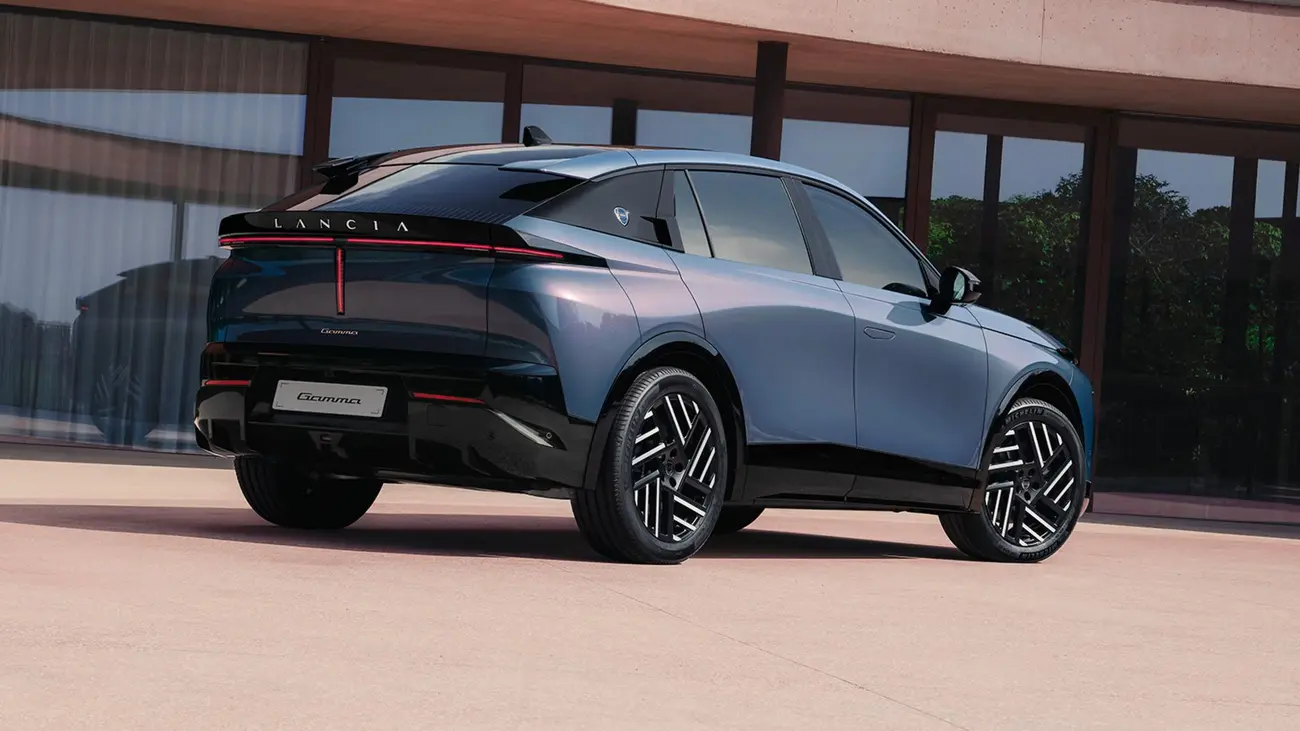
The design leans on the Y-shaped light signature debuted on the Ypsilon, front and rear. There's a three-strake daytime running light Lancia calls "the calice", main headlights embedded in the bumper, active aero shutters in the grille and flush door handles. All in service of the efficiency that underpins those 740 km.
Inside: the "coffee table" and two screens
The interior centres on a dashboard feature Lancia describes as a "coffee table", which doubles as a wireless smartphone charging pad. It's flanked by two large screens and touch-sensitive buttons on the steering wheel.
Electrek describes the cabin as a more restrained take on the brand's recent design language, with physical buttons and climate controls living alongside the digital instrumentation. For anyone who's been frustrated by everything buried in a touchscreen, that's good news.
When the Lancia Gamma reaches Portugal (and what it should cost)
Here's the honest part: there's no official price yet, nor confirmation of a Portugal launch. What we do know is the timeline. Order books open across Europe after summer 2026, with the public debut set for the Paris Motor Show in autumn 2026.
Since the Gamma is built in Melfi, Italy, and designed from the ground up for the left-hand-drive European market, its arrival in Portugal is a question of when, not if. Lancia has already returned to our market with the Ypsilon, which clears the path for the Gamma.
On price, any figure right now is an estimate. Using the DS Nº7 and Peugeot E-3008 as platform benchmarks, it's reasonable to expect the electric versions to start somewhere above €45,000 in Portugal. Tax works in the buyer's favour: an EV is exempt from ISV (the vehicle registration tax) and pays a reduced IUC (the annual road tax), which brings the real running cost much closer to a combustion equivalent.
The enthusiast surprise: Gamma HF Integrale
A high-performance version is planned, the Gamma HF Integrale, with around 370 hp and all-wheel drive, good for 0-100 km/h in roughly 6 seconds. The name is no accident: it evokes the legendary Delta HF Integrale rally car. Details haven't been revealed yet, but the intent is clear — to give the brand some emotion back.
More technical and commercial detail should surface in the coming months as we approach the Paris debut. The price announcements are the ones to watch, because that's where it gets decided whether this Gamma is a genuine alternative to the DS Nº7 or simply a pricier version of the same thing.
Frequently Asked Questions
The advertised 740 km is a WLTP figure for the 245 hp front-wheel-drive version. In practice, in mixed use, a driver in Portugal should expect around 550 to 600 km of real-world range — enough for a Lisbon-Porto-Lisbon round trip without stopping to charge. The 230 hp base version claims over 540 km, while the 375 hp AWD with its 104 kWh battery manages 675 km.
There is no official Portugal launch date yet. Order books open across Europe after summer 2026, with the public debut set for the Paris Motor Show in autumn 2026. Since the Gamma is built in Melfi, Italy, and designed for the left-hand-drive European market, its arrival in Portugal is all but certain, just as happened with the Ypsilon.
Pricing has not been announced, so any figure is an estimate. Using the DS Nº7 and Peugeot E-3008 as platform benchmarks, it's reasonable to expect the electric versions to start above €45,000 in Portugal. Tax works in the buyer's favour: an EV is exempt from ISV (vehicle registration tax) and pays a reduced IUC (annual road tax), significantly lowering the real running cost.
Both share the 400V STLA Medium platform and are almost identical in size: 4.67 m versus 4.66 m in length and 1.89 m versus 1.90 m in width. Underneath they are practically the same car, which they also share with the Peugeot E-3008, the Opel Grandland and the Citroën C5 Aircross. The difference lies in the fastback bodywork, the finish and the premium identity Lancia is trying to establish.
For enthusiasts, possibly. A high-performance version is planned, the Gamma HF Integrale, with around 370 hp and all-wheel drive, capable of 0-100 km/h in roughly 6 seconds, evoking the legendary Delta HF Integrale rally car. Details have not been revealed yet and the model will follow the base launch, so it's worth following the brand's announcements over the coming months.