
Kia EV5 in Portugal: Price, Real-World Range and Skoda Enyaq Rivalry
Published: 21/06/2026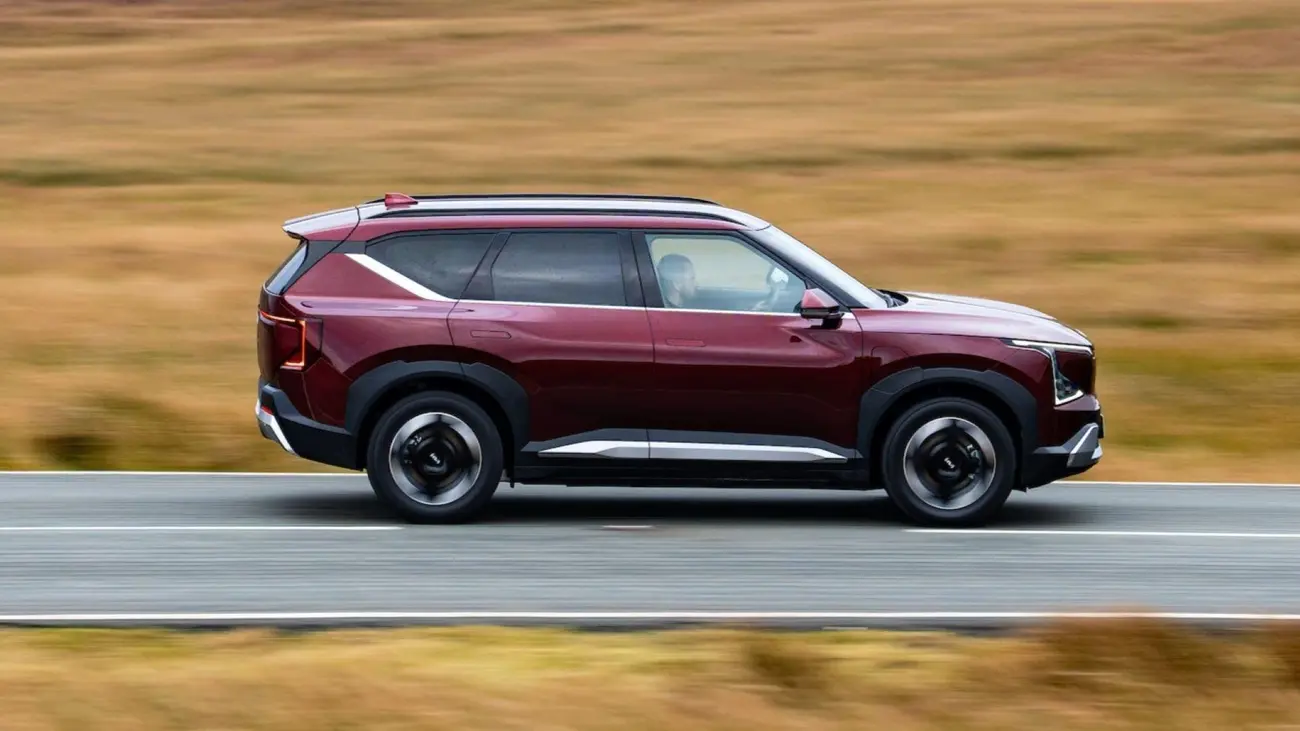
Kia EV5 price Portugal: what the new compact electric SUV costs
The Kia EV5 has landed in Portuguese showrooms with confirmed local pricing: €49,990 for the Tech version and €53,490 for the GT-Line. This is the electric SUV Kia positions as the battery-powered alternative to the Sportage — its best-selling model — entering one of Europe's most contested segments. For anyone shopping for a family-sized compact electric SUV, the question is straightforward: is it worth it?
The short answer from early European reviews is "not the fastest, but one of the most impressive." And for a Portuguese buyer, that philosophy makes sense. Here's why.
What you get for €49,990
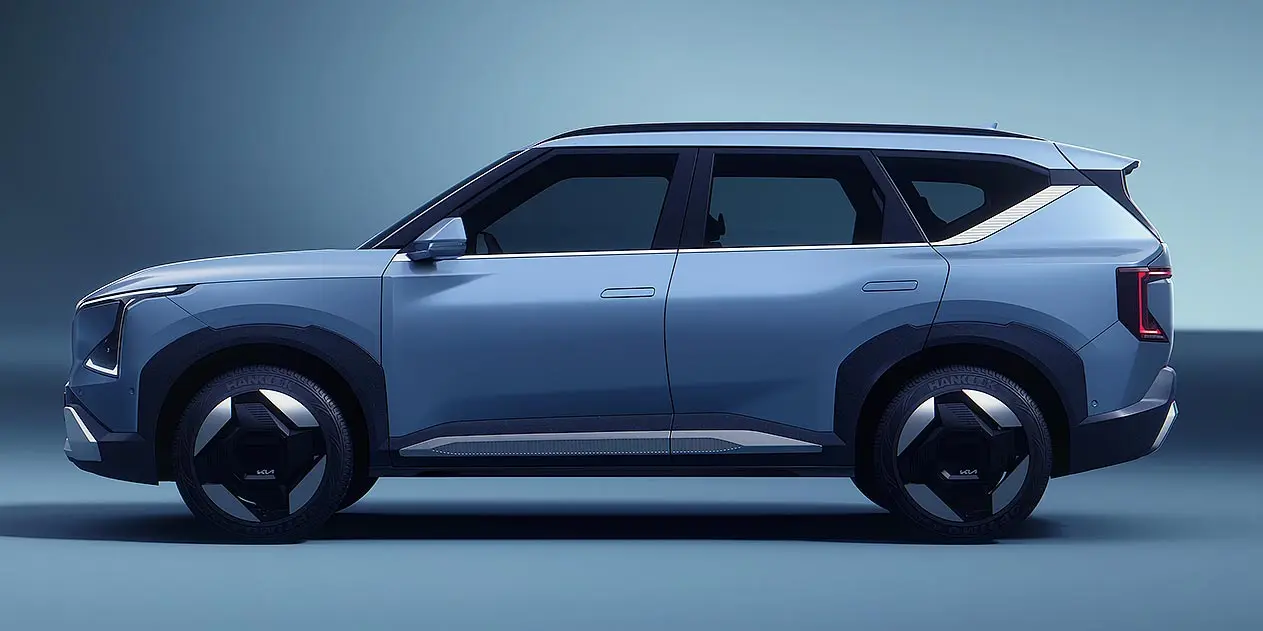
The EV5 measures 4.61 metres long, with a 2.75 m wheelbase. That slots it between the EV3 and EV6 in Kia's range, roughly the footprint of a Hyundai Ioniq 5 and a touch shorter than a Tesla Model Y. The European version is built in Korea and uses an NMC battery — different from the Chinese variant with BYD's LFP Blade cells.
Every version shares the same hardware: an 81.4 kWh battery (78 kWh usable), a single front motor with 160 kW (218 hp) and 295 Nm, and front-wheel drive. No smaller-battery option for Europe, unlike Canada. The 0-100 km/h sprint takes 8.4 seconds and top speed is capped at 165 km/h.
That's not a figure that turns heads in a segment where the Enyaq does 6.7 s and the Model Y dips under 7 s. But Kia made the choice deliberately, prioritising comfort, space and efficiency over outright pace. Dual-motor AWD and a hotter GT version are expected to follow.
Kia EV5 range: what to expect in the real world
Kia quotes up to 520 km WLTP on Portuguese homologation (the European data sheet reaches 530 km on the entry version; the GT-Line drops to 505 km because of its bigger wheels). Honest numbers for the class, but well short of the best: the Renault Scénic reaches 610 km and the Skoda Enyaq 577 km WLTP.
The more interesting story is real-world range. EV Database estimates around 400 km in mixed use. And in a UK group test across road and town, the EV5 covered the equivalent of 394 real km — the best result of the four contenders, ahead of the Scénic, the Enyaq and the Smart #5, despite having the smallest battery in the group.
That works out to a real-world efficiency of 3.6 mi/kWh (about 195 Wh/km). In plain terms: the EV5 squeezes more out of each kWh than rivals with bigger batteries. For a Lisbon-Porto run (around 310 km), it makes the trip comfortably without range anxiety.
Kia EV5 charging: the weak point
This is the Achilles' heel. The EV5 accepts a maximum of 150 kW on DC — in theory. Real-world tests point to more modest peaks, between 127 and 130 kW. A 10 to 80% charge takes about 30 minutes, which is acceptable but unremarkable.
For context: the Hyundai Ioniq 5, which shares the E-GMP platform but in its 800 V form, does the same in 18 minutes. The Enyaq and Model Y also charge faster. The EV5 sits on a 400 V architecture, and you feel it at motorway stops.
At home, AC charging goes up to 11 kW, with a full charge taking close to 8.5 hours — perfect for topping up overnight. There's also V2L (Vehicle-to-Load) up to 3.6 kW, handy for powering electrical kit straight from the car's battery, whether on a picnic or a worksite.
On Portugal's MOBI.E network and the fast chargers along the motorways, expect slightly longer stops than in an Ioniq 5 — but the better efficiency offsets part of that gap, because you need to charge less often.
Space and practicality: where the EV5 shines
The boot holds 566 litres, expanding to 1,650 litres with the seats folded. There's also a 44-litre frunk for cables. That's more than the Scénic (545 L) but less than the Enyaq (585 L), the Smart #5 (630 L) and the Model Y (854 L).
The real ace is in the back. The rear floor is completely flat and leg and head room rank among the best in class — three adults travel in comfort, with more room than in a Sportage. The seats recline, though they don't slide. For a family, it's a genuinely practical car.
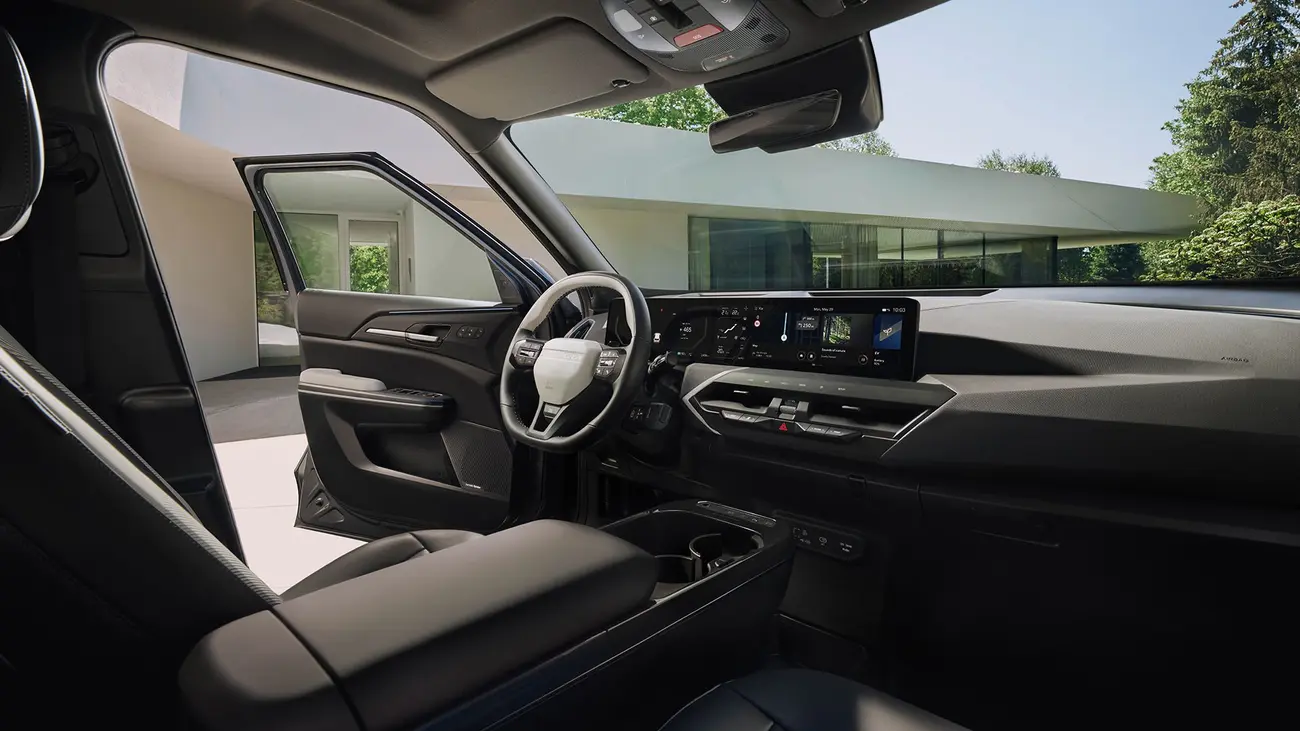
Inside, two 12.3-inch screens dominate the dashboard, with a third 5.3" display dedicated to climate control. And, bucking the current trend, Kia kept physical buttons for the essentials. The cabin is functional rather than plush — several reviews call it grey and sober — but it's easy to live with day to day.
Kia EV5 vs Skoda Enyaq: which to choose
The most direct rival, on both size (4.66 m) and price, is the Skoda Enyaq. That's the comparison that matters in Portugal — not the smaller Elroq.
| Kia EV5 | Skoda Enyaq | |
|---|---|---|
| Length | 4,610 mm | 4,658 mm |
| Battery | 81.4 kWh | 82 kWh |
| WLTP range | up to 520 km | up to 577 km |
| 0-100 km/h | 8.4 s | 6.7 s |
| Drive | Front | Rear |
| Boot | 566 L | 585 L |
| DC charging | ~150 kW | ~135 kW |
| Warranty | 7 years | 3 years |
The Enyaq wins on official range, acceleration and boot space, and it's the more refined drive — in a UK group test it finished first, with the EV5 fourth, dubbed "the trusty kitchen appliance of the group." Not exactly praise for driving thrills.
But the EV5 fires back with two strong arguments: superior real-world efficiency (more usable range per kWh) and the 7-year / 150,000 km warranty, against Skoda's 3 years. For anyone keeping the car for many years, that warranty gap is real money.
Frequently Asked Questions
The Kia EV5 has confirmed Portuguese pricing from €49,990 for the Tech version and €53,490 for the GT-Line. As a full electric, it's exempt from ISV (vehicle purchase tax) and benefits from reduced IUC (annual road tax), making the total cost of ownership more competitive than the sticker price suggests — especially for company cars.
Kia homologates up to 520 km WLTP in Portugal (530 km on the entry version in the European data sheet). In real-world use, EV Database estimates around 400 km in mixed driving, and in a UK group test the EV5 covered 394 real km — the best of four rivals, despite having the smallest battery (81.4 kWh). For a Lisbon-Porto run (around 310 km) it makes the trip comfortably.
On DC fast charging the EV5 accepts up to 150 kW and does 10 to 80% in about 30 minutes (real-world tests show peaks of 127-130 kW). At home, AC charging goes up to 11 kW, with a full charge taking close to 8.5 hours. It's slower than the Hyundai Ioniq 5 (18 minutes) because it uses a 400 V architecture rather than 800 V.
The Skoda Enyaq is the most direct rival on size and price. It wins on WLTP range (up to 577 km vs 520 km), acceleration (6.7 s vs 8.4 s) and boot space (585 L vs 566 L). The EV5 fires back with better real-world efficiency (more usable range per kWh) and a 7-year / 150,000 km warranty, against Skoda's 3 years — a gap worth real money if you keep the car for many years.
For a family, yes: the EV5 offers plenty of space (566 L boot, flat rear floor), top-tier real-world efficiency, a 5-star Euro NCAP (2025) rating, physical climate controls and a 7-year warranty. It isn't the fastest or the quickest to charge, but it's one of the most impressive compact electric SUVs in the segment — ideal for anyone who wants a reliable, no-fuss car.
Is the Kia EV5 worth it in Portugal?
At €49,990, the EV5 isn't the cheapest electric SUV in the segment, nor the quickest. But it offers a package that's hard to beat for a family: plenty of space, top-tier real-world efficiency, generous standard equipment, a 5-star Euro NCAP (2025) rating and that 7-year warranty few rivals match.
The tax incentives help. As a full electric, it's exempt from ISV (Portugal's vehicle purchase tax) and benefits from reduced IUC (annual road tax), on top of the company-car tax advantages — factors that make the total cost of ownership more competitive than the sticker price suggests.
If you want the most engaging drive or the fastest motorway charging, there are better rivals. But if you want a reliable, spacious, efficient compact electric family SUV — a car you can simply live with, no fuss — the EV5 delivers. It is, as the early reviews put it, one of the most impressive in the segment even if not the most spectacular. Worth a trip to the dealer before you decide between it and the Enyaq.