
Kia EV2 LFP vs NMC: Which Battery to Buy in Portugal, 42 kWh or 61 kWh
Published: 03/10/2026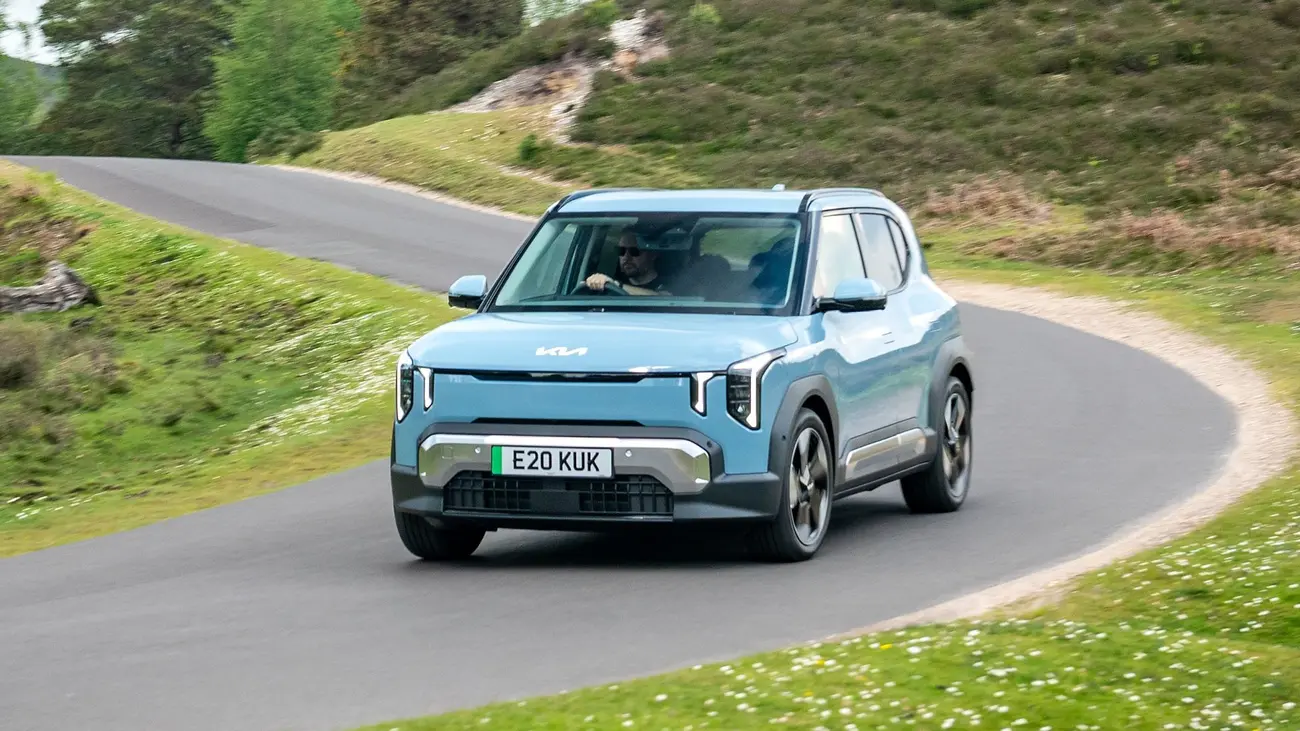
Kia EV2 LFP vs NMC: same body, two very different batteries
45% more energy for just 6 kg of extra battery weight. That is the physical gap between the two versions of the Kia EV2 on sale in Portugal, and it shows why the Kia EV2 LFP vs NMC decision is about more than battery size. One version uses a 42.2 kWh lithium iron phosphate (LFP) pack; the other a 61 kWh nickel manganese cobalt (NMC) pack.
Most buyers compare range and price and stop there. Battery chemistry also shapes how you should charge the car, how it copes with winter, how quickly it refills at a fast charger and even how much power the motor gets. Using the EV2 as the worked example, with Portuguese prices included, here is which version suits which kind of driver.
Kia EV2 42 kWh or 61 kWh: the numbers side by side
Body, dimensions and core equipment are identical. Only the battery changes, and with it a handful of figures that are less obvious than they look.
| EV2 42.2 kWh (LFP) | EV2 61 kWh (NMC) | |
|---|---|---|
| Gross / usable capacity | 42.2 / 41.0 kWh | 61.0 / 58.0 kWh |
| WLTP range | 317 km (308 km higher trims) | 453 km (413 km higher trims) |
| Real-world range, mild weather (combined / highway) | 280 / 220 km | 395 / 310 km |
| Real-world range, cold at -10 °C (combined / highway) | 205 / 170 km | 290 / 240 km |
| Battery weight | 319 kg | 325 kg |
| Nominal voltage | 358 V | 297 V |
| Power / torque | 108 kW (147 hp) / 250 Nm | 100 kW (135-136 hp) / 250 Nm |
| 0-100 km/h | 8.5-8.7 s | 9.5-9.7 s |
| Peak DC charging | 118 kW (Kia) | 112 kW (Kia) |
| DC 10-80% | 29 min (avg ~61 kW) | 30 min (avg ~85 kW) |
| AC 0-100% at 11 kW | 4h30 | 6h15 |
| Unladen weight | 1,615 kg | 1,625 kg |
Sources: Kia via Automobile Propre; real-world range and AC times estimated by EV Database. EV Database lists a 115 kW DC peak for both versions.
The NMC car adds 136 km of WLTP range, roughly 43% more. For Kia EV2 real world range, EV Database estimates 280 km versus 395 km in mild weather. That is the difference between reaching Coimbra from Lisbon on the motorway with range to spare and arriving on fumes.
EV Database applies the same consumption to both versions. In other words, its cold-weather figures do not include the extra penalty LFP usually suffers below freezing, which we come back to below.
LFP vs NMC battery: the differences that matter day to day
Neither chemistry wins everywhere. Both meet strict safety regulations and have more than 15 years of use in mainstream cars behind them. The differences come down to the balance between cost, energy density and charging habits.
Cost and longevity
LFP cells cost around $80-90 per kWh in 2025, versus $100-120 for NMC. They contain no cobalt or nickel, which makes them cheaper and less exposed to troublesome supply chains.
LFP also wins on cycle life: 3,000 to 5,000 full cycles before significant degradation, against 1,500 to 2,500 for NMC, according to The Electric Car Scheme. For a car covering 40 km a day, either figure comfortably outlasts the vehicle, but the LFP margin is real.
The trade-off is energy density. The EV2 illustrates it well: storing 61 kWh in LFP cells would take a noticeably heavier, bulkier pack. That is why long-range versions still stick with NMC.
LFP battery: charge to 100% without guilt
This is one of the most practical differences. An LFP battery tolerates 100% charges and actually needs them regularly, so the battery management system can recalibrate its state-of-charge reading and balance the cells. Tesla, for example, recommends charging LFP Model 3s to 100% once a week.
With NMC, the usual advice is to keep the battery between 20% and 80% day to day and save 100% for trips. In practice, that narrows the usable range gap: an LFP owner can leave home with a full battery every morning.
It is worth keeping this in proportion. Geotab's study of more than 22,700 EVs found that charge extremes only measurably speed up degradation when a car spends over 80% of its time near full or near empty: 2.0% a year, versus 1.4-1.5% for the other groups. Every modern EV also has hidden buffers, so the 100% on the screen is not a chemically full battery.
Cold, heat and Portugal's climate
LFP's best-known weakness is cold. Below 0 °C it can lose 30% or more of its usable range, compared with 15-25% for NMC, and it charges more slowly until the pack warms up. Preconditioning helps, and the EV2 warms its battery automatically when you set a fast charger as your navigation destination.
For most drivers in Portugal, this is a minor issue. Sub-zero temperatures are rare along the coast. If you live in Bragança or Guarda, or drive the A25 at dawn in January, you will notice the difference more.
Heat matters too. Geotab's data shows vehicles in hot climates degrade 0.4% faster per year than those in mild ones. An Alentejo summer will not ruin a battery, but parking in the shade and avoiding fast charging with an already hot pack is a good habit with any chemistry.
Fast charging: the peak figure misleads
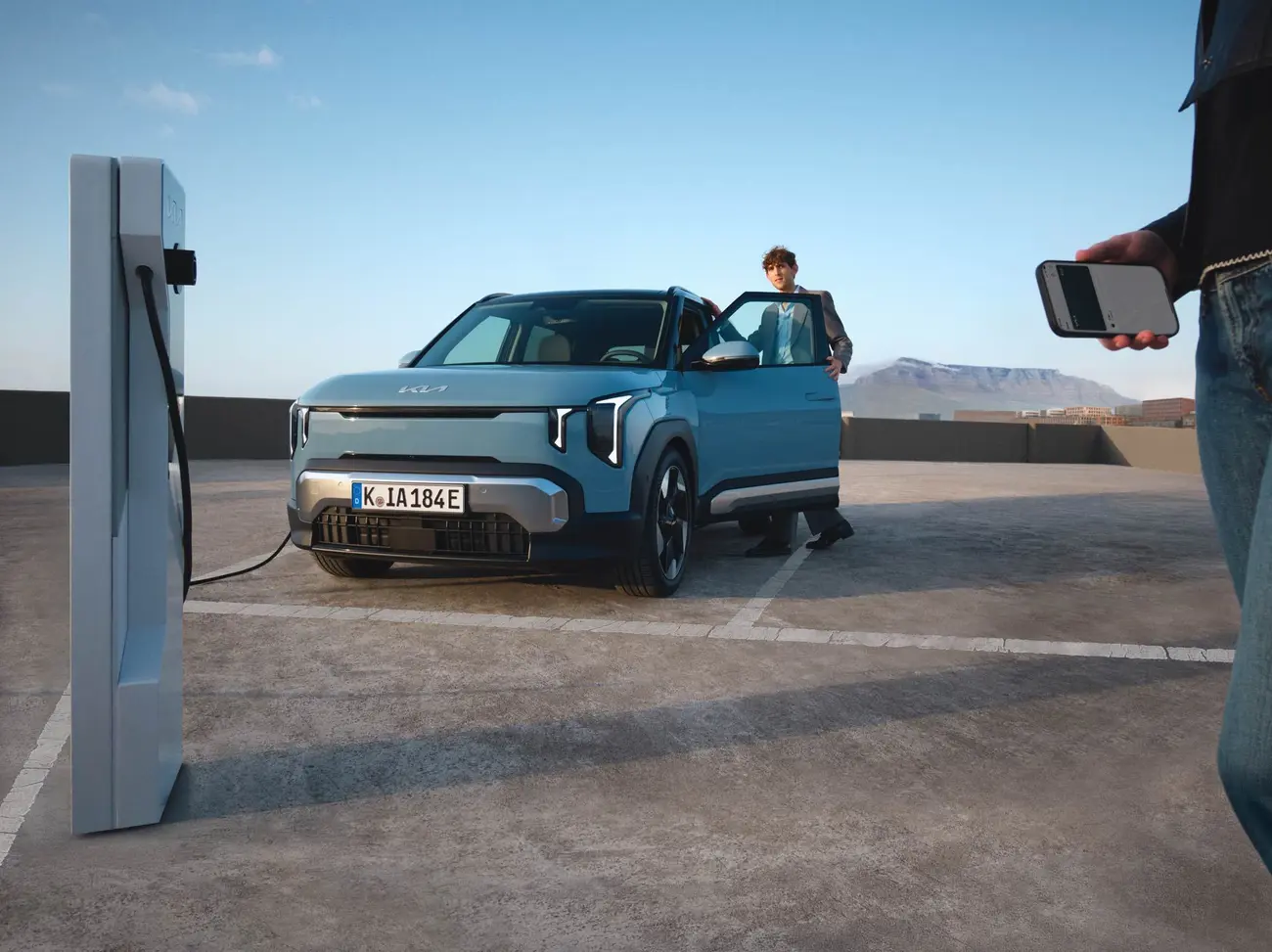
On paper the LFP version charges faster: 118 kW peak versus 112 kW, and 29 minutes from 10% to 80% versus 30. The picture changes once you look at average power across that window, which is around 61 kW for LFP and around 85 kW for NMC.
Put simply, in the same time the NMC puts roughly 13 kWh more into the battery. EV Database estimates the LFP adds about 330 km of range per hour of charging, against about 470 km for the NMC. On 50 kW chargers, still common on MOBI.E (Portugal's national public charging network), 10-80% takes 52 minutes for the LFP and 64 minutes for the NMC, but the NMC leaves with far more kilometres available.
There is a longevity angle as well. According to Geotab, cars that rely heavily on fast charging above 100 kW degrade by 3.0% a year, versus 1.5% for those that mostly charge slowly. After eight years, that means 76% versus 88% of original capacity. Charging at home or at work protects the battery, whether it is LFP or NMC.
Why the EV2 LFP is more powerful
It sounds backwards: the smaller battery delivers 147 hp while the bigger one stops at 135-136 hp. The explanation lies in the pack architecture, not the chemistry itself. The LFP pack runs at 358 V and the NMC at 297 V because of how the cells are wired in series and parallel, and that higher voltage lets the pack feed more power to the motor.
The result is a 0-100 km/h time about a second quicker for the LFP version. In Lisbon or Porto traffic you will barely feel it, but it is an unexpected bonus on the cheaper car.
Kia EV2 price in Portugal: what the extra 136 km costs
The Kia EV2 has been on sale in Portugal since around June 2026. The prices below were reported by the Portuguese motoring press (MotorMais and SAPO); we could not confirm them directly on Kia Portugal's website, so check the official configurator before you decide.
| Version | Battery | Price (private buyers) |
|---|---|---|
| Urban | 42.2 kWh LFP | €32,250 |
| Dynamic | 42.2 kWh LFP | €34,000 |
| Drive | 42.2 kWh LFP | €35,500 |
| Drive Long Range | 61 kWh NMC | €38,000 |
According to the same press reports, business (company) prices range from €28,490 to €34,490. The Urban trim comes as a four-seater with sliding, reclining rear seats, worth knowing if you need to carry five.
On the Drive trim, the NMC battery costs €2,500 more. Using usable capacity, that is about 17 kWh extra, or close to €147 per kWh, and 136 km more WLTP range, roughly €18 per kilometre. In France the gap between equivalent trims is larger, at €4,000 to €4,500, which makes the Portuguese premium fairly modest.
Like every EV, the EV2 is exempt from ISV (Portugal's car purchase tax) and IUC (the annual circulation tax), whichever battery you pick.
Is the Kia EV2 Long Range worth it? A decision table
When weighing up Kia EV2 LFP vs NMC, the answer depends less on chemistry and more on how you use the car. This table covers the most common situations:
| Your profile | Best choice | Why |
|---|---|---|
| Daily driving up to 60-80 km, charging at home | 42.2 kWh LFP | Cheaper, happy at 100%, 280 km real range is plenty |
| Only car in the household, frequent Lisbon-Porto or Algarve trips | 61 kWh NMC | 395 km real range in mild weather and more productive fast-charging stops |
| No garage, relying on public chargers | 61 kWh NMC | Each stop yields more kilometres, so fewer charger visits |
| Living in the northern interior, with frequent frosty mornings | 61 kWh NMC | Smaller range loss in the cold |
| Second car, mainly urban use | 42.2 kWh LFP | More powerful, lighter on the wallet and with longer cycle life |
| Annual mileage above 24,000 km | 61 kWh NMC | More headroom for natural degradation over the years |
The battery warranty is 7 years or 150,000 km according to EV Database; some Portuguese press reports mention 8 years or 160,000 km, so confirm the terms with your dealer.
Other electric cars in Portugal with LFP or NMC batteries
The EV2 is not an isolated case. More and more brands use LFP in entry-level versions and keep NMC for the longer-range ones.
Renault 5
In August 2026 Renault announced a new entry-level R5 called the Five, with a 36.5 kWh LFP battery, an 80 kW motor and up to 305 km WLTP. It charges at 80 kW DC (15-80% in 21 minutes) and 6.6 kW AC. The 40 kWh (315 km) and 52 kWh (430 km) versions remain NMC. It debuts at the Paris Motor Show on 12-18 October, and Portuguese availability has not been confirmed.
Tesla Model 3 and Model Y
Tesla's entry-level rear-wheel-drive versions have used LFP, while Long Range and Performance versions use nickel-based batteries. The exact chemistry of each 2026 version sold in Portugal is not confirmed, so ask before ordering, especially if you plan to follow the weekly 100% rule.
MG4
Historically, the standard-range MG4 used LFP and the longer-range versions used NMC. The 2026 line-up has changed and the available information is inconsistent, so confirm the chemistry of each version with MG.
BYD
No choice here: every BYD model uses the Blade battery, an LFP chemistry. BYD says the cell format brings its energy density close to NMC. Other LFP cars on sale in Portugal include the Dacia Spring, the Citroën ë-C3 and the entry-level Volvo EX30.
Frequently Asked Questions
According to Portuguese press reports, the Kia EV2 Drive Long Range with the 61 kWh NMC battery costs €38,000 for private buyers, €2,500 more than the Drive with the 42.2 kWh LFP battery (€35,500). The range starts at €32,250 (Urban), and business prices run from €28,490 to €34,490. As an EV it is exempt from ISV and IUC, and prices are worth checking on Kia Portugal's configurator.
Yes. LFP chemistry tolerates full charges and actually needs to reach 100% regularly, at least once a week, so the battery management system can recalibrate its state-of-charge reading and balance the cells. For the 61 kWh NMC version, the usual advice is to stay between 20% and 80% day to day. Even so, Geotab's study of 22,700 EVs found that only cars spending over 80% of their time near full or empty degrade noticeably faster (2.0% per year versus 1.4-1.5%).
In charge cycles, yes: LFP cells handle roughly 3,000 to 5,000 full cycles, compared with 1,500 to 2,500 for NMC. In practice, charging habits matter as much as chemistry: Geotab found that cars relying heavily on DC fast charging above 100 kW lose 3.0% of capacity per year, versus 1.5% for those charged mostly at home. The EV2 battery warranty is 7 years or 150,000 km according to EV Database, though some Portuguese press cites 8 years or 160,000 km.
EV Database estimates around 205 km combined and 170 km on the motorway at -10 °C for the 42.2 kWh EV2, versus 280 km and 220 km in mild weather. Those estimates do not include LFP's extra cold-weather penalty, which can exceed 30% of usable range below 0 °C, compared with 15-25% for NMC. Sub-zero temperatures are rare on Portugal's coast, and automatic battery preconditioning, triggered through the navigation system, reduces the impact on fast charging.
Besides the 42.2 kWh Kia EV2, LFP is used by every BYD model (Blade battery), the Dacia Spring, the Citroën ë-C3, the entry-level Volvo EX30 and, traditionally, the entry versions of the Tesla Model 3 and Model Y. The Renault 5 is adding a Five version with a 36.5 kWh LFP battery and 305 km WLTP range, unveiled at the Paris Motor Show in October 2026, with no confirmed date for Portugal yet. For the MG4 and Tesla, check the chemistry of each 2026 version before buying.
What we would pick in the Portuguese market
With mild coastal winters and a €2,500 gap on the Drive trim, the LFP EV2 is the rational choice if you charge at home and mostly drive locally. It is cheaper, quicker off the line and can be charged to 100% every night.
If the EV2 will be your only car, if you rely on public charging or regularly drive the A1 motorway, the Long Range's extra 136 km are worth the money. The Kia EV2 LFP vs NMC logic applies to any brand: look at average charging power and real-world range, not just the peak figure and the WLTP number.