
Kia EV1 vs Renault Twingo: The Cheap Electric City Car Showdown
Published: 26/05/2026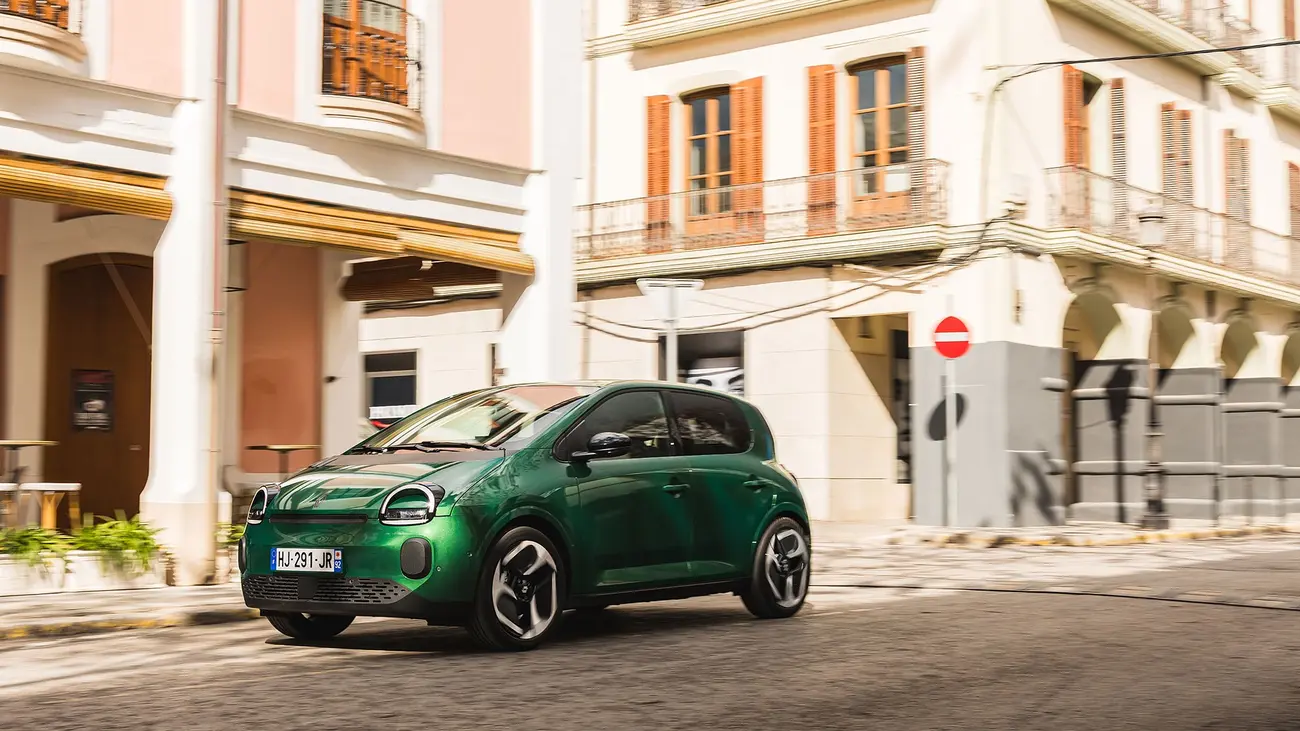
Kia EV1 vs Renault Twingo: the cheap electric city car showdown
The fight over affordable electric city cars is heating up. Kia is preparing the EV1, a small urban EV expected to cost around €20,000, and the European press has already lined it up against the Renault Twingo E-Tech. But there's one detail that changes everything if you're shopping right now: the Twingo is effectively on sale, while the EV1 isn't due until 2027 or 2028.
It's worth understanding what's actually on the table. On one side, a real car with a confirmed price and spec sheet. On the other, a promising idea — but one that hasn't materialised yet.
What we know about the Kia EV1 (and what's still guesswork)
Kia hasn't released official figures. Everything circulating about the EV1 is estimated, much of it extrapolated from the EV2, the model directly above it in the range. So treat the numbers below as expectations, not settled facts.
The EV1 is expected to be Kia's cheapest EV ever, sitting below the EV2 and conceived as the electric successor to the petrol Picanto. Kia executives have repeatedly signalled their intent to chase price-sensitive buyers — CEO Ho Sung Song said the company was "internally studying what will be our entry EV product, apart from the EV2".
On the platform side, expect the same 400V E-GMP architecture as the EV2, with a single front motor of around 145 hp (108 kW). The batteries should mirror its bigger sibling: 42.2 kWh and 61 kWh.
Kia EV1 range: 322 km or 483 km, depending on the battery
The entry version, with 42.2 kWh, should offer around 322 km WLTP. The bigger 61 kWh pack pushes closer to 483 km WLTP — figures that, if confirmed, put the EV1 well above the city-car average. In real-world urban use, either version comfortably covers a week of Lisbon or Porto commuting between charges.
The EV1 should measure roughly 3,600 mm long, in line with the Picanto and Fiat 500e. It's a genuinely small car, shorter than the Twingo, and built for the city. It will also be Kia's first software-defined model in the segment, with OTA updates — the software evolves over the car's life, no workshop visit required.
Renault Twingo E-Tech: the rival you can buy today
Here's the decisive difference. The Renault Twingo E-Tech starts at around €19,490 in Evolution trim and €21,090 in Techno, going on sale in spring 2026. It's a real car with a fixed price, unlike the EV1.
The spec sheet is more modest, and it's only fair to say so. The Twingo uses a 27.5 kWh usable LFP battery (29.0 kWh nominal) supplied by CATL, for a WLTP range of 263 km — dropping to around 250 km with the 18-inch wheels. The motor delivers 82 PS (60 kW), 0–100 km/h takes 12.1 seconds, and DC fast charging maxes out at 50 kW, recovering 10–80% in half an hour.
It's neither fast nor long-legged. But it costs under €20,000, it's on sale, and it fits in any parking space.
Kia EV1 vs Renault Twingo: the head-to-head
| Specification | Kia EV1 (expected) | Renault Twingo E-Tech |
|---|---|---|
| Price (estimate) | ~€20,000–23,000 | €19,490 / €21,090 |
| Launch | 2027–2028 | Spring 2026 |
| Battery | 42.2 kWh / 61 kWh | 27.5 kWh usable (LFP) |
| WLTP range | ~322 km / ~483 km | 263 km |
| Power | ~145 hp (108 kW) | 82 PS (60 kW) |
| Platform | E-GMP 400V (modified) | 400V EV platform |
| Length | ~3,600 mm | 3,789 mm |
| DC charging | n/a (estimated) | up to 50 kW |
| Production | Slovakia (likely) | Slovenia |
On paper, the EV1 wins almost everywhere: more power, more than double the range in its bigger version, and a more capable platform. The Twingo counters with the strongest argument of all — it exists, it has a price, and it can be in your garage this year.
How much will the Kia EV1 cost in Portugal
With no official European price, any Portugal figure is educated guesswork. International estimates point to €20,000–23,000 before incentives, starting from around £17,000 in the UK. For the Portuguese market, the EV1 will most likely start somewhere between €21,000 and €24,000, depending on trim and equipment.
The good news is fiscal. As a fully electric car, the EV1 is exempt from ISV (Portugal's vehicle purchase tax) and qualifies for reduced IUC (the annual road tax), on top of the usual company-car benefits. The same already applies to the Twingo today.
Frequently Asked Questions
There is no official European price yet, so any figure is an estimate. International sources point to €20,000–23,000 before incentives (around £17,000 in the UK). For the Portuguese market, the EV1 will most likely start somewhere between €21,000 and €24,000, depending on trim and equipment.
On paper the Kia EV1 wins almost everywhere — up to 145 hp, 42.2 and 61 kWh batteries and a WLTP range of 322 to 483 km, against the Twingo E-Tech's 82 PS and 263 km. But the Twingo has the decisive advantage: it is already on sale from €19,490, while the EV1 isn't due until 2027–2028. If you need a car today, the Twingo is the rational choice; if you can wait, the EV1 promises more for a similar price.
The entry version (42.2 kWh) should offer around 322 km WLTP, while the 61 kWh pack pushes closer to 483 km WLTP. In real-world urban use in Lisbon or Porto, either version comfortably covers a week of commuting between charges, sitting well above the city-car segment average.
The dates vary across sources: Autocar says 2027, while Auto Express points to 2028 with a concept in 2027. The safest bet is to count on 2027–2028 for the European arrival, plus extra time before it lands in Portuguese showrooms with a final price.
As a fully electric car, the Kia EV1 is exempt from ISV (the vehicle purchase tax) and qualifies for reduced IUC (the annual road tax), on top of the usual company-car benefits. The same advantages already apply to the Renault Twingo E-Tech and other electric city cars today.
When the Kia EV1 reaches Portugal — and what to do meanwhile
The dates don't line up across sources: Autocar says 2027, Auto Express points to 2028 with a concept in 2027. The safest bet is to count on 2027–2028 for the European arrival, plus extra time before it lands in Portuguese showrooms with a final price.
So, wait or buy now? If you need an electric city car today and your budget is around €20,000, the Twingo E-Tech is the rational choice — it's available, cheap, and does the urban job. If you can wait a year or two and want more range and power for the same money, the EV1 looks like the better deal — provided Kia delivers on the estimated numbers and price.
It's worth keeping an eye on Kia's next official announcements. Once the European price is confirmed, this showdown turns from a hypothesis into a real decision.