
KGM Torres EVX in Portugal: Price, Specs and Real-World Range
Published: 12/09/2026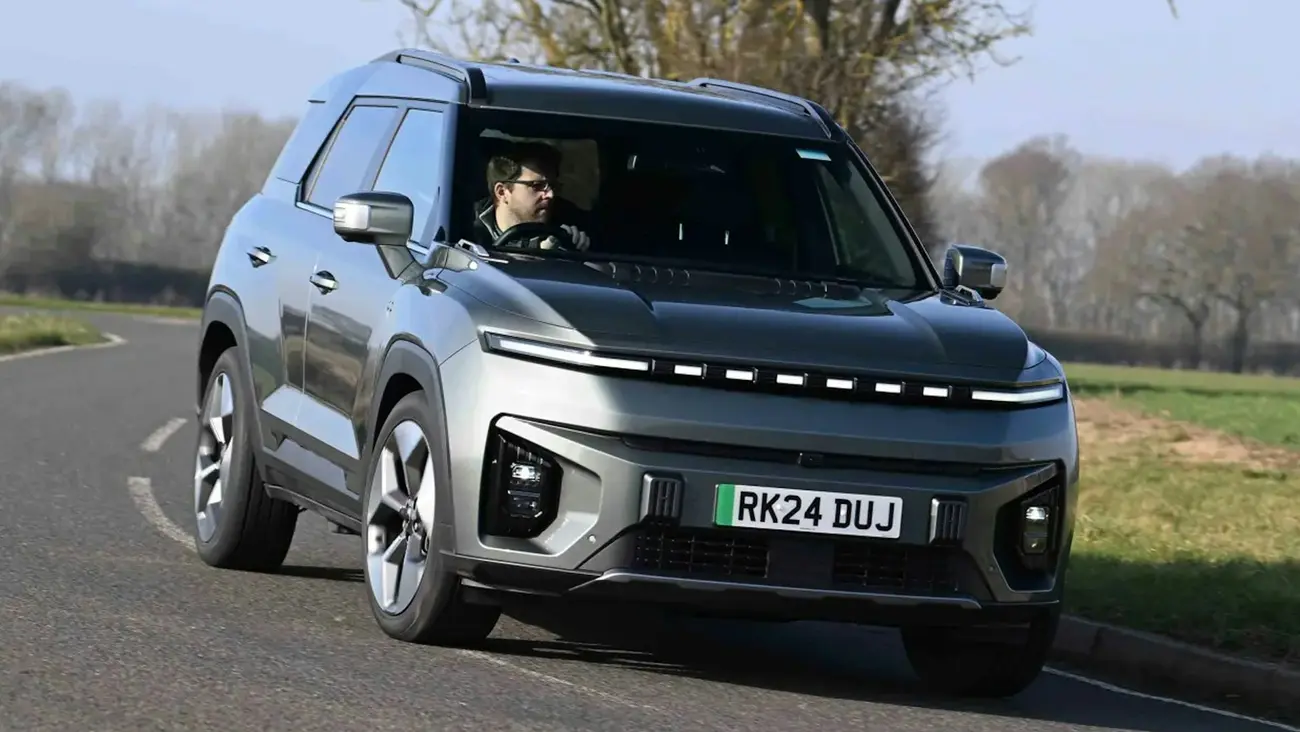
An entry version at €38,990: Europe is pushing the Torres EVX down
KGM has opened orders in the Netherlands for a new entry-level Torres EVX, the Street Series, at €38,990. That undercuts the Bronze at €41,250 by €2,260 and makes it the cheapest way into the Korean electric SUV in that market.
It isn't an isolated move. In Germany, KGM is running the Torres EVX Nomad from €34,990 — more than €13,000 below the German list price of €41,990 — with a heat pump, heated and ventilated seats, a 360-degree camera and wireless charging thrown in. Deliveries start in September 2026. The brand is clearly using special editions to attack the €35,000-€40,000 bracket across several countries at once.
One thing to be clear about if you're reading this from Portugal: Street Series is a Dutch trim name. Here the range is sold as K3, K30 and K40. What matters is the price signal these European editions send — and what it means for the KGM Torres EVX price in Portugal.
What the Street Series keeps (and what it drops)
For that €2,260 gap you give up less than you might expect. The Street Series keeps dual-zone automatic climate control, navigation, adaptive cruise control and a 12.3-inch digital instrument cluster.
Out go seat heating, electrically adjustable seats, a powered tailgate and wireless phone charging. None of which are standard on the Bronze either — the real difference is the wheels.
And here's the odd part: the cheaper car wears 20-inch Black Diamond Cut wheels on 245/45 tyres, while the Bronze runs 18-inch rims on 225/60. Bigger wheels on the cheaper trim. It looks better, but it costs ride comfort and a few kilometres of range.
KGM Torres EVX MY26 specs: 80.6 kWh and 503 km WLTP
Model year 2026 brought the change that counts. The battery grew from the old 73.4 kWh to 80.6 kWh usable (83.0 kWh nominal), using LFP BYD Blade cells on a 400 V architecture. WLTP range climbed to 503 km, with rated consumption of 19.3 kWh/100 km (KGM Germany quotes 18.7 kWh/100 km combined and up to 664 km in city driving).
The powertrain is identical across trims: 152 kW (207 hp), 339 Nm, front-wheel drive, 0-100 km/h in 8.2 seconds and a 175 km/h top speed.
| Specification | Value |
|---|---|
| Battery (usable / nominal) | 80.6 kWh / 83.0 kWh, LFP BYD Blade |
| Power / torque | 152 kW (207 hp) / 339 Nm |
| Drive | Front-wheel drive |
| 0-100 km/h | 8.2 s |
| Top speed | 175 km/h |
| WLTP range | 503 km |
| WLTP consumption | 19.3 kWh/100 km |
| AC charging | 11 kW (8h45m for 410 km) |
| DC charging | 120 kW peak, 36 min from 10 to 80% |
| V2L | Yes, up to 3.5 kW |
| Boot | 839 L / 1,662 L |
| Braked towing | 1,500 kg |
| Battery warranty | 10 years / 1,000,000 km |
Real range: 465 km in mild weather, 350 km in the cold
The 503 km WLTP figure doesn't survive contact with the real world, as usual. EV Database estimates for this powertrain with the 80.6 kWh pack point to 465 km combined in mild weather and 350 km in cold conditions.
On the motorway — where most of the doubts start — the numbers fall to 365 km in good weather and 290 km in winter. Put that on the Portuguese map: Lisbon to Porto (roughly 300 km on the A1) is a single-shot drive in any season, but in cold weather the margin gets thin if you want to come back on the same charge.
An independent electrive road test of the Torres EVX with the older 73.4 kWh battery measured under 15 kWh/100 km in town, around 20 kWh/100 km at 100 km/h and 22 kWh/100 km at 120 km/h. The motor and bodywork are unchanged, so those consumption figures should carry over to the MY26 car — what changes is range, which rises with the bigger pack.
Charging: this is where it hurts
Charging is where the Torres EVX falls behind. On DC it peaks at 120 kW, averages around 100 kW, and takes 36 minutes to go from 10 to 80% — and that time doesn't improve on a 350 kW charger, because the limit is in the car.
Rivals in this price bracket typically sit under 30 minutes. That's six to ten extra minutes at every stop on a long trip. At home, the 11 kW onboard charger means a full night (8h45m) to put back around 410 km.
The good news with MY26 is battery preconditioning, triggered manually through the navigation system. The car electrive tested didn't have it, and on an LFP pack that badly hurts winter charging speed. There's still no Plug and Charge, but Autocharge is supported, along with V2L up to 3.5 kW for running external equipment off the battery.
The 839-litre boot is the real argument
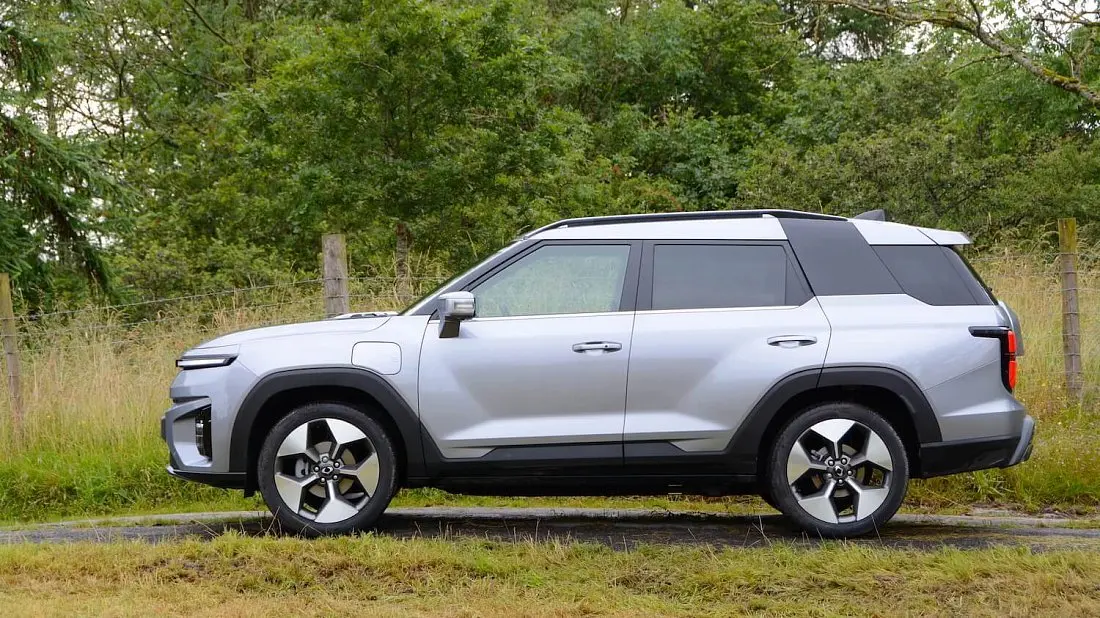
If there's one reason to shortlist this SUV, it's this. 839 litres with the seats up, 1,662 litres with them folded. A Skoda Enyaq, the segment benchmark, offers 585 litres. That's a gap of more than 250 litres — the difference between the family luggage fitting and having to do maths in the driveway.
The shape helps as much as the volume: boxy bodywork over 4,715 mm of length and a 2,680 mm wheelbase, with underfloor storage in the boot for charging cables. There's no frunk up front, unlike a Hyundai Ioniq 5 or Kia EV6.
Add 1,500 kg of braked towing capacity, standard roof rails and 510 kg of payload. If you tow a trailer or a small caravan, few EVs at this price will do the same job.
KGM Torres EVX price in Portugal: what it costs here
Time for some honesty. In Portugal the Torres EVX is sold through the KGM network (the former SsangYong dealers), with list prices starting around €45,900 and dealer campaigns advertising the K3 trim at roughly €38,490 with the €4,000 Fundo Ambiental grant already applied. Those figures come from commercial campaigns and aggregators rather than an official price list, so check with a dealer before committing.
In other words: the effective KGM Torres EVX price in Portugal, for the K3 on campaign, lands close to the €38,990 of the Dutch Street Series — but only once the state incentive is applied. Without it, the gap to northern European pricing remains.
Portugal's tax framework still favours EVs, and it's worth factoring in: exemption from ISV (the vehicle registration tax), exemption from IUC (the annual road tax) and favourable treatment for company cars. On the used market, 2024 and 2025 examples average around €35,600 — with a car this new, that's a serious alternative to consider.
Who it competes with between €38,000 and €45,000
In this bracket the Torres EVX faces cars with far more history behind them. The Skoda Enyaq drives better and has a vastly larger service network. The Renault Scenic E-Tech offers considerably more range. The Hyundai Ioniq 5 and Kia EV6 run 800 V architecture and charge at more than twice the speed. The Mini Countryman Electric trades on brand image.
The Torres EVX answers with three concrete arguments: cargo space, towing capacity and a battery warranty of 10 years or 1,000,000 km — a number almost no European maker matches. Vehicle warranty is seven years.

Where the Torres EVX loses points
None of this counts without the caveats. And there are a few.
- No Euro NCAP rating. KGM has no models tested by Euro NCAP at all. The safety kit is there — automatic emergency braking, blind spot warning, cross-traffic alert, eight airbags on the better-equipped German versions — but there's no independent crash protection score to point at.
- Dated infotainment. Old graphics, slow menus, laggy responses, and every climate control buried in the touchscreen. The TomTom navigation was designed for combustion cars and won't plan charging stops.
- Merely adequate to drive. Noticeable body lean in corners, soft suspension that absorbs big bumps but passes small ones through, and obvious wind and road noise at motorway speeds.
- Soft seats. Comfortable for the first hour, tiring after a few, with little lateral support.
Carwow scored it 6 out of 10, with a summary that holds up well: practical and roomy, but no fun at the wheel.
Worth buying? It depends what you need. If you want the electric SUV with the most cargo space for €40,000, an almost absurd battery warranty and genuine towing ability, the Torres EVX makes sense — especially if you can land a campaign with Fundo Ambiental support. If you cover a lot of motorway kilometres and don't want to lose 36 minutes at every stop, there are better options for the same money. The entry editions appearing in the Netherlands and Germany suggest price pressure will keep building — and the Portuguese market usually follows a few months later.
Frequently Asked Questions
Not for now. The Street Series launched as an entry-level trim in the Netherlands at €38,990, sitting below the Bronze at €41,250, and KGM has not confirmed whether it is permanent or just a campaign. In Portugal the range is still sold as K3 and K5, with list pricing from around €45,900 for private buyers. The wider signal matters more: between the Dutch Street Series and the German Torres EVX Nomad at €34,990, KGM is pushing entry prices down across several European markets, which usually precedes similar offers here.
The MY26 Torres EVX uses an 80.6 kWh usable LFP pack (BYD Blade cells) rated at 503 km WLTP, with 19.3 kWh/100 km consumption. In practice, expect around 465 km in mixed driving in mild weather and roughly 350 km in winter. On the motorway that drops to about 365 km in mild conditions and 290 km in the cold — still enough for Porto to Lisbon without stopping, but with little margin in winter.
On DC the Torres EVX peaks at 120 kW, averages close to 100 kW, and covers 10-80% in about 36 minutes. On AC it is capped at 11 kW, which means roughly 8h45m for a full wallbox charge — an overnight job. This is the weakest part of the spec sheet: several rivals in the same price bracket do 10-80% in under 30 minutes. The MY26 update does add manual battery preconditioning through the navigation system, which helps reach peak power in cold weather.
No. No KGM model currently holds a Euro NCAP rating, and the Torres EVX has not been tested. That does not make it unsafe: autonomous emergency braking, lane keep assist, adaptive cruise control, traffic sign recognition and blind-spot monitoring are all standard. But buyers are left without the independent benchmark that virtually every direct rival already has published.
As a fully electric car, the Torres EVX is exempt from ISV (vehicle tax) and pays the minimum IUC road tax, and companies can deduct VAT. For private buyers, the Fundo Ambiental grant for new EVs has been around €4,000, subject to a limited annual budget and a vehicle price cap — it was with that grant included that some dealers advertised the K3 trim from about €38,490. Always confirm the current allocation and eligibility before signing, because the funding runs out during the year.