
Jaguar Type 01: Price in Portugal, Full Specs and Release Date
Published: 25/05/2026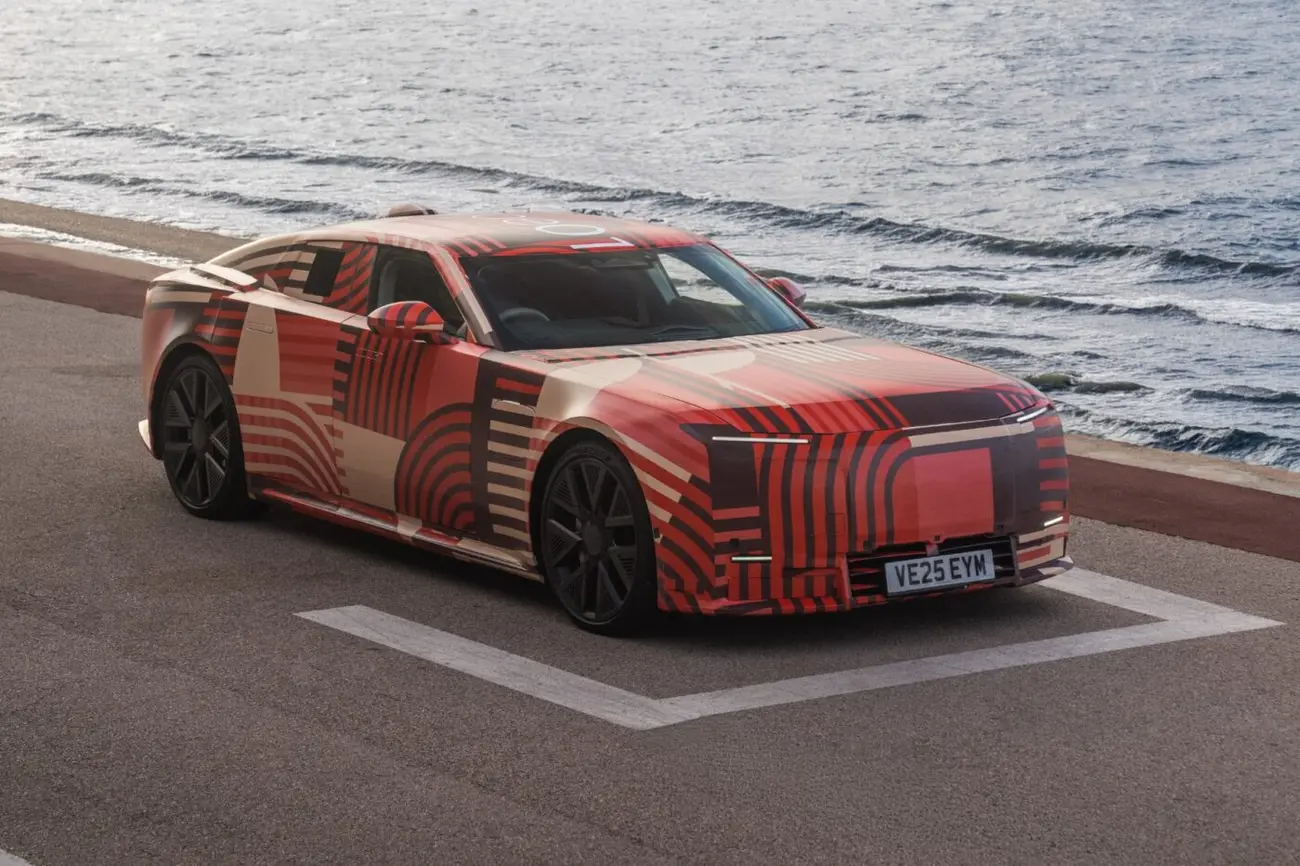
The first Jaguar of the new era has a name: Type 01
After two years of commercial silence and a polarising rebrand, Jaguar has finally revealed what its first electric car will be called: Type 01. The name is not random. The "0" stands for zero emissions, the "1" marks the first model of the new era. And "Type" reaches into Jaguar's own history — the C-Type from 1951, the E-Type, the F-Type. For Portuguese buyers eyeing a luxury electric GT, two dates matter: full reveal in autumn 2026, first deliveries in 2027.
What we know about the Jaguar Type 01 electric
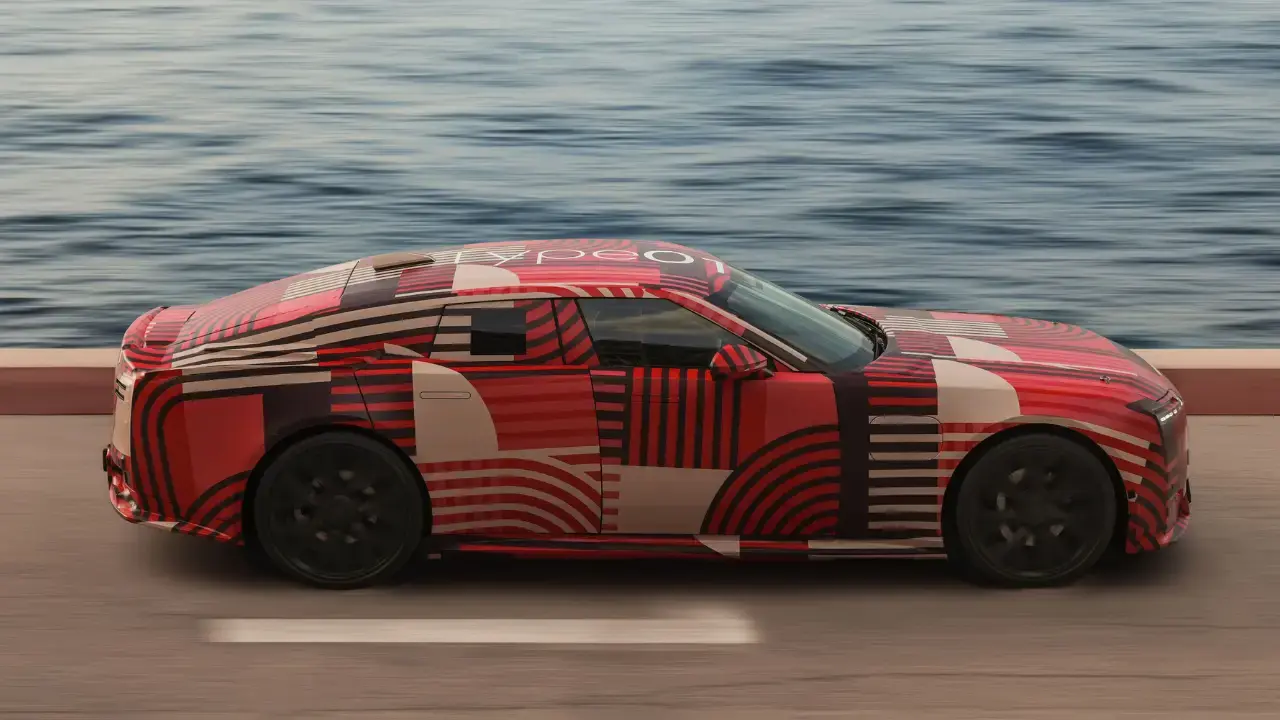
The naming announcement came with a camouflaged prototype lapping the Monaco circuit ahead of the Formula E E-Prix on 16 May. It was the clearest view yet of this four-door GT: heavily raked windshield, flush handles, flat roof, stretched coupe proportions. Over 5.2 metres long. For context, that is longer than a Porsche Taycan — and heavier too, at around 2,700 kg, roughly 500 kg above the German rival.
Underneath sits the new JEA platform (Jaguar Electric Architecture), built from scratch for this generation. Jaguar will produce the Type 01 in the UK and has already ruled out a hybrid version. Pure electric, no compromise.
Specs: three motors, more than 1,000 hp
The numbers do the talking. Jaguar fitted three motors to the Type 01 — one at the front, two at the rear — for an AWD setup producing over 986 bhp (1,000+ PS) and 1,300 Nm of torque. The 0-100 km/h sprint is dispatched in just over 3 seconds. The AWD control software and fast-switching silicon-carbide inverters come straight from Jaguar TCS Racing, the 2024 Formula E Teams' World Champions.
| Specification | Value |
|---|---|
| Body style | Four-door GT |
| Length | Over 5.2 m |
| Weight | About 2,700 kg |
| Power | Over 1,000 PS (986 bhp) |
| Torque | 1,300 Nm |
| 0-100 km/h | Just over 3 s |
| Motors | 3 (1 front, 2 rear), AWD |
| Battery | 120 kWh |
| Architecture | 850V (JEA platform) |
| WLTP range | Up to 700 km (435 miles) |
| DC charging | 350 kW — 320 km in under 15 min |
| Suspension | Twin-chamber air with adaptive dampers |
| Steering | Rear-wheel steering |
The 120 kWh battery on an 850V architecture is one of the headline points. Paired with 350 kW DC charging, Jaguar claims you can recover 320 km of range in under 15 minutes. For someone running Lisbon to Porto regularly, that means a single coffee stop on the A1 motorway and you are back on the road. The claimed WLTP range of 700 km also pushes the Type 01 above most current rivals.
Jaguar Type 01 price Portugal: what to expect
This is where the story gets interesting — and expensive. Jaguar managing director Rawdon Glover has openly named three UK price bands:
- Entry: around £100,000-£120,000 (€115,000-€140,000)
- Centre of gravity of the range: around £140,000 (~€163,000)
- Bespoke versions: from £280,000 (~€325,000)
For Portugal, the maths is messier. Electric cars are exempt from ISV (the Portuguese vehicle registration tax), which helps. But 23% VAT plus importer margins should put the entry version above €130,000, with the mid-spec configuration nudging €170,000. This is not a car for the many — Jaguar knows it. The brand is deliberately abandoning the mid-segment to position itself between top premium (Porsche, BMW M, Mercedes-AMG) and ultra-luxury (Bentley, Rolls-Royce).
When will the Jaguar Type 01 arrive in Portugal
The full reveal is scheduled for autumn 2026, with some sources pointing to September. Order books open in the second half of 2026 and first deliveries only happen in 2027. For the Portuguese market, keep in mind that Jaguar has a limited dealer network here — the brand is mid-restructuring, with UK sales halted entirely during the transition. National distribution is not yet confirmed in its new form.
The Type 01 is only the first of three planned models: the GT seen here, a top-end SUV (a direct rival to the electric Porsche Macan and Lotus Eletre), and an electric coupe. The production target is modest — around 10,000 units per year globally, reinforcing the exclusivity positioning.
Frequently Asked Questions
There is no official Portuguese price list yet, but based on the three UK bands disclosed by managing director Rawdon Glover (entry at £100,000-£120,000, mid-range at £140,000, and bespoke versions from £280,000), the entry version should land above €130,000 in Portugal. The figure accounts for the ISV exemption on electric cars but includes 23% VAT and importer margins, with the mid-spec configuration likely nudging €170,000.
The full reveal is scheduled for autumn 2026, with some sources pointing to September. Order books open in the second half of 2026 and first customer deliveries only happen in 2027. National distribution has not yet been confirmed in its new form, as Jaguar is mid-restructuring its dealer network.
Jaguar claims up to 700 km (435 miles) on the WLTP cycle, which places the Type 01 above most current rivals in the electric GT segment. The battery is 120 kWh on an 850V architecture and supports 350 kW DC fast charging, allowing 320 km of range to be recovered in under 15 minutes at a high-power stop.
The Type 01 outpaces the Taycan on most numbers: over 5.2 metres long (longer), around 2,700 kg (roughly 500 kg heavier), three motors producing over 1,000 PS versus the Taycan Turbo S's circa 952 bhp, and a claimed WLTP range of 700 km against roughly 600 km for the German. On the other hand, the Taycan already has an established dealer network and confirmed Portuguese pricing, while the Type 01 only arrives in 2027.
As a fully electric vehicle, the Type 01 qualifies for the full ISV (vehicle registration tax) exemption in Portugal, which is a significant saving versus an equivalent petrol or diesel model. It also pays a reduced IUC (annual road tax). However, the state EV purchase incentive (Fundo Ambiental) caps the eligible vehicle price well below the Type 01, so it does not apply to this model.
Is it worth the wait?
For anyone currently looking at a Taycan, a BMW i7 or an EQS, the honest answer is: it depends on your patience. The Type 01 has paper numbers that justify the interest — more power, higher claimed range, Formula E-derived technology. But until autumn 2026 there is no configurator, no official Portuguese price list, and the first real-world drive only comes in 2027.
Anyone with the budget for this segment will struggle to lose anything by waiting another six months to see the final product and confirmed Portuguese pricing. For everyone else, the Type 01 is a clear signal of where Jaguar is heading — and of what will eventually trickle down to smaller models in the years that follow.