
Jaecoo 5 Electric in Portugal: Price, Range and Full Specs
Published: 17/06/2026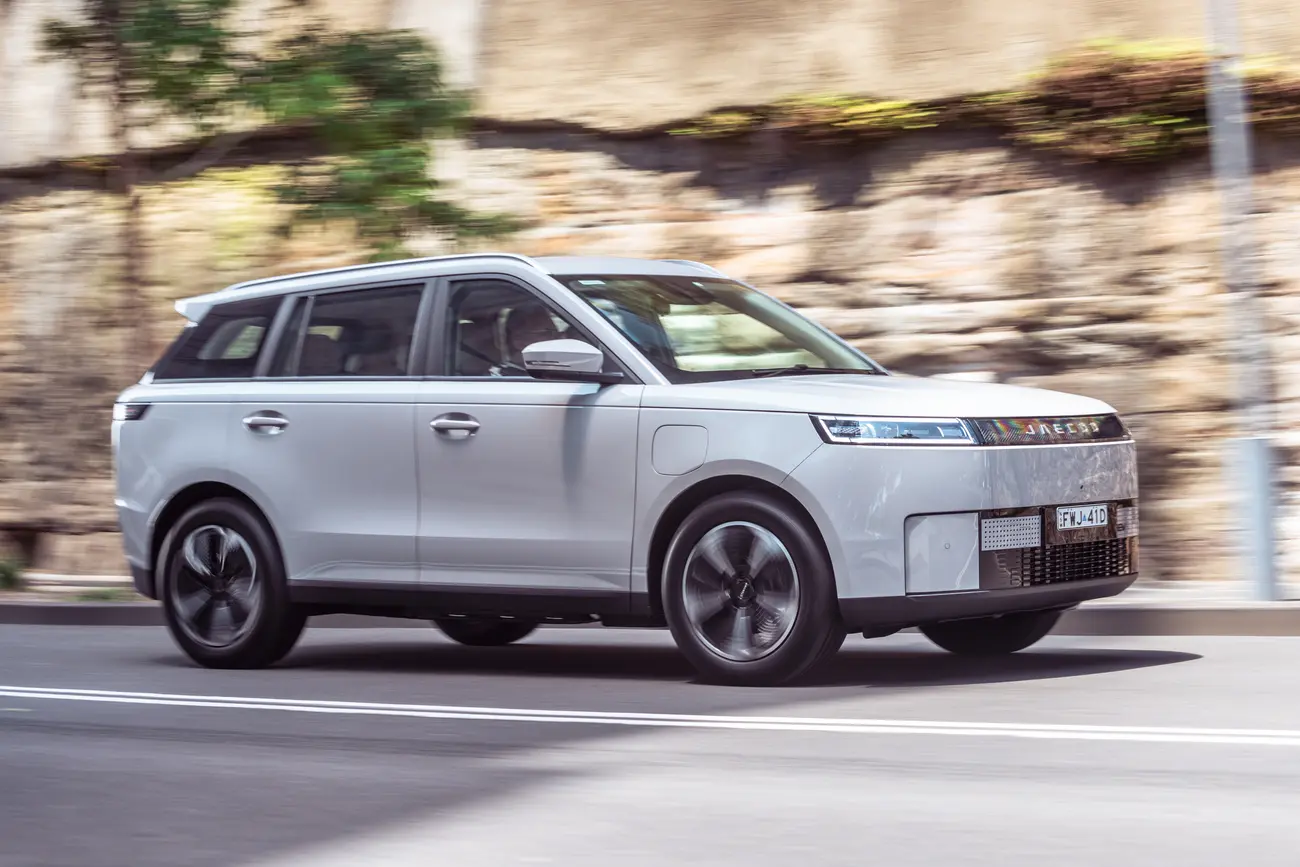
An electric SUV under €34,000 — what the Jaecoo 5 brings to Portugal
There's a new name in the race for affordable EVs, and it already has a Portuguese price tag. The Jaecoo 5 electric arrives in Portugal from €33,900 in Pure trim and €36,490 in Exclusive — cheap enough to put a fully electric compact SUV within reach of buyers who, until now, saw EVs as out of budget. Jaecoo, a brand under China's Chery group, is betting everything on price. And it's worth understanding where that forces it to compromise.
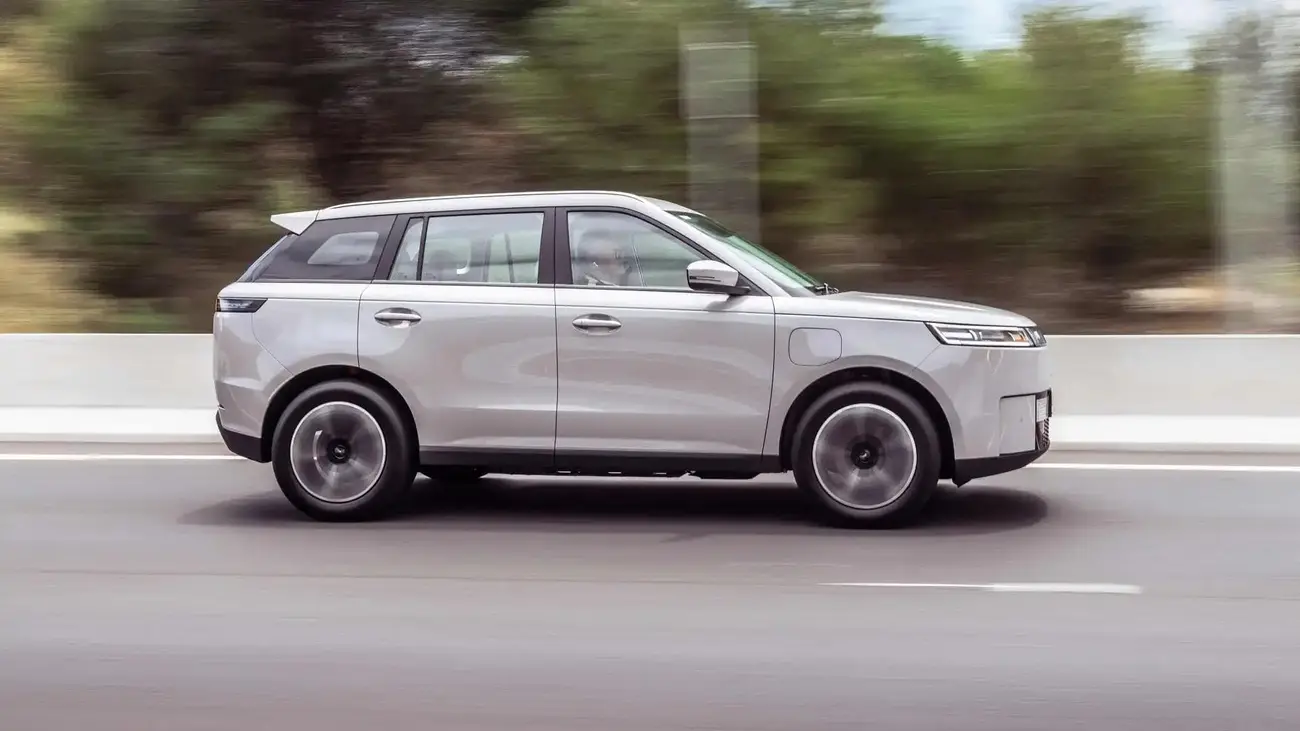
The Jaecoo 5 already existed in Portugal as an SHS plug-in hybrid. This is the all-electric version — same SUV, different drivetrain. Abroad it's sold as the Jaecoo 5 BEV (the UK gets the "E5" badge), but here the press simply calls it the Jaecoo 5 electric.
A 61 kWh LFP battery and around 400 km WLTP
Under the floor sits a lithium-iron phosphate (LFP) battery rated at 61.1 kWh by Jaecoo — EV Database measures 60.9 kWh nominal and 58.9 kWh usable. LFP chemistry is cheaper and more tolerant of frequent 100% charges than nickel-based packs, which suits a car built for daily use.
WLTP range is 402 km (399 km on the stricter cycle). In the real world, expect around 325 km in combined driving, according to EV Database's independent estimates. In cold weather and on the motorway that drops to roughly 230 km; in mild weather and city use it can top 400 km. That's more than enough for a working week around Lisbon or Porto, but a stress-free Lisbon-to-Algarve run will need a little planning.
There's only one battery. No long-range version exists — buyers who want more kilometres between charges will have to look at the competition.
Charging is its Achilles' heel
This is the catch everyone points to. On DC, the Jaecoo 5 charges at a peak of around 80 kW — some EV Database listings reach 130 kW, but Jaecoo quotes 80 kW. In practice, a 10 to 80% charge takes 27 to 33 minutes on a rapid charger.
It's not bad in absolute terms, but it clearly trails the direct rivals. A Kia EV3, a Skoda Elroq or an MG S5 EV charge at 100-150 kW, trimming those stops. If you cover a lot of motorway and hate waiting at service stations, this is the point to weigh carefully.
At home, AC charging runs at 11 kW, with a full 0 to 100% cycle in about 6h30. For overnight charging on a wallbox that's perfectly adequate — most days you won't even drain the battery.
What you get for the money
Despite the modest charging, the Jaecoo 5 offers a lot for what it costs. The front motor delivers 155 kW (around 204-211 hp) and 288 Nm, with 0-100 km/h in 7.7 seconds and a 175 km/h top speed. That's plenty for Portuguese traffic.
The boot holds 480 litres (1,180 litres with the seats folded), larger than a Kia EV3 or an MG S5 EV. Inside there's a 13.2-inch central screen, wireless Apple CarPlay and Android Auto, and standard V2L — meaning the car can power external devices, something few rivals offer at this price.
| Specification | Jaecoo 5 electric |
|---|---|
| Usable battery | 58.9 kWh (Jaecoo quotes 61.1 kWh) |
| Chemistry | LFP, 400 V |
| WLTP range | 402 km |
| Real-world range (est.) | around 325 km |
| Power | 155 kW (204-211 hp) |
| Torque | 288 Nm |
| 0-100 km/h | 7.7 s |
| AC charging | 11 kW (0-100% in about 6h30) |
| DC charging | around 80 kW (10-80% in 27-33 min) |
| Boot | 480 L (1,180 L folded) |
| Seats | 5 |
| Warranty | 7 years (vehicle) / 8 years (battery) |
| Price Portugal | €33,900 (Pure) / €36,490 (Exclusive) |
The warranty stands out: 7 years on the vehicle and 8 years on the battery, matching what MG, Kia or Hyundai offer. For a newly arrived brand, that's a reassurance that counts.
Pure or Exclusive: what changes between the two
The €2,590 gap between Pure and Exclusive buys comfort. The entry version already includes alloy wheels, front and rear parking sensors, the 13.2-inch screen and the full Level 2 driver-assistance suite. The essentials are there.
Exclusive adds a panoramic sunroof, heated, ventilated and electrically adjustable front seats, wireless phone charging, a better sound system and multi-colour ambient lighting. Anyone who spends long hours behind the wheel — and anyone who values heated seats in winter — will probably find the step up worth it.
Frequently Asked Questions
The Jaecoo 5 electric starts at €33,900 in Pure trim and €36,490 in Exclusive. As a fully electric car it is exempt from ISV (purchase tax) and benefits from reduced IUC (road tax), which helps it sit below rivals such as the Kia EV3 or Skoda Elroq that ask for more money for an equivalent level of equipment.
The official WLTP range is 402 km, but in combined driving expect around 325 km, according to EV Database's independent estimates. In cold weather and on the motorway that drops to roughly 230 km; in mild weather and city use it can top 400 km. There's only one 61.1 kWh LFP battery, with no long-range version available.
On DC the Jaecoo 5 charges at a peak of around 80 kW, taking 27 to 33 minutes for 10-80% — slower than rivals that reach 100-150 kW. At home, the 11 kW AC charging completes a full 0 to 100% cycle in about 6h30, which is perfectly adequate for overnight charging on a wallbox.
The €2,590 gap between Pure and Exclusive buys comfort. Pure already includes alloy wheels, parking sensors, the 13.2-inch screen and Level 2 driver assistance. Exclusive adds a panoramic sunroof, heated, ventilated and electrically adjustable front seats, wireless phone charging, a better sound system and ambient lighting — a step up worth it for anyone who spends long hours behind the wheel.
It's worth it for buyers who mostly drive in the city and charge at home: the sub-€34,000 price, the 480-litre boot, standard V2L and the 7-year vehicle / 8-year battery warranty offset the modest DC charging. For those who cover a lot of motorway and value short stops, the faster-charging Kia EV3 or MG S5 EV remain essential comparisons before signing.
Is it worth it? Where it fits the Portuguese market
The Jaecoo 5 electric isn't the most exciting SUV to drive, nor the fastest to charge, nor the one with the longest range. What it does, and does well, is deliver a spacious, well-equipped EV with a long warranty for under €34,000. In a segment where the Kia EV3 and Skoda Elroq ask for more money, that's a strong argument.
The tax picture helps too. As a fully electric car, it benefits from ISV exemption (the Portuguese vehicle purchase tax) and reduced IUC (the annual road tax), and for company use the autonomous-taxation advantages make the maths even more appealing. It's worth confirming the incentives in force at the time of purchase, but the starting point is favourable.
For someone who mostly drives in the city and charges at home, the slow DC charging barely registers — and the price speaks louder. For someone who lives on the road, the Kia EV3 or MG S5 EV remain essential comparisons before signing. As always with these Chinese EVs, the advice is simple: look beyond the price tag and check whether the charging and range fit your everyday life.