
Hyundai Ioniq 3 in Portugal: Price Estimate, Trims and Real Range
Published: 02/08/2026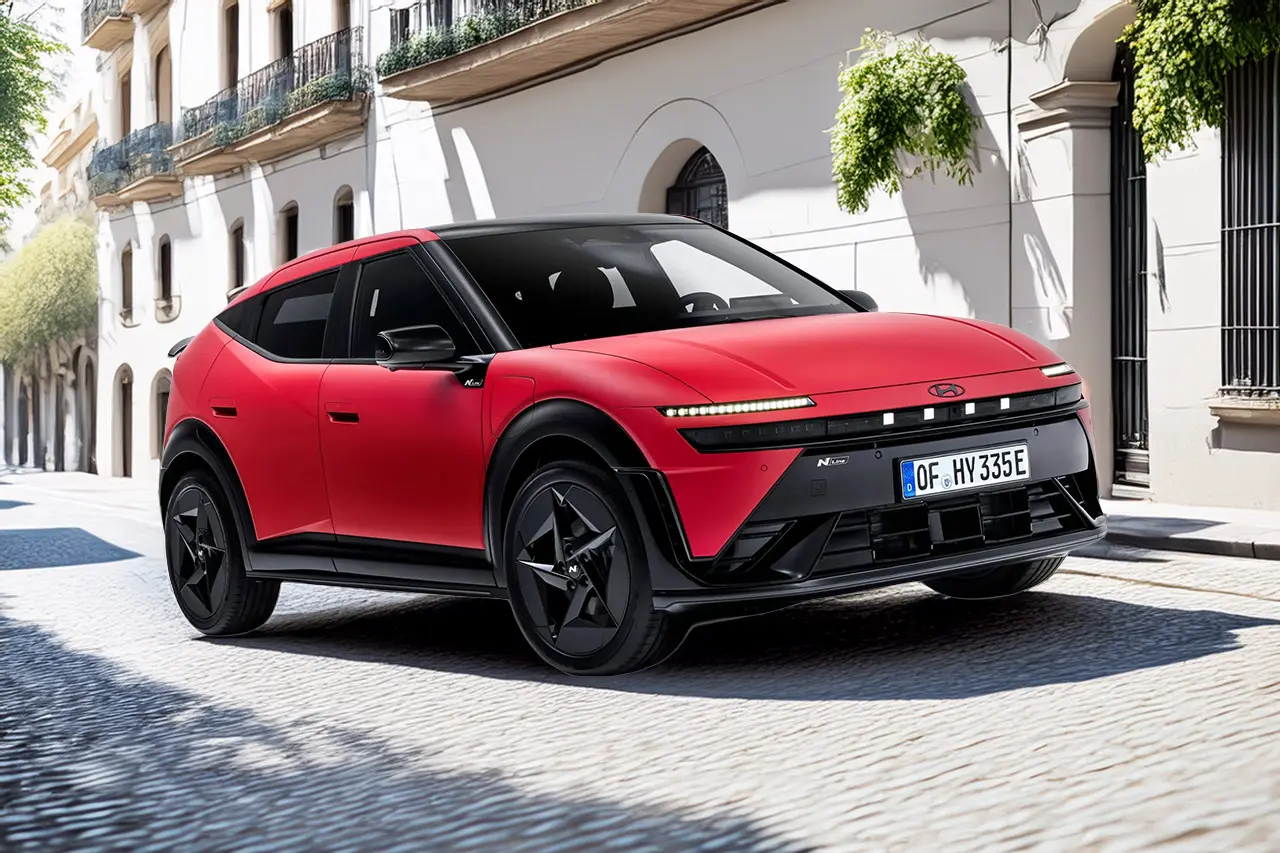
The first official European price list is out
€27,995. That is where the Hyundai Ioniq 3 starts in the Netherlands, the first European market to get an official price list, published by Hyundai on 28 July. Portugal has no announced figures yet, but the Dutch list is the best clue we have today about the Hyundai Ioniq 3 price Portugal buyers will eventually see — and it points to a compact electric hatchback under €30,000, with 344 km of WLTP range and genuinely useful equipment on the entry trim.
The background explains how the number gets that low. The Ioniq 3 was designed in Europe and is built at Hyundai's Turkish plant in İzmit, on a 400-volt architecture that is cheaper to produce than the 800-volt system in the Ioniq 5. This is not a shrunken Ioniq 5. It was engineered from the start to hit this price.
Hyundai Ioniq 3 European price list: every Dutch trim
Hyundai Netherlands published the range trim by trim. Eight configurations, split across the two batteries:
| Trim | Battery | Price (NL) | WLTP range |
|---|---|---|---|
| Select | 42.2 kWh | €27,995 | 344 km |
| Trend | 42.2 kWh | €30,995 | 341 km |
| Vision | 42.2 kWh | €32,995 | — |
| Trend | 61 kWh | €34,995 | 488 km |
| Vision | 61 kWh | €36,995 | — |
| N Line | 61 kWh | €40,995 | — |
| Prime | 61 kWh | €40,995 | — |
| N Line Evo | 61 kWh | €41,995 | — |
One caveat worth flagging: electrive quotes €31,995 as the entry point for the 61 kWh battery, a figure that does not appear on the official Dutch list, where the cheapest 61 kWh trim is the Trend at €34,995. It most likely reflects a different configurator baseline or a launch offer. We are sticking with the official list.
The entry-level Select is no stripped-out showroom bait, either. It comes with a 12.9-inch central screen, wireless Apple CarPlay and Android Auto, adaptive cruise control, front and rear parking sensors, a reversing camera, dual-zone automatic climate control and the full Hyundai SmartSense driver assistance package. Half of that is still an option box on several rivals.
Other markets line up neatly: Germany opens at roughly €27,000 and the UK at £22,245 for the 42 kWh Advance, rising to £31,945 for the 61 kWh N-Line Evo.
42 kWh or 61 kWh: the cheaper battery is the quicker car
This is the most counterintuitive thing about the Ioniq 3. The Standard Range version, with a 42.2 kWh LFP pack (41.0 kWh usable), makes 107.8 kW — 147 PS — and does 0-100 km/h in 9.0 seconds. The pricier 61 kWh NMC Long Range makes 99.5 kW (135 PS) and takes 9.6 seconds. Torque is identical at 250 Nm, as is top speed at 170 km/h.
So the big battery buys range, not pace. That is a reasonable engineering call — the lower-output motor helps stretch the claimed 496 km WLTP — but it is worth knowing before you sign anything.
Real-world range against the WLTP figure
The Standard Range car's 344 km is a homologation number. The independent EV Database puts real-world range at 265 km, on an average 155 Wh/km. And the picture shifts a lot with conditions:
- City, mild weather: around 395 km
- Combined, mild weather: around 305 km
- Motorway, mild weather: around 245 km
- Combined, cold weather: around 220 km
- Motorway, cold weather: around 185 km
If your week is Lisbon-Cascais or Porto-Braga, the small battery is more than enough — charge at home twice a week and forget about it. If you drive down to the Algarve several times a year, the 42 kWh car's 185 to 245 km of motorway range means one charging stop each way. That is where the €3,000 step up to the 61 kWh (Trend to Trend) starts to look like money well spent.
Fast charging: 400 volts, not the Ioniq 5's 800
Here is the trade-off that pays for the price tag. The Ioniq 3 sits on the E-GMP platform but with a 400-volt architecture, not the 800 volts that made the Ioniq 5 famous. In practice, DC charging peaks at about 115 kW and averages 60 kW across the curve. The result: 10-80% in roughly 29 minutes on the 42 kWh pack and 30 minutes on the 61 kWh. Hyundai quotes about 100 km added in 8 minutes.
It is no Ioniq 5, which does the same job in 18 minutes. But on a 150 kW charger on the A1 motorway, half an hour is a coffee and a bathroom break. There is a silver lining, too: plugging into a 350 kW unit gains you nothing, so you can always pick the cheapest post on the MOBI.E network, Portugal's national public charging system.
AC charging is generous: 11 kW as standard, 22 kW optional. At 22 kW the 42 kWh battery fills in 2h15, which matters in city car parks and hotels. There is also 3.6 kW V2L with both an exterior and an interior socket, Plug and Charge (ISO 15118-2), and an optional heat pump that earns its keep on cold winter mornings. Battery warranty is 8 years or 160,000 km.
Just over four metres, 441 litres of boot
The Ioniq 3 measures 4,155 mm long (4,170 mm for the N Line), 1,800 mm wide and 1,505 mm tall, on a 2,680 mm wheelbase. It weighs between 1,550 and 1,580 kg. Boot space totals 441 litres: 322 litres in the main compartment plus 119 litres in the Megabox underfloor bin, which swallows the charging cables without stealing luggage room.
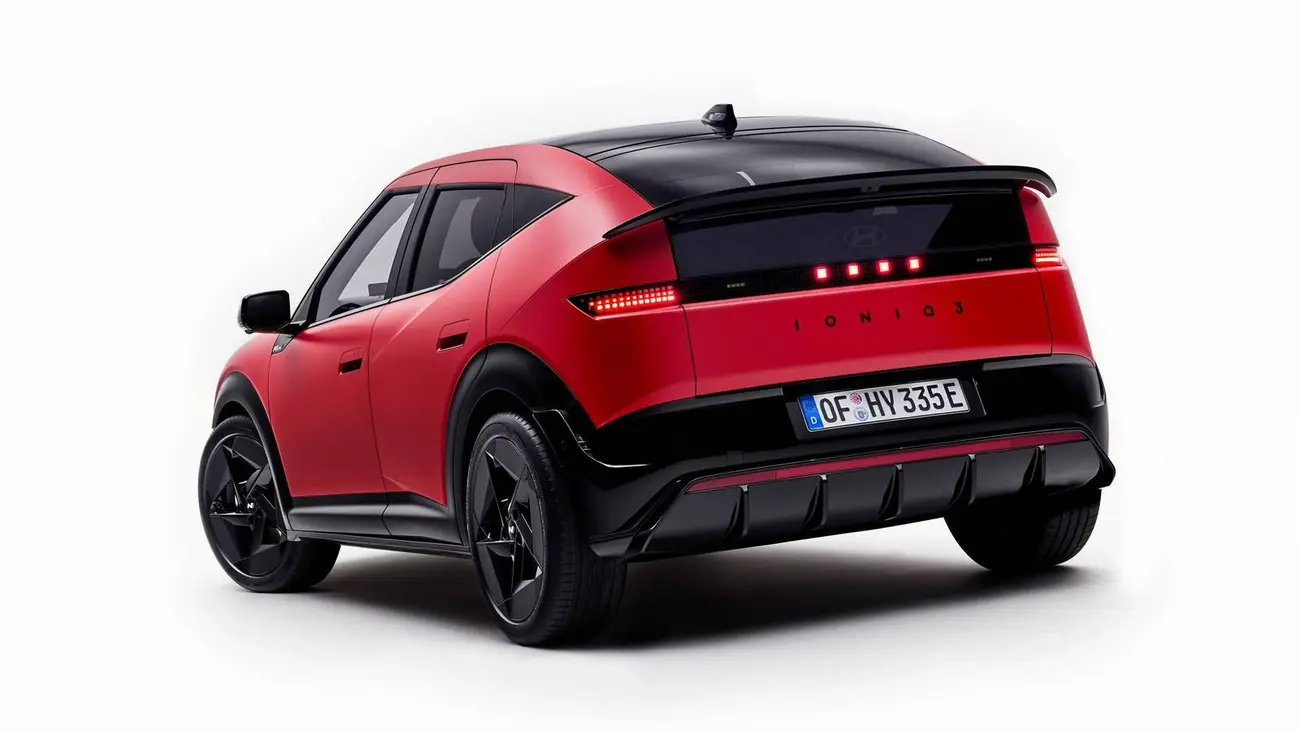
Hyundai calls it an "Aero Hatch", and the 0.263 drag coefficient backs the name up — it is among the best in the class. The roofline runs flat over both rows before dropping into the rear spoiler, which protects headroom out back. Reviewers who have driven prototypes confirm the space but warn that tall rear passengers will find the sloping roof tight. Electrifying.com scored it 8 out of 10 and called it light-footed and fun to drive.
Inside, it debuts Pleos Connect, the first Hyundai system in Europe built on Android Automotive OS, with a 12.9 or 14.6-inch central screen and — unlike several rivals — a dedicated driver display behind the wheel. Climate control keeps physical buttons.
Portugal release date and likely pricing
Deliveries in the Netherlands, Germany and the UK are due from late September 2026. Portugal usually follows those markets by a few weeks, which points to national pricing in the autumn and first registrations late this year or early in 2027.
The price itself can be estimated with reasonable confidence. The Dutch €27,995 includes 21% VAT; Portugal charges 23% VAT, and battery electric cars are exempt from ISV, the vehicle registration tax. Strip out the Dutch VAT, apply the Portuguese rate, and you land somewhere around €28,400 to €29,000 for the 42 kWh Select. The German starting point of roughly €27,000 with 19% VAT gives virtually the same answer. Run the same maths on the 61 kWh Trend and you get close to €35,500.
That estimate is as close as anyone can get to the Hyundai Ioniq 3 price Portugal will actually see until the brand publishes its national list. The rest of the tax picture helps too: IUC, the annual road tax, runs at about €20 a year for an EV against several hundred for a comparable diesel, and companies avoid autonomous taxation up to the legal threshold. Official numbers, though, only arrive when Hyundai Portugal speaks.
Frequently Asked Questions
It comes down almost entirely to the kind of driving you do, because the cheaper version is the more powerful one: the 42.2 kWh LFP Standard Range makes 147 hp and 0-100 km/h in 9.0 seconds, against 135 hp and 9.6 seconds for the 61 kWh Long Range. For city and suburban use, the 344 km WLTP figure (around 265 km real-world, 305 km combined in mild weather) is more than enough. Regular motorway drivers will see only 185 to 245 km from the small battery, and in that case the €3,000 gap between the 42 kWh Trend (€30,995) and the 61 kWh Trend (€34,995) on the Dutch list buys the big battery's 488 km WLTP.
No. The Ioniq 3 sits on the E-GMP platform but with a cheaper 400 V architecture, which is part of what makes the €27,995 entry price possible. In practice DC charging peaks at roughly 115 kW (averaging 60 kW across the curve), giving 10-80% in about 29 minutes on the 42 kWh battery and 30 minutes on the 61 kWh — against 18 minutes for an Ioniq 5. The upside is that a 350 kW post brings no benefit, so you can always pick the cheapest charger available, and AC charging is generous at 11 kW as standard with 22 kW optional.
Three concrete reasons. It is designed in Europe and built at Hyundai's İzmit plant in Türkiye, which cuts production and logistics costs compared with models shipped from Korea. It uses a 400 V architecture instead of the Ioniq 5's 800 V. And the entry version runs a 42.2 kWh LFP battery, a cheaper chemistry than the 61 kWh NMC pack in the higher trims. Even so, the entry Select already includes a 12.9-inch screen, wireless Apple CarPlay and Android Auto, adaptive cruise control, a rear camera and dual-zone climate control.
Battery electric vehicles are exempt from ISV, the vehicle registration tax that weighs heavily on the final price of an equivalent combustion car. Annual IUC road tax for an EV is around €20, against several hundred euros for a comparable diesel, and companies avoid autonomous taxation up to the legal threshold. VAT applies at the standard Portuguese rate of 23%, against 21% in the Netherlands — and it is that gap that pushes the Portuguese estimate for the 42 kWh Select into the €28,400 to €29,000 band.
If budget is the only criterion, the Citroën ë-C3 remains clearly cheaper, but with less range, slower charging and none of the Hyundai's cabin tech. The Renault 5 plays the retro design and European-build cards, while the Ioniq 3 answers with 441 litres of boot space (322 litres plus 119 in the Megabox), 496 km WLTP in 61 kWh form and 22 kW AC charging. With European deliveries starting in late September 2026 and the Portuguese price list expected in the autumn, waiting a few weeks before committing to another compact EV is a low-risk call.
Ioniq 3 versus the Renault 5, Citroën ë-C3 and the rest
This segment got crowded fast: Renault 5 and Renault 4, Cupra Raval, VW ID.Polo, Kia EV2, Skoda Epiq and Ford Puma Gen-E all chase the same buyer. The Renault 5 plays the retro design and European-build cards; the Ioniq 3 answers with a bigger boot, more range in Long Range form and 22 kW AC charging.
Below it sits the Citroën ë-C3, clearly cheaper but also clearly more basic — less range, slower charging and none of the Hyundai's cabin tech. If you want the cheapest EV you can get, buy the Citroën. If you want a compact electric car you can still take on a long trip, spend the extra few thousand on the Ioniq 3.
What is missing now is the Portuguese price sheet. If Hyundai Portugal follows Dutch and German logic, we get an EV with 344 km of range, a 12.9-inch screen and adaptive cruise control for under €29,000 — enough to unsettle every other price tag in the segment. Worth waiting for that announcement before committing to another compact EV.