
Genesis Portugal 2027: Hyundai's Premium Brand Confirms Its Arrival
Published: 19/06/2026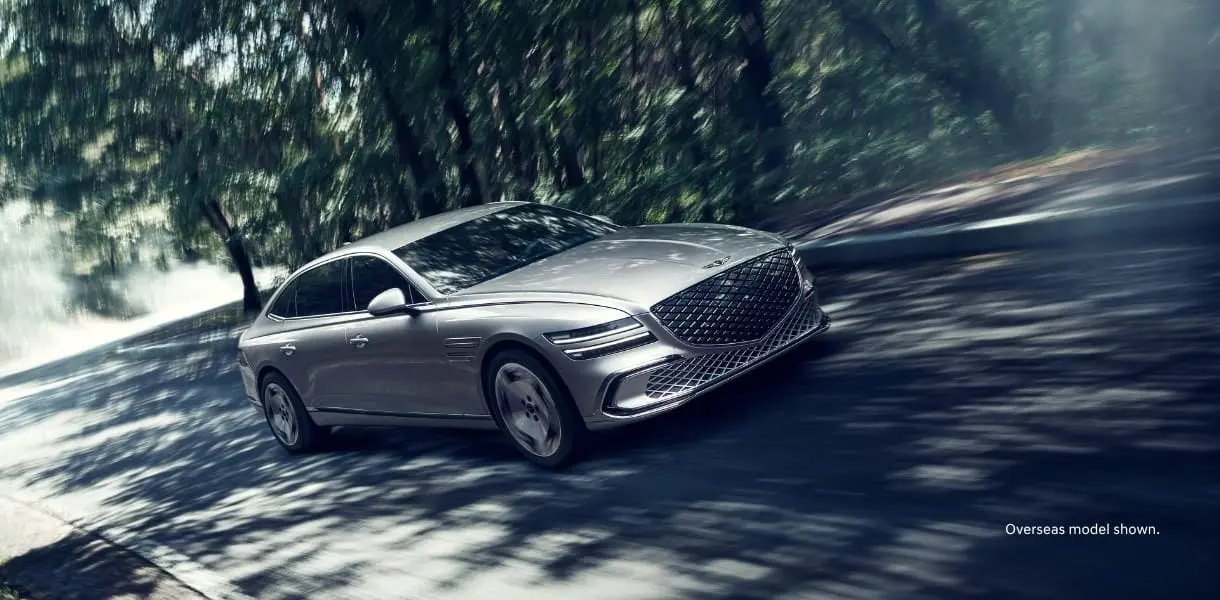
Genesis confirms it is coming to Portugal in 2027
A new premium brand is on its way to our market. Genesis, Hyundai's luxury arm, has confirmed it will enter Portugal in 2027 — and it isn't arriving alone. The announcement, made during this year's 24 Hours of Le Mans, also covers Austria, Denmark and Poland, bringing the brand to 11 European countries.
If you've been shopping for a premium electric SUV and feel boxed into the usual Mercedes, BMW and Audi choice, this shifts the picture. Genesis Portugal 2027 brings a Korean alternative with a real track record abroad — in April 2026 it was voted number one in Auto Bild magazine's "Best Brand in Every Class" reader survey, ahead of all three German rivals.
Who is Genesis, Hyundai's premium brand
If the name doesn't ring a bell, that's normal. Genesis launched in 2015 as the luxury division of the Hyundai Motor Group, much like Lexus sits above Toyota or Infiniti once did above Nissan. The idea is straightforward: take Hyundai's engineering — already strong in EVs with cars like the Ioniq 5 — and push it to a level of finish, materials and technology that takes on the German old guard.
The brand has grown fast. Global sales nearly tripled, from 77,135 units in 2019 to 229,532 in 2024. In Europe, where it has only been present since 2021, the numbers are still modest (2,260 cars in 2024), but the current expansion aims to change that.
One of Genesis's signatures is the "Son-Nim" (guest, in Korean) service philosophy and no-haggle pricing — you know upfront what you'll pay, with none of the showroom negotiation ritual.
Which Genesis models are coming to Portugal
The launch range for the new markets rests on three EVs: the GV60, the Electrified GV70 and the Electrified G80. The brand wants to be fully electric by 2030, so leading with a plug-in lineup makes sense.
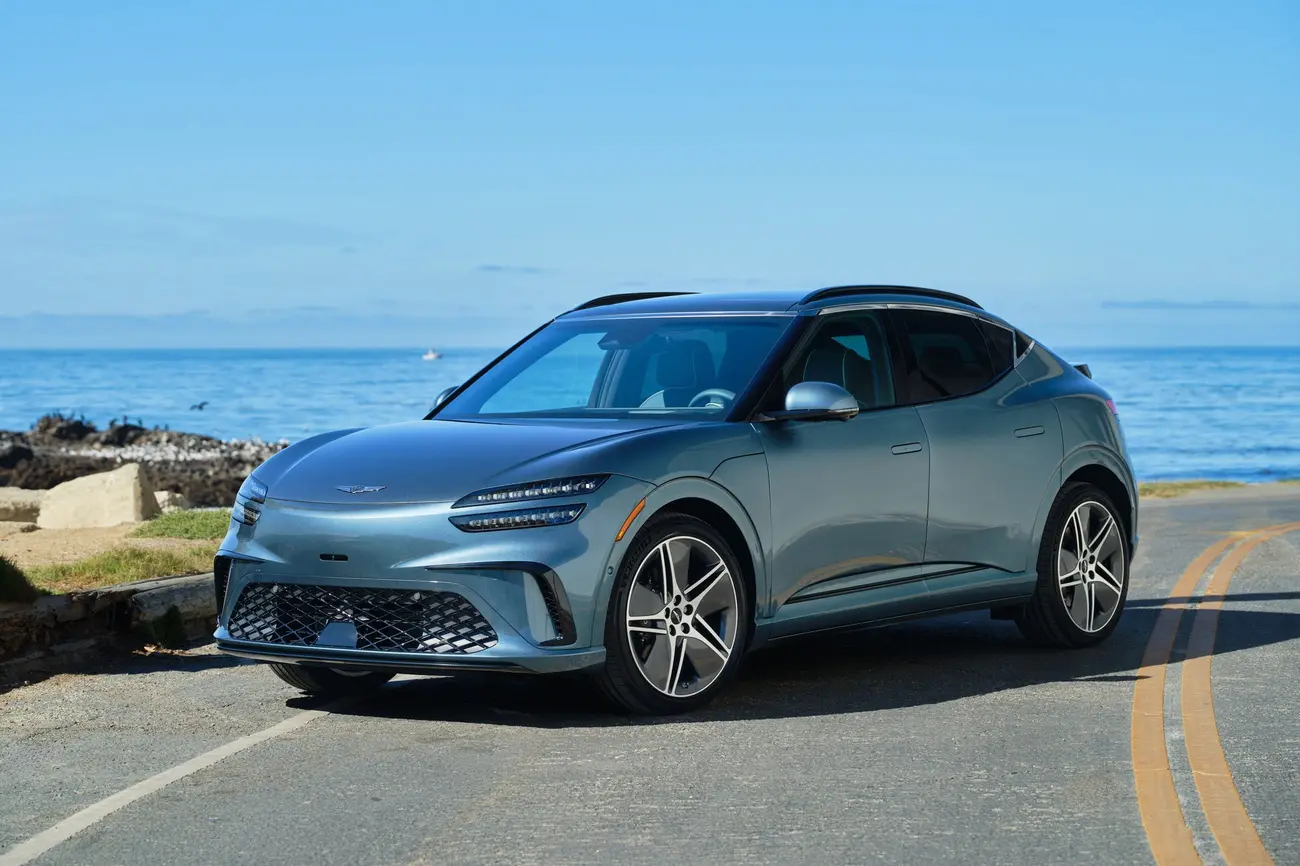
- GV60 — compact luxury SUV. It's the entry model and the most driver-focused, with performance versions reaching 483 hp.
- Electrified GV70 — mid-size SUV, the range's flagship in family form, with towing capacity up to 1,800 kg.
- Electrified G80 — the luxury saloon, the pick for buyers who prefer a large, quiet sedan over an SUV.
All three share the 800V architecture, the same technical base that gives the Ioniq 5 its ultra-fast charging. In practice, that means an 18-minute stop at a 350 kW station to go from 10% to 80% battery on both SUVs.
Specs of the three Genesis EVs
The figures below come from UK and continental specification — exact Portuguese-market data sheets haven't been confirmed yet, but they give a clear sense of what to expect.
| Spec | GV60 | Electrified GV70 | Electrified G80 |
|---|---|---|---|
| Body | Compact SUV | Mid-size SUV | Luxury saloon |
| Battery | 84 kWh | 84 kWh | 87.2 kWh |
| WLTP range | up to around 560 km | around 455 km | up to around 520 km |
| Power (top) | up to 360 kW (483 hp) | 360 kW (483 hp) | 272 kW (365 hp) |
| 0-100 km/h | around 4.0 s | around 4.2 s | around 4.9 s |
| Charging 10-80% | 18 min at 350 kW | 18 min at 350 kW | around 22 min |
| Architecture | 800V, V2L | 800V, V2L, 1,800 kg towing | 800V |
That 84 kWh battery in the GV60 translates to around 560 km of WLTP range — more than enough headroom for a Lisbon-Porto run without stopping to charge. And the V2L (Vehicle-to-Load) function lets you use the car as a giant power socket, handy for running equipment on a worksite or at a campsite.
How much will a Genesis cost in Portugal
Here we have to be honest: there are no official Portuguese prices yet. What we have are reference points from markets where the brand already sells, which serve as a guide.
| Model | Starting price (UK) | Starting price (France) |
|---|---|---|
| GV60 | from £54,115 | from €54,200 |
| Electrified GV70 | from £69,915 | from €68,400 |
| Electrified G80 | from £75,615 | from €82,000 |
Taking France as the closest match to our tax reality, that points to something starting around €54,000 for the GV60 and climbing from there. Worth remembering: being fully electric, these models qualify for ISV exemption (ISV is Portugal's vehicle registration tax) and reduced IUC (the annual circulation tax) — which brings the final cost closer to what's paid in markets without our vehicle tax. Still, until Genesis confirms the Portuguese list, any figure is an estimate.
Where to buy: the end of direct sales
An important change comes with this expansion. Genesis is dropping the direct-to-consumer model — which it used when entering Europe in 2021 to reinforce its premium image — and moving to a traditional dealer network. The goal is to have more than 50 sales outlets across Europe by 2027.
The first standalone showroom opened in April 2026 near Amsterdam, followed by Padua in Italy. Lille (France) and Rome were scheduled for the second half of 2026. There's no confirmed Portuguese address yet, but the arrival of a physical network means you'll be able to see, touch and test the cars in a dedicated space — not just order online.
Frequently Asked Questions
Genesis confirmed its entry into the Portuguese market in 2027, announced during the 2026 24 Hours of Le Mans. Portugal is part of an expansion that also includes Austria, Denmark and Poland, bringing the brand to 11 European countries. The exact launch date and national pricing have not yet been released.
There are no official Portuguese prices yet. Using France as the closest match to our tax reality, the GV60 starts at around €54,200, the Electrified GV70 at €68,400 and the Electrified G80 at €82,000. Being fully electric, these models qualify for ISV exemption and reduced IUC, so the final Portuguese price could land close to these reference figures.
The launch range rests on three EVs: the GV60 (compact luxury SUV and entry model), the Electrified GV70 (mid-size SUV with up to 1,800 kg towing) and the Electrified G80 (luxury saloon). All share the 800V architecture, with a 10% to 80% charge taking around 18 minutes at a 350 kW station on both SUVs.
According to UK and continental specifications, the GV60 offers up to around 560 km WLTP with its 84 kWh battery, the Electrified GV70 around 455 km, and the Electrified G80 up to around 520 km. These are reference figures — the exact data sheets for the Portuguese market have not yet been confirmed.
Genesis has two strong arguments: a five-year warranty including the battery (versus the usual three years from the German makers) and generous standard equipment, with adaptive suspension, OLED screens and materials like Nappa leather. In April 2026 it was voted number one in Auto Bild's reader survey, ahead of all three German rivals. The unknowns are the service network, still to be built in Portugal, and the resale value of a brand with no track record here.
Is Genesis worth waiting for over Mercedes, BMW and Audi?
Genesis's pitch has two strong arguments. The first is the five-year warranty, including the battery — against the usual three years from the German competition. On an EV, where the battery is the most expensive component, that extra cover matters.
The second is the equipment. Even on base versions, the brand throws in extras that other premium makers keep on the options list: camera-based adaptive suspension that reads the road ahead, active noise cancellation, large OLED screens, and materials like Nappa leather and real wood.
The flip side is the service network, still to be built in Portugal, and the resale value of a brand with no track record in our market — two unknowns only time will settle.
For now, 2027 is still a way off and Portuguese prices remain unconfirmed. If you're weighing a premium electric SUV right now, it's worth also looking at the Genesis models and prices already circulating here through private imports. But if you can wait, Genesis's official arrival promises to give the segment the shake-up it needed.