
Ford Explorer Electric in Portugal: How It Compares to the Renault Scenic
Published: 21/07/2026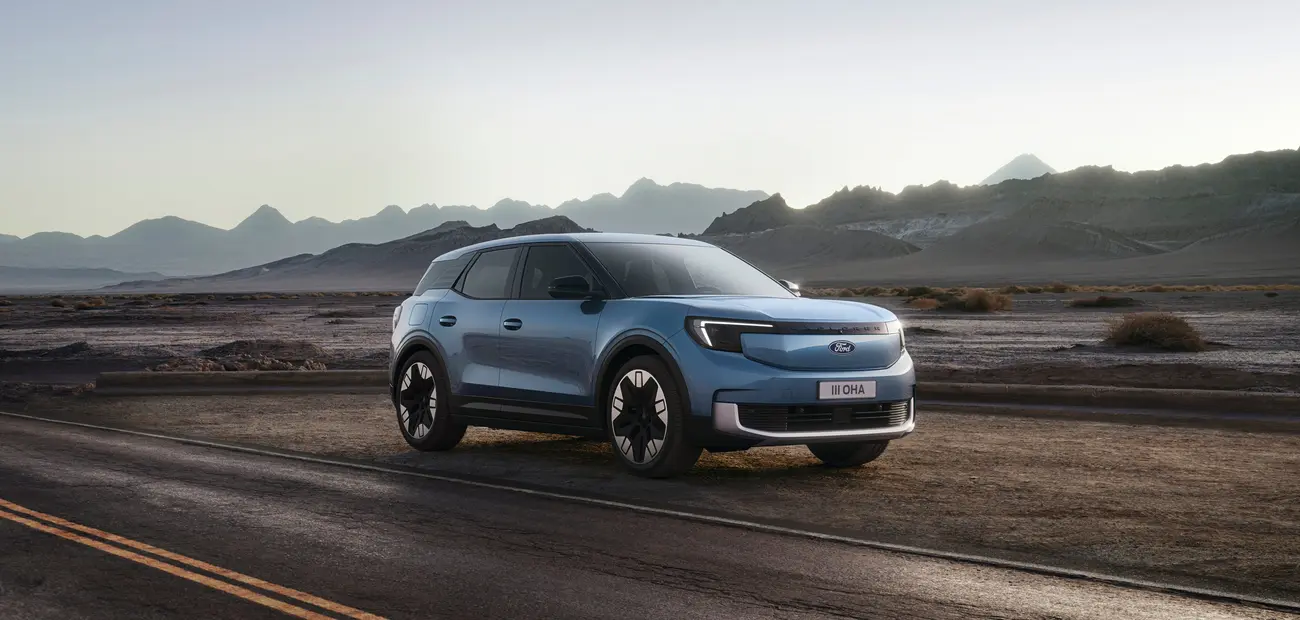
Ford Explorer electric in Portugal: how it stacks up against the Renault Scenic
Ford brought back the Explorer name, but not the car you remember. This is a compact electric SUV, built in Cologne, Germany, sold only in Europe, and riding on Volkswagen's MEB platform — the same one under the ID.4. For a family in Portugal shopping for a roomy EV with real range, the useful question isn't "is it good?" but "is it better than what's already on sale here?". And its most direct rival has a full name: the Renault Scenic E-Tech.
In the two British group tests this analysis draws on, the Scenic beat the Explorer. Narrowly, but it won. It's worth understanding why before you sign anything.
Ford Explorer electric: the specs and what you actually get
The Explorer is 4.47 metres long, seats five, and has an interior clearly borrowed from the Volkswagen world — the 5.3-inch digital cluster comes straight from the ID.4. But Ford gave it its own character: a 14.6-inch adjustable central screen (with hidden storage behind it), the 17-litre "MegaConsole," and an optional 10-speaker B&O sound system.
The version most buyers will care about is the Extended Range RWD, with rear-wheel drive. Here are the numbers that matter:
| Specification | Ford Explorer Extended Range RWD |
|---|---|
| Platform | VW MEB (EV-dedicated) |
| Usable battery | 79 kWh (84 nominal, NMC) |
| Power / Torque | 210 kW (286 hp) / 545 Nm |
| 0-100 km/h | 6.4 s |
| Top speed | 180 km/h |
| WLTP range | up to 602 km |
| Real-world range (EV Database) | around 450 km |
| DC charging | max 183 kW, 10-80% in about 30 min |
| AC charging | 11 kW, about 8h30 |
| Boot | 450-532 L (max 1,460 L), no frunk |
| Weight | 2,090 kg |
| Euro NCAP 2024 | 89% adult / 86% child |
The line-up has three rungs. The entry point is the Standard Range RWD (52 kWh, 168-187 hp, 378 km WLTP), fine for mostly-city driving. At the top sits the Extended Range AWD, with all-wheel drive, a 335 hp system output, and 5.3 seconds to 100 km/h — quick, but that's where the price climbs fastest.
Real-world range vs the 602 km WLTP figure
The 602 km WLTP number reads well on a brochure, but nobody drives in lab conditions. EV Database's estimate lands at around 450 km in mixed real-world use. In winter, at -10°C with the heating on, that drops to roughly 380 km; on a mild spring day it can stretch to 515 km. In local terms: Lisbon to Porto (about 310 km) is a one-shot trip in any season, with room to spare.
One detail that hits both your electricity bill and your winter range: the heat pump is optional on the Explorer. On the Scenic it's standard. If you live inland or clock up a lot of cold-weather kilometres, put it on your options list.

Charging from 10 to 80% in about 30 minutes
On MY26 cars, the Explorer takes up to 183 kW on DC and does the 10-80% top-up in about 30 minutes (Ford claims 29). The first examples were capped at 135 kW, so check the model year if you're looking at a used one. On AC it charges at 11 kW, which means a full charge in a little over 8h30 on a home wallbox.
There's also V2L (2.3 kW) to power external gear — handy for a camping trip or a tool on site. There's no V2H or V2G. Battery preconditioning is automatic once you set a fast charger in the navigation, and that makes a genuine difference to winter charging stops.
Explorer vs Renault Scenic vs Tesla Model Y
This is the heart of the decision. Three electric family SUVs, three different philosophies:
| Model | Battery | Power | Tested range | Boot |
|---|---|---|---|---|
| Ford Explorer | 77 kWh | 282 hp | 325 miles (~523 km) | 450-465 L |
| Tesla Model Y | 93 kWh | 342 hp | 381 miles (~613 km) | 854 L |
| Renault Scenic | 87 kWh | 217 hp | 287 miles (~462 km) | 545 L |
The Tesla Model Y wins on range and carries a huge 854-litre boot, plus the Supercharger network. But testers flagged artificial steering at low speed and a ride that never quite settles.
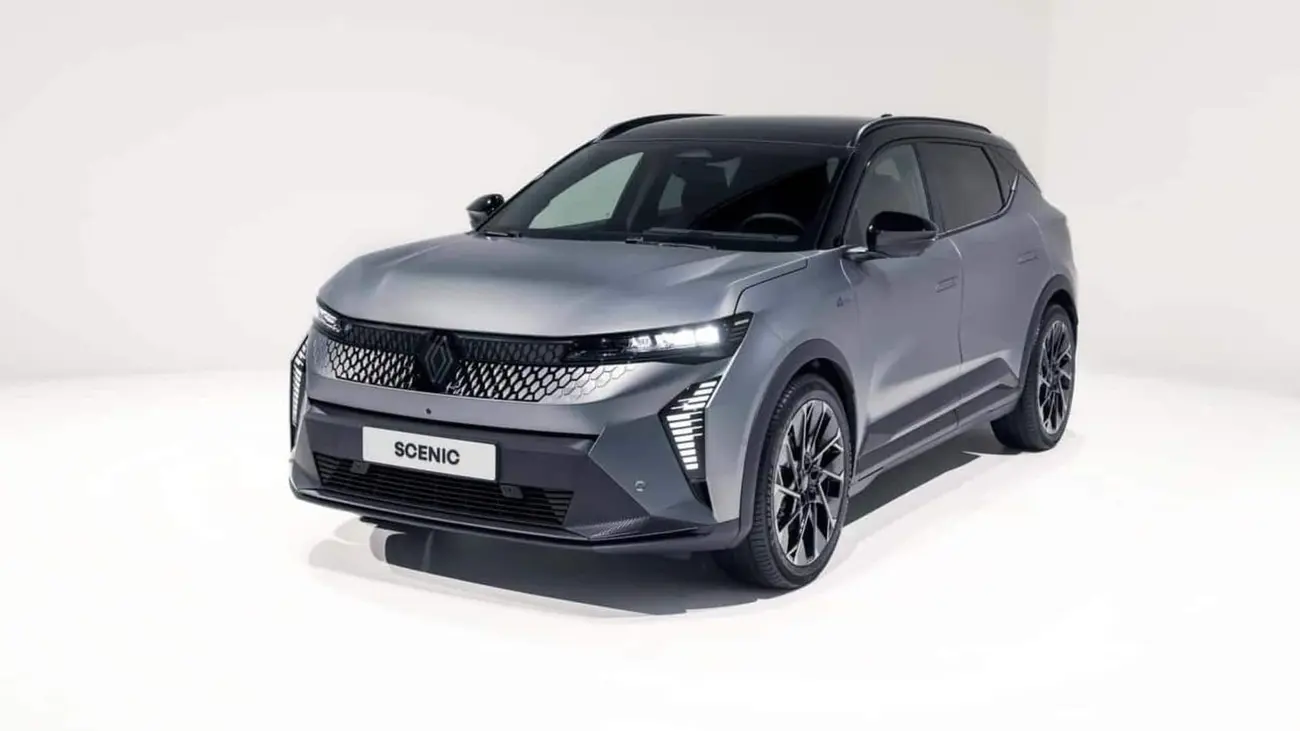
The Renault Scenic won both group tests. Not by being spectacular at anything, but by nailing the basics of a family car: more rear space, a bigger boot (545 L), physical buttons for the climate control, and a price that undercuts its rivals by several thousand. The standard heat pump was the tie-breaker.
And the Explorer? Second place. Its strong suit is the drive — precise steering, good composure, and 282 hp through the rear wheels that give it more bite than the front-drive Scenic, which suffers from torque steer. It loses on space and boot volume, and the pay-extra heat pump didn't help its case.
Beyond this trio, two names a price-conscious family shouldn't ignore: the Kia EV5, roomier and cheaper to start with, and the Leapmotor C10, bigger and cheaper still, though the Explorer beats it on driving dynamics.
Which Ford Explorer electric version to buy
Short answer: not the cheapest, not the priciest. The Extended Range RWD is the sweet spot. It keeps the big battery and the long range, but sits about €10,000 below the top Premium AWD — which, by the testers' own admission, is hard to justify on value.
The 52 kWh Standard Range makes sense if you spend nearly all your time in town and rarely take long trips. But for a family that wants one car for everything, 378 km WLTP is tight. The Extended Range RWD fixes that without forcing you to pay for all-wheel drive most people won't use.
What it costs in Portugal, and whether it's worth it
Ford hasn't set round prices for every version in Portugal yet, but the European figures mark out the range. In Germany, the Extended Range RWD starts at €48,900, and in the Netherlands at €43,850; the line-up opens near €42,500 with the Standard Range. In Portugal, because EVs are exempt from ISV (the vehicle registration tax), the final price tends to line up with those figures rather than jumping the way it does on petrol cars.
On top of that tax break come the reduced IUC (annual road tax) for EVs and the company-car benefits, which remain a strong argument for anyone running the car through a business. Add it up, and a well-equipped Explorer Extended Range RWD should land somewhere around €45,000-49,000 — right where it goes head to head with the Scenic, and a few thousand under the Model Y.
Is it worth it? If you want the most rational family car, the Scenic is still the better-balanced pick, and that's where it sells. But if you care about how a car drives and prefer the Explorer's chunkier look, the Ford earns its place — as long as you stick to the right version and tick the heat pump.
Frequently Asked Questions
Prices in Portugal start at around €45,838 for the range, with the Extended Range RWD landing near €45,000-49,000 depending on equipment. Because EVs are exempt from ISV (registration tax), the final price lines up with European figures (in Germany the Extended Range RWD starts at €48,900) rather than jumping the way it does on petrol cars.
The Extended Range RWD is rated at up to 602 km WLTP, but EV Database's real-world estimate lands at around 450 km in mixed use. In winter, at -10°C with the heating on, that drops to roughly 380 km; on a mild day it can stretch to 515 km. In practice, the Lisbon-to-Porto trip (about 310 km) is a one-shot drive in any season.
On MY26 cars, the Explorer accepts up to 183 kW on DC and does the 10-80% top-up in about 30 minutes (Ford claims 29). The first examples were capped at 135 kW, so check the model year when buying used. On AC it charges at 11 kW, which means a full charge in a little over 8h30 on a home wallbox.
In two British group tests, the Renault Scenic beat the Explorer, mainly on more rear space, a bigger boot (545 L versus the Ford's 450-465 L), physical climate buttons, a lower price and a standard heat pump. The Explorer hits back with better driving dynamics, precise steering and 286 hp through the rear wheels. For a rational family choice the Scenic is more balanced; for anyone who values how a car drives, the Explorer earns its place.
The Extended Range RWD is the sweet spot: it keeps the 79 kWh battery and long range but sits about €10,000 below the top Premium AWD, which is hard to justify on value. The 52 kWh Standard Range (378 km WLTP) only makes sense for mostly-city driving. On any version it's worth ticking the optional heat pump, which isn't standard on the Explorer.
Best family electric SUV in Portugal for 2026?
There's no single winner. There's the most practical (Scenic), the one with the most range and boot (Model Y), the cheapest and roomiest (Kia EV5), and the one that drives best (Explorer). The Ford arrives late to a crowded segment and pays for it: competent at almost everything, unbeatable at almost nothing.
Even so, for anyone who was going to buy an ID.4 and wants more character at the wheel, the Explorer is the same mechanical base with a different seasoning. Keep an eye on Ford Portugal's official pricing and, above all, compare it closely with the Scenic before deciding — the gap between these two comes down to the details.