
Fiat 500e LFP Battery in 2027: Lower Price, Range Trade-offs, Portugal Outlook
Published: 12/11/2026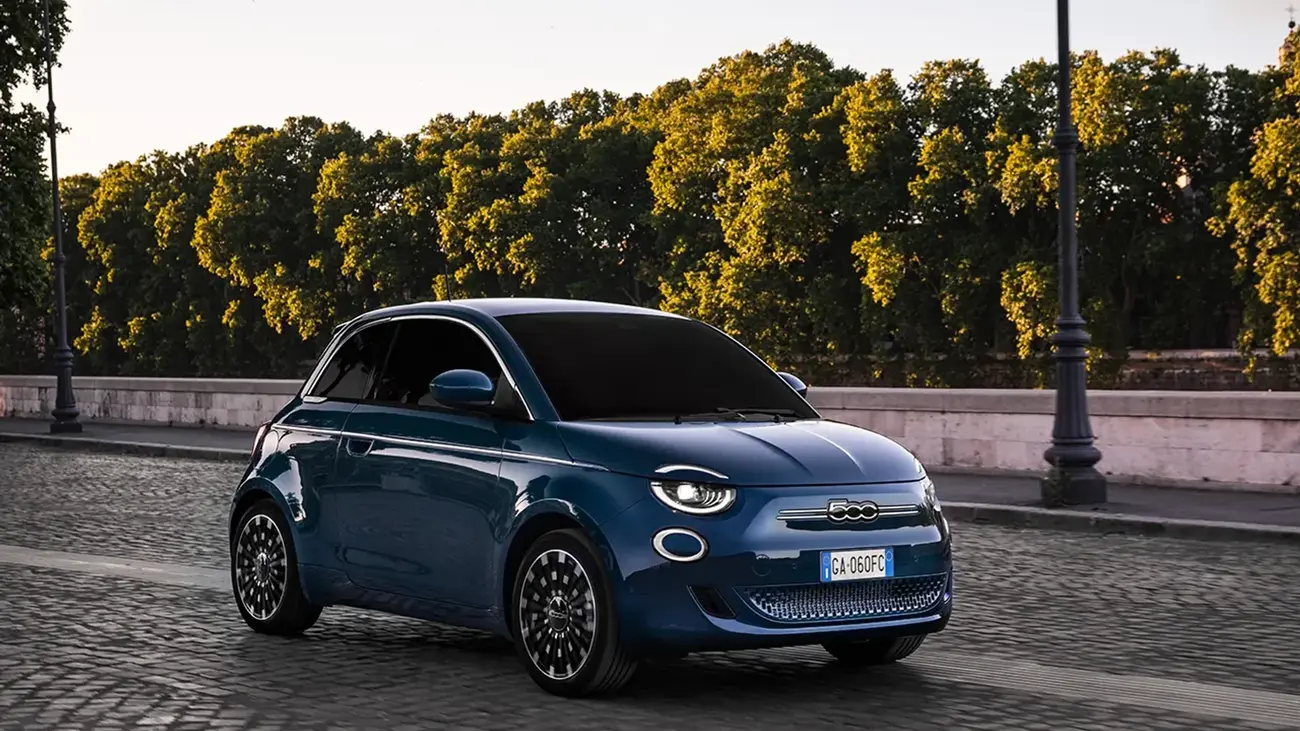
Fiat 500e LFP battery 2027: what Stellantis has confirmed
Cheaper, but with different chemistry under the floor. From 2027 the Fiat 500e swaps its current NMC (nickel-manganese-cobalt) battery for LFP (lithium iron phosphate) cells, and Stellantis has already said the entry price will come down. If you're eyeing an electric city car in Portugal, two questions follow straight away: how much will it cost, and is it worth waiting?
Confirmation came on 28 October 2026, during the third-quarter results call. Stellantis CEO Antonio Filosa kept it short: "We will also switch for many nameplates from NMC battery chemistry to LFP battery chemistry. This is a substantial saving in the battery cost."
So far, the only model named outright is the Fiat 500e with an LFP battery. Everything else is still open: Stellantis hasn't disclosed battery capacity, range, charging speed, an exact launch date or how big the saving actually is.
Why Stellantis needs this
The numbers explain the urgency. Stellantis's European division closed Q3 2026 with an adjusted operating loss of €311 million, against a €157 million profit a year earlier — even though the group's EV sales in Europe rose 65%. Selling more electric cars doesn't help much if each one earns a thin margin.
The 500e in particular needs a boost. According to figures cited in the French press, registrations reportedly fell from around 65,000 units in 2023 to roughly 24,000 in 2025, largely because buyers saw the car as overpriced. Emanuele Cappellano, head of Stellantis Europe, summed up the goal: make the city car "even more competitive and attractive".
How much will the 2027 Fiat 500e cost?
Official price? There isn't one yet. What we know is that the 500e currently starts at €23,900 in Italy, and that the LFP version will start below that.
A figure of around €20,000 is doing the rounds online, but take it with a pinch of salt. It comes from a low-authority French site, published in April 2026 — months before the official confirmation — and it's an estimate, not an announcement. The same goes for the 40–45 kWh battery capacity that source suggests: plausible, but unconfirmed.
For Portugal, none of the sources we consulted list a current local price, let alone one for the 2027 car. The upside is that, as a fully electric car, the 500e remains exempt from ISV (Portugal's vehicle purchase tax) and IUC (the annual road tax). That means the Portuguese price tends to track the European one closely, without the tax burden that weighs on combustion cars here.
Why a 20% saving isn't a 20% discount
One misunderstanding worth clearing up. Stellantis talks about a 20% cut in production costs, but that refers to the new STLA One platform — and the 500e won't even use it. Even on models that do, it's a manufacturing cost reduction, not 20% off the list price.
There's another useful benchmark: Citroën estimated that an NMC pack equivalent to the ë-C3's 44 kWh LFP battery would have cost about 20% more. That gives a sense of the size of the battery saving. How much of it reaches buyers and how much ends up as Stellantis margin is the big unknown — although the 500e is so far the only model with an explicit commitment to a lower price.
LFP vs NMC: what changes for the driver
LFP cells are cheaper because they skip nickel and cobalt, two of the priciest materials in a battery. The catch is lower energy density: at the same size and weight, they store less energy.
For the person behind the wheel, the switch cuts both ways:
- More charge cycles — LFP cells tolerate more charging over their lifetime.
- Charge to 100% without worry — you can routinely fill them up, instead of stopping at 80% as is usually advised with NMC.
- Greater thermal stability — the chemistry is more stable.
- Weaker cold-weather performance — they lose more range and charging speed in low temperatures.
- Less range for the same pack size — unless Fiat makes the battery bigger.
Stellantis isn't alone here. LFP's share of new EVs sold in Europe rose from 5% in 2024 to 13% in 2025, and Renault is moving the entry versions of its EVs to LFP too — including the Renault 5 and Renault 4.
Fiat 500e range today and what to expect
To see what might change, it helps to look at the current 500e with the 42 kWh battery:
| Spec | Current 500e (NMC) | 500e LFP 2027 |
|---|---|---|
| Chemistry | NMC (Samsung SDI cells) | LFP (CATL) |
| Battery gross / usable | 42.0 / 37.3 kWh | Not announced |
| WLTP range | about 320 km (334 km EV Database) | Not announced |
| Real-world range (EV Database) | 235 km | Not announced |
| DC charging | 85 kW, 10-80% in about 25 min | Not announced |
| AC charging | 11 kW | Not announced |
| Power / torque | 87 kW (118 hp) / 220 Nm | Not announced |
| 0-100 km/h / top speed | 9.0 s / 150 km/h | Not announced |
| Starting price (Italy) | €23,900 | Below €23,900 |
| Production | Mirafiori, Turin | Mirafiori, Turin |
There's also a small-battery version (23.8 kWh), rated at around 185–190 km WLTP.
The 42 kWh car's 235 km of real-world range covers a full week of commuting in Lisbon or Porto without thinking about a charger. A Lisbon–Porto run, on the other hand, means a stop on the MOBI.E network, Portugal's national public charging network. If the LFP version keeps a similarly sized pack, range will probably land slightly below these figures — unless Fiat uses the switch to add capacity. The 44 kWh LFP pack the group already fits to the ë-C3 and Grande Panda shows there's room for that, but nothing is confirmed.
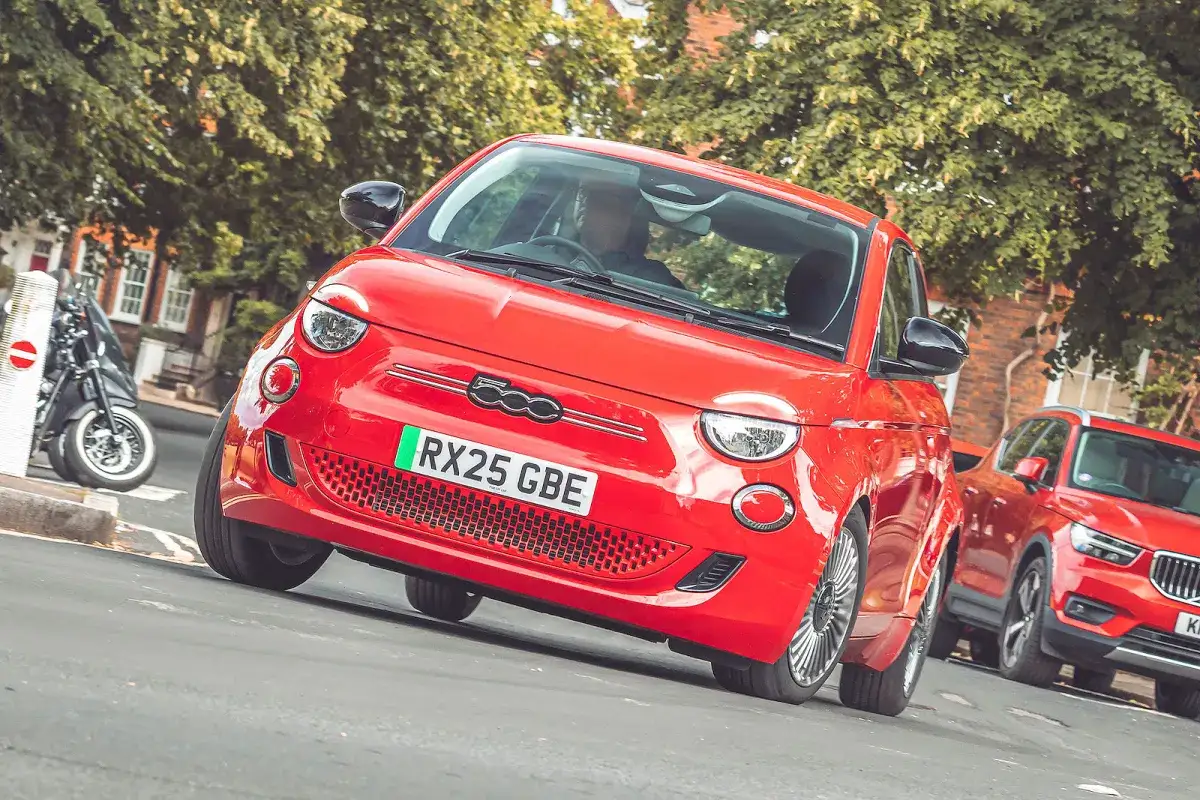
Charging to 100% and the winter question
Here's some good news if you live in Portugal. The main weakness of LFP — cold-weather behaviour — matters less in a mild climate like ours. According to EV Database, the current 500e drops from 270 km of combined range in mild weather to 195 km in severe cold (-10 °C); temperatures like that are rare across most of the country.
One detail to watch, though: the current 500e has no battery preconditioning. With LFP cells, that feature and a heat pump make a bigger difference on winter trips, especially in the colder inland north. It's worth checking whether the 2027 version adds them.
Where the cells come from: CATL, Zaragoza and Mirafiori
Stellantis has a joint venture with CATL — Contemporary Star Energy — that's building an LFP battery plant in Zaragoza, Spain, with capacity of up to 50 GWh a year. The timing doesn't line up with 2027, though: module assembly is due to start in March 2027 and the first cell lines only in June 2028.
In practice, the LFP cells in the 2027 500e will most likely be imported, probably from CATL in China. The car itself stays at Mirafiori in Turin, the same plant that builds the Fiat Grande Panda.
As for the rest of the group, the STLA One platform launches in 2027 with the new Peugeot E-208, built in Figueruelas (Zaragoza), and will use cell-to-body integration to offset LFP's lower energy density. The 500e stays off this platform: it keeps its current underpinnings, and an all-new 500e isn't expected until around 2030.
Frequently Asked Questions
Stellantis confirmed on 28 October 2026 that the Fiat 500e will switch to LFP batteries in 2027, but it hasn't given an exact launch date or a Portuguese arrival date. The car stays at the Mirafiori plant in Turin, and its cells will most likely be imported from CATL, since the joint-venture plant in Zaragoza only starts producing cells in June 2028. If you decide to wait, expect at least 12 months.
There is no official price yet. The only firm reference is that the LFP version will start below the €23,900 the 500e currently costs in Italy. The figure of around €20,000 circulating online is just an estimate from a low-authority French source, not a Fiat announcement. As a fully electric car, the 500e is exempt from ISV and IUC in Portugal, so the local price tends to track the European one closely.
Generally, yes: LFP chemistry tolerates routine charging to 100% and handles more charge cycles than NMC batteries, where stopping at 80% is usually advised. Fiat hasn't published specific guidance for the LFP 500e yet, so check the owner's manual once the model launches. The current (NMC) 500e comes with an 8-year / 160,000 km battery warranty.
According to EV Database, the current 42 kWh 500e covers about 270 km of combined driving in mild weather and about 195 km in severe cold (-10 °C), for a real-world average of 235 km. The LFP version's range hasn't been announced; since LFP cells lose more performance in the cold, battery preconditioning and a heat pump (which the current 500e lacks) will matter. In Portugal's mostly mild climate, the effect is smaller.
The Citroën ë-C3 already uses a 44 kWh LFP battery, the same pack as the Fiat Grande Panda, and Renault is moving the Renault 5's entry versions to LFP. The 500e stands out for its compact size (3.63 metres long) and style, but it has only four seats and a 185-litre boot. A direct price and range comparison will only be possible once Fiat releases the LFP version's figures.
Should you wait for the LFP Fiat 500e or buy now?
It depends on what you're after. Waiting for the LFP version means holding on for at least 12 months for a car with no specs, no price and no Portuguese arrival date. That can pay off if purchase price is the deciding factor and you don't need a car right away.
Buying now makes more sense if you need electric mobility today and find a good deal. The current 500e has an NMC battery with an 8-year / 160,000 km warranty, 85 kW fast charging and a known range — no surprises.
A used Fiat 500e as the alternative
News of a cheaper version tends to put pressure on used prices, and the 500e is unlikely to be the exception. In France, early 500e models reportedly sell for €12,000–16,000 used, according to the same French source — indicative figures that don't translate directly to the Portuguese market.
For a city runabout, a used 500e with the 42 kWh battery may be the most rational choice: it costs a fraction of a new car, and the 8-year / 160,000 km battery warranty still covers many cars from 2021 onwards. Before buying, check the battery's state of health (SOH) and charging history.
Rivals already running on LFP
The 500e isn't first to this party. Within Stellantis, the Citroën ë-C3, ë-C3 Aircross, Fiat Grande Panda and Opel Frontera already use the 44 kWh LFP battery from the Smart Car platform. Outside the group, the Renault 5 is getting LFP entry versions, and the Volkswagen ID.2 is another rival to keep an eye on.
If you're comparing options, keep this in mind: the 500e still wins on size (3.63 metres long, ideal for parking in Lisbon) and style, but pays for it with a 185-litre boot and just four seats.
The next step is for Fiat to announce the capacity and WLTP range of the LFP 500e. Only then will we know whether the cheaper 500e gives up kilometres or whether Fiat manages to keep today's numbers at a friendlier price. Until then, Italy's €23,900 is the only firm figure — and the ceiling the new version will come in under.