
Ferrari Luce vs Xiaomi YU7 GT: How the First Electric Ferrari Stacks Up
Published: 28/05/2026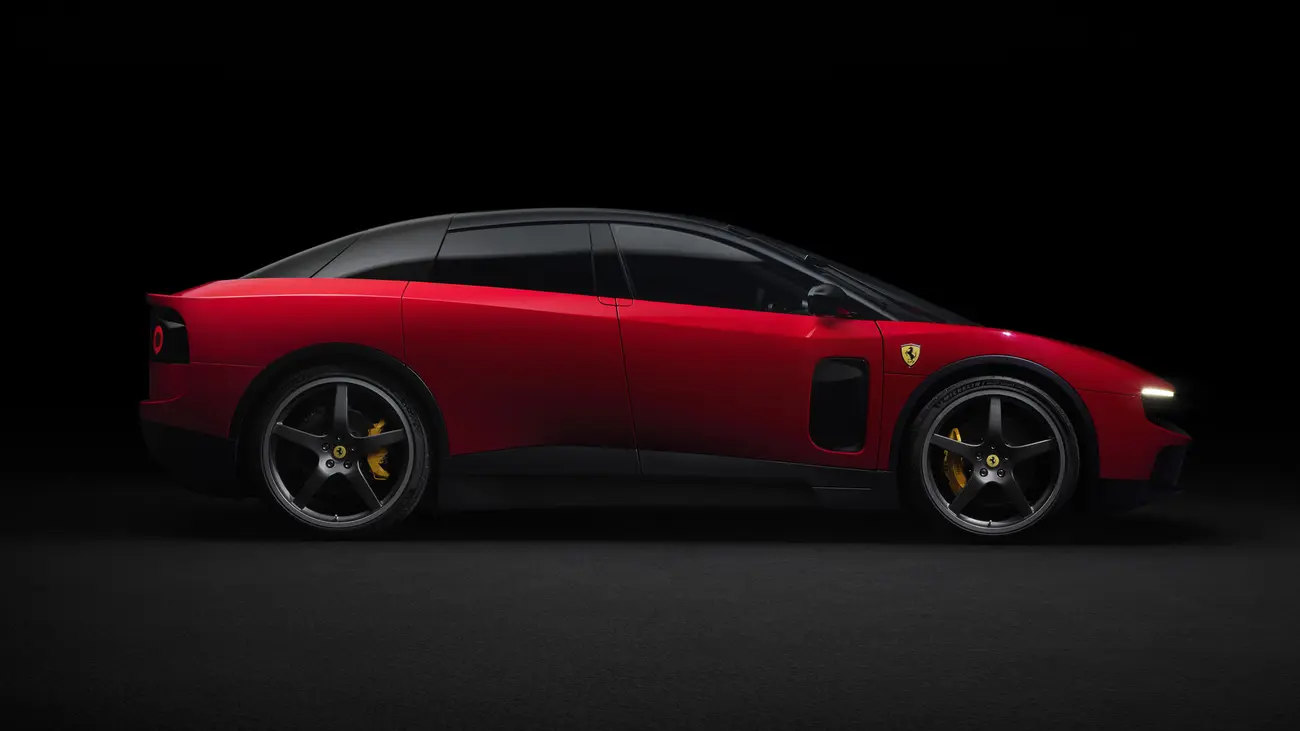
When a $57,000 Xiaomi humbles a $650,000 Ferrari
Some numbers just hurt. The Ferrari Luce, Maranello's first electric car, is expected to cost over 500,000 euros. The Xiaomi YU7 GT — a high-performance electric SUV from the Chinese smartphone giant — costs 389,900 yuan, roughly $57,400. Ten times cheaper. And on the headline performance figures, it stands toe to toe with the Italian without flinching.
This Ferrari Luce vs Xiaomi YU7 GT comparison isn't about two direct rivals — one is a four-door GT, the other an SUV. It's about what that price chasm buys you today in power, range, and lap times. The answer is uncomfortable.
Power: over 1,000 hp on both sides
The Ferrari Luce claims over 1,000 hp (830 kW in boost mode), split across four motors — one per wheel. Some sources cite as much as 1,113 hp. The rear axle delivers 843 hp and 8,000 Nm of torque at the wheels; the front, 286 hp. The front unit can even disconnect within half a second, switching the car from rear-wheel drive to all-wheel drive on demand.
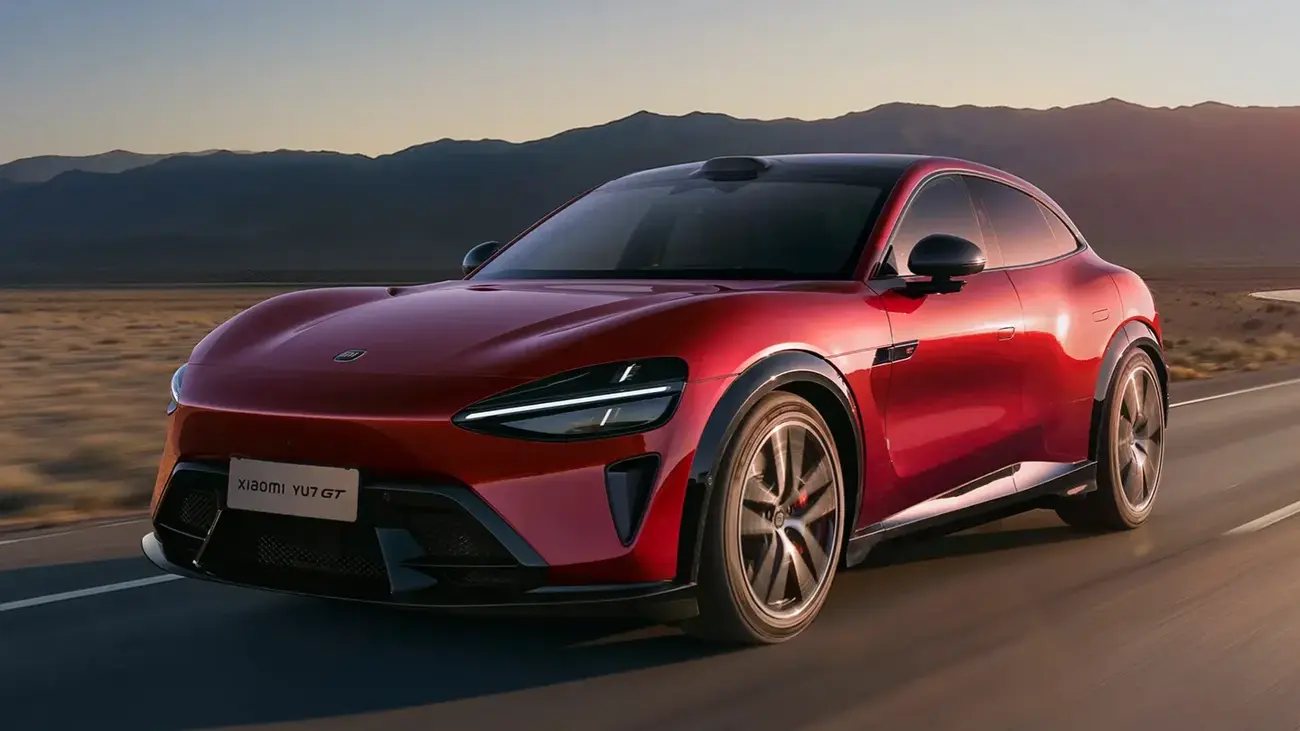
The Xiaomi YU7 GT answers with 1,003 hp in production form: 386 hp up front, 604 hp at the rear, dual-motor all-wheel drive. Worth noting that early reports (February 2026) quoted 990 hp, and there was even speculation about a tri-motor 1,526 bhp setup — but the production YU7 GT spec settles at 1,003 hp.
In practice, this power head-to-head ends in a near draw. A Chinese electric car putting down over a thousand horsepower in the same ballpark as a Ferrari, for a tenth of the price, is exactly the kind of news that keeps the European industry awake at night.
Acceleration and top speed: tenths apart
Here the Ferrari pulls ahead, but only just. The Luce does 0–100 km/h in about 2.5 seconds and tops out at 310 km/h. The YU7 GT needs 2.92 seconds for the same sprint and is electronically limited to 300 km/h (186 mph).
Four tenths of a second. That's what separates a half-million-euro Ferrari from a Xiaomi that costs less than many premium EVs already on sale in Portugal. For anyone who doesn't drive on a track, that gap is academic.
The Nürburgring record that changed the conversation
The Xiaomi's strongest argument isn't on the spec sheet — it's on the asphalt. The YU7 GT set a 7:22.755 lap at the Nürburgring Nordschleife, claiming the production SUV record and shaving about 14 seconds off the previous holder, the Audi RS Q8.
This wasn't luck. The car ran a "Track Professional" package with a roll cage and racing seats, Akebono six-piston front carbon-ceramic brakes that survive ten consecutive stops from 111 mph with zero fade, and a Smart Chassis 2.0 setup with dual-valve dampers and air springs. This is a serious performance SUV, not a marketing exercise.
Battery, range, and charging
| Spec | Ferrari Luce | Xiaomi YU7 GT |
|---|---|---|
| Power | over 1,000 hp (up to 1,113 hp) | 1,003 hp (386 + 604) |
| 0–100 km/h | about 2.5 s | 2.92 s |
| Top speed | 310 km/h | 300 km/h (limited) |
| Battery | 122 kWh, NMC, 880 V | 101.7 kWh, ternary lithium, 897 V |
| Range | over 530 km (WLTP) | about 705 km (CLTC) |
| DC charging | 350 kW | 897 V architecture |
| Body / seats | 4-door GT, 4 seats | performance SUV |
| Price | over 500,000 euros (est.) | 389,900 yuan (about $57,400) |
Read the range figures with care. The Ferrari quotes over 530 km on the WLTP cycle; the Xiaomi claims around 705 km, but on the CLTC cycle — the Chinese standard, which is considerably more optimistic. They are not directly comparable. In real-world driving, the gap shrinks dramatically.
On charging, the Luce has published figures: an 880 V architecture and up to 350 kW DC, taking it from 10% to 80% in under 25 minutes in ideal conditions. The YU7 GT rides on a 897 V platform — among the most advanced on the market — but Xiaomi hasn't detailed its peak charging rate.
What the Ferrari Luce offers that the Xiaomi doesn't
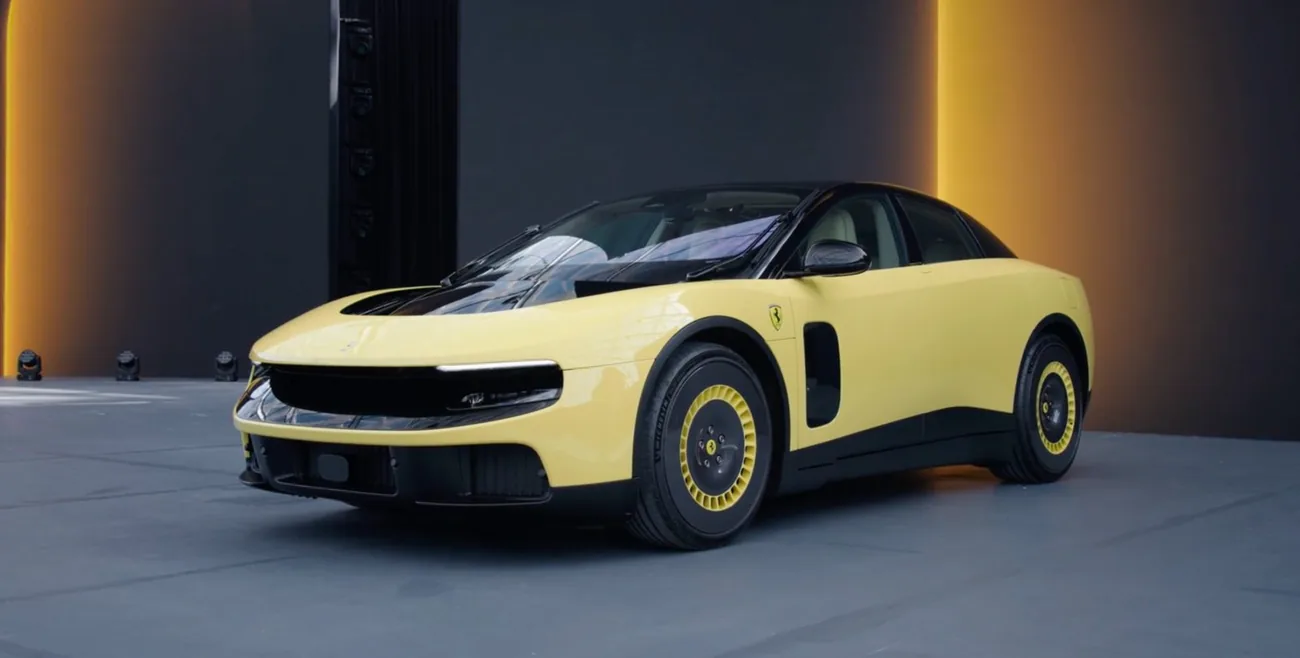
The numbers tell half the story. The Luce is a Ferrari, with everything that implies. A 122 kWh battery structurally integrated into the chassis, third-generation active electric suspension, four-wheel steering, and a single central unit managing all four motors, all four suspensions, and the steering at each wheel.
Then there's what horsepower can't measure. The interior is signed by Jony Ive and Marc Newson's LoveFrom studio, prioritising physical materials over screens — a steering wheel in 100% recycled aluminium, a traditional Manettino plus a new eManettino. And a trick for purists: accelerometers capture the real vibrations of the rear motors and amplify them through the cabin speakers, creating a "sound" that evolves with revs and torque.
The Luce is classified within Ferrari's GT family, between the Amalfi and the 12Cilindri, with a "hunting station wagon" profile and a 2.96 m wheelbase. It isn't a supercar — it's a four-seat grand tourer that happens to be fully electric.
Frequently Asked Questions
It depends on what you value. On raw performance they are very close: the Ferrari Luce does 0-100 km/h in about 2.5 s and the Xiaomi YU7 GT in 2.92 s, both with over 1,000 hp. The YU7 GT even holds the production-SUV Nürburgring record (7:22.755). But the Luce is a Ferrari grand tourer with engineering, exclusivity, and finish (a LoveFrom interior by Jony Ive) the Xiaomi can't match. The real difference is price: roughly 10x in the Chinese car's favour.
There's no official price yet, but analysts point to over 500,000 euros — above the hybrid SF90 Stradale. On top of that comes ISV, Portugal's vehicle tax, which on a car in this bracket pushes the final bill even higher. Ferrari expects the Luce to account for only around 5% of its 2026 sales, making it an absolute rarity.
Not in a straight line, but barely. The Ferrari Luce accelerates from 0-100 km/h in about 2.5 s and tops out at 310 km/h, against the Xiaomi YU7 GT's 2.92 s and 300 km/h (limited) — just four tenths apart. On track, however, the YU7 GT set the production-SUV record at the Nürburgring, running a Track Professional package, Akebono carbon-ceramic brakes, and Smart Chassis 2.0 suspension.
It's roughly tenfold. The Ferrari Luce is expected to cost over 500,000 euros (an estimated ~$650,000), while the Xiaomi YU7 GT costs 389,900 yuan, about $57,400 in China. That price chasm is the heart of the comparison: two cars with comparable performance figures, separated by an order of magnitude in cost.
It isn't confirmed yet. Xiaomi doesn't yet sell cars outside China and its European arrival remains unannounced. When it happens, the European price won't be the ~$57,400 Chinese sticker: import, homologation, VAT, and ISV change everything. The Ferrari Luce, meanwhile, reveals its full exterior on May 25, 2026, and begins deliveries in October 2026.
When each one reaches Portugal, and what it costs
The Ferrari Luce reveals its full exterior on May 25, 2026, in Rome, with first deliveries in October 2026. Official price? None yet. Analysts point to over 500,000 euros — above the hybrid SF90 Stradale. On top of that comes ISV, Portugal's vehicle tax, which on a car this expensive pushes the final bill even higher. It'll be a true rarity: Ferrari expects it to make up around 5% of its 2026 sales.
The Xiaomi YU7 GT has already been revealed, but its arrival in Europe — and Portugal — remains unconfirmed. Xiaomi doesn't yet sell cars outside China, and when it does, the European price won't be the $57,000 Chinese sticker: import, homologation, VAT, and ISV change everything. Even so, judging by the Chinese benchmark, it would land in a completely different price bracket from the Ferrari.
This Ferrari Luce vs Xiaomi YU7 GT comparison doesn't decide which to buy — almost nobody chooses between the two. It decides something else: that the technological edge which justified astronomical prices is evaporating. It's worth watching what Xiaomi and the other Chinese brands bring to Europe over the next few years. If this is what they're already delivering in China, the rest of the market will have to answer.