
Dodge Charger Daytona in Portugal: Price, Specs and Range
Published: 10/06/2026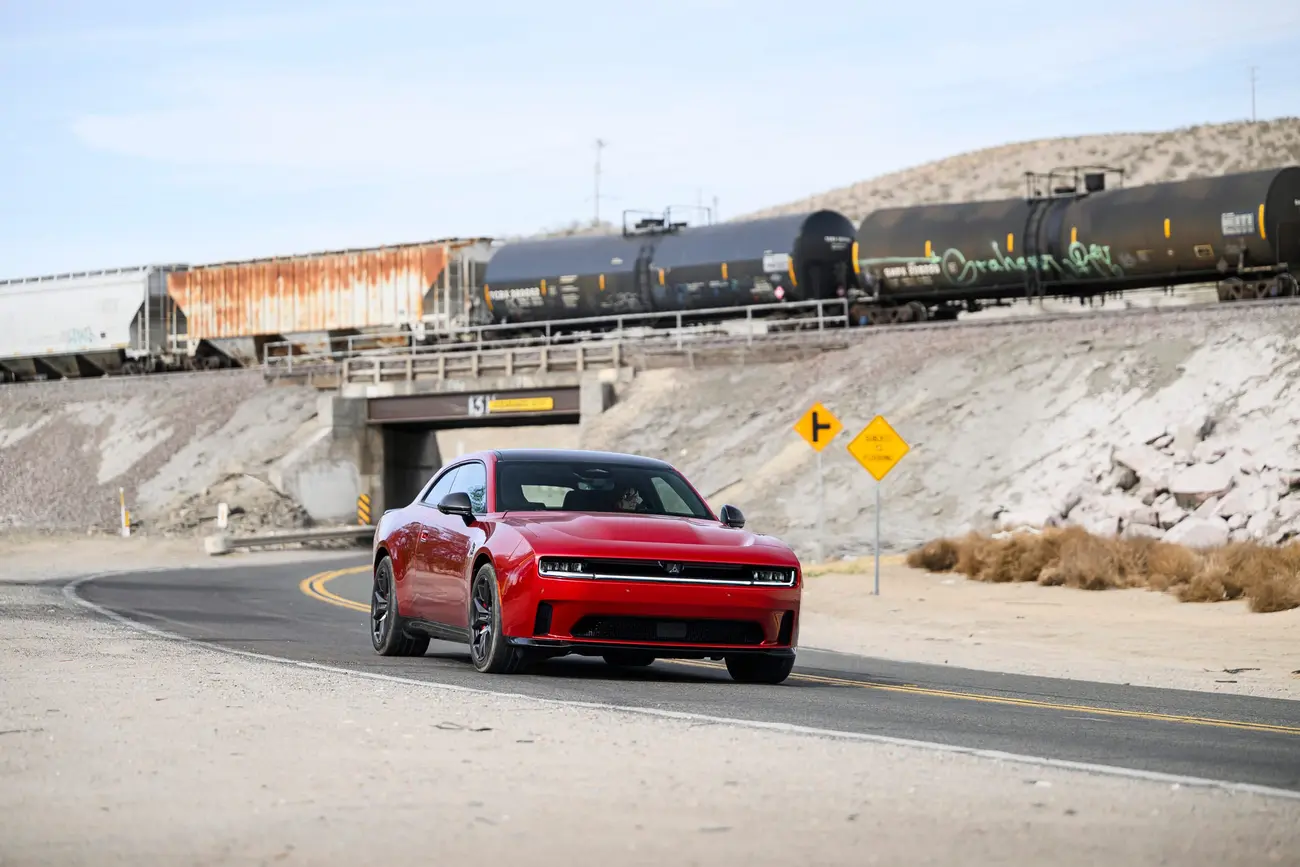
The American muscle car that's actually coming to Europe
Dodge has confirmed what many enthusiasts assumed would never happen: the electric Charger Daytona is coming to Europe, making the Dodge Charger Daytona the only American battery-powered muscle car you'll be able to buy on the continent. The official announcement landed on 8 June 2026 — the same year the Charger nameplate turns 60 — and marks the brand's return to Europe after more than a decade away.
This isn't a concept or a styling exercise. It's a production car with a confirmed arrival window (sometime in the second half of 2026) and a distribution network already in place. For anyone in Portugal who always wanted a genuine American but balked at private import hassle, that changes things.
Two EVs and two petrol versions: the Dodge Charger Daytona European lineup
The European range mirrors the US one. On the electric side there are two versions:
- Charger Daytona R/T — around 536 hp (538 bhp on the European spec sheet)
- Charger Daytona Scat Pack — between 660 and 670 hp, the range-topper
If you'd rather have a real engine, there are two petrol options too, using the 3.0-litre twin-turbo straight-six SIXPACK: 420 hp in the R/T and 550 hp in the Scat Pack H.O. Every version gets all-wheel drive as standard, but with a selectable RWD mode — so you can send all the torque to the rear when you want to play. And there are two body styles: a two-door coupe or a four-door saloon.
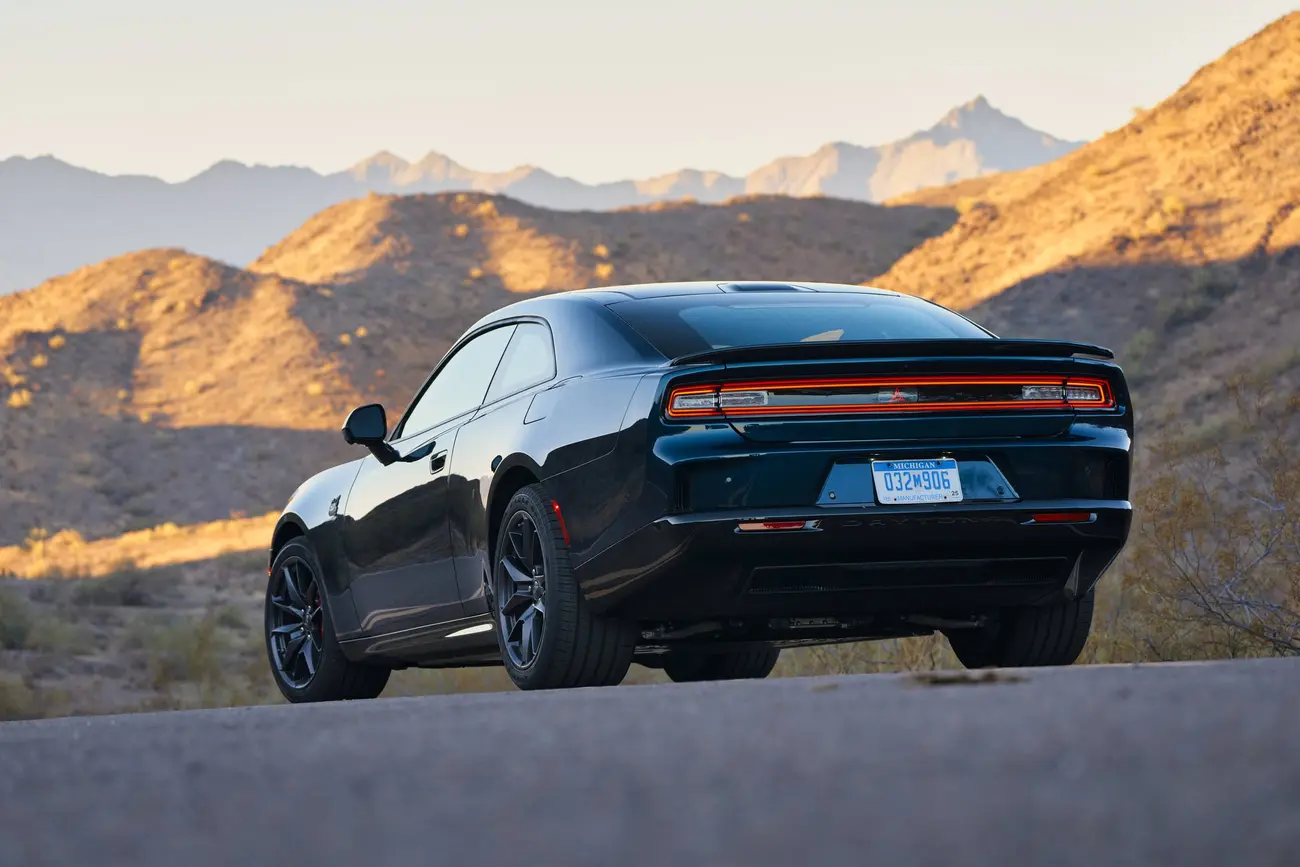
Charger Daytona Scat Pack specs: what the numbers say
The Scat Pack is the version that matters to anyone chasing serious performance. The battery is 100.5 kWh total (93.9 kWh usable), and the two electric motors deliver permanent all-wheel drive.
| Specification | Charger Daytona Scat Pack |
|---|---|
| Power | ~660–670 hp (with Power Shot) |
| Battery | 100.5 kWh total / 93.9 kWh usable |
| 0–100 km/h | 3.3 seconds |
| Quarter-mile | ~11.5 s (tested: 11.87 s at 188 km/h) |
| Range | ~260 mi (around 420 km) |
| DC charging | up to 183 kW (on a 350 kW charger) |
| 5–80% charge | around 32.5 minutes |
| AC charging | up to 11 kW (Level 2) |
| Weight | ~2,643 kg |
| Length | ~5,248 mm |
That's 3.3 seconds from 0 to 100 km/h — Porsche Taycan territory. But range is the weak spot: around 420 km in the Scat Pack, and as little as 360 km with the Track Pack. If distance is the priority, it's worth comparing other EVs with over 400 km of range. In US winter testing, one car managed just 327 km. Lisbon to Porto without stress, fine. A run down to the Algarve, count on a charging stop.
Fast charging doesn't dazzle for a car at this price either: a 183 kW peak means roughly 32 minutes from 5 to 80% on a 350 kW charger. Plenty of cheaper EVs charge faster. Efficiency was never the point here — and Dodge doesn't pretend otherwise.
The R/T for those who want more miles
The Daytona R/T, with its ~536 hp, trades some fury for range: up to around 510 km claimed. It's still quick, still AWD, and it's the more sensible pick for anyone who wants the looks and the sound without making the charger part of the weekly routine.
The fake sound that's part of the show
An electric muscle car is silent by nature — and Dodge refused to accept that. The fix is called the Fratzonic synthetic exhaust: in practice, a subwoofer behind the rear bumper that mimics a V8 rumble and hits up to 126 decibels, adjustable by the driver.
It might sound like cheating, and it is. But it's also how Dodge gives identity to a car that would otherwise sound like any other EV. You'll either love it or hate it. There's no middle ground.
How much will the Dodge Charger Daytona cost in Portugal?
Here we're into estimate territory, because Dodge hasn't confirmed European prices yet. What we know:
- In the US, the Scat Pack starts at $63,990 (destination included); the 2027 coupe starts from $74,490.
- Earlier UK estimates pointed to around £48,895 for the R/T and £58,427 for the Scat Pack.
Convert those and add Portuguese tax reality, and the picture isn't kind to your wallet. ISV (Portugal's vehicle registration tax) heavily penalises heavy, powerful cars — and this one weighs 2,643 kg. In theory, pure EVs get an ISV exemption or reduction in Portugal, which helps a lot on a car like this. The IUC (annual road tax) for an electric vehicle is also lower than for a petrol equivalent. Even so, it's wise to budget for a final price above €80,000 for the Scat Pack once it reaches dealers.
European distribution is handled by importer KW Automotive and its dealer network; parts come through Iron Parts. There's no list of Portuguese sales points yet, but the structure exists — and that's what separates this launch from a one-off private import.
Frequently Asked Questions
Dodge confirmed its return to Europe on 8 June 2026, with deliveries expected in the second half of 2026. Final details, including the dealer list and European pricing, should be announced before the end of 2026. Distribution will be handled by importer KW Automotive and its dealer network.
European pricing has not been confirmed yet. For reference, the US Scat Pack starts at $63,990, while earlier UK estimates pointed to around £48,895 for the R/T and £58,427 for the Scat Pack. With Portuguese taxes, expect a final figure above €80,000 for the Scat Pack — though the ISV exemption or reduction for pure EVs softens the bill compared with a petrol equivalent.
The Scat Pack claims around 420 km (260 miles), dropping to about 360 km with the Track Pack; a US winter test managed just 327 km. The less powerful R/T climbs to roughly 510 km. DC fast charging peaks at 183 kW on a 350 kW charger, covering 5–80% in about 32.5 minutes — modest numbers for an EV at this price.
The Charger Daytona Scat Pack does 0–100 km/h in 3.3 seconds, Porsche Taycan territory, but it is cheaper and less refined than the German. Against the Hyundai IONIQ 5 N it delivers more drama, presence and theatre — including the Fratzonic synthetic exhaust of up to 126 dB — but loses out on agility and range. It is the American electric muscle car, not the most efficient sports EV.
Sales in Europe will be handled by importer KW Automotive and its dealer network, with spare parts supplied through Iron Parts. There is no official list of Portuguese sales points yet, but the distribution structure is already in place — which sets this launch apart from a private one-off import. Watch for pricing and dealer announcements expected before the end of 2026.
Worth it, or just noise?
The Charger Daytona doesn't try to be the most efficient EV, nor the cheapest, nor the most practical. It tries to be the most theatrical — and in that arena it has no rival on the European market. Against a Porsche Taycan it's cheaper but less polished; against a Hyundai IONIQ 5 N it delivers more drama and presence, but loses out on agility and range.
For the Portuguese buyer, the decision comes down to one simple question: do you want an EV, or do you want this EV? If it's the latter, get your wallet ready and keep an eye on the European pricing announcements, expected before the end of 2026.