
Denza N8 Range and Price in Portugal: 1,003 km from a 130 kWh Battery
Published: 26/08/2026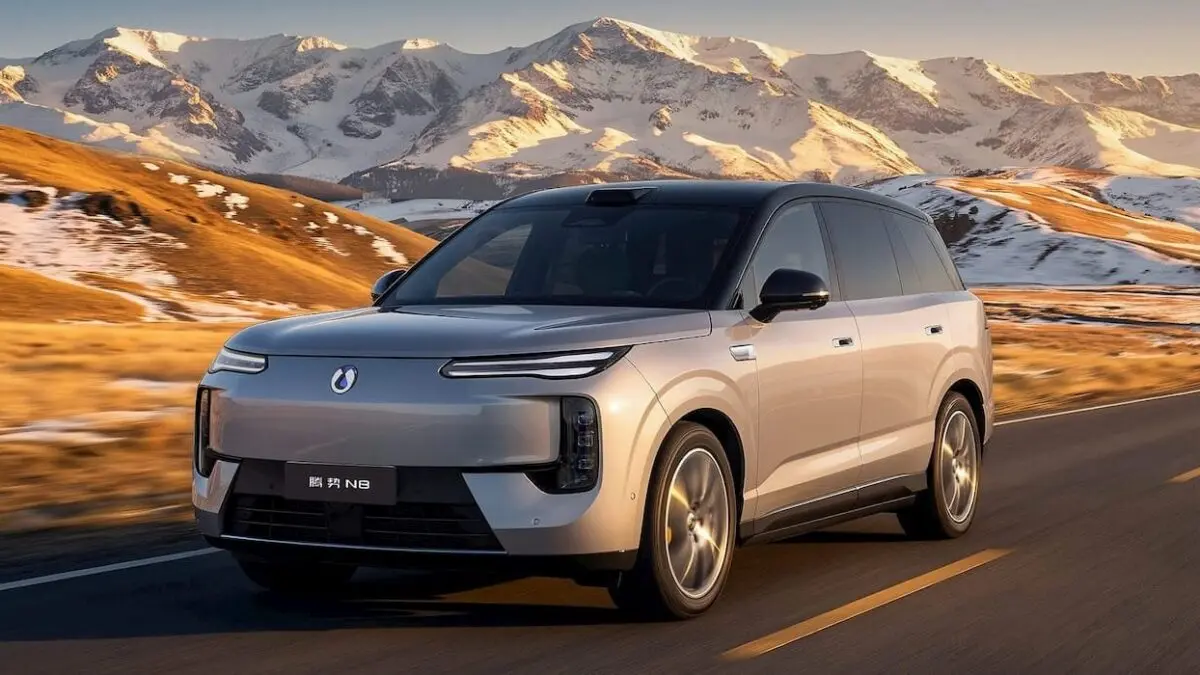
1,003 km on a single charge: the number Denza just homologated
Three years ago, hitting four digits of range in a large SUV meant carrying a combustion engine along for the trip. The new all-electric Denza N8 does it on electricity alone — using the lithium iron phosphate chemistry Western carmakers spent years dismissing as the cheap option.
Homologation filings from MIIT, China's regulator, list a 130.15 kWh battery and a top range figure of 1,003 km. That is the kind of number that travels around the world in a day. It is also the kind of number that needs context before it means anything to someone driving between Lisbon and Porto.
Denza N8: a 130 kWh battery and four range figures
Denza homologated two packs, both LFP and both from BYD's Blade Battery 2.0 generation: the big 130.15 kWh unit and a more modest 105.792 kWh one. Depending on the version and motor count, the official CLTC figures land like this:
| Battery | CLTC range | Version |
|---|---|---|
| 130.15 kWh | 1,003 km | N8 (homologated maximum) |
| 130.15 kWh | 970 km | N8 |
| 130.15 kWh | 960 km | N8L (long body) |
| 105.792 kWh | 840 km | N8 |
| 105.792 kWh | 800 km | N8 |
Look at the entry version for a moment. Even with the "small" battery, 800 km CLTC beats every electric SUV you can actually buy in Portugal today — and that, not the headline record, is the real story.
The historical contrast makes the point. The 2023 Denza N8 carried 108.8 kWh in its electric form, and you had to move up to the plug-in hybrid to reach 1,030 km combined. That PHEV was discontinued in under a year for lack of sales. The pure EV now matches it without a drop of fuel.
CLTC vs WLTP: what 1,003 km is worth on the A1
Here is the part almost no headline mentions. CLTC is China's homologation cycle and it is consistently more generous than Europe's WLTP — the gap is usually put at 15 to 20 percent.
No official WLTP figure exists for the N8. Conversion estimates land somewhere around 820 km WLTP. And WLTP itself is already optimistic against reality: on a Portuguese motorway at 120 km/h, air conditioning running, a 5.15-metre SUV pushing through the air, a realistic number is closer to 600-650 km.
Still remarkable. Lisbon-Faro-Lisbon without a charging stop, or a Lisbon-Porto round trip, fit comfortably inside that energy budget. But 1,003 km is not the distance you will cover between plugs.
Five-minute charging — and what Portugal can actually deliver
The N8 uses BYD's Flash Charging system: 10 to 70 percent in five minutes, 10 to 97 percent in about nine. Reports put peak power around 1 MW, and Denza has quoted system capability up to 1,500 kW on the Z9 GT.
Those numbers live inside a closed ecosystem, though. They depend on BYD's own charger and a Chinese-market connector. In Portugal, the fastest public units — Ionity, Atlante, the motorway service-area chargers — top out around 300 to 400 kW, and even those rarely hold peak power for long.
In practice: on a Portuguese 350 kW charger, a 130 kWh pack does not go 10-70 percent in five minutes. With a cooperative charging curve, expect something in the 15 to 20 minute range for that same window. Still good — a coffee stop rather than a lunch break — but a long way from the marketing figure.
Denza has said it intends to install 6,000 Flash Charging stations globally within 12 months, 3,000 of them in Europe. Until that happens and reaches southern Europe, the selling point in Portugal is range, not charging speed.
Power, platform and dimensions
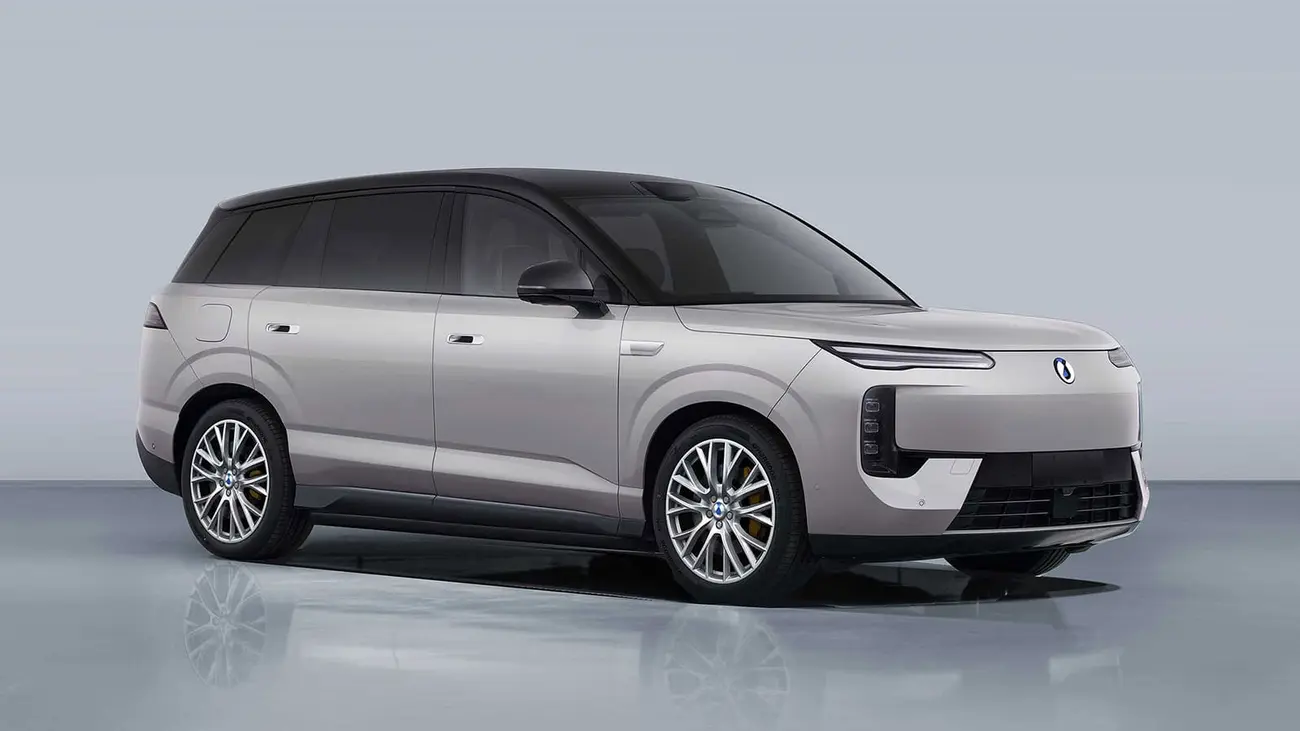
The range starts with a single rear-mounted motor in two outputs: 320 kW (429 hp) or 370 kW (497 hp). At the top sits a tri-motor all-wheel-drive setup on BYD's e3 platform: 270 kW at the front plus two 310 kW motors at the rear, for a combined 890 kW — 1,193 hp.
The dimensions explain much of the rest:
| Measurement | Denza N8 | Denza N8L |
|---|---|---|
| Length | 5,150 mm | 5,200 mm |
| Width | 1,999 mm | 1,999 mm |
| Height | 1,820 mm | 1,820 mm |
| Wheelbase | 3,075 mm | 3,075 mm |
| Seats | 5 | 6 (2+2+2) |
For reference: the Volvo EX90 measures 5,037 mm, the Li Auto L9 5,218 mm. The N8 sits between them. In a 1980s Lisbon apartment garage, two metres of width and over five of length is a genuine problem — measure the space before falling for the car.
Denza N8 price in Portugal: what to expect
In China, the N8 is expected to start near 300,000 yuan, roughly 38,450 euros. Ignore that number for Portuguese purposes.
The best benchmark we have is the Denza Z9 GT, which the brand already sells in Europe: 115,000 euros in Germany against about 59,000 euros in China. That is close to double, and it comes down to EU tariffs on Chinese EVs, European homologation, service network build-out and brand positioning.
Apply similar logic and a European N8 would struggle to land below 70,000-80,000 euros before national taxes. In its favour: as a full EV it is exempt from ISV (Portugal's vehicle registration tax) and pays a reduced IUC (annual road tax), which closes part of the gap to a diesel X7 or GLS.
Frequently Asked Questions
There is no Portuguese price yet, because Denza has not confirmed a European launch for the N8. In China it starts at around 300,000 yuan (roughly 38,450 euros), but the brand's European benchmark tells a different story: the Denza Z9 GT sells for 115,000 euros in Germany against about 59,000 euros in China. Add EU tariffs on Chinese EVs, shipping and dealer network costs and any Portuguese N8 would land far above its Chinese sticker, likely in BMW iX and Volvo EX90 territory.
Not on the same measurement. The 1,003 km figure comes from China's CLTC cycle, which is considerably more optimistic than Europe's WLTP. There is no official WLTP homologation, and conversion estimates point to around 820 km, roughly 15 to 20 percent lower. At 120 km/h on the motorway with the air conditioning running, the real figure drops further, but it would still cover a Lisbon-Porto round trip without a charging stop.
Not on today's network. The 10-70 percent in 5 minutes and 10-97 percent in about 9 minutes rely on BYD's Flash Charging system, with peaks close to 1 MW, available at specific stations in China. Portugal's fastest public chargers (Ionity, Atlante and equivalents) top out around 300 to 400 kW, which means charging times several times longer. The battery can take the power; the infrastructure cannot deliver it.
The N8L is the long-wheelbase version. The N8 measures 5,150 mm with five seats, while the N8L stretches to 5,200 mm and offers six seats in a 2+2+2 layout. With the same 130.15 kWh pack, the N8L is rated at 960 km CLTC against the N8's 1,003 km, due to extra weight and bulk. Both sit on BYD's e3 platform and use LFP Blade Battery 2.0 cells.
With no confirmed European launch, waiting for the N8 means waiting without a date. Denza entered Europe in April 2026 with the Z9 GT and D9 DM-i across five markets (Germany, France, Italy, Spain and the UK) and plans to reach 30-plus countries and around 150 dealers by the end of 2026, but the N8 is not among the announced models. If you need a large electric SUV now, there are options already homologated in Portugal, with ISV exemption and reduced IUC, and you avoid having to park 5.15 metres of car in Portuguese garages and city streets.
When is Denza coming to Portugal?
Honestly: the N8 has no confirmed European launch. There is not even an indication that it is coming.
What does exist is the brand's European debut, held in Paris on 8 April 2026 with the Z9 GT (122.5 kWh, 850 kW, 600 km WLTP) and the D9 DM-i van. First markets are Germany, France, Italy, Spain and the UK. The announced plan targets 30-plus countries and around 150 dealers by the end of 2026 — and Portugal appears in the investor plans presented in December 2025, usually bundled with Spain.
The brand has the numbers to justify expanding. Denza passed 20,000 monthly deliveries for the first time in June 2026 and recorded 19,196 units in July — down 5.7 percent month on month, but up 68.8 percent year on year. It started life as a 50:50 joint venture between BYD and Mercedes-Benz and is now wholly BYD-owned, used as the group's technology showcase.
If you are choosing a car right now, the N8 is not an option. It is an indicator. When a Chinese SUV homologates 1,000 km in 2026, the pressure on the prices and range figures of the EVs sold in Portugal will follow — most likely first through the BYD models already on sale here. If you would rather wait, the thing to watch is not the N8's spec sheet but the list of countries Denza opens over the coming months.