
Denza D9 in Portugal: Price, Specs and When It Actually Arrives
Published: 20/08/2026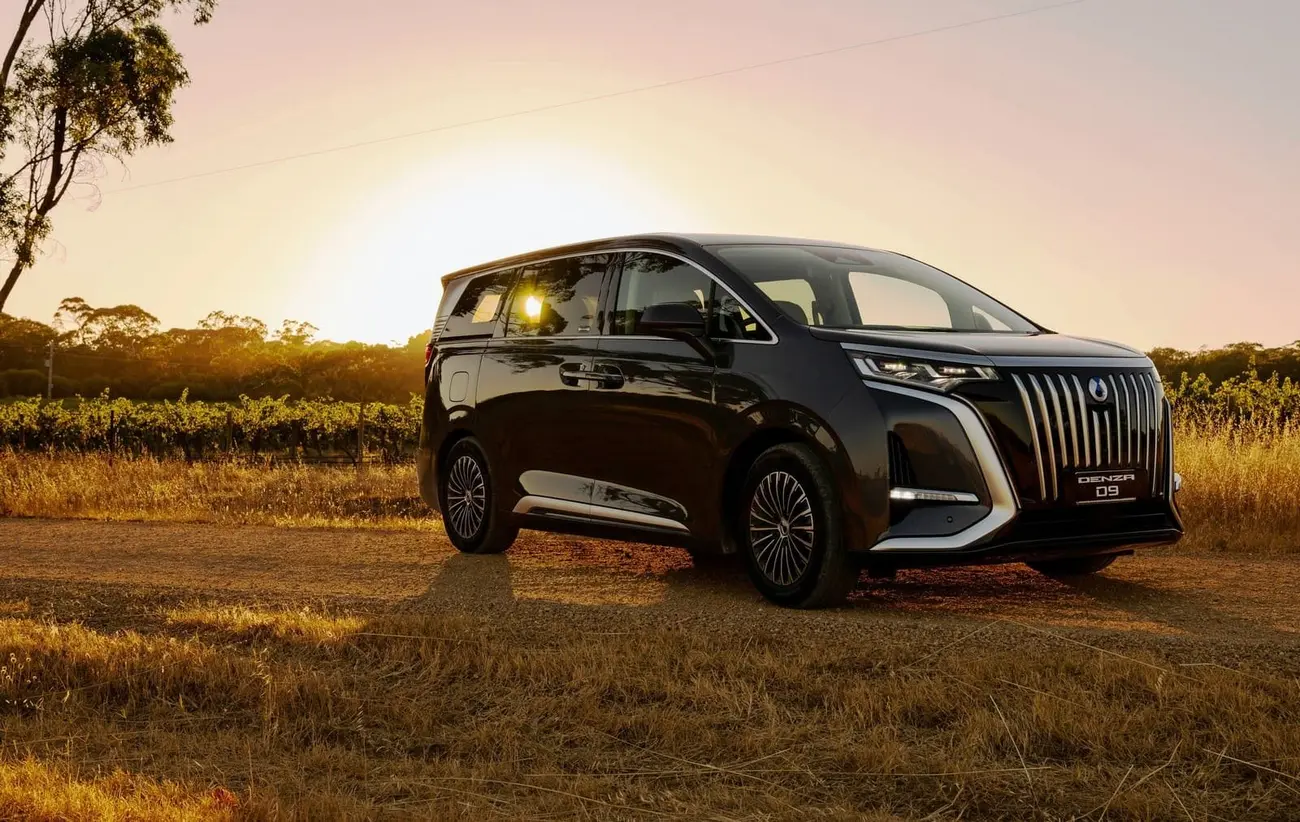
Denza D9 price Portugal: what we know and what we don't
Five minutes to take the battery from 10% to 70%. That is not a lab promise for some point next decade — it is what Denza claims for the D9, the seven-seat plug-in hybrid MPV that BYD's premium brand has just put on sale in Europe. In the UK it starts at £75,000. In Germany, between €80,000 and €90,000. And in Portugal? That answer is messier.
Let's deal with the awkward part first, because Denza D9 availability in Portugal is the question everything else hangs on. The Denza D9 launched in Europe across five markets: France, Germany, Italy, Spain and the UK. Portugal is not in that first wave. No local price, no dealer, no confirmed date.
What does exist is a plan. Denza says it wants to cover more than 30 European countries and open over 150 retail outlets by the end of 2026. Portugal fits naturally into that expansion — more than 20 additional markets are earmarked for the second phase — but until there's an official announcement, the only sensible thing to do is read across from neighbouring markets.
| Market | Elegance | Ultimate |
|---|---|---|
| United Kingdom | £75,000 | £85,000 |
| Germany | €80,000 | €90,000 |
The German €80,000 to €90,000 band is the better guide to what a Portuguese price might look like. One thing works in the buyer's favour here: as a plug-in hybrid with well over 50 km of electric range and very low emissions, the D9 qualifies for Portugal's reduced ISV rate (ISV is the one-off vehicle registration tax) that applies to this kind of powertrain. That won't make it cheap. It does stop the tax system from pushing it into an entirely different price bracket.
Denza D9 specs: the DM-i AWD plug-in hybrid explained
There's a trap that a lot of online spec sheets fall into: the Chinese D9 and the European D9 are not the same car on paper. The European version uses a 58.5 kWh Blade battery — the Chinese one has 66.5 kWh and far more generous CLTC figures that simply don't apply here.
The system is called DM-i AWD and it combines three parts: a 1.5-litre turbocharged four-cylinder petrol engine producing 88 kW (120 PS), which mostly works as a generator, a front electric motor rated at 170 kW (231 PS) and a rear one at 45 kW (61 PS). Total system output: 260 kW, or 353 PS. Zero to 100 km/h takes 8.6 seconds, top speed is 180 km/h.
For a 5.25-metre MPV with this much presence, 8.6 seconds is plenty. Nobody buys one of these to time launches.
| Specification | Value |
|---|---|
| Powertrain | DM-i AWD plug-in hybrid |
| Combustion engine | 1.5 turbo, 88 kW / 120 PS |
| Front electric motor | 170 kW / 231 PS |
| Rear electric motor | 45 kW / 61 PS |
| System output | 260 kW / 353 PS |
| 0-100 km/h | 8.6 s |
| Top speed | 180 km/h |
| Battery | 58.5 kWh Blade (BYD) |
| Electric range | 210 km (preliminary WLTP) |
| Combined range | 950 km |
| Peak charging power | 559 kW |
| Length x width x height | 5,250 x 1,960 x 1,900 mm |
| Wheelbase | 3,110 mm |
| Seats | 7 (2-2-3) |
| Boot | 430 / 570 / 2,310 L |
Range: 210 km on electricity, 950 km in total
That's 210 km of pure electric driving on the preliminary WLTP cycle. In practical terms: a daily Lisbon-Setúbal round trip, or a full week of school runs, commuting and supermarket trips without burning a drop of petrol. Charge at home overnight and you could go months treating the D9 as an electric car.
With a full tank and a full battery, combined range climbs to 950 km. Lisbon to Faro and back on one charge and one tank, with no mandatory stops — which is exactly the argument that makes a plug-in make sense for families who take two or three long trips a year.
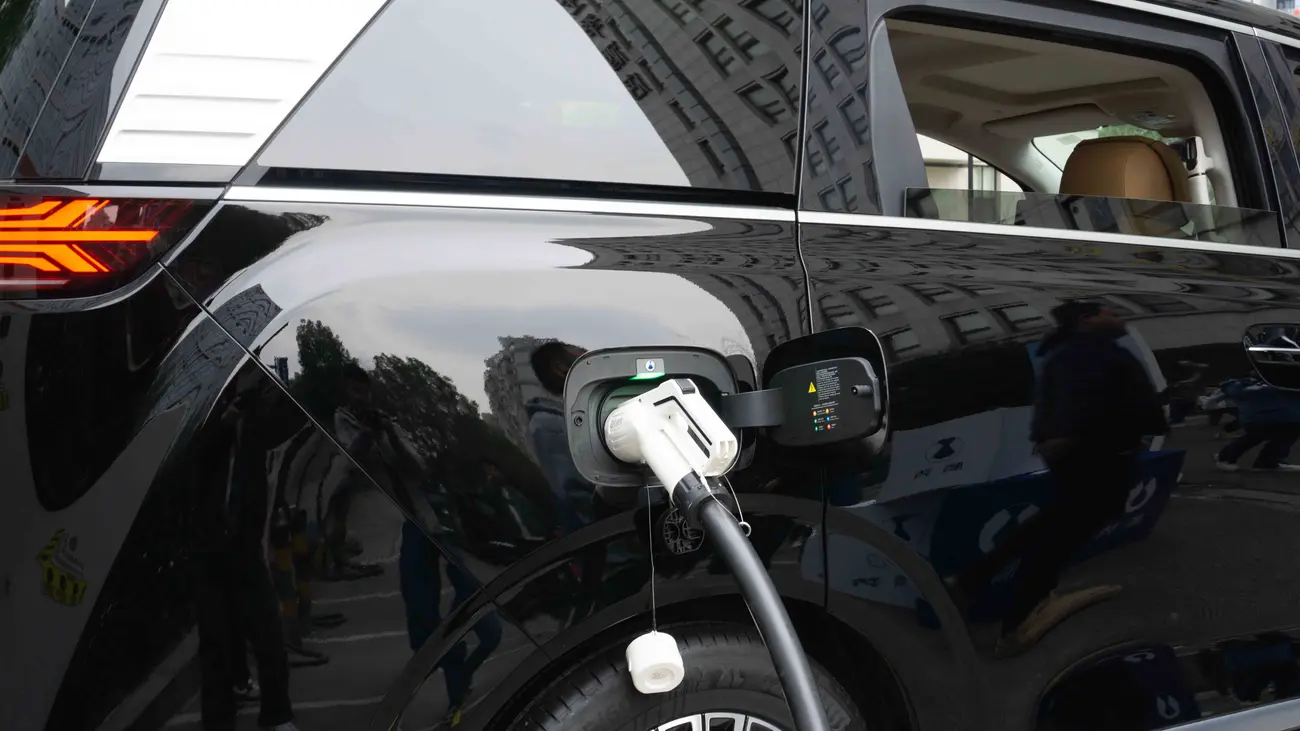
Five-minute charging: BYD Flash Charging in practice
This is the headline. The battery accepts up to 559 kW. Denza's numbers: 10% to 70% in five minutes, 10% to 97% in nine minutes, and — the most striking figure — 20% to 97% in twelve minutes even at minus 30 degrees, the kind of cold that normally collapses charging speeds on any EV.
The catch is obvious and worth saying plainly: to use any of that you need a charger capable of delivering it, and those aren't sitting on Portuguese streets yet. BYD has announced 6,000 flash chargers outside China, half of them in Europe, but the network is only starting. On a standard rapid charger on the MOBI.E network (Portugal's national public charging system), the D9 charges well — it just doesn't charge in five minutes.
A genuine seven-seater, with business-class comfort
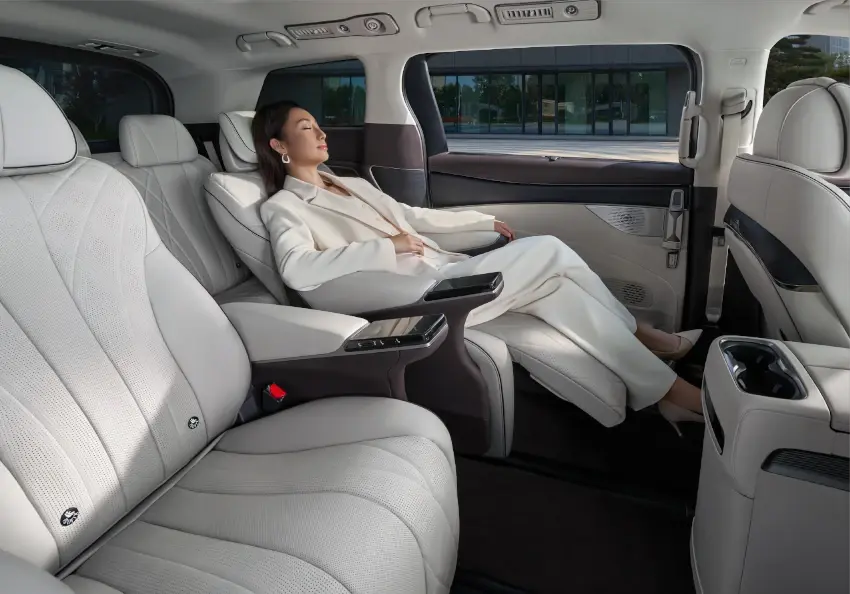
The layout is 2-2-3, and the 3,110 mm wheelbase means the third row isn't a punishment seat. Denza says it carries seven 1.80 m adults plus seven 20-inch cabin bags, and boot space runs from 430 to 570 litres with all seven seats occupied, rising to 2,310 litres with the third row folded and the car used as a four-seater.
The middle row is the real selling point. The "Air Spa Zero Gravity" chairs get 14-way electric adjustment, 16-point massage and recline up to 152 degrees. There are 5.5-inch LCD screens in the armrests for climate, audio, roof and lighting, folding tables on the seatbacks in front, and a 7-litre fridge between the front seats that runs from minus 6 to plus 6 degrees — or heats to between 35 and 50 degrees if you'd rather bring soup than sandwiches.
Above it all sits a 1.1 m² panoramic glass roof with an electric blind and 99% UV protection. That matters more than it sounds in a country where an August sun turns a glass roof into a greenhouse.
Audio comes from Devialet: 16 speakers, six independently controlled zones. The dashboard carries a 15.6-inch central screen with Google built-in and Apple CarPlay, a 10.25-inch digital cluster and a third 10.25-inch display for the front passenger. Suspension is MacPherson front, multi-link rear, with DiSus-C adaptive damping standard on both trims.
Elegance or Ultimate: where the £10,000 goes
Elegance already gives you leather, the panoramic roof, the fridge, the Devialet system, heated and ventilated front seats with 10-point massage, electric sliding side doors and DiSus-C damping.
Ultimate adds the zero-gravity second-row seats, foot-gesture opening for the doors and tailgate, Nappa leather across all three rows with real wood trim, heating and ventilation for the third row too, 12.8-inch rear entertainment screens, a 12-inch head-up display, a digital rear-view mirror and welcome lighting.
If the D9 is mainly going to carry people in the back — a large family, executive transfers, chauffeur work — Ultimate earns its premium. For ordinary family use, Elegance is already a fully equipped car.
Denza D9 vs Lexus LM and the rest of the segment
The positioning is deliberate. In the UK, the Lexus LM hybrid starts at £97,645; the D9 Elegance asks £75,000. That's more than £22,000 between two cars doing the same job — luxury MPV, second row treated as a business cabin.
Denza names the Mercedes VLE, Xpeng X9 and Volkswagen ID. Buzz as rivals, though the VW plays a different game on both price and image. In Portugal the segment is close to empty: anyone who wants seven electrified seats with premium ambitions has very few real options, and that gap is precisely what Denza is aiming at.
One clarification, because it causes confusion: Denza spent years as a joint venture between BYD and Mercedes-Benz, but it is now wholly owned by BYD. In China the D9 has sold close to 300,000 units since launch, which means Europe isn't getting an experiment — it's getting a mature product.
What about the fully electric version?
It exists, just not here. In China the second-generation D9 is also sold as a battery-electric car — a 340 kW motor, plus a 70 kW rear unit on the all-wheel-drive version, with claimed CLTC ranges of 750 and 800 km. That version is not confirmed for Europe. For now, only the DM-i plug-in hybrid is coming. A BEV may follow later, but Denza has made no commitment.
Deliveries in the five launch markets begin at the end of 2026 and run into early 2027. If you're in Portugal looking for a seven-seat electrified MPV at this equipment level, the thing to watch is Denza's announcement of its second wave of markets — that's when we'll find out whether the D9 arrives here, and at what price.
Frequently Asked Questions
Portugal is not one of the five European launch markets for the Denza D9 (France, Germany, Italy, Spain and the UK), so there is no local price and no confirmed date yet. The closest references are the €80,000 to €90,000 asked in Germany for the Elegance and Ultimate trims, and the £75,000 to £85,000 UK pricing. Denza says it wants a presence in more than 30 European countries with over 150 retail outlets by the end of 2026, and Portugal would fall into that second wave of markets.
The European version uses a 58.5 kWh Blade battery and is quoted at 210 km of electric-only range on the preliminary WLTP cycle, with 950 km combined once the 1.5-litre turbo petrol engine is factored in. Be wary of spec sheets online showing 401 km or 750 km: those figures belong to the Chinese D9, are measured on the CLTC cycle and come from a different 66.5 kWh battery, so they do not apply to the European car. In everyday Portuguese driving, 210 km WLTP comfortably covers a full week of commuting without burning any petrol.
Denza quotes 10% to 70% in five minutes and 10% to 97% in nine minutes, but those figures depend on BYD Flash Charging delivering up to 559 kW — a power level essentially no public charger in Portugal offers today. On a typical DC rapid charger on the national network it will be substantially slower, and on an 11 kW home wallbox filling the 58.5 kWh pack takes roughly six hours, or around eight hours on a 7.4 kW supply. BYD is rolling out 6,000 flash chargers outside China, half of them in Europe, but that network is only just starting.
Not confirmed. In China the second-generation D9 is also sold as a full battery-electric model, with a 340 kW motor (plus a 45 kW to 70 kW rear motor on all-wheel-drive variants) and claimed CLTC ranges of 750 and 800 km. For Europe, Denza is launching only the 260 kW (353 PS) DM-i AWD plug-in hybrid for now; a BEV variant may follow later, but the brand has made no commitment and given no timeline.
It is the segment's most direct comparison, and price is Denza's headline argument: in the UK the Lexus LM hybrid starts at £97,645 while the D9 Elegance costs £75,000 — more than £22,000 apart for the same kind of product. The D9 counters with 260 kW (353 PS), 0-100 km/h in 8.6 seconds, second-row seats with 14-way electric adjustment, 16-point massage and a 152-degree recline, a 16-speaker Devialet system and a 1.1 m² panoramic glass roof. The other rivals named by Denza itself are the Mercedes VLE, the Xpeng X9 and the Volkswagen ID. Buzz.