
Dacia Sandero 4 Electric in Portugal: Price, Range and Launch Date
Published: 11/04/2026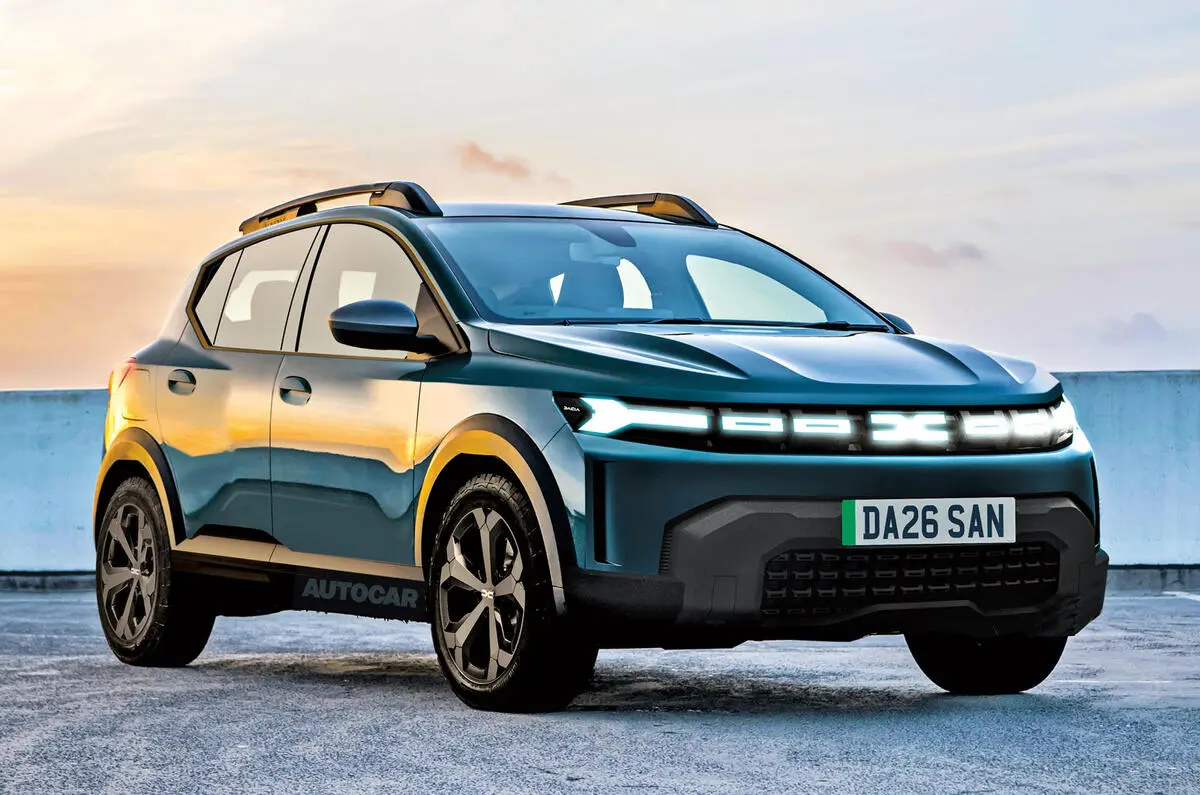
A Sandero EV for under 20,000 euros — that's Dacia's plan
Europe's best-selling car is going electric. The fourth-generation Dacia Sandero, expected in 2027-2028, will launch with a fully electric variant — and the Romanian brand's ambition is blunt: keep the price below 20,000 euros before incentives. For Portuguese buyers who've always picked the Dacia Sandero as the rational choice, this is a genuine shift. The Dacia Sandero 4 Electric Portugal story could finally put affordable electric motoring in the same driveway where the Sandero has always lived: the one owned by people who run the numbers.
The confirmation came straight from Dacia CEO Denis Le Vot at the 2024 Geneva Motor Show: the next Sandero will come in both combustion and fully electric flavours, with production running all the way to 2035 — the deadline set by the European Union for the end of new combustion-engine sales.
When does the new Dacia Sandero EV launch in Portugal
The launch window points to 2027-2028, aligned with the end of the current third-generation model (which got a late-2025 facelift to keep it fresh until then). No official date has been announced for Portuguese dealers yet, but Dacia typically rolls out Iberian launches alongside the rest of Western Europe, so Portugal should get the car shortly after its European debut.
While we wait, it's worth unpacking what's already known — and what still needs confirming.
AmpR Small platform: the same DNA as the Renault 5
The big technical news is that the Sandero EV will ride on the AmpR Small platform (formerly known as CMF-BEV) — the exact architecture used by the Renault 5 E-Tech, the new Renault 4 E-Tech and the upcoming Nissan Micra EV. Sharing a platform with three siblings helps spread the costs, and that's what lets Dacia promise such an aggressive price tag.
On batteries, expect the same offer as the Renault 5: packs of 40 kWh and 52 kWh, likely with LFP chemistry to keep cost per kWh down. The motors come from the same catalogue — 70 kW, 90 kW or 110 kW, all front-wheel drive. Translated into WLTP range, that's roughly 300 to 410 km depending on battery choice — enough for the vast majority of Portuguese everyday driving, Lisbon-Coimbra included, without range anxiety.
The combustion Sandero 4 takes a different road: it sits on a Clio-derived platform with a 1.2-litre three-cylinder 100 hp petrol, a 100 hp LPG option, a 48V mild-hybrid 120 hp and a full hybrid 155 hp. Two engine families, two platforms — that's the Renault Group's confirmed strategy.
Projected spec sheet
| Spec | Expected value |
|---|---|
| Launch | 2027-2028 |
| EV platform | AmpR Small (CMF-BEV) |
| Length | ~4.10 m |
| Battery options | 40 kWh / 52 kWh (LFP) |
| Motor options | 70 / 90 / 110 kW, FWD |
| Expected starting price | < €20,000 (before incentives) |
| Production run | Through 2035 |
| Body style | 5-door B-segment hatchback |
Dacia Sandero electric price Portugal: what to expect
The sub-20,000-euro positioning before incentives is the headline promise. In Portugal, a new EV also benefits from full ISV exemption (ISV is the Portuguese vehicle registration tax) and a reduced IUC annual road tax, which pushes the out-the-door price into territory no B-segment EV currently reaches. For comparison: the Citroën ë-C3 starts around €23,300 and the Fiat Grande Panda Electric at roughly €24,000. If Dacia delivers on the promise, the Sandero 4 Electric will simply be the cheapest new electric car on sale in Portugal — and the first EV to compete head-on with petrol superminis on sticker price.
An honest caveat: "sub-€20,000" will almost certainly be the entry price, with the 40 kWh battery and 70 kW motor. The version most buyers will actually want — 52 kWh for real-world range headroom — will likely land closer to €22,000-24,000. Still aggressive, just don't expect the full-fat Sandero EV at the minimum price.
Dacia Sandero Electric vs Renault 5: why buy the cheaper cousin
If they share a platform, batteries and motors, why pick a Sandero over a Renault 5? The answer is classic Dacia: essential kit at the minimum price. The Renault 5 is an emotional design exercise, packed with 1970s R5 heritage cues, nicer materials, and a starting price around €25,000. The Sandero 4 Electric should give you the same chassis and the same range for roughly €5,000 less.
For the buyers who pick a Sandero with their head rather than their heart — and there are plenty, given it was Europe's best-selling car in 2024 — that's exactly the trade they want. Pay less, get the same engineering, skip the retro styling and premium trim you weren't going to use anyway.
The other direct rivals
- Citroën ë-C3 — today's benchmark affordable EV in Portugal, around €23,000, 44 kWh, ~320 km WLTP
- Cupra Raval — arriving in 2026, MEB Entry platform, sportier and pricier
- Fiat Grande Panda Electric — 44 kWh, ~320 km, nostalgic design
- Renault 5 E-Tech — technological sibling, prettier, more expensive
- Volkswagen ID.2 — aimed at 2026-2027, also targeting under €25,000
A segment that was virtually empty two years ago will soon give Portuguese buyers real choice — and the Sandero is set to be the most pragmatic pick of the lot.
Design and the Stepway spun off into its own SUV
Visually, expect clear lineage with the Manifesto concept and styling cues lifted from the Dacia Duster and Bigster: illuminated Y-signature, Starkle exterior plastics, boxy and function-first surfaces. Length stays around 4.10 m, keeping the Sandero firmly in B-segment family hatchback territory.
One structural change worth noting: the Stepway stops being a rugged-jacket version of the Sandero and becomes its own model — a compact B-SUV slotted between the future "Evader" (the Spring replacement) and the Duster. It will share the same AmpR Small platform and electric powertrains, with the option of adding a rear motor for all-wheel drive — something the Sandero hatchback won't offer.
Frequently Asked Questions
Dacia has publicly stated the ambition to keep the Sandero 4 Electric below 20,000 euros before incentives, which would make it the cheapest new electric car on sale in Portugal. That figure refers to the entry version with the 40 kWh battery and 70 kW motor; the more capable 52 kWh variant is expected to land between 22,000 and 24,000 euros. In Portugal, full ISV exemption (registration tax) and a reduced IUC (annual road tax) on pure electric cars make the out-the-door price even more competitive versus rivals like the Citroën ë-C3 (around €23,300) or the Fiat Grande Panda Electric (around €24,000).
The European launch window points to 2027-2028, as confirmed by Dacia CEO Denis Le Vot at the 2024 Geneva Motor Show. The current third-generation Sandero was given a late-2025 facelift specifically to bridge the gap until then. Dacia typically aligns Portuguese launches with the rest of Western Europe, so local dealers should get the car shortly after the European debut. Production is expected to run through 2035, the EU's deadline for new combustion-engine car sales.
The Sandero 4 Electric will share the battery and motor pool with the Renault 5 E-Tech, offering two battery sizes: 40 kWh and 52 kWh, most likely in LFP chemistry to control costs. In WLTP terms that translates to roughly 300 km with the smaller pack and up to 410 km with the 52 kWh battery. Three front-wheel-drive motors will be available — 70, 90 or 110 kW. For everyday Portuguese driving, including longer runs like Lisbon to Coimbra, the 52 kWh version is the one that gives real peace of mind.
Both cars ride on the exact same AmpR Small (CMF-BEV) platform, use the same 40 kWh and 52 kWh batteries and share the same motor catalogue, so the core engineering is identical. The difference is positioning: the Renault 5 E-Tech is an emotional design exercise packed with 1970s R5 heritage cues, nicer materials and a starting price near €25,000, while the Sandero 4 Electric is expected to cost around €5,000 less by sticking to essential kit without retro styling or premium trim. For buyers picking with their head instead of their heart, the Sandero remains the more pragmatic choice — the same logic that made the current Sandero Europe's best-selling car in 2024.
Pure electric cars sold in Portugal currently benefit from full ISV exemption (the vehicle registration tax) and a reduced IUC (annual road tax), which can amount to several thousand euros of savings versus a comparable combustion model. When the Sandero 4 Electric arrives in 2027-2028, these incentives are expected to still apply, although the regulatory framework may evolve. Combined with a list price below 20,000 euros, the ISV exemption would put the Sandero Electric in a unique position: the first EV to compete head-on with petrol superminis on out-the-door price for Portuguese buyers.
Is it worth waiting for?
That depends on how long you can wait and what you need the car for. If you need an affordable EV right now, the Citroën ë-C3 is already in Portuguese showrooms and does the job. If you can hold out another 18 to 24 months and budget is your main criterion, the Sandero 4 Electric looks set to be the most rational choice the Portuguese B-segment EV market has ever offered.
Dacia has spent three decades in Portugal building a reputation for one thing: giving you what you actually need for the lowest possible price. The fourth-generation Sandero, now with an electric option, is the natural extension of that philosophy into the post-combustion era. Worth keeping an eye on the next round of official announcements — especially when the Renault Group confirms firm pricing for the Portuguese market.