
Electric Car Repair Cost in Portugal: Cheaper to Run, Dearer to Fix
Published: 08/07/2026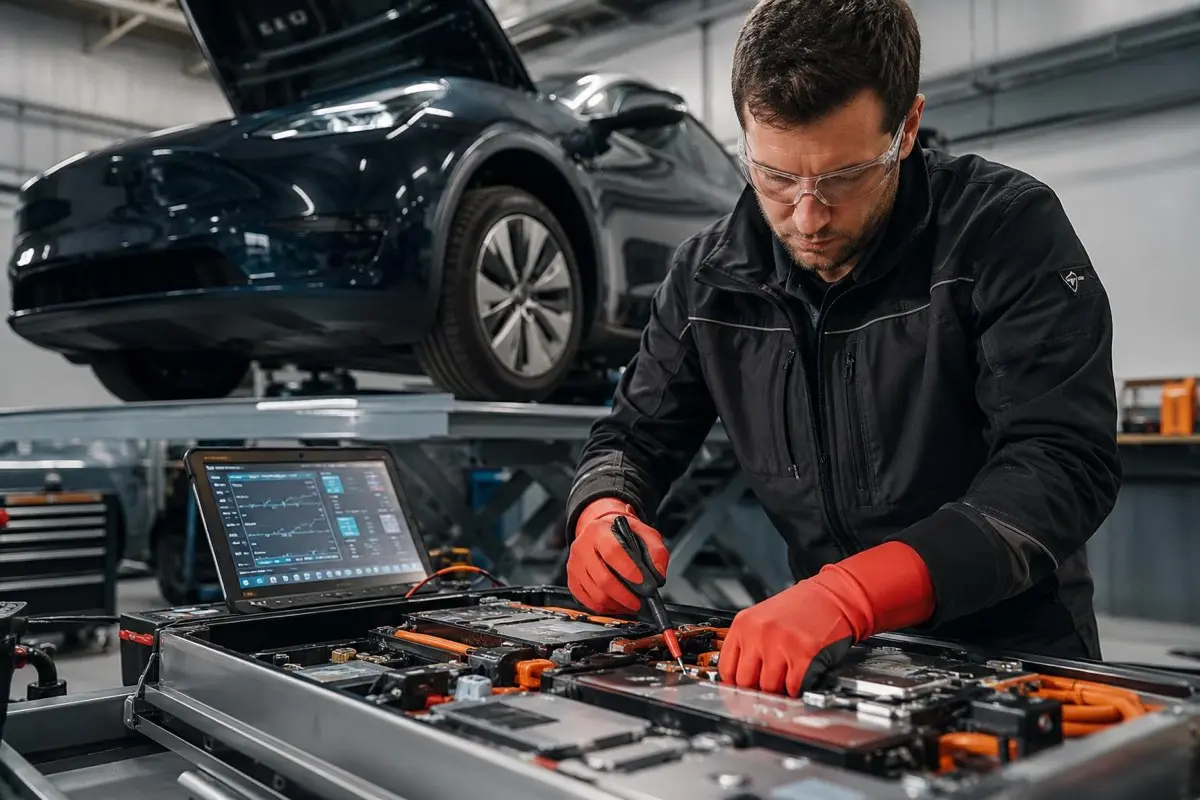
Fewer trips to the garage, but bigger bills when it counts
There's a promise you hear every time someone weighs up switching from petrol to electric: "you save a fortune on maintenance." It's true — but only half the story. The real electric car repair cost in Portugal hides a paradox few salespeople explain: an EV visits the garage far less often and each service is cheaper, yet when something breaks properly — especially after an accident — the bill lands much higher than on a combustion car.
A recent study by UK firm AX, drawing on more than 40,000 accidents a year, put hard numbers behind this. They're worth looking at before you decide.
Why routine servicing is genuinely cheaper
Here the EV advantage is real and consistent. A combustion engine has more than 2,000 moving parts; an electric motor has around 20. Fewer parts means fewer things to wear out and fewer to replace.
What drops off the expense list:
- Oil changes — none. That alone saves 50 to 80 euros per service.
- Timing belt, spark plugs, clutch, exhaust — none of it exists on an EV.
- Brakes — thanks to regenerative braking, pads often last well over 120,000 km, two to three times longer than on a petrol car.
In money terms: in the UK, annual EV maintenance runs about 165 euros against roughly 300 euros for a petrol car — less than half. An EV service is done in 45 to 60 minutes; a combustion car takes 2 to 3 hours. Over three years, the accumulated gap is around 900 euros in the EV's favour.
And it widens over time. A Consumer Reports study estimated that, over the life of the car, an EV spends about $4,600 on maintenance and repair versus $9,200 for a combustion car — literally half. Across total cost of ownership, that works out to savings of $6,000 to $10,000.
Where the EV bites back: post-accident repair
This is where the argument flips. According to AX, repairing an EV after an accident costs an average of £6,363 against £5,338 for a combustion car — 19.2% more, roughly £1,025 extra per repair. And it sits off the road longer: 25 days instead of 23.
Three things drive that gap:
- Costlier parts. High-voltage components, sensors and battery modules aren't cheap, and many still depend on the manufacturer.
- Mandatory calibration. As AX's Scott Hamilton-Cooper puts it, EVs "usually require calibration even for small repairs." Swapping a bumper fitted with driver-assistance sensors (ADAS) means recalibrating the whole system — specialist work an older car never demanded.
- Technician shortage. There's a growing scarcity of mechanics qualified to work on high-voltage systems. The UK alone faces a projected shortfall of over 40,000 certified technicians by 2035, and scarce labour is always expensive labour.
Then there's the extreme case: if the high-voltage battery is damaged in a crash, the bill can climb so high that the insurer writes off a car that, mechanically, could still be fixed.
EVs cost more to insure
The repair cost doesn't stay in the workshop — it flows straight into your premium. Because repairs are pricier, insurers charge more: on average, comprehensive cover for an EV runs about 13% higher than for a petrol equivalent. More powerful motors push many models into higher insurance groups on top of that.
It's a cost that rarely enters the calculations of buyers comparing only service prices, but it lands every single year.
Two costs that catch petrol drivers out
Two expenses an EV owner shouldn't ignore:
- Tyres. An EV is heavier because of the battery, and that weight wears tyres down faster. A new set easily runs 400 to 600 euros and arrives sooner than you're used to.
- 12V battery. Yes, EVs also carry a small 12-volt battery for the accessories, and it fails like on any car — usually after 5 to 7 years.
The main traction battery, on the other hand, typically comes with an 8-year or 160,000 km warranty and rarely causes trouble within that window.
Frequently Asked Questions
According to the UK study by AX, repairing an EV after an accident costs an average of £6,363 against £5,338 for a combustion car — about 19.2% more. Three factors drive this: pricier high-voltage components and battery modules, mandatory ADAS sensor recalibration even for small repairs, and a shortage of technicians qualified for high-voltage systems, which pushes up labour costs.
An electric motor has around 20 moving parts against more than 2,000 in a combustion engine, which removes oil changes, timing belts, spark plugs and the clutch. In the UK, annual EV maintenance runs about 165 euros against roughly 300 euros for a petrol car — less than half — and regenerative braking makes pads often last well over 120,000 km. Over the life of the car, maintenance savings can reach half.
The AX study, based on more than 40,000 accidents a year, puts the average EV repair at £6,363 against £5,338 for a combustion car — roughly £1,025 more. The EV also stays off the road longer: 25 days on average against 23. In the extreme case where the high-voltage battery is damaged, the bill can climb so high that the insurer writes the car off.
As a rule, yes. Because repairs are pricier, insurers reflect that risk in the premium: on average, comprehensive cover for an EV runs about 13% higher than for a petrol equivalent. More powerful motors push many models into higher insurance groups on top of that — an annual cost that rarely enters the calculations of buyers comparing only service prices.
For anyone covering daily distances, the maths favours the EV: you save every month on energy and servicing, and the odds of an expensive accident repair are low if you drive carefully. The warning is not to buy on the belief that it has "no maintenance" — it has less, cheaper and further apart, but a serious repair is dearer and demands a certified workshop, a network that is still growing in Portugal.
Does it add up for buyers in Portugal?
For most people covering daily distances — the Lisbon or Porto commute, the occasional longer trip — the maths still favours the EV. You save every month on energy and servicing, and the odds of needing an expensive accident repair are low if you drive carefully.
The warning is different: don't buy an EV on the belief that it has "no maintenance at all." It has less, cheaper and further apart — but when it does need a serious repair, that repair is dearer, slower and demands a certified workshop. In Portugal, where the network of EV-specialist garages is still growing, that's a factor worth weighing before you sign.
The good news is that the trend runs in the buyer's favour. As mechanics gain experience, batteries move to modular designs and diagnostic systems become standardised, the repair gap narrows year on year. Anyone buying an EV today is catching the market in far better shape than five years ago — and every year that passes improves the sums.