
Buying a Used Tesla Model S or X in Portugal: Motor, Battery, Supercharging
Published: 20/10/2026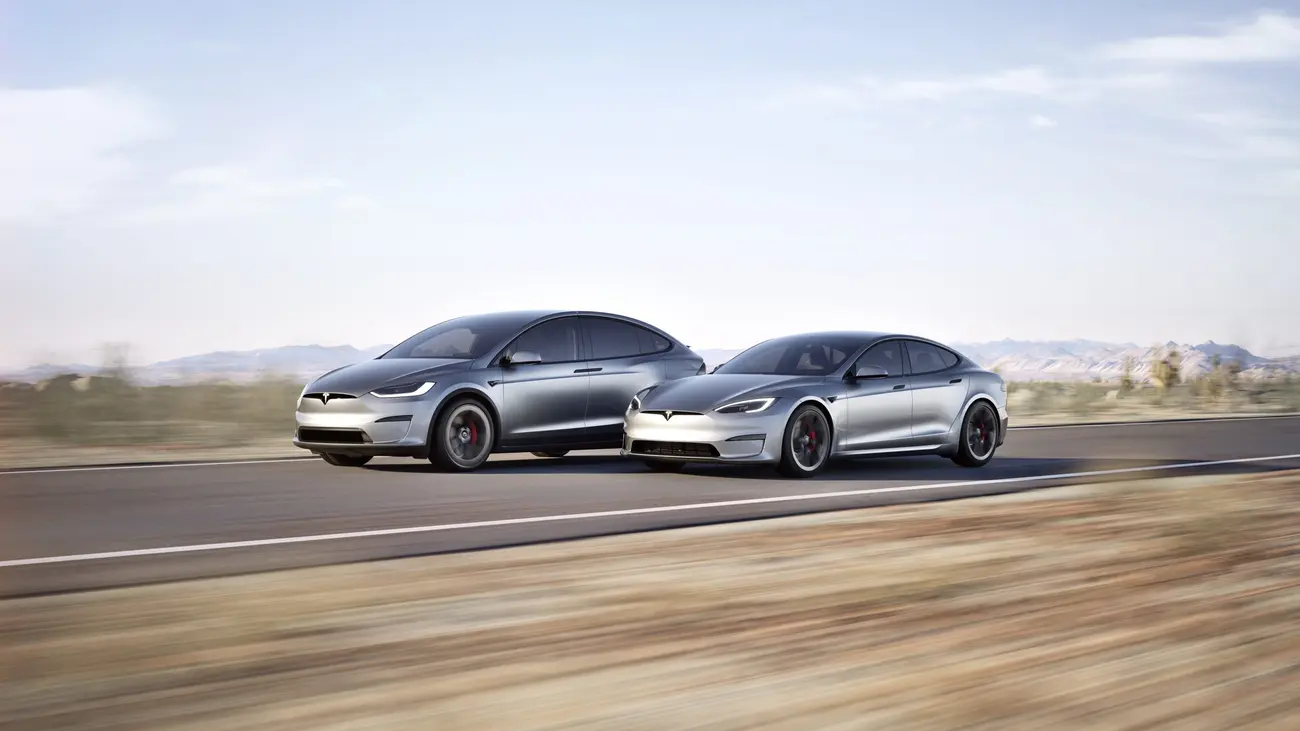
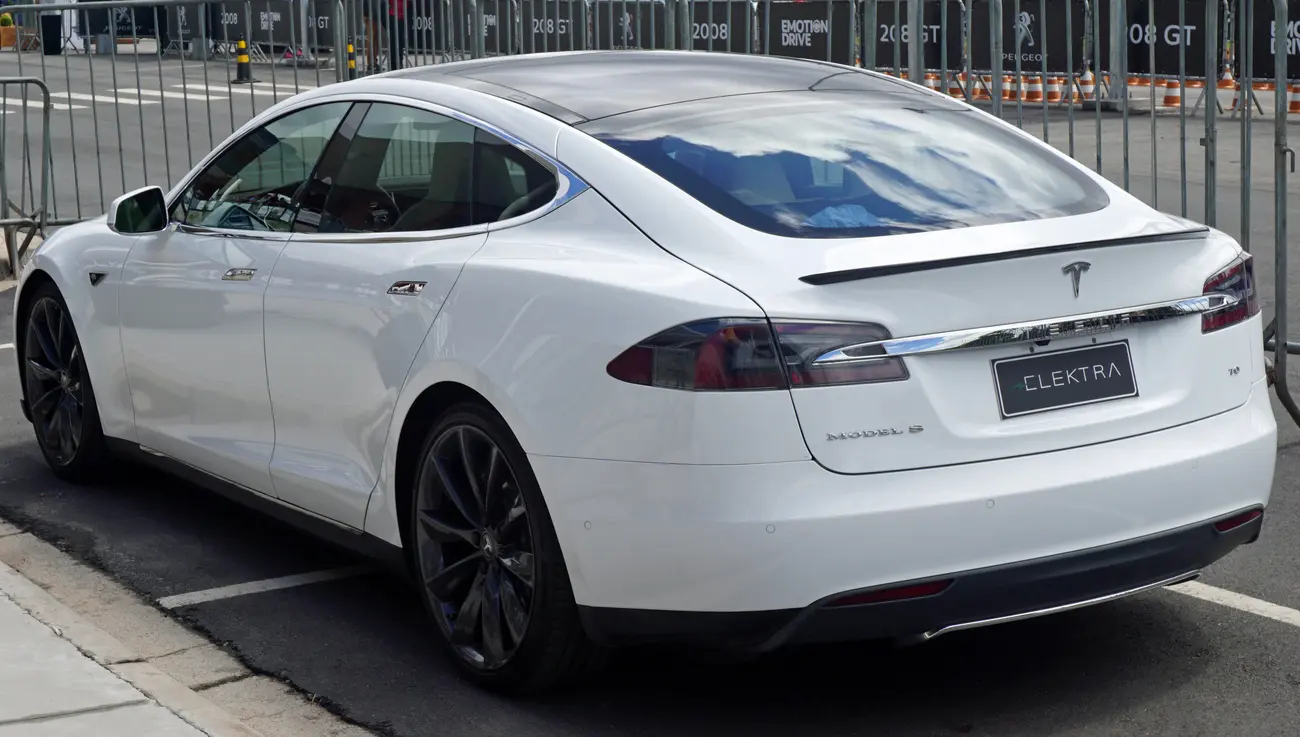
Buy a used Tesla Model S in Portugal: a former flagship now out of production
Ten years ago, a Tesla Model S was the electric car everyone wanted and few could afford. Today it shows up in the classifieds at family-car money, and the Model X is heading the same way. If you want to buy a used Tesla Model S in Portugal, you get huge cabin space, sports-car acceleration and access to a Supercharger network that is still one of the best in Europe.
The catch is age. Many versions have a well-documented rear motor defect, the battery needs checking, and the famous lifetime free Supercharging almost never passes to the next owner. All of that is worth knowing before you sign anything.
There is also new context. Since July 2025, Tesla has stopped taking orders for the Model S and Model X in Europe, selling only remaining inventory, and Elon Musk announced the end of production for both in Q2 2026, with the Fremont lines being repurposed for the Optimus robot. From here on, in Portugal as elsewhere in Europe, the Model S and Model X are a used-only proposition.
Used Tesla Model S price in Portugal: what moves it
Two cars from the same year can be priced very differently, and usually for reasons you can't see in the photos. Before comparing listings, it helps to know what drives the price of a used Tesla Model S or Model X:
- Version and battery. An S60 or S70 is not worth the same as a 90D or a P100D. Nominal battery capacity sets your starting range.
- Rear motor history. A car whose drive unit has already been replaced, upgraded or remanufactured has, in practice, had its biggest mechanical risk dealt with.
- Battery state of health (SoH). A diagnostic report is worth money in negotiation, for both sides.
- Transferable free Supercharging. Cars with a confirmed SC01 code are rare, and sellers know it.
- Build year. Cars built after 2016 avoid several early teething problems.
We don't have a table of average prices by year here: values swing a lot with these factors and with mileage. The most useful approach is to filter Model S and Model X listings by year and version, compare cars with the same motor and battery, and use the points below as negotiating leverage.
The weak spot: Tesla Model S Large Drive Unit coolant leak
The most serious problem on these cars has a technical name: the Large Drive Unit, or LDU. It's the big rear induction motor, with no permanent magnets, fitted to the Model S and Model X for years. The same unit was supplied to Toyota for the RAV4 EV and to Mercedes for the B-Class Electric Drive (B250e), and they share the defect.
How the coolant leak destroys the motor
To cool the rotor, Tesla routed coolant through the inside of the rotor shaft itself. Heat and high revs gradually wear out the rotor shaft seal. Because the motor housing has no external drain, glycol starts seeping into the stator and inverter area with no visible sign from the outside.
Tesla's coolant is electrically conductive. Once it wets the windings and inverter connections, it causes an insulation fault between the high-voltage system and the chassis. The car goes into safe mode, shows a dashboard warning and refuses to drive.
Which versions use the LDU
The affected-versions list published by EV Clinic, a specialist workshop that rebuilds these motors every week, covers cars from 2013 to 2022:
| Drive | Listed versions |
|---|---|
| Rear-wheel drive (RWD) | S60, S70, S75, S85, S90, P85, P90 |
| Performance all-wheel drive | P85D, P90D, P100D |
The Performance all-wheel-drive versions use the LDU at the rear. The non-Performance dual-motor versions (70D, 75D, 85D, 90D, 100D) don't appear on that list, but our sources don't confirm that they are free of the problem. If the car you're eyeing is one of these, ask a specialist to confirm which rear motor it actually has.
Symptoms and fault codes
The first sign is usually something you hear. The coolant washes the grease out of the rotor's ceramic bearings, which spin at up to 22,000 rpm, producing a hum or whine that rises in pitch with road speed regardless of throttle. Other signs to watch for:
- a creaking while driving that doesn't change in corners and isn't coming from the suspension;
- the PRND indicator turning red when you select a gear, with the car immobilised;
- insulation fault codes BMS_w142, BMS_w158 or BMS_w172.
On a test drive, switch off the audio and listen carefully above 80 km/h. A rising hum is reason enough to get a diagnosis before any deal.
Tesla Model S rear motor repair cost in Europe
At Tesla, the usual fix is to swap the entire drive unit. Dutch independent Tesland says this "often exceeds €5,000"; one owner reported a €6,700 quote on a forum. Independent shops offer much cheaper alternatives:
| Solution | Price | Warranty |
|---|---|---|
| Drive unit replacement at Tesla | over €5,000 | Tesla |
| Preventive coolant delete (Tesland) | €1,850 incl. VAT | 2 years or 40,000 km |
| Repair with coolant delete, Basic (Tesland) | €3,250 incl. VAT | 1 year or 20,000 km |
| Repair with coolant delete, Premium (Tesland) | €4,250 incl. VAT | 2 years or 40,000 km |
| Graphite seal and bearings kit (EV Clinic) | €870 to €1,000 | — |
| Full LDU remanufacture (EV Clinic) | around €2,800 | 2 years, unlimited km |
Bear in mind the unit can weigh up to 135 kg and has to come out of the car, so labour is not trivial. If the motor has already failed, Tesland recommends trailering the car in to avoid further damage to the inverter.
Coolant delete vs graphite seal: the specialists can't agree
A coolant delete blocks the rotor's coolant channel with an aluminium plate or a stainless-steel bypass. The stator and inverter are still cooled, but coolant no longer runs through the centre of the motor, so there's nothing left to leak. The idea is close to "Revision U", the revised LDU Tesla introduced in 2022, which also cuts coolant flow through the rotor.
EV Clinic, which sells the alternative, strongly disagrees. It argues that without internal cooling, rotor heat migrates into the stator end-windings, which have no temperature sensor, and says it has received coolant-delete motors destroyed at around 20,000 km in warm climates. It also claims Tesla has revised the LDU more than a dozen times and that Revision U is not a definitive fix. Its own approach: machine the shaft, fit a graphite mechanical seal and replace the bearings.
Read both positions knowing they come from competing workshops, each promoting its own service. For a buyer in Portugal, where summers are hot, the heat argument deserves attention, but there is no independent data that settles it either way. The practical advice is the same from both camps: ask the seller exactly what has been done to the drive unit, and ask for the invoice.
Tesla Model S battery degradation: smaller than people fear
The news here is good. France's L'Automobile Magazine says Model S and Model X batteries "hold up well" over the years, with some issues flagged on 85 kWh packs. Long-term data backs that up:
- A Plug In America study of around 500 Model S cars found roughly 90% of original capacity up to about 240,000 km.
- One P85 at 232,442 miles (close to 374,000 km) still had 83% of its range: 220 out of 265 miles.
- Voltest, a company that tests batteries for dealerships, says some of the best high-mileage retention results it sees come from older Model S and Model X cars.
- On Teslas with NMC chemistry, Voltest typically sees a state of health in the high 70s to low 80s percent after 200,000 miles, about 320,000 km.
Liquid battery cooling is the reason, and it makes a huge difference compared with older air-cooled EVs. Most of the loss happens in the first two or three years, then the curve flattens out considerably.
Still, two cars with the same mileage can be in very different shape, depending on whether they lived on DC fast charging to 100% or on overnight home charging. Insist on a battery health test before buying, and don't rely only on the range shown on the dashboard.
Tesla free Supercharging transfer on a used car: checking for SC01
It's the selling point that appears most in listings, and the one that causes the most disappointment. Tesla offered several flavours of free charging over the years, but only one passes to the next owner:
| Option code | What it means |
|---|---|
| SC00 | No Supercharging |
| SC01 | Free unlimited Supercharging, transferable |
| SC04 | Paid Supercharging |
| SC05 | Free unlimited, current owner only |
| SC06 | Free, but time-limited |
The transferable version was dropped in early 2017, so you'll only find it on cars built between 2012 and early 2017. The Model S 40 never had it. The free-Supercharging promotions on new Model S and Model X in late 2024 and early 2025 were tied to the first owner's account and don't carry over with the car.
Even an SC01 car can lose the perk along the way. If it went through Tesla's own used inventory, the benefit is normally removed, and there are cases of it being stripped in dealer or auction sales. Buying from a private seller gives you the best chance of keeping it. Before paying extra for this, ask Tesla to confirm in writing, using the VIN, that the benefit will transfer.
MCU screen, door handles and other things to check
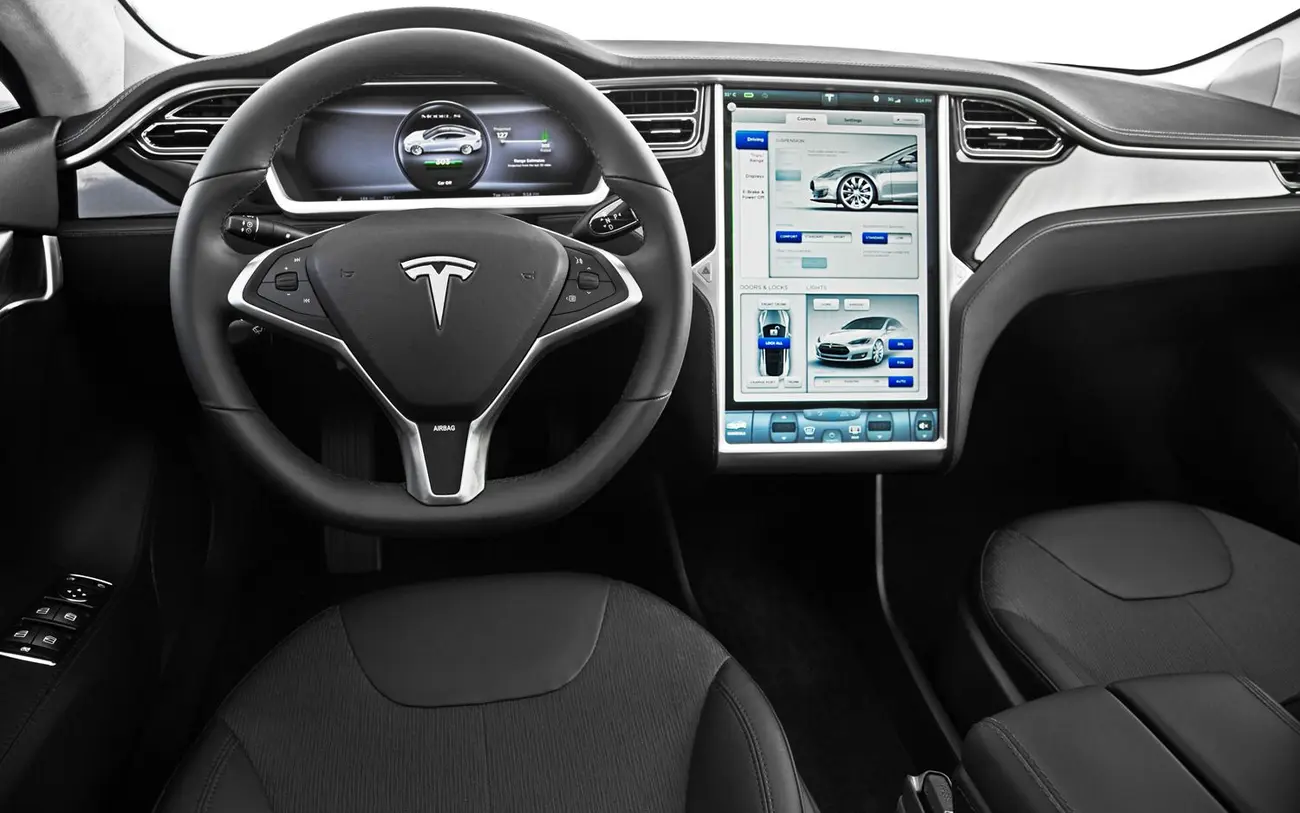
The Model S was Tesla's first high-volume car, and the early years had their share of teething problems. The 17-inch central touchscreen (MCU) failed frequently on older cars, and the retractable door handles were another known headache. On a test drive, open and close every door several times and use the screen for a few minutes.
Frequently Asked Questions
The Model S is the saloon, more efficient and more widely available second-hand; the Model X is the SUV, offered with up to 7 seats, but its falcon-wing rear doors add extra hardware to check. Both share the same critical points: the rear LDU motor on affected versions, battery health and Supercharging option codes (only SC01 transfers). Choose based on the space you need and each car's documented history rather than the model itself.
Yes. EV Clinic's list covers 2013-2022 Model S and Model X, and on the Model X it is mainly the Performance P90D and P100D that use the LDU at the rear. Glycol leaking past the rotor seal causes isolation faults (BMS_w142, BMS_w158, BMS_w172), and a Tesla drive unit replacement often exceeds €5,000. Independent shops repair it from about €870-1,000 (seal kit) or €1,850 (preventive coolant delete, VAT included).
It can be, because the battery ages better than most buyers expect: Plug In America data on around 500 Model S showed roughly 90% capacity up to about 240,000 km, and a P85 at nearly 374,000 km kept 83% of its range. Voltest typically sees 77-83% state of health on NMC Teslas at around 320,000 km. The real risk on a high-mileage car is the rear motor, so insist on an SoH test and drive unit invoices before buying.
Tesla gives an 8-year warranty on the battery and drive unit, counted from the first delivery, and that cover stays with the car when it changes hands. In practice only the newer Model S and Model X are still within the period, which makes them a safer bet against the LDU risk. Check the start date and mileage limits with Tesla using the VIN before you commit.
Not to order: since July 2025 Tesla has stopped taking orders for the Model S and Model X in Europe, selling only inventory cars. Elon Musk announced the end of production for both in the second quarter of 2026, with the Fremont lines converted for the Optimus robot. From now on, the Portuguese market for these models is essentially used-only, and they benefit from the ISV and IUC exemption for electric cars.
Which year of used Tesla Model S to buy
The sources agree: go for cars built after 2016, which avoid most of the early problems. If your budget stretches to a 2023 or newer car, you get the Revision U rear motor, which L'Automobile Magazine says solves the coolant leak, although EV Clinic disputes that it is a definitive fix.
Take this checklist with you before closing a deal:
- Rear drive unit history: original, replaced by Tesla, Revision U, coolant delete or remanufactured? With invoices.
- A battery state-of-health (SoH) test from an independent workshop or service.
- Confirmation of the Supercharging code from Tesla, if the listing mentions it.
- Motor noise above 80 km/h and no insulation warnings on the dashboard.
- A working MCU screen and door handles.
- Remaining warranty: Tesla covers the battery and drive unit for 8 years, so some newer cars may still be covered. Confirm the start date and limits with Tesla.
On the tax side, things are simple. Electric cars in Portugal are exempt from ISV (the one-off vehicle tax paid on registration, including imports) and from IUC (the annual road tax), which makes running costs on a used Model S or Model X quite predictable.
A well-chosen Model S or Model X is still one of the roomiest and quickest EVs you can buy for the money. The trick is to treat the rear motor and the battery as the two things that define the car's value, and to pay for documented history rather than the promise of free charging.