
Stellantis €15,000 Electric City Cars: Citroën, Fiat and Opel for Portugal 2028
Published: 16/04/2026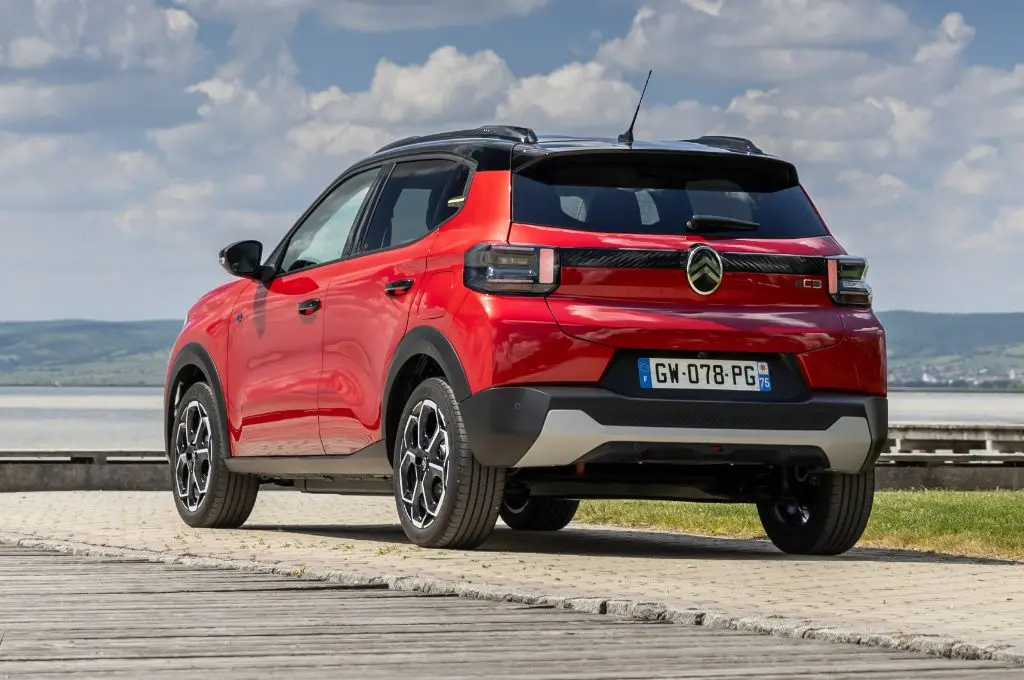
Three electric city cars at 15,000 euros — Citroën, Fiat and Opel plan the counter-attack
A new electric car under 15,000 euros is no longer a vague promise. Stellantis has three concrete projects on the table: Citroën, Fiat and Opel will share the same technical platform to launch entry-level electric city cars around 2028. The goal is clear — stop the Chinese wave and reclaim the A-segment, abandoned by European brands for almost a decade.
For a buyer in Portugal used to hunting down a used Fiat Panda or a Citroën C1 with 100,000 km on the clock, this changes the game. By 2028 it will be possible to buy a brand-new electric with warranty for the price you currently pay for a three or four-year-old B-segment combustion car.
What Stellantis has confirmed so far
The project runs on the Smart Car platform, an evolution of the older CMP already used by the Citroën e-C3 and the Fiat Grande Panda. It was designed with one priority: cost. Production starts in Trnava, Slovakia, with possible expansion to other European plants or to Morocco.
Seven models in total will use this base — including the three electric city cars we're discussing here, plus the current C3, Grande Panda, a seven-seat Citroën B-SUV and the next generation of the Opel Crossland.
Citroën: Xavier Chardon's "E-car"
The new Citroën CEO, Xavier Chardon — in the role since June 2025 — has confirmed the project. It's the spiritual successor to the C1, discontinued in 2020 when A-segment margins became unsustainable. Chardon insists this is not a retro 2CV — it's an "E-car", a vehicle designed from scratch for the electric era.
Design lead Pierre Leclercq sums up the philosophy: "If you think of a 2CV, a cheap car for villages, it's so important to keep the philosophy and the values." A concept will debut at the Paris Motor Show in October. Sales are scheduled for 2028, with a starting price below 15,000 euros.
Fiat Pandina: the Panda that fits its name
Fiat uses the same platform to renew the Panda — Italy's best-selling model of all time. The new city car, internally called the Pandina, measures 3.69 metres and will be shown in Paris in 2026. The announced price also sits below 15,000 euros.
Don't confuse it with the Grande Panda Electric already on sale, which costs around 24,500 euros with a 44 kWh battery and 320 km of range. The Pandina is smaller, cheaper and plays in a completely different league — the real A-segment.
Opel: successor to the Agila and Karl
Opel closed the Agila/Karl/Adam chapter and left its catalogue with nothing below the Corsa. CEO Florian Huettl admitted "there is space in the range for a smaller model". In 2023 the target was 25,000 euros, but sharing a platform with Citroën and Fiat now makes the same 15,000-euro mark feasible. Opel wants a fully electric European range by 2028 — this city car is the missing piece.
The EU's "E-car" category — the piece that's still missing
None of this happens without a green light from Brussels. The European Commission is preparing the M1E category, informally known as the "E-car", which relaxes certain technical and safety requirements for small electric vehicles:
- Maximum length: 4.2 metres
- Must be assembled within the EU
- Target price below 25,000 euros
The final decision is expected by the end of 2026. If it passes, production can begin in 2027–2029. If it fails, the whole timeline is on hold — and the Portuguese buyer will keep depending on the Dacia Spring and the used-car market.
Benchmark specs (Renault Twingo E-Tech)
There is no official data sheet yet for the three models. The closest reference is the Renault Twingo E-Tech, used by Autocar and Auto Express as a direct comparison:
| Parameter | Value |
|---|---|
| Starting price | ~€16,000 (Twingo) / under €15,000 (Stellantis target) |
| Battery | 27.5 kWh LFP |
| WLTP range | ~260 km (163 mi) |
| Power | 80 bhp |
| Torque | 175 Nm |
| Length | 3.80 m (Twingo) / 3.69 m (Pandina) |
| Platform | Smart Car (Stellantis) |
| Production | Trnava, Slovakia |
| Launch window | 2027–2029 |
LFP chemistry is the logical pick: cheaper, more durable, tolerates more charge cycles, and the extra weight stops being an issue in a 3.7-metre car that rarely leaves the city.
What this changes for buyers in Portugal
Today, someone in Portugal looking for a new EV under 20,000 euros has essentially two options: the Dacia Spring (from around €17,000 with ISV exemption — ISV is the Portuguese vehicle purchase tax, waived for EVs) or waiting for used Renault Zoes and Fiat 500es to appear. Neither is ideal.
By 2028 the offer doubles or triples. Three Stellantis city cars below 15,000 euros, plus the revived Renault Twingo, plus the VW ID.1, plus the Kia EV2 — the most competitive A-segment Europe has seen in two decades.
There are two knock-on effects for Portuguese wallets:
- New: For the first time since the C1 and the old Panda 1.2 disappeared, you'll be able to buy a new city car with warranty for under 16,000 euros including VAT and import costs. With the current ISV exemption for EVs and the minimum IUC road tax, total cost of ownership becomes competitive against any combustion supermini.
- Used: The Dacia Spring, Fiat 500e and Renault Zoe will see a price squeeze. Anyone buying one of these in 2026 or 2027 should expect faster depreciation once the new wave reaches showrooms.
Real-world range and who this is for
260 km WLTP translates, in practice, to 200–220 km of real driving with normal use. That's enough for everything a city car needs to do: commuting, shopping, weekends inside your district. This isn't a car for driving up to Bragança or for renting out to Algarve tourists — it's a car for daily urban and suburban use.
Home charging at 7.4 kW means a full overnight refill from empty. At MOBI.E fast chargers (Portugal's public charging network), the likely lack of high DC charging capacity isn't a real problem — anyone who needs to go from 20% to 80% in 20 minutes is shopping in the wrong segment.
Frequently Asked Questions
Stellantis targets 2028 for the first customer deliveries, with the Citroën concept and the Fiat Pandina prototype being revealed at the Paris Motor Show in October 2026. Production in Trnava, Slovakia, is scheduled for 2027–2029, and everything hinges on final EU approval of the M1E ("E-car") category by the end of 2026. In Portugal, showroom arrival should follow a few months after European production starts.
The three sibling city cars — the new Citroën "E-car" (spiritual successor to the C1), the Fiat Pandina (3.69 m) and Opel's new successor to the Karl/Agila — will all share the Smart Car platform and sit below 15,000 euros. Today the cheapest Stellantis EV on the Portuguese market is the Citroën e-C3, starting around €23,400, so the price cut represents roughly a 35% drop compared with current offerings.
No official spec sheet exists yet, but the benchmark used by Autocar and Auto Express is the Renault Twingo E-Tech: 27.5 kWh LFP battery, WLTP range of around 260 km (163 mi) and 80 bhp output. In Portuguese real-world driving this translates to 200–220 km — plenty for commuting, shopping and trips within your district, but not enough for regular long-distance journeys.
The Dacia Spring currently starts at around €17,000 in Portugal (including ISV exemption) and delivers 225 km WLTP from a 26.8 kWh battery. The Fiat Pandina, with a target price below €15,000, a reference 27.5 kWh LFP battery and traditional European-brand finish, will compete head-on with two advantages: EU assembly (mandatory under the M1E category) and Fiat's established service network. The Spring keeps the edge of being on sale today, while the Pandina only arrives in 2028.
Even without extra incentives, EVs in Portugal are exempt from ISV (vehicle purchase tax) and pay the minimum IUC road tax — savings that can exceed €3,000 versus an equivalent combustion city car. If any direct purchase support such as the Fundo Ambiental grant survives into 2028, the net purchase cost could drop to around €13,000, making this the most accessible brand-new EV ever sold in the Portuguese market.
Dates to watch
Three milestones will define this story:
- October 2026 — Paris Motor Show, with the Citroën concept and Fiat Pandina production prototypes.
- End of 2026 — final EU decision on the E-car category. The real go/no-go moment for the project.
- 2028 — first customer deliveries planned, with Opel rounding out the three-brand lineup.
The promise of a new EV at 15,000 euros has been made many times. What's different now is that the platform exists, the factory is booked, a CEO has signed off on the project, and three brands are splitting the bill. Worth keeping an eye on the next round of official pricing announcements.